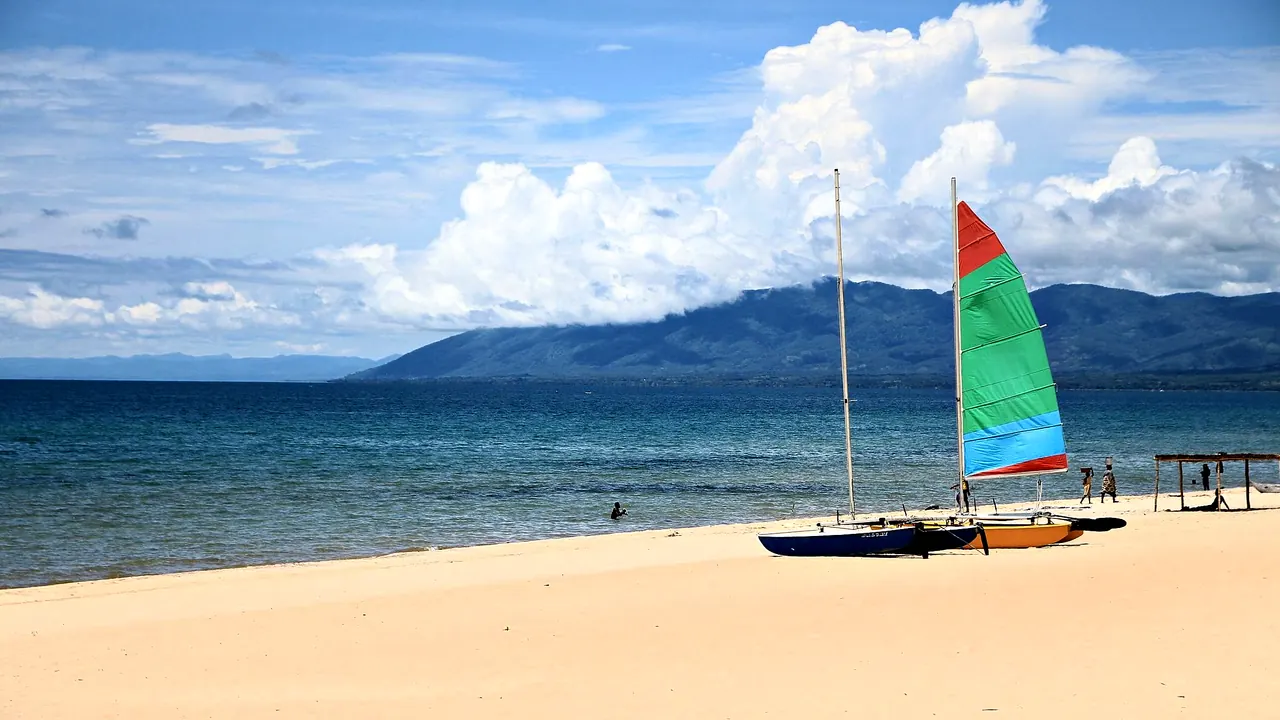
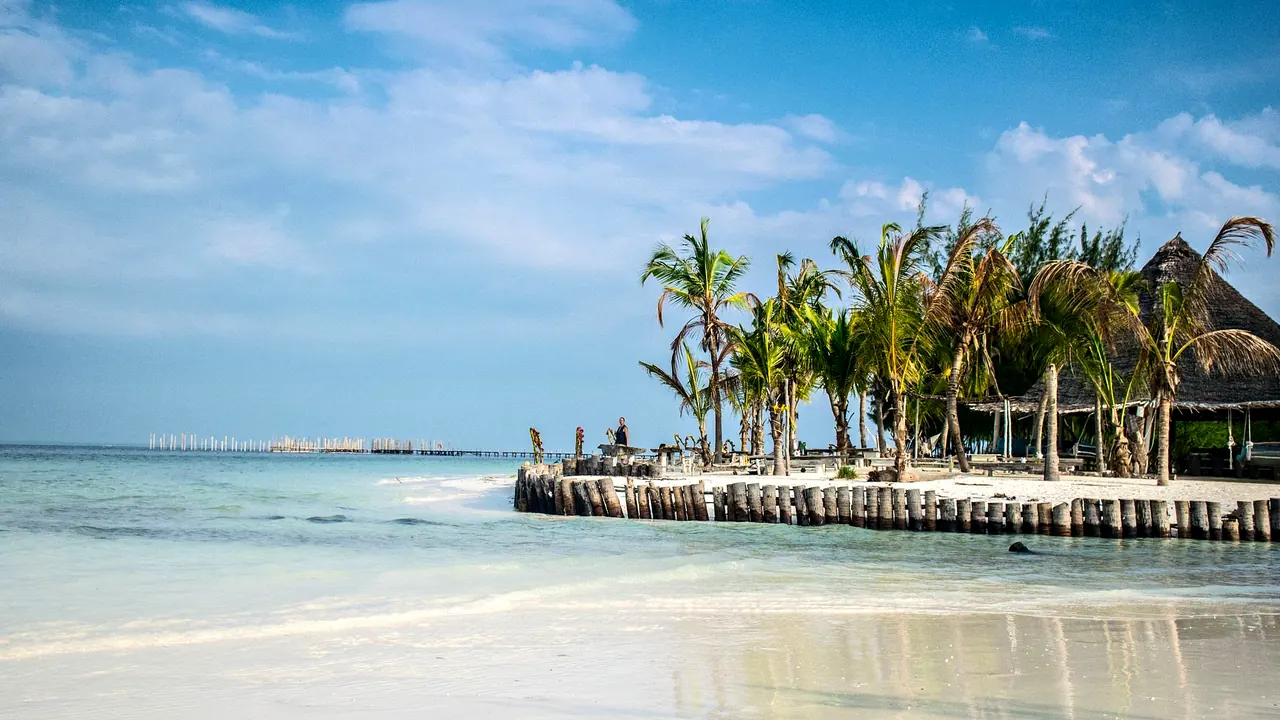
Photos: Lake Malawi by Ros NL, Pexels License; Zanzibar by Ákos Helgert, Pexels License.
Lake Malawi or Zanzibar?
Our verdict in twelve categories, each scored against the same fixed benchmark cities, and the climate month by month, so you can choose for your trip.
Choose Lake Malawi for
- prices
- nature and the outdoors
Lake Malawi suits travellers who want water and wildlife more than towns. You can snorkel off the rocks among brightly coloured fish found in no other lake, kayak out to small islands and walk the escarpment above the north shore, and simple lodges and local transport make it cheap. In return you get long rough journeys, few sights, simple food and evenings that end soon after dinner. It rewards patient, independent travellers who are happy to stay put on a stretch of sand.
Choose Zanzibar for
- culture and sights
- food and drink
- live music and the arts
Zanzibar is the easier and more rounded choice, and it costs more. The powder-white beaches face the Indian Ocean, and Stone Town adds old lanes, Swahili cooking, taarab music and real history to a beach stay. Distances are short, resorts are geared to visitors and families have more to do. It suits a first trip to East Africa, a honeymoon or anyone who wants a few days of culture before the beach.
Scoreboard
Twelve categories on one fixed scale from 0 to 100. The shaded stretch is the gap between the two.
Your match
Pick a travel style or drag the sliders, and both match scores follow your weighting.
Wins on prices and nature and the outdoors with your weighting.
Wins on culture and sights and food and drink with your weighting.
What matters to you?
Category by category
What the scores mean for a trip.
Beaches & swimming
Both are built around the water, but Zanzibar has the finer beaches. Its powder-white coral sand faces a warm Indian Ocean, and Kendwa and Nungwi in the north stay deep enough to swim at any tide. The catch is the east coast from Paje to Jambiani, where the sea pulls far out at low tide and swimming follows the tide table.
Lake Malawi gives you freshwater swimming from golden sand, with no salt, tides or waves, often a few steps from your lodge at Cape Maclear, Nkhata Bay or Chintheche. You have to choose your spot with more care, though. Bilharzia lurks in reedy shallows near villages, and in the south you should keep away from river mouths because of hippos and crocodiles.
Food & drink
Zanzibar has a real cuisine, and Lake Malawi mostly does not. On the island, centuries of Omani and Indian trade show in clove-scented pilau, coconut fish curries and the evening seafood grills of Forodhani Gardens, though the choice narrows to resort buffets once you leave Stone Town.
At the lake you will eat at your lodge almost every night. The local food is grilled chambo, dried usipa and nsima eaten by hand. Lodge kitchens make plain international dishes from whatever the supply run brings, and there is nowhere to go out for dinner.
Culture & sights
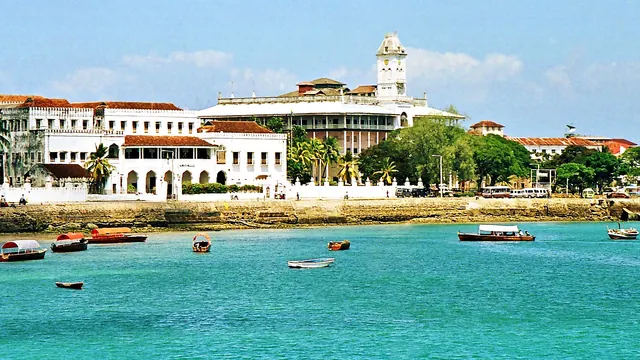
Stone Town by itself gives Zanzibar the lead. It is a UNESCO-listed Swahili trading town of carved doors, mosques, temples and merchant houses, with the Old Fort, the sultans' Palace Museum and the slave market memorial within a short walk. Palace ruins and Persian baths lie just outside town.
Lake Malawi has scattered missionary sites rather than a historic centre. They include the oversized St Peter's Cathedral on Likoma, the stone church and small museum at Livingstonia, and the clock tower at Mangochi. Each is worth a look if you are nearby, but none is a reason to plan the trip.
Nightlife
Neither has clubs, but Zanzibar has more going on after dark. Nungwi and Kendwa have beach bars, bonfires and a well-known full-moon party, Paje has a relaxed kitesurfers' scene, and Stone Town has rooftop sundowners. Drinking stays in hotels and tourist bars on this conservative island.
At Lake Malawi the late nights are limited to the backpacker bars of Nkhata Bay and Cape Maclear, with reggae, pool tables and the odd beach party. Elsewhere you get a lodge drink by the fire and an early night.
Nature & outdoors
Lake Malawi has the bigger landscape and the more unusual wildlife. The lake is close to 580km long, with hills on one shore and the Mozambique highlands across the water. Hundreds of species of cichlid found nowhere else live along its rocky shores, at their richest in the national park around Cape Maclear. Trails above the north shore lead to the Manchewe Falls, and Liwonde's river safaris are within a long drive of the south.
Zanzibar is a flat coral island, so its outdoors is reef and lagoon. You can snorkel with turtles at Mnemba, see red colobus monkeys at close range in Jozani Forest and look for dolphins off Kizimkazi. Kitesurfing on the Paje lagoon is something the lake cannot offer.
Day trips
Zanzibar makes outings easier because everything is close. Boats take you from Stone Town to the tortoises on Changuu or to a sandbank, and spice farm tours end with a village lunch. From the beach towns, Stone Town is about an hour away. The fast ferry to Dar es Salaam is better done with an overnight stay.
From Lake Malawi, slow roads make every outing a long one. Zomba's colonial buildings and plateau are about two hours from the southern shore, and Lilongwe or Mzuzu work as a market day. Likoma takes several days to visit, so it does not work as a day trip.
Good for families
Both need malaria precautions and have only basic medical care, but Zanzibar is easier with children. North-coast resorts have pools and calm water you can swim in at any tide. The tortoises on Changuu, the monkeys in Jozani and spotting turtles while snorkelling make good half-day outings.
Lake Malawi suits families who already travel independently in Africa. The warm, still water and friendly villages are a real plus. But children need watching for bilharzia whenever they paddle, the airport transfers are long and bumpy, and beyond the sand nothing is made for them.
Getting around
Zanzibar is compact and its main roads are paved. Nungwi or Paje are about an hour or more from Stone Town by taxi or transfer, and the old town itself is best on foot. Hiring a car needs a local permit, and you will meet police checkpoints along the way.
On Lake Malawi the bases are hundreds of kilometres apart along a slow lakeshore road, and the tracks down to places like Cape Maclear are rough. Most visitors pay for a driver or lodge transfers. The lake steamer and the flights to Likoma run too rarely to plan around easily.
Shopping & style
Zanzibar has more to bring home, mostly from Stone Town's lanes and Darajani market. You can buy vanilla, clove and cardamom by the bag, kanga and kikoi cloth, carved chests, Tingatinga paintings and tanzanite, but stock repeats from stall to stall and you are expected to haggle.
At the lake, shopping means woodcarvers walking the beaches with bao boards and chief's chairs. The bright chitenje cloth from village markets is the one thing really worth packing.
Affordability
Lake Malawi is the cheaper of the two, and on both, costs rise quickly once you want comfort. At the lake, campsites, basic lodges, local meals and minibuses cost very little, while diving, private transfers and the remote island lodges are priced for international visitors.
Zanzibar has cheap corners too, such as Stone Town guesthouses, the Forodhani stalls and simple bungalows around Paje and Jambiani. But most of its accommodation is mid-range or upmarket, taxis and boat trips add up, and the peak months push prices higher.
Live music & performing arts
Zanzibar has a musical tradition of its own. Taarab blends Swahili poetry with Arabic and Indian melody, and in Stone Town you can hear it at rehearsals at the music school and in cultural halls. The dry-season calendar also brings festivals of East African music and film.
Lake Malawi has almost no performance life. There are lodge evenings of village drumming and dance and Sunday church choirs. The masked Gule Wamkulu dances belong to Chewa ceremonies and are not put on for visitors.
Wellness & relaxation
Both are places to slow right down, and neither has a bathing tradition. Zanzibar makes pampering easier. Resorts on the north and east coasts have spas offering coconut oil and spice massages, and yoga is easy to find around Paje and Jambiani.
At the lake the rest comes from a hammock, a still morning swim and a sunset with nothing planned afterwards. A few quiet lodges on Likoma and the Cape Maclear islands offer massage or yoga decks, but proper treatments are hard to find.
When should you go?
Pick your month. The climate figures are measured averages, not a forecast.
Lake Malawi in July
Zanzibar in July
Daytime high, °C
Rainfall in the month, mm
Where the figures come from
Lake Malawi has no weather station within reach, so its figures come from a gridded climate model rather than a measured record, and read a broad area rather than one spot.
Zanzibar's temperatures are measured 78 km from the centre, at Dar Es Salaam Airport.
Zanzibar has no rain gauge within 25 km of the centre, so its rainfall comes from a gridded climate dataset read at the destination rather than from a gauge further away.
Temperature and rainfall are climate normals, averaged over the years shown. Lake Malawi: 2001-2020 normals, NASA POWER reanalysis grid, no weather station within 90 km. Zanzibar: 1991-2020 normals, Dar Es Salaam Airport (77.9 km from centre).
Lake Malawi has one wet season and one dry season. The rains run from December to March and are heaviest in January, at close to 308mm, so those months are the ones to avoid. From May to October it hardly rains at all. June and July are the mildest months, with highs near 25°C, which is comfortable for walking up the escarpment to Livingstonia. The heat then builds through September, and by October and November it reaches 33°C, warm for the beach but tiring for any long walk.
Zanzibar is hot in every month, so a midday walk through Stone Town is tiring whenever you go. Its worst weather comes with the long rains of April and May, and April reaches about 363mm. Rain picks up again from November to December, and March is fairly wet too. The sea never drops below about 26°C. June to October is the driest and sunniest stretch, and January and February are also good. Both places are at their best from June to October. Skip Lake Malawi from December to March and Zanzibar in April and May.
Which traveller are you?
For a culture and arts trip, Zanzibar is the clear pick. Stone Town's coral-stone lanes, the sultans' palace, the slave market memorial and evenings of taarab give you days of walking and listening. Around Lake Malawi the heritage is a handful of mission churches.
On a trip on a tight budget, Lake Malawi stretches your money further. Campsites, simple lakeside lodges, local fish with nsima and shared minibuses cost very little. On Zanzibar, most beds are mid-range or upmarket, and taxis and boat trips soon add up.
For an outdoors trip, Lake Malawi has more to offer. You can snorkel and learn to dive among cichlids in calm fresh water, kayak to Thumbi and Mumbo islands, and hike to the Manchewe Falls. Zanzibar's reef, colobus monkeys and kitesurfing lagoon are good but smaller in scale.
Before you go
| Measure | Lake Malawi | Zanzibar |
|---|---|---|
| Official language | English, Chewa, Tumbuka | English, Swahili |
| Currency | Malawi Kwacha (MWK) | Tanzanian Shilling (TZS) |
| Sockets | G230 V, 50 Hz | G230 V, 50 Hz |
| Driving side | Left | Left |
| Time zone | UTC+2 | UTC+3 |
| Emergency number | Police 990/997, ambulance 998, fire 999 | Police 112, ambulance 115, fire 114 |
| Main airport | Kamuzu International Airport (LLW)9 non-stop destinations | Abeid Amani Karume International Airport (ZNZ)40 non-stop destinations |
| Public holidays this year | 11 days | 13 days |
By the numbers
| Measure | Lake Malawi | Zanzibar |
|---|---|---|
| Population | - | 896,721 |
| People per km² | - | 569 |
| Swim season, months above 21 °C | - | 12 months |
Where else could you go?
Every comparison below shares a destination with this one, so you can follow Lake Malawi or Zanzibar somewhere new.
- Dar es Salaamvs Zanzibar
- Lilongwevs Lake Malawi
- Dianivs Zanzibar
- Mombasavs Zanzibar
- Ngorongorovs Zanzibar
- Serengetivs Zanzibar