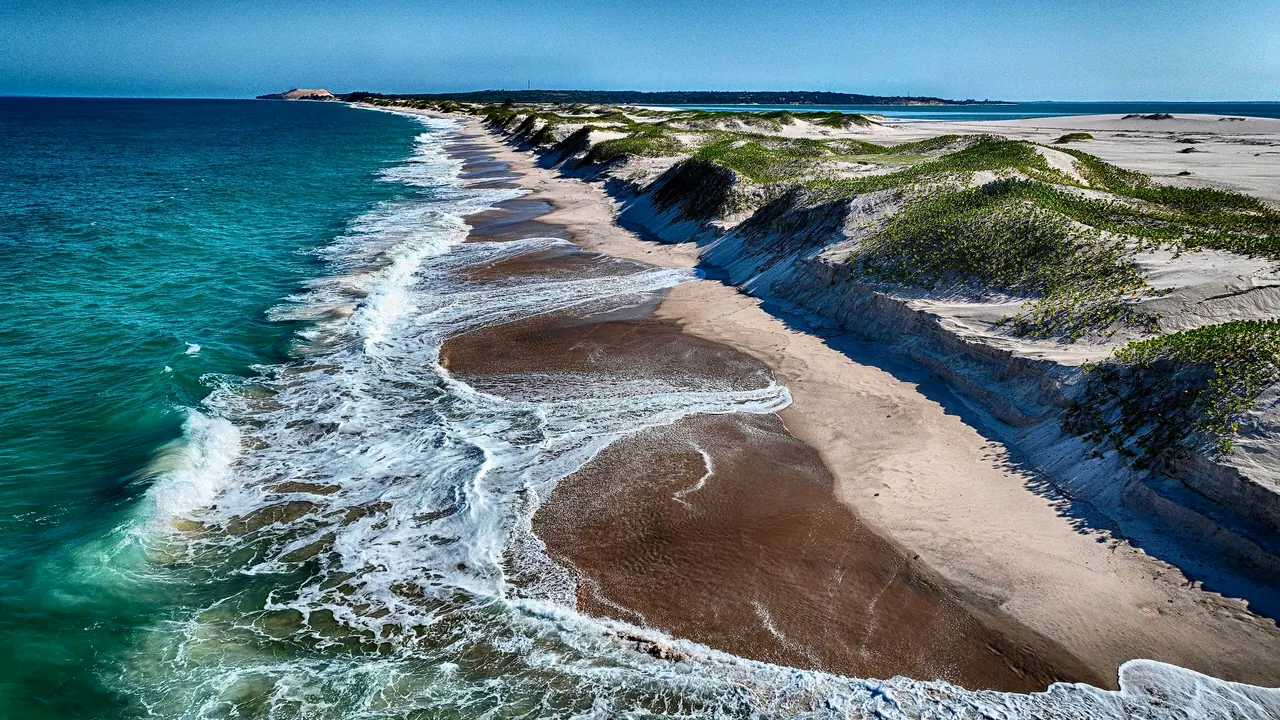
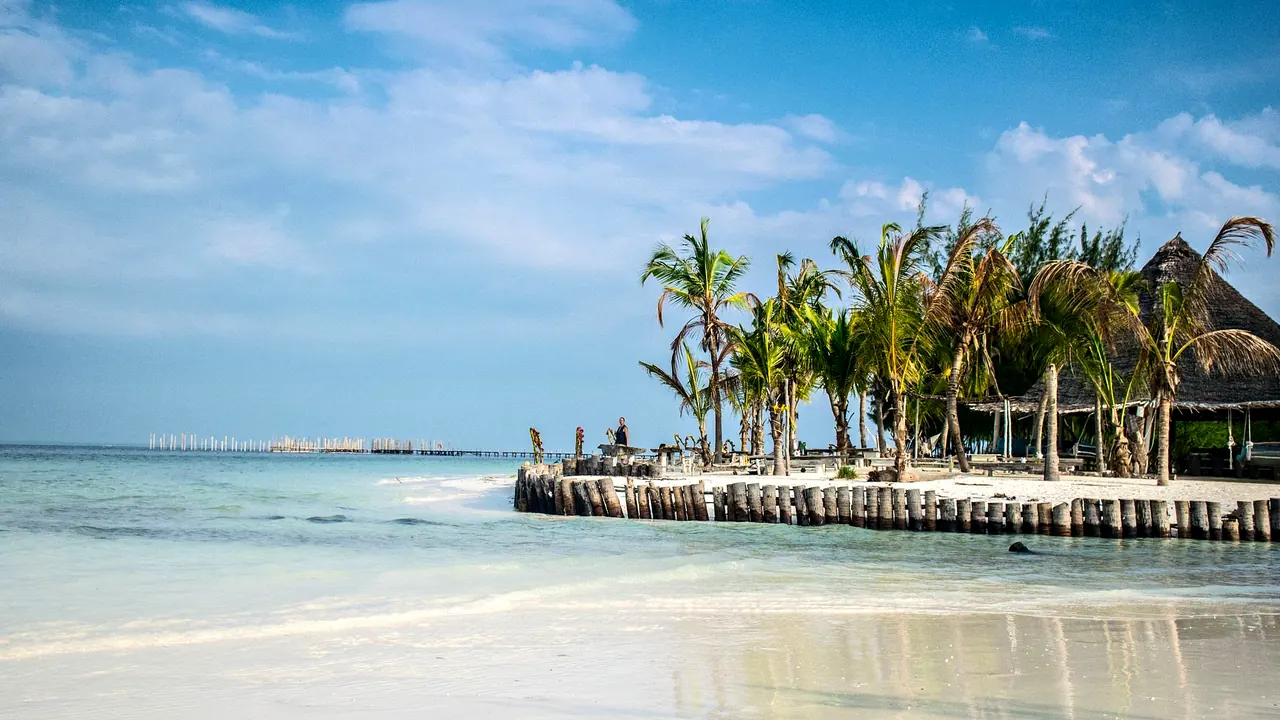
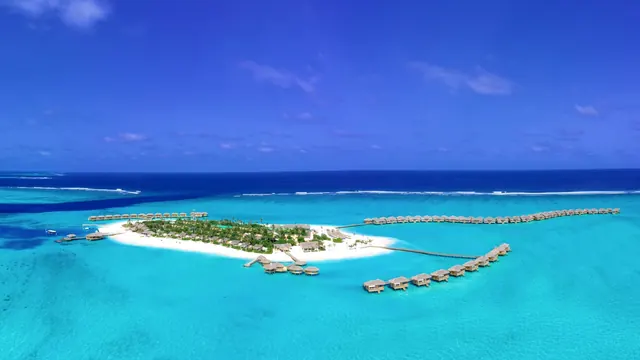
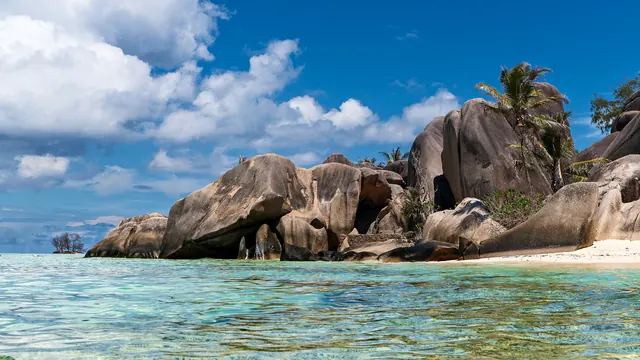
Photos: Mozambique by Tom Corser, CC BY-SA 3.0, cropped; Zanzibar by Ákos Helgert, Pexels License.
Mozambique or Zanzibar?
Our verdict in twelve categories, each scored against the same fixed benchmark cities, and the climate month by month, so you can choose for your trip.
Choose Mozambique for
- nature and the outdoors
- nightlife
Mozambique is the choice for travellers who come for the ocean's wildlife as much as the sand. Swimming with whale sharks and manta rays off Tofo, watching humpbacks pass in the southern winter, sailing a dhow across the Bazaruto channel or adding elephants in Gorongosa make up a wilder trip. It suits people who are happy to pick one stretch of a very long coast and accept slow roads, costly flights and basic services to reach it.
Choose Zanzibar for
- culture and sights
- getting around
- families
Zanzibar suits those who want a beach vacation that is easier to put together and has some history to go with it. Powder-white sand, Stone Town's coral-stone lanes an hour away and short outings to spice farms, tortoises and monkeys all sit on one small island. That makes it the better pick for families, first visits to the Indian Ocean and anyone who wants unhurried days with a spa and a sunset dhow rather than long transfers.
Scoreboard
Twelve categories on one fixed scale from 0 to 100. The shaded stretch is the gap between the two.
Your match
Pick a travel style or drag the sliders, and both match scores follow your weighting.
Wins on nature and the outdoors and nightlife with your weighting.
Wins on culture and sights and getting around with your weighting.
What matters to you?
Category by category
What the scores mean for a trip.
Beaches & swimming
Both places have superb beaches, so the choice comes down to the kind you want. Mozambique has two types. In the south, Ponta do Ouro and the Tofo and Barra peninsula have long beaches backed by dunes, with real surf and strong currents. Further north, the Bazaruto islands have white sandbanks and calm, clear shallows. The coasts are so far apart that you have to choose one of them.
Zanzibar's beaches are fine coral sand and its water is a little warmer in the southern winter. The catch is the tide. Kendwa and Nungwi in the north stay deep enough to swim at any hour, while Paje and Jambiani on the east coast drain away across seagrass at low water.
Where in Mozambique: Bazaruto Archipelago, Vilanculos, Tofo, Ponta do Ouro
Food & drink
Zanzibar eats more interestingly, thanks to its Swahili cooking spiced with clove and cardamom through centuries of Omani and Indian trade. You can taste it in the pilau, biryani, urojo and Zanzibar pizza at the Forodhani Gardens evening market in Stone Town.
Mozambique's cooking is simpler and centred on the grill: prawns, crab and line fish with peri-peri and lime, plus matapa and coconut curries. Maputo's fish market, where you choose your catch and have it cooked on the spot, is the high point, and Tofo's beach shacks the easy everyday version. Local beer is sold everywhere, whereas on Muslim Zanzibar alcohol is mostly limited to hotels and tourist places.
Where in Mozambique: Maputo, Inhambane, Tofo
Culture & sights
Zanzibar's history is close at hand. Stone Town is a UNESCO-listed Swahili trading town you explore on foot, with the sultans' Palace Museum, the Old Fort and the Anglican cathedral on the site of the last open slave market in East Africa. The ruined palaces at Maruhubi and Mtoni are short drives out of town.
Mozambique has a site of the same class in Ilha de Moçambique, with its fortress and Stone and Macuti towns, but it lies so far north that it means a separate trip. Near the southern beaches, culture comes down to Maputo's colonial and modernist avenues, its domed railway station and murals, and quiet Inhambane.
Where in Mozambique: Ilha de Moçambique, Maputo, Inhambane
Nightlife
There is little between them, but the evenings feel quite different. Maputo is a real city night out. Drinks in pavement bars lead on to clubs in Polana and the Baixa playing marrabenta, kizomba and Afro house well past midnight. On the coast, Tofo and Vilanculos liven up mainly in the southern summer and over Christmas, New Year and Easter, when South Africans drive up.
Zanzibar has almost no clubs. Its nights are bonfires and beach bars at Nungwi and Kendwa, with a well-known full-moon party, kitesurfers' bars in Paje and rooftop sundowners in Stone Town. Most places are quiet by midnight, and Ramadan quietens things further.
Where in Mozambique: Maputo, Tofo, Vilanculos
Nature & outdoors
Mozambique is the bigger draw for wildlife. Whale sharks and manta rays feed off Tofo all year, humpbacks pass the coast from about July to October, and the Bazaruto marine park shelters turtles and one of the region's last dugong populations. Inland, Gorongosa adds elephants, floodplain and the forested slopes of its mountain.
Zanzibar is a flat coral island, so its outdoors is on a smaller scale. You can see red colobus monkeys at close range in Jozani Forest, snorkel the reef at Mnemba and go out from Kizimkazi to look for dolphins. Its strongest card is kitesurfing in the steady winds over the Paje lagoon.
Where in Mozambique: Tofo, Bazaruto Archipelago, Gorongosa National Park, Ponta do Ouro
Day trips
Zanzibar is better for easy outings. From Stone Town, boats go to the giant tortoises on Changuu and out to sandbanks, while spice farm tours and the old mosque at Kizimkazi are short drives. From any beach, Stone Town itself is about an hour away.
Mozambique's attractions are too far apart for most of them to be day trips. From Maputo you can take the ferry to Catembe or a boat to Inhaca Island, and from Tofo it is a short hop to Inhambane. Beyond that, excursions mostly mean boat trips and reserves rather than towns.
Where in Mozambique: Inhaca Island, Inhambane, Catembe
Good for families
Zanzibar works much better with children. North-coast resorts have pools and calm water, Kendwa's beach is swimmable at all tides, and tortoises, monkeys and turtles are all within short outings.
Mozambique can work as a single stay somewhere gentle, such as the Bilene lagoon, the Bazaruto shallows or the sheltered side of Barra. However, the open beaches have strong currents, the road journeys are long and rough, and medical care outside Maputo is basic. Both places need malaria precautions.
Where in Mozambique: Bilene, Bazaruto Archipelago, Barra
Getting around
Size makes the difference here. Zanzibar's main roads are paved and Nungwi or Paje are about an hour from Stone Town by taxi or transfer. Once there, you can walk the old town and the beach villages.
Mozambique's coast runs for more than 2,000km along a slow, potholed highway, and Maputo to Vilanculos takes most of a day by road. Domestic flights are limited and costly, and sandy lodge tracks often need a four-wheel drive, so most visitors fly to one region and stay there.
Where in Mozambique: Maputo, Vilanculos, Tofo
Shopping & style
Neither place is for fashion, and both are mainly about crafts. Mozambique's best buys are Makonde ebony carvings from Maputo's craft markets and capulana cloth, bought by the length and tailored to order in Maputo or Inhambane.
Zanzibar's appeal is spices. Clove, vanilla and cardamom are sold by the bag in Darajani market, along with kanga cloth, Tingatinga paintings, carved chests and tanzanite. Much of it repeats from stall to stall and you are expected to haggle.
Where in Mozambique: Maputo, Inhambane
Affordability
Costs are similar, and in both places they depend on where you sleep. Mozambique can be cheap for backpackers in Tofo and Vilanculos. Maputo's business hotels, diving, domestic flights and the private island lodges on Bazaruto, some of the costliest stays in Africa, push a comfortable trip up fast.
Zanzibar has cheap guesthouses in Stone Town, food stalls at Forodhani and simple bungalows around Paje and Jambiani, but much of its accommodation is mid-range or upmarket. North-coast resorts, taxis and boat trips add up, especially at Christmas and in July and August. Because the island is small, you avoid Mozambique's costly flights between regions.
Where in Mozambique: Tofo, Vilanculos, Maputo
Live music & performing arts
Live music matters about equally in the two places, and in both it is a local sound rather than a concert season. In Maputo you hear marrabenta, jazz and Afro-fusion in bars and cultural centres, and the city has a small theatre scene.
Zanzibar's own music is taarab, sung Swahili poetry over Arabic and Indian melody. Visitors can hear it at rehearsals at Stone Town's music school, and the dry season brings East African music and film festivals. Neither has opera or an orchestra.
Where in Mozambique: Maputo, Inhambane
Wellness & relaxation
Zanzibar is the more restful choice. Resorts on the north and east coasts offer massages with coconut oil and island spices, yoga is easy to find around Paje and Jambiani, and the tides and the call to prayer set a slow pace.
In Mozambique, relaxation mostly means emptiness. The Bazaruto island lodges and a few beach lodges near Vilanculos and Tofo have spa rooms, and some offer yoga by the dunes. Otherwise, rest comes from long days without traffic or crowds.
Where in Mozambique: Bazaruto Archipelago, Vilanculos, Tofo
When should you go?
Pick your month, and for a country the place in it. The climate figures are measured averages, not a forecast.
Maputo (Mozambique) in July
Zanzibar in July
Daytime high, °C
Rainfall in the month, mm
Where the figures come from
Zanzibar's temperatures are measured 78 km from the centre, at Dar Es Salaam Airport.
Zanzibar has no rain gauge within 25 km of the centre, so its rainfall comes from a gridded climate dataset read at the destination rather than from a gauge further away.
Temperature and rainfall are climate normals, averaged over the years shown. Maputo (Mozambique): 1991-2020 (sunshine 1981-2010) normals, Maputo / Mavalane (5.8 km from centre). Zanzibar: 1991-2020 normals, Dar Es Salaam Airport (77.9 km from centre).
The figures for Mozambique are for Maputo in the far south, where the year splits into a hot, wet summer and a dry, sunny winter. From May to September rain almost stops and days are warm rather than hot, around 26°C in July, which is the most pleasant time to walk the capital. The trade-off is the sea, which cools to about 22°C from July to September. That is still fine for a swim but fresher than many expect. December to March bring the warmest water, along with sticky heat and heavy afternoon storms.
Zanzibar is hot all year and its sea never drops below 26°C, so the rain decides the season, not the temperature. April and May are the months to avoid, and April alone brings 363mm. November and December are wet as well. June to October is dry, very sunny and a little less hot, which makes it the best time for both the beaches and Stone Town. January and February make a second good window. Because those dry months line up with Maputo's winter, both places are at their most reliable in the same part of the year.
Which traveller are you?
For an outdoors trip, Mozambique is the stronger pick. Whale sharks and mantas off Tofo, humpback whales in season, the dugongs and reefs of the Bazaruto marine park and elephants in Gorongosa go well beyond Zanzibar's single reef and forest.
On a culture and arts trip, Zanzibar wins clearly. Stone Town's carved doors, the Old Fort, the Palace Museum and the slave market memorial are an easy drive from the beaches. Mozambique's best historic site, Ilha de Moçambique, needs a separate long journey north.
On a family trip with children, Zanzibar is far easier. Resort pools, Kendwa's beach where you can swim at any tide, the tortoises on Changuu and the colobus monkeys in Jozani are all close together, which spares children Mozambique's long, bumpy road transfers.
More comparisons
Each shares a side with Mozambique or Zanzibar.
Where else could you go?
Set Mozambique against any other country.