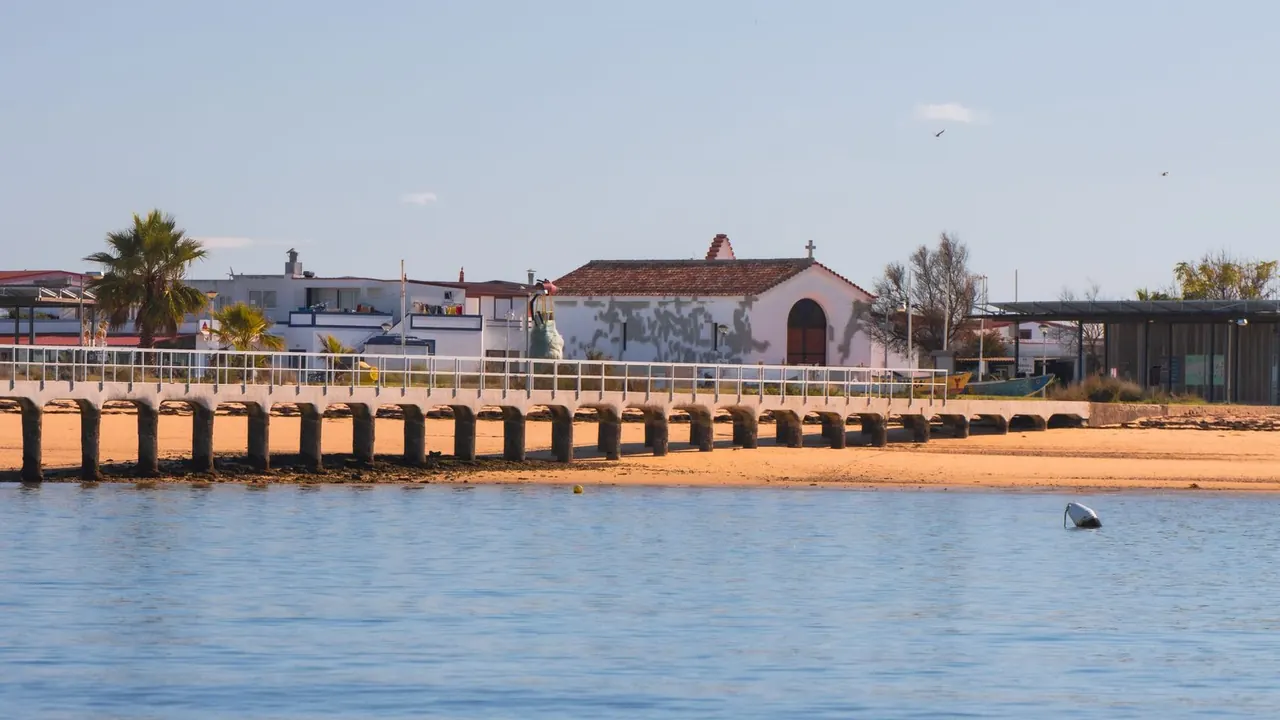
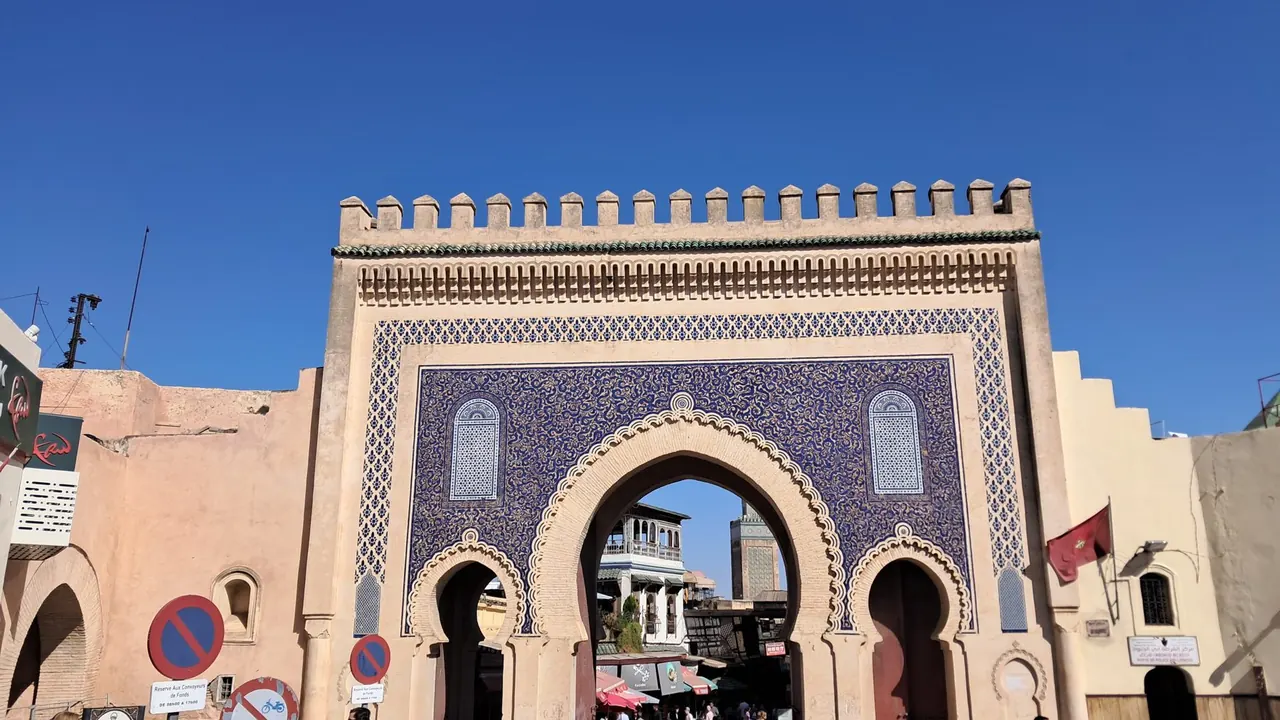
Photos: Faro by Efrem Efre, Pexels License; Fes by Ideophagous, CC BY-SA 4.0, cropped.
Faro or Fes?
Our verdict in twelve categories, each scored against the same fixed benchmark cities, and the climate month by month, so you can choose for your trip.
Choose Faro for
- beaches
- families
- nightlife
Faro suits a slower trip built around the sun. You get sandy barrier islands across the Ria Formosa, boat rides and birdwatching on the lagoon, and a small walled old town that takes about a day. The centre is flat and easy to get around, which helps with children. It is the better base if you want beach days mixed with drives along the Algarve, and evenings with a glass on a bar terrace.
Choose Fes for
- culture and sights
- wellness
- shopping
For a trip about the place itself, Fes is the stronger choice by a long way. The medieval medina of Fes el-Bali, its Marinid madrasas and its working craft lanes turn every walk into sightseeing. Good cooking, the hammams and low everyday costs add to that. It asks more of you: there is no beach, almost no nightlife, and the steep lanes are hard going with small children. It rewards curious adults most.
Scoreboard
Twelve categories on one fixed scale from 0 to 100. The shaded stretch is the gap between the two.
Your match
Pick a travel style or drag the sliders, and both match scores follow your weighting.
Too close to call, level with your weighting
Wins on beaches and families with your weighting.
Wins on culture and sights and wellness with your weighting.
What matters to you?
Category by category
What the scores mean for a trip.
Beaches & swimming
This is the clearest gap between the two. Faro's sand lies on the barrier islands of the Ria Formosa. Praia de Faro is a short bus ride over the bridge, and summer ferries run to the near-empty beaches of Ilha Deserta and Culatra. The cliff coves near Albufeira are within an hour.
Fes is inland, about three hours from both the Atlantic and the Mediterranean. Swimming there means a hotel pool or a small courtyard or rooftop plunge pool, so if you want to cool off, choose where you stay with that in mind.
Food & drink
Fes eats better. Its cooking is urban and Andalusian-influenced and known across Morocco: pastilla with almonds and cinnamon, tagines with preserved lemon or quince, and long dinners in riad dining rooms. In the medina, bissara at breakfast, sfenj doughnuts and grilled skewers make street food part of every walk.
Faro's strength is narrower: lagoon clams and oysters, grilled sardines and cataplana at simple grill houses, with the markets of Olhão close by. It does have one thing Fes lacks, which is wine with dinner as a matter of course. In Fes, alcohol is mostly limited to hotels and a few licensed places.
Culture & sights
Fes is in a different league here. Fes el-Bali is itself the sight. This car-free medieval medina holds Marinid madrasas, the Quaraouiyine seen through its doors, the tanneries, the Mellah, and the Marinid tombs above the city at sunset. That is enough for several full days.
Faro has a pleasant, compact Cidade Velha behind the Arco da Vila. There you find the Sé with its view over the lagoon, a Roman mosaic in a Renaissance convent cloister, and the bone-lined Capela dos Ossos. It fills a relaxed day, and most of the Algarve's memorable heritage lies elsewhere.
Nightlife
Neither is a city for going out, but Faro at least has an evening. The bar terraces on Rua do Prior and near the marina stay open late and fill with students during term. The big clubs of Albufeira are about forty minutes away.
In Fes the medina empties once the shops shut. The night is a rooftop dinner and mint tea, and there are only a few hotel bars in the Ville Nouvelle.
Nature & outdoors
Faro has the better outdoors on its doorstep. The Ria Formosa starts at the edge of the old town, and you can explore its channels and salt pans by kayak, paddleboard or boat. Flamingos and spoonbills feed around Ludo, and flat lanes along the lagoon make for easy cycling.
The scenery around Fes is wilder but further away. It includes the cedar forests around Azrou with their wild Barbary macaques, the lake plateaux of the Middle Atlas and the caves of Tazekka National Park, and you need a car or a driver for all of them. Both cities are best for the outdoors outside high summer.
Day trips
Both make good bases, and the difference is in the kind of outing. From Faro, short train rides reach Tavira and Olhão. Loulé, the Roman villa at Milreu and the red castle of Silves are a short drive, and Seville is a long day across the border.
From Fes, the classic day goes west: Meknes by train, then the mosaics of Volubilis and the holy town of Moulay Idriss, usually combined with a driver. To the south, the Alpine-style roofs of Ifrane and the cave houses of Bhalil make a contrast.
Good for families
Faro is much the easier choice with children. Gentle lagoon beaches, boat rides to the islands, a hands-on science centre and a quiet walled old town keep things simple. The Algarve's marine park and water parks are within a short drive.
Fes is demanding with small children. The steep lanes are shared with donkeys and handcarts, touts are persistent, the tannery quarter smells strongly and the afternoons are hot. Older children who like watching craftsmen and trying street snacks can enjoy it, especially with a pool at the riad and short outings into the medina.
Getting around
Faro is simpler to manage. The flat centre, the station, the marina and the old town are all a short walk apart, buses run to the nearby airport and to Praia de Faro, and ferries to the islands leave from below the walls. Touring the wider Algarve usually means hiring a car.
Fes is walkable mainly because the medina has no cars, and its lanes twist, climb and dead-end. Many first-time visitors take a guide for the first day, and petit taxis link the medina gates with the Ville Nouvelle and the station.
Shopping & style
Fes is the better place to shop, as long as it is crafts you are after. Leather from the tanneries, copper from the Seffarine square, blue-and-white Fassi pottery, zellige tiles and carved cedar fill whole lanes, often with the workshop behind the counter. Expect to bargain, and wander on your own rather than letting a guide steer you to shops that pay commission.
Faro's shopping is practical. Rua de Santo António has chains and shoe shops, plus cork goods, ceramics, tinned fish and salt flower from the lagoon, and Loulé's market offers more choice. Neither city has a fashion or designer scene.
Affordability
Fes makes a budget go further. Street food, mint tea, petit taxis and entry to the madrasas cost little, and modest riads in the medina offer a lot of character for the money. Spending only climbs for the grander riads, private guides and drivers.
In Faro, grilled fish lunches, coffee and buses are moderately priced. Rooms in July and August, though, are priced for the beach season, and a hire car adds up. Drinks are the exception to the pattern, because wine is cheap in Faro and costly in Fes.
Live music & performing arts
Neither is a city to visit for live performance, and what little each offers is different in kind. Faro has proper venues: the ornate Teatro Lethes for chamber music and plays, and the Teatro das Figuras for touring concerts, dance and the regional orchestra. Fado is not native to the Algarve and is heard only now and then.
Fes has no theatre or opera, but it has a deep musical heritage in Andalusian classical and Sufi devotional music. Its Festival of World Sacred Music brings concerts to palace gardens. Outside festival time, music mostly comes at riad dinners and on occasional evenings.
Wellness & relaxation
Fes is far the better place to unwind, and in a traditional way. Every quarter of the medina has a public hammam for steam, black soap and a scrub, and many riads run calmer versions. The hot springs of Moulay Yacoub are about half an hour away. In the medina itself, calm comes from a courtyard fountain or a roof terrace at dusk.
Faro has no bathing tradition of its own. Its spas belong to the resorts along the golf coast, and the spring-water spa at Caldas de Monchique is more than an hour away. What Faro offers is a slower pace: long lunches and walks along the lagoon at sunset.
When should you go?
Pick your month. The climate figures are measured averages, not a forecast.
Faro in July
Fes in July
Daytime high, °C
Rainfall in the month, mm
Where the figures come from
Fes's station stands 171 m above the city centre, so the centre is likely a little warmer than the figures say.
Fes has no rain gauge within 25 km of the centre, so its rainfall comes from a gridded climate dataset read at the city rather than from a gauge further away.
Fes's sunshine is measured 52 km from the centre, at Meknes.
Temperature and rainfall are climate normals, averaged over the years shown. Faro: 1991-2020 normals, Faro / Aeroporto (2.8 km from centre). Fes: 1999-2020 (sunshine 1991-2020, rainfall 1991-2020) normals, Fes-Sais (12.4 km from centre).
Faro is warm enough for the beach from June to September, with highs around 29°C in July and August, and the sea is at its warmest, about 22°C, in August. Warm days last well into October. Summer is almost completely dry and very sunny. Rain sets in during October and is heaviest in December, at about 102mm. Between the wet spells, the mild winters still suit walks through the old town and along the lagoon.
Fes has no beach season, and its summer is much harsher. July and August reach about 36°C, which is too hot for walking the medina in the afternoon. The best months for exploring are April, May and October. Rain returns in autumn and is heaviest in November, at around 80mm. Winter days are cool and about as warm as Faro's. Fes is drier in December, though, and gets a little more sunshine through the winter months.
Which traveller are you?
On a beach and sun trip, Faro is the only real choice. A short bus ride or a summer ferry takes you to long sandy barrier islands with calm, warm water. Fes is about three hours from any coast, so swimming there means a riad plunge pool.
For a culture and arts trip, Fes is far ahead. The UNESCO-listed medina, the carved Bou Inania and Al-Attarine madrasas and the Chouara tannery fill several days. Faro's walled old town and cathedral take one unhurried day.
On a family trip with young children, Faro is much easier. It has gentle lagoon beaches, boat trips to the islands, a flat compact centre, and water parks within a short drive. Fes means steep lanes shared with donkeys, persistent touts and fierce summer heat.
Before you go
| Measure | Faro | Fes |
|---|---|---|
| Official language | Portuguese | Arabic, Standard Moroccan Tamazight |
| Currency | Euro (EUR) | Moroccan Dirham (MAD) |
| Sockets | CF230 V, 50 Hz | CE50 Hz |
| Driving side | Right | Right |
| Time zone | UTC, UTC+1 in summer | UTC+1 |
| Emergency number | 112 | Police 19/112, ambulance 15, fire 15 |
| Elevation | 10 m | 408 m |
| Main airport | Faro - Gago Coutinho International Airport (FAO)3 km from centre91 non-stop destinations | Fes Saïss International Airport (FEZ)13 km from centre35 non-stop destinations |
| Public holidays this year | 14 days | 11 days |
By the numbers
| Measure | Faro | Fes |
|---|---|---|
| City population | 64,560 | 1,167,842 |
| People per km² | 319 | 3,650 |
| Museums within 10 km | 2 | 2 |
| UNESCO World Heritage sites within 50 km | 0 | 1 |
| Swim season, months above 21 °C | 3 months | - |
Where else could you go?
Every comparison below shares a destination with this one, so you can follow Faro or Fes somewhere new.