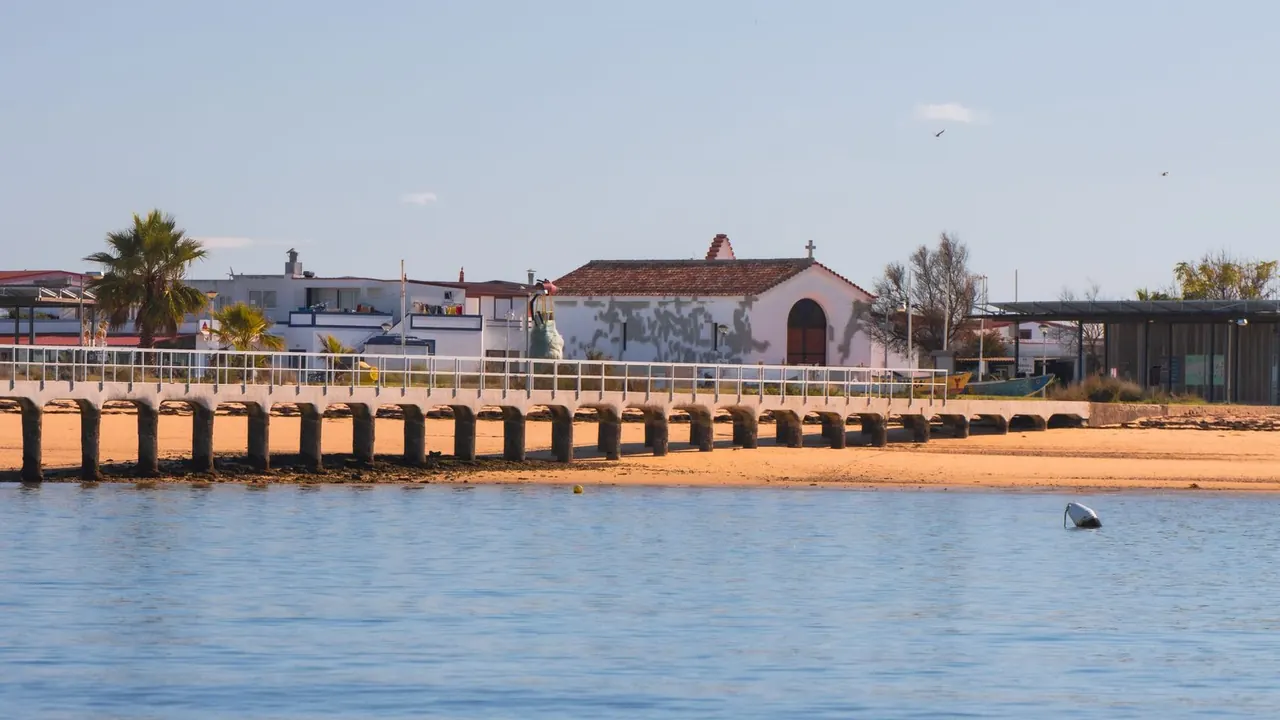
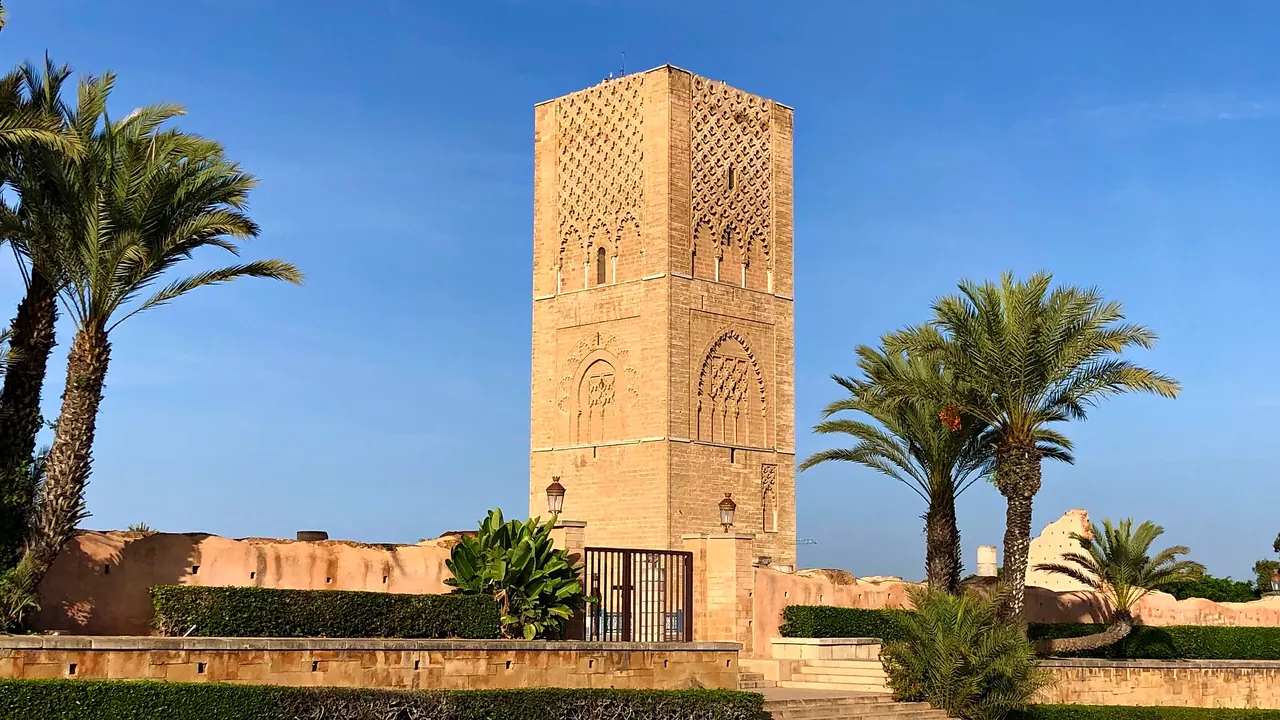
Photos: Faro by Vitor Oliveira, CC BY-SA 2.0, cropped; Rabat by Aemazy, CC BY-SA 4.0, cropped.
Faro or Rabat?
Our verdict in twelve categories, each scored against the same fixed benchmark cities, and the climate month by month, so you can choose for your trip.
Choose Faro for
- beaches
- nature and the outdoors
- families
Faro suits a trip built around sand, water and easy days. The barrier islands of the Ria Formosa give it long, calm beaches and a lagoon full of birds. The walled old town takes a day to see, and the rest of the Algarve's towns are close by. Choose it for a sunny beach week, a family stay or a slow base for boat trips and lagoon walks, and accept that the sights and the evenings are modest.
Choose Rabat for
- culture and sights
- wellness
- prices
Travellers who want history and a different culture, without the pressure of Morocco's busier medinas, will be happier in Rabat. Its kasbah, the Hassan Tower and the Chellah give it far more to see. The hammams and the unhurried pace make it restful, and daily costs are lower. The Atlantic beaches are worth an afternoon, but they are not the reason to go.
Scoreboard
Twelve categories on one fixed scale from 0 to 100. The shaded stretch is the gap between the two.
Your match
Pick a travel style or drag the sliders, and both match scores follow your weighting.
Too close to call, 2 points apart
Wins on beaches and nature and the outdoors with your weighting.
Wins on culture and sights and wellness with your weighting.
What matters to you?
Category by category
What the scores mean for a trip.
Beaches & swimming
Faro's beaches are a short trip away rather than outside the door, but they are the real thing. Long sandy barrier islands such as Ilha Deserta and Culatra are reached by ferry from the old town quay, with calm water in front and dunes behind, and Praia de Faro is a bus ride over the bridge.
Rabat's beach lies right below the kasbah walls, which is handy, but it is a local beach for surfing and football, and the swell keeps swimmers close to shore. Calmer sand lies south towards Temara and Skhirat, and beachwear on all of them is more modest than on the Algarve.
Food & drink
Rabat gives you more to discover at the table. There are tagines and Friday couscous in medina eateries, snail broth and msemen from the evening stalls, and mint tea on the terraces of the Ville Nouvelle. When you want a change, Agdal has French and Lebanese restaurants, though alcohol stays discreet and is mostly found in hotels.
Faro's cooking has a narrower range and centres on the lagoon: clams, oysters, fish sold by weight and cataplana in plain grill houses near the old town and the marina. Keen seafood eaters will find better fish restaurants a short train ride away in Olhão.
Culture & sights
On sightseeing, Rabat is far ahead. Its UNESCO-listed sights run from Roman Sala and the Marinid tombs of the Chellah to the Almohad gate of the Kasbah of the Udayas, the Hassan Tower and the Mausoleum of Mohammed V. A modern art museum and the art deco Ville Nouvelle add to them, enough for two or three full days.
Faro's Cidade Velha, which you enter through the Arco da Vila, is charming but small. The Sé with its view over the lagoon, the Roman mosaic in the convent museum and the bone chapel at the Igreja do Carmo make a relaxed single day.
Nightlife
Neither city is made for a big night out, but Faro offers more. Rua do Prior and the lanes by the marina have bar terraces and a few clubs that stay open late, and they are busier when the students are in town. Albufeira's clubs are also within reach.
Rabat's evenings belong to the cafés, the river promenade and walks through the medina, and drinking is limited to hotel bars and a few lounges in Agdal and Hassan. Anyone who wants to dance goes to Casablanca.
Nature & outdoors
Faro has the richer outdoors, because the Ria Formosa begins at the edge of the old town. You can paddle its saltmarsh channels by kayak or board, watch flamingos and spoonbills in the salt pans around Ludo, and cycle the flat lanes beside the lagoon, which is best done early in the day in summer. Inland, the Via Algarviana crosses the cork-oak hills of the Serra do Caldeirão, and the cliff path past Carvoeiro is about an hour west.
Rabat's natural side is smaller in scope: rowing on the Bou Regreg estuary, surf schools at the river mouth, easy trails in the Maamora cork forest and birdwatching at the lake reserve of Sidi Boughaba. Its shore is low cliffs and rocky points rather than lagoon, and real hiking country in the Middle Atlas or the Rif is several hours away.
Day trips
Both cities make good bases, but the trips are different in kind. From Faro they are short and regional: Tavira's Roman bridge, the market halls of Olhão, Loulé, the Milreu villa and the castle at Silves. Seville is a long day across the border, and a car helps for many of these trips.
From Rabat the railway does the work and the destinations are bigger. Casablanca and its Hassan II Mosque are an hour away, Tangier and Asilah are reached by high-speed train, and Meknes, the imperial city, is about two hours away. Salé's older medina is a short tram ride.
Good for families
Faro is the easier base with children. It has gentle sandy beaches on the lagoon side, boat trips that feel like an adventure and a small science centre. The Algarve's water parks and marine park are within forty minutes by car.
Rabat is calm and welcoming for a Moroccan city, and it has a large modern zoo and the gardens of the Jardin d'Essais and Bouknadel. Beyond those, little is aimed at children, and the city beaches need close watching.
Getting around
Both centres are flat and easy to walk, so the difference lies in what is beyond them. Rabat has a tram to Salé and Agdal, cheap and plentiful petit taxis, and a central station on the national rail network, so you never need a car.
In Faro, the centre, the airport and Praia de Faro are easy to reach on foot or by bus, and ferries run out to the islands. Beyond that, the coastal railway is slow and misses many places, so most visitors touring the Algarve hire a car.
Shopping & style
Rabat has more to browse. Rue des Consuls in the medina is lined with carpet dealers and stalls of leather, brass and embroidery. Rabat's own deep-pile carpets are a real find, and the haggling is gentler than in the bigger souks. Salé, across the river, adds pottery.
Faro's Rua de Santo António is practical, with chains, cork goods, painted ceramics and tinned fish. Its best buys are things to eat: almonds, fig sweets and salt flower from the lagoon salt pans.
Affordability
Rabat is the cheaper stay from day to day. Medina meals, café terraces, the tram and petit taxis cost little, and most sights are cheap or free. Business hotels and the restaurants of Agdal push the costs up, and alcohol is expensive.
Faro is moderately priced rather than cheap. Grilled fish lunches, coffee and buses are easy on the budget, but rooms in summer are priced for the beach season, and a hire car adds to the bill.
Live music & performing arts
Rabat has more on, as home to Morocco's national theatre and the large Grand Theatre on the Bou Regreg, although programmes are mostly in Arabic and French and run irregularly. The best time to go is during Mawazine, when open-air stages across the city fill with pop, Gnawa and African music.
Faro's calendar is smaller: chamber music and plays at the ornate Teatro Lethes, and the regional orchestra at the Teatro das Figuras. Fado is limited to occasional evenings in restaurants.
Wellness & relaxation
Rabat has a living bathing culture that Faro lacks. The neighbourhood hammams of the medina and Salé offer steam and a black-soap scrub, and hotel spas add argan oil massages for anyone who wants more comfort. The Andalusian garden in the kasbah and the evening walks by the river add to the restful feel.
In Faro, wellness means resort spas along the golf coast, or the spring-water spa at Caldas de Monchique, over an hour away. Rest there comes from long lunches and sunset walks by the lagoon.
When should you go?
Pick your month. The climate figures are measured averages, not a forecast.
Faro in July
Rabat in July
Daytime high, °C
Rainfall in the month, mm
Temperature and rainfall are climate normals, averaged over the years shown. Faro: 1991-2020 normals, Faro / Aeroporto (2.8 km from centre). Rabat: 1991-2020 normals, Rabat-Sale (7.6 km from centre).
The two cities follow the same pattern of a dry, sunny summer and a wet winter, but Faro runs hotter and brighter. From June to September Faro has reliable beach weather, with highs around 29°C in July and August and almost no rain, and warm days carry on into October. Rabat's summers are a little milder, so midsummer sightseeing is more comfortable there than in Faro's afternoon heat. By late summer its sea is even a degree warmer, although on Rabat's beaches the Atlantic swell matters more than the water temperature.
The rain comes back to both cities in October and is heaviest in late autumn and early winter, about 102mm in Faro in December and 97mm in Rabat in November. Winters are mild in both, a little warmer in Rabat at around 18°C in January, so either city is pleasant for walking in the cooler months. Spring is the best all-round season, both for Rabat's monuments and for Faro's lagoon.
Which traveller are you?
On a beach and sun trip, Faro is the clear choice. Ferries and a short bus ride take you to kilometres of calm sand on the Ria Formosa islands. Rabat's city beach is a surfing and football strand where strong swell keeps swimmers close to shore.
For a culture and arts trip, go to Rabat. Its UNESCO-listed monuments span Roman, Almohad, Marinid and French-era building and fill two or three days, and its national theatres add concerts. Faro's small walled old town is seen in one relaxed day.
On a relaxing and wellness trip, Rabat has the edge. Steam and a scrub in a bathhouse are part of ordinary life there, and it is Morocco's calmest major city. Faro has no bathing tradition, so unwinding there means lagoon walks and resort spas outside town.
Before you go
| Measure | Faro | Rabat |
|---|---|---|
| Official language | Portuguese | Arabic, Standard Moroccan Tamazight |
| Currency | Euro (EUR) | Moroccan Dirham (MAD) |
| Sockets | CF230 V, 50 Hz | CE50 Hz |
| Driving side | Right | Right |
| Time zone | UTC, UTC+1 in summer | UTC+1 |
| Emergency number | 112 | Police 19/112, ambulance 15, fire 15 |
| Elevation | 10 m | 87 m |
| Main airport | Faro - Gago Coutinho International Airport (FAO)3 km from centre91 non-stop destinations | Rabat-Salé Airport (RBA)9 km from centre45 non-stop destinations |
| Public holidays this year | 14 days | 11 days |
By the numbers
| Measure | Faro | Rabat |
|---|---|---|
| City population | 64,560 | 515,619 |
| People per km² | 319 | 4,370 |
| Museums within 10 km | 2 | 7 |
| UNESCO World Heritage sites within 50 km | 0 | 1 |
| Swim season, months above 21 °C | 3 months | 4 months |
Where else could you go?
Every comparison below shares a destination with this one, so you can follow Faro or Rabat somewhere new.