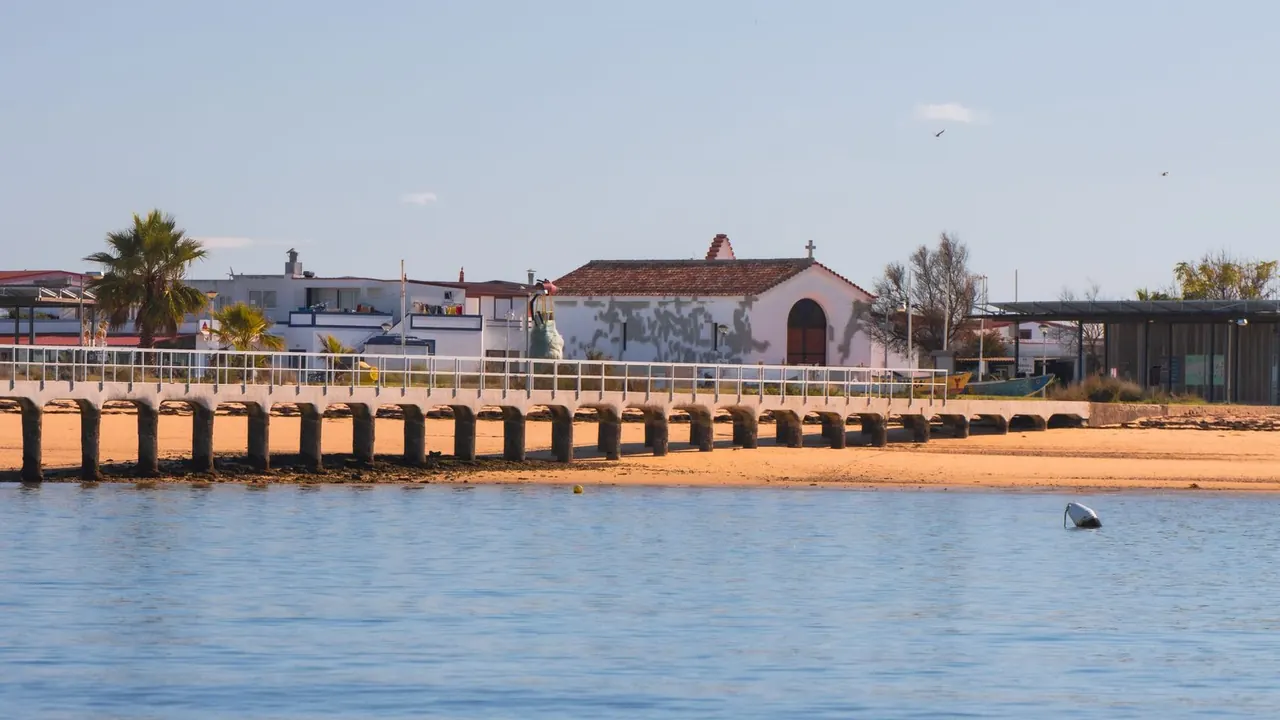
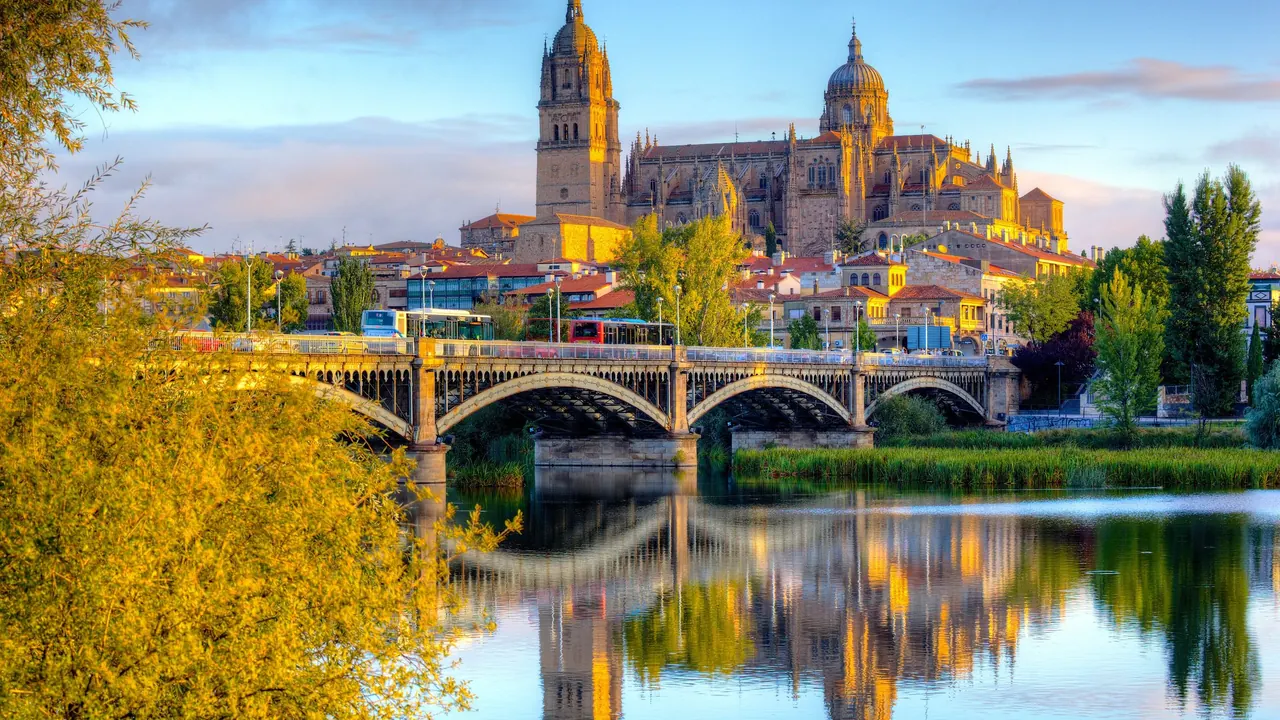
Photos: Faro by Vitor Oliveira, CC BY-SA 2.0, cropped; Salamanca by Jiuguang Wang, CC BY-SA 3.0 ES, cropped.
Faro or Salamanca?
Our verdict in twelve categories, each scored against the same fixed benchmark cities, and the climate month by month, so you can choose for your trip.
Choose Faro for
- beaches
- families
- nature and the outdoors
Faro is the choice for a sun-and-sea trip with an easy pace. The sandy barrier islands of the Ria Formosa, the lagoon's birdlife and boat trips, and a calm, compact base that works well with children all point to a relaxed coastal stay. Food and evenings out are simple, and the town's own sights fill a day rather than a week.
Choose Salamanca for
- culture and sights
- nightlife
- getting around
Salamanca suits travellers who want a historic city to walk, look at and stay up late in. Its golden sandstone old town, the university and the two cathedrals make a far richer sightseeing trip, and the student crowd keeps the tapas bars and late bars full. There is no sea at all, so anyone hoping to swim should look south instead.
Scoreboard
Twelve categories on one fixed scale from 0 to 100. The shaded stretch is the gap between the two.
Your match
Pick a travel style or drag the sliders, and both match scores follow your weighting.
Wins on beaches and families with your weighting.
Wins on culture and sights and nightlife with your weighting.
What matters to you?
Category by category
What the scores mean for a trip.
Beaches & swimming
This is the widest gap between the two. Faro's beaches lie on the barrier islands of the Ria Formosa: Praia de Faro by bus over the bridge, and Ilha Deserta and Culatra by ferry, with kilometres of sand backed by dunes and sea calmer than Portugal's Atlantic west.
Salamanca is on the Castilian plain, far from any coast. In summer the choice is municipal pools or a river beach on the Tormes, fine for cooling off but never a reason to come.
Food & drink
Salamanca has the better table, built around the bar counter: ibérico ham from nearby Guijuelo, hornazo, roast suckling pig and an evening drifting between tapas bars off the Plaza Mayor and Calle Van Dyck, with Toro and Ribera del Duero wines to match. Seafood is the gap it cannot fill.
Faro is the opposite, strong precisely where Salamanca is weak. Lagoon clams and oysters, grilled sardines and cataplana are honest and good, but the choice is narrow, and the better fish restaurants are a short train ride away in Olhão.
Culture & sights
Salamanca is in another league for sightseeing. The golden stone old town, the Plateresque university façade with its hidden frog, the Old and New Cathedrals and the Casa de las Conchas reward two or three full days, and the floodlit centre is a sight in itself after dark.
Faro offers a pleasant day rather than a programme. The walled Cidade Velha, the cathedral tower over the lagoon, the Roman mosaic in the convent museum and the bone chapel of the Igreja do Carmo are worth seeing, but they are soon done.
Nightlife
Salamanca's student nightlife makes it the livelier choice by far. From Thursday to Saturday the bars around Calle Bordadores and Gran Vía fill with students, and dance bars run past 3am, cheap and sociable, though aimed at a young crowd and quieter in high summer.
Faro's evenings are gentle: terraces on Rua do Prior and by the marina, a few small clubs, and most people calling it a night after dinner. Those wanting big clubs head to Albufeira.
Nature & outdoors
Faro has the better natural setting on the doorstep. The Ria Formosa begins at the edge of the old town, with kayaking, paddleboarding and flamingos and spoonbills in the salt pans, and the cork-oak hills of the Serra do Caldeirão lie inland.
Salamanca's countryside is grander but further off. The plain around the city is open and flat, and the forested Sierra de Francia, the peaks of Béjar and the granite canyon of the Arribes del Duero are all about an hour away by car.
Day trips
Both make good bases, with Salamanca a little richer in historic towns. Ávila's walls, Zamora's Romanesque churches, the ramparts of Ciudad Rodrigo and the half-timbered villages of La Alberca and Mogarraz give a run of distinctive outings, several of them needing a car.
From Faro the outings are coastal and Moorish in flavour: Tavira and Olhão by train, Loulé's market and castle, Silves' red castle, and Seville as a long day across the border.
Good for families
Faro is the easier family base. Shallow, sandy lagoon beaches, boat trips to the islands and a hands-on science centre suit children well, and the marine park and water parks near Albufeira are within reach, though awkward without a car.
Salamanca is safe and pleasantly walkable, and children enjoy hunting the carved frog and astronaut, but nothing there is built for them, and the summer afternoons and winters are harsh.
Getting around
Salamanca is simpler to get around. Almost every sight lies in a pedestrian old town you can cross on foot in about twenty minutes, and trains link it to Madrid and Valladolid. Faro's flat centre is just as walkable, and the airport and Praia de Faro are a short bus ride away.
The difference shows beyond town. Faro's slow coastal railway misses much of the Algarve, so most visitors hire a car for part of their stay, whereas from Salamanca a car is needed mainly for the mountains and the Arribes.
Shopping & style
Neither is a shopping destination, and both have a pedestrian high street of national chains. The difference is what you take home: from Faro, cork goods, hand-painted ceramics, tinned fish and lagoon salt flower; from Salamanca, ibérico ham and cheese from the Mercado Central and the silver filigree of charro jewellery.
Affordability
The two are similarly kind to the wallet, but the costs fall in different places. In Faro everyday meals and buses are cheap while rooms climb sharply in July and August, and a hire car adds up. In Salamanca student prices keep tapas low, often with a free tapa alongside a drink, while festival weekends, Easter and the admission charges at cathedrals and towers are what push the bill up.
Live music & performing arts
Neither will satisfy a dedicated concertgoer, but Salamanca has more going on most nights. The Teatro Liceo stages flamenco, dance and theatre, the university holds concerts in its historic halls, and caped student tunas sing under the Plaza Mayor arcades.
Faro's ornate Teatro Lethes and the Teatro das Figuras, home to visits from the regional orchestra, offer good evenings, yet the calendar is sparse and fado appears only occasionally.
Wellness & relaxation
Salamanca has the slight edge for a restful trip. Small Arab-style bath houses sit in the city, the mineral-spring balneario at Ledesma is about half an hour away, and the cloisters of San Esteban and Las Dueñas offer quiet in the afternoon siesta.
Faro relies on resort spas along the golf coast, with Caldas de Monchique the nearest true spa town over an hour away. Its calm comes from lagoon walks at sunset and slow winter months.
When should you go?
Pick your month. The climate figures are measured averages, not a forecast.
Faro in July
Salamanca in July
Daytime high, °C
Rainfall in the month, mm
Temperature and rainfall are climate normals, averaged over the years shown. Faro: 1991-2020 normals, Faro / Aeroporto (2.8 km from centre). Salamanca: 1991-2020 normals, Salamanca / Matacan (13.9 km from centre).
Faro has the milder, steadier climate. From autumn through spring it is clearly the warmer of the two, with winter days still reaching about 17°C, though November and December are the wet months, with December bringing around 102mm. June to August is hot, sunny and close to rainless, and September stays mostly dry. The sea is warm enough for swimming from June into October and is at its best around 22°C in August. Spring and autumn are the comfortable months for walking the old town and exploring the lagoon.
Salamanca has a sharper inland climate. It is colder in winter and, at the height of summer, a touch hotter than Faro. January highs are only about 9°C, while July afternoons climb to around 31°C, which makes sightseeing on foot hard work in the middle of the day. June and September are its best months, warm and mostly dry. May is just as pleasant for walking but brings more showers, and October, though still mild, is its wettest month. From late spring to early autumn both cities get plenty of sunshine.
Which traveller are you?
On a beach and sun trip, Faro is the obvious pick. Ferries and buses take you to long sandy islands with calm, warm water, while Salamanca sits far inland with nothing more than pools and river beaches for a hot afternoon.
For a culture and arts trip, Salamanca wins clearly. Its UNESCO-listed old town, baroque Plaza Mayor, ancient university and twin cathedrals sit within a short walk, and towns like Ávila and Zamora extend the trip. Faro's walled Cidade Velha fills only a relaxed day.
On a family trip with children, Faro works better. Gentle lagoon beaches, island boat rides and a waterfront science centre keep young ones busy, with water parks within reach. Salamanca is safe and pleasant, but its sights are churches and colleges.
Before you go
| Measure | Faro | Salamanca |
|---|---|---|
| Official language | Portuguese | Spanish |
| Currency | Euro (EUR) | Euro (EUR) |
| Sockets | CF230 V, 50 Hz | CF230 V, 50 Hz |
| Driving side | Right | Right |
| Time zone | UTC, UTC+1 in summer | UTC+1, UTC+2 in summer |
| Emergency number | 112 | 112 |
| Elevation | 10 m | 798 m |
| Main airport | Faro - Gago Coutinho International Airport (FAO)3 km from centre91 non-stop destinations | Adolfo Suárez Madrid–Barajas Airport (MAD)184 km from centre239 non-stop destinations |
| Public holidays this year | 14 days | 12 days |
By the numbers
| Measure | Faro | Salamanca |
|---|---|---|
| City population | 64,560 | 146,110 |
| People per km² | 319 | 3,690 |
| Museums within 10 km | 2 | 13 |
| UNESCO World Heritage sites within 50 km | 0 | 1 |
| Swim season, months above 21 °C | 3 months | - |
Where else could you go?
Every comparison below shares a destination with this one, so you can follow Faro or Salamanca somewhere new.