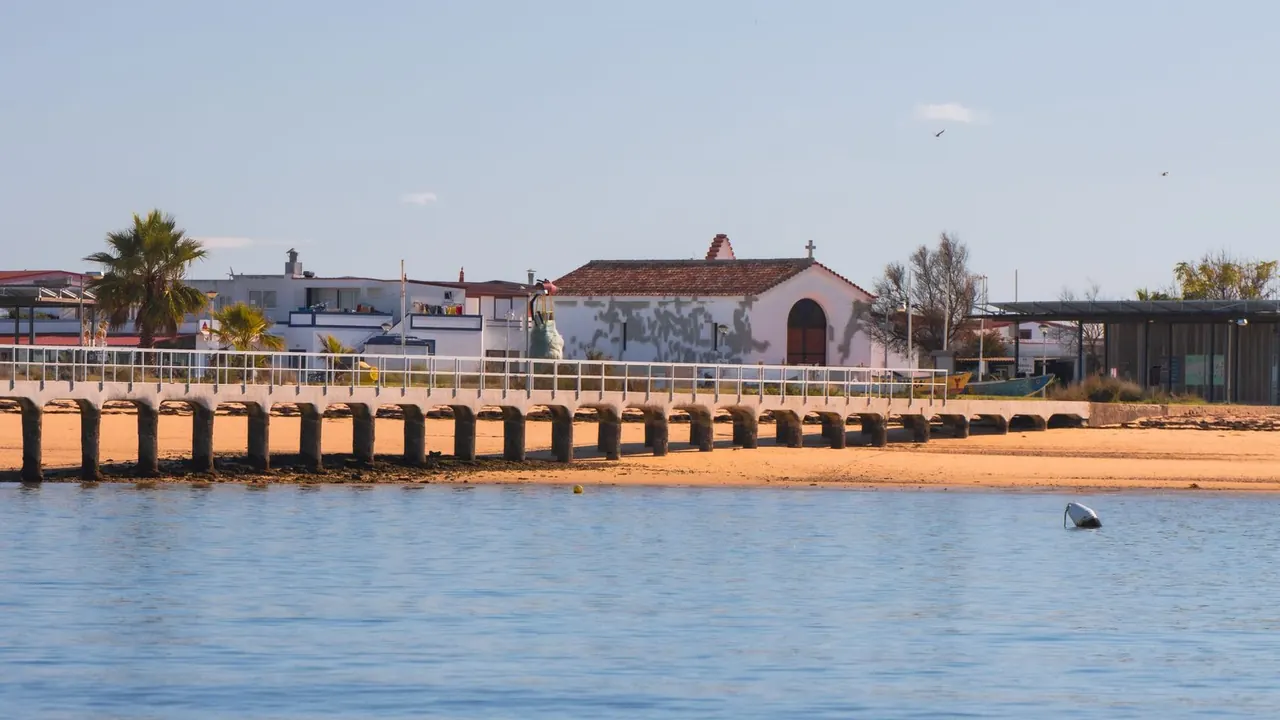
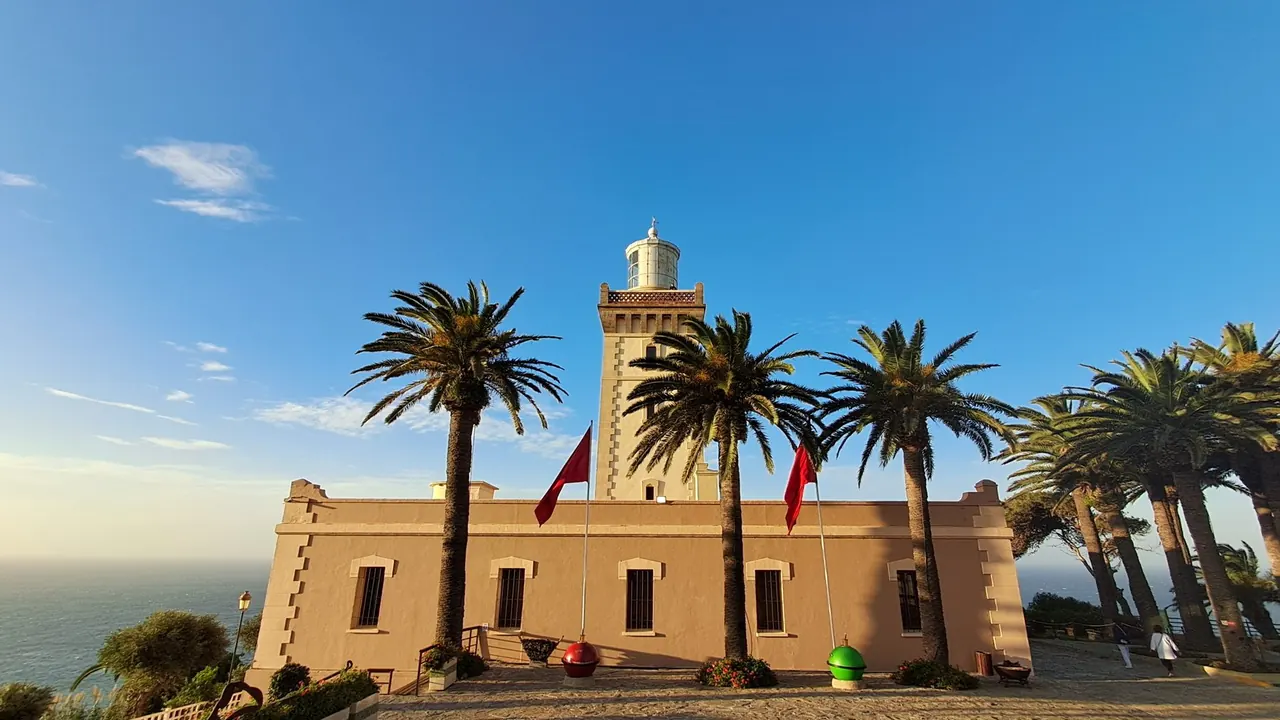
Photos: Faro by Efrem Efre, Pexels License; Tangier by Ideophagous, CC BY-SA 4.0, cropped.
Faro or Tangier?
Our verdict in twelve categories, each scored against the same fixed benchmark cities, and the climate month by month, so you can choose for your trip.
Choose Faro for
- families
- beaches
- getting around
Faro is the easier and gentler choice, best for a sun-and-sand trip with a soft base to come back to. The barrier-island beaches of the Ria Formosa, the lagoon right at the edge of town and a small, flat centre make it work well for families, birdwatchers and anyone who wants calm water and short ferry rides more than a busy programme of sights.
Choose Tangier for
- culture and sights
- wellness
- prices
Choose Tangier if the city itself is the point. Its medina, kasbah and history as a meeting point of Europe and Africa give it far more to explore than Faro's small walled quarter. It is also cheaper day to day, has a real hammam culture, and makes a better base for trips out, to Asilah, Tetouan, Chefchaouen, Rabat or across the Strait to Spain. It suits curious adults happy to haggle and walk steep lanes rather than children who want a beach on tap.
Scoreboard
Twelve categories on one fixed scale from 0 to 100. The shaded stretch is the gap between the two.
Your match
Pick a travel style or drag the sliders, and both match scores follow your weighting.
Too close to call, level with your weighting
Wins on families and beaches with your weighting.
Wins on culture and sights and wellness with your weighting.
What matters to you?
Category by category
What the scores mean for a trip.
Beaches & swimming
Faro is the clear winner for a beach trip. Its sand lies on the barrier islands of the Ria Formosa: Praia de Faro is a short bus ride over the bridge, and summer ferries reach Ilha Deserta and Culatra, where the beach runs for kilometres backed only by dunes and the water is calm and sheltered.
Tangier's curved city beach is better to look at than to swim from, and the good swimming is out west at Achakar and Cap Spartel, wide Atlantic beaches with surf and slightly cooler water. Beach life there is a local summer scene with more modest dress, and the beach is a side trip from the city rather than the reason to come.
Food & drink
Both kitchens lean on the sea and neither has much fine dining, but Tangier gives you more to explore. Its days run from bissara soup at breakfast to harira, tagines and Friday couscous, with msemen and grill counters around the Grand Socco, and long hours over mint tea on terraces facing the Strait.
Faro's strength is the lagoon itself: clams, oysters and cockles, grilled fish by weight and cataplana in simple grill houses, plus almond and fig sweets. The best seafood is a train ride away in Olhão. A glass of wine with dinner is easy in Faro and limited to certain restaurants and hotels in Tangier.
Culture & sights
Tangier has much more to see. The kasbah's old palace museum looks across to Spain, the medina climbs from the port between the Petit and Grand Socco, and the American Legation tells the story of the city's international era, with the Paul Bowles and Beat-writer connections adding to it.
Faro's heritage fits inside its medieval walls: the Arco da Vila, the cathedral with its lagoon view, a Roman mosaic in the convent museum and the bone-lined chapel of the Igreja do Carmo. It is charming and quiet, but it fills a day where Tangier fills several.
Nightlife
Neither is a place for a big night, but the evenings feel different. Faro has an ordinary bar scene on Rua do Prior and near the marina, with a few late clubs that liven up at weekends and in university term. The loud Algarve strip is forty minutes away in Albufeira.
Tangier's nights belong to café terraces and the seafront promenade, with drinking kept to a discreet circle of old international-era bars, hotel lounges and summer beach clubs along the bay. The medina goes quiet after dark.
Nature & outdoors
Faro has the edge because its best landscape starts at the old town walls. The saltmarsh, channels and islands of the Ria Formosa can be explored by kayak or paddleboard, flamingos and spoonbills feed in the salt pans, and the flat lagoon lanes suit easy cycling. The cork-oak hills of the Serra do Caldeirão add quiet walking inland.
Tangier's outdoors centres on the headland: cliff paths through pine at Cap Spartel, the wooded Perdicaris park above the Strait, and storks and raptors crossing on migration. Proper mountain hiking in the Rif means an overnight stay away from the city.
Day trips
Tangier opens up more variety. Asilah's ramparts and Tetouan's UNESCO-listed medina are each about an hour away, Chefchaouen makes a long day in the mountains, the high-speed train reaches Rabat in well under two hours, and a ferry puts you in Tarifa, Spain, in about an hour.
From Faro the outings are pleasant but more alike: Tavira's Roman bridge, Olhão's market halls, Loulé's castle, Silves and the Roman villa at Milreu, with Lagos and Sagres further west. Seville is possible but takes the whole day.
Good for families
Faro is far easier with children. The lagoon beaches are sandy and shallow, the ferry to the islands is a treat in itself, there is a small hands-on science centre on the waterfront, and the old town is quiet enough to wander. The Algarve's marine park and water parks are within forty minutes by car.
Tangier is welcoming to children but offers little built for them: no zoo, aquarium or theme park, a steep medina that defeats pushchairs and touts that tire parents quickly. The park, the caves and a day ferry to Spain are the main outings.
Getting around
Faro is simpler to handle. Its centre is small and flat, the airport is close, and buses and ferries reach the beaches and islands. Touring the wider Algarve is where it gets harder, as the coastal railway is slow and many visitors hire a car.
In Tangier the medina's stairways and tangled lanes take getting used to, and the city buses are little use, so you rely on cheap blue petit taxis and a driver for Cap Spartel and the Atlantic beaches. Its long-distance links are the stronger ones, though, with fast trains south and a ferry port right in the centre.
Shopping & style
Tangier has more to buy, mostly in the medina lanes around the Petit Socco: leather slippers, rugs, lanterns, ceramics and red-and-white Rif cloth, with bargaining expected and a hard sell to match. The Saturday markets by the Grand Socco bring farm women with produce and woven hats.
Faro's shopping is practical: chains on Rua de Santo António, cork goods, painted ceramics, tinned fish and salt flower from the lagoon. It is calmer, with no haggling, but for a wider choice you go to Loulé's market.
Affordability
Tangier goes noticeably further on the same budget. Street food, tagines, café tea, petit taxis and medina riads all come cheaply, and only alcohol and the sea-view hotels cost anything like European prices.
Faro is moderate: fish lunches, house wine and buses are fair, but summer rooms are priced for the beach season, and a hire car for touring adds to the bill. Outside July and August the gap narrows.
Live music & performing arts
Both have thin stages, but the kind of evening differs. Faro has proper venues, the ornate nineteenth-century Teatro Lethes for chamber music and plays, and the Teatro das Figuras, where the regional orchestra, dance and occasional opera appear. Fado here is an occasional guest, not a tradition.
Tangier has no regular theatre or classical programme. Its music comes in bursts: Andalusian classical, gnawa and Jilala at festivals, a long-running annual jazz festival, and the historic art-house cinema on the Grand Socco.
Wellness & relaxation
Tangier has the real bathing culture. Neighbourhood hammams in the medina offer the full ritual of steam, black soap and a kessa scrub, simple and local, while riads and larger hotels run gentler hammam spas. Rooftop terraces over the Strait do the rest.
Faro's relaxation is about pace rather than treatment: long lunches, sunset walks along the lagoon and quiet winters. Its spas sit in resort hotels on the golf coast, and the old spring-water baths at Caldas de Monchique are well over an hour away.
When should you go?
Pick your month. The climate figures are measured averages, not a forecast.
Faro in July
Tangier in July
Daytime high, °C
Rainfall in the month, mm
Temperature and rainfall are climate normals, averaged over the years shown. Faro: 1991-2020 normals, Faro / Aeroporto (2.8 km from centre). Tangier: 1991-2020 normals, Tanger Aerodrome (9.5 km from centre).
The two share the same summer: almost no rain from June to August, afternoons around 29°C and a sea that warms to about 22°C by August, so swimming is good from June into October in both. Faro gets a little more sunshine through the year, and its midsummer heat pushes sightseeing into the mornings. Tangier holds its warmth slightly better into September and October, which suits the medina and the cliffs at Cap Spartel.
The real difference is the wet season. Faro's rain is concentrated around midwinter, and its spring is drier and brighter. Both turn rainy from October, but Tangier stays wetter from autumn right through spring, with 110mm or more in both November and December. Winter days of 16-18°C keep either city pleasant for walking, but for exploring on foot in spring, Faro is the safer bet, and Tangier is better left until May.
Which traveller are you?
On a family trip with young children, Faro is the better pick. Sandy, gentle lagoon beaches, ferry rides to the islands and a quiet, compact old town suit small legs, while Tangier's steep medina stairs and persistent touts make outings with a pushchair hard work.
For a culture and arts trip, Tangier offers much more. The kasbah museum, the American Legation, the medina and the Art Deco Ville Nouvelle fill two or three days, whereas Faro's walled Cidade Velha and cathedral are done in a relaxed day.
On a trip on a tight budget, Tangier stretches money further. Tagines, street snacks, mint tea, petit taxis and medina guesthouses all cost little. Faro is moderate rather than cheap, and its rooms climb steeply in July and August. In Tangier, only alcohol is costly.
Before you go
| Measure | Faro | Tangier |
|---|---|---|
| Official language | Portuguese | Arabic, Standard Moroccan Tamazight |
| Currency | Euro (EUR) | Moroccan Dirham (MAD) |
| Sockets | CF230 V, 50 Hz | CE50 Hz |
| Driving side | Right | Right |
| Time zone | UTC, UTC+1 in summer | UTC+1 |
| Emergency number | 112 | Police 19/112, ambulance 15, fire 15 |
| Elevation | 10 m | 56 m |
| Main airport | Faro - Gago Coutinho International Airport (FAO)3 km from centre91 non-stop destinations | Tangier Ibn Battuta Airport (TNG)11 km from centre50 non-stop destinations |
| Public holidays this year | 14 days | 11 days |
By the numbers
| Measure | Faro | Tangier |
|---|---|---|
| City population | 64,560 | 1,275,428 |
| People per km² | 319 | 6,393 |
| Museums within 10 km | 2 | 6 |
| UNESCO World Heritage sites within 50 km | 0 | 1 |
| Swim season, months above 21 °C | 3 months | 3 months |
Where else could you go?
Every comparison below shares a destination with this one, so you can follow Faro or Tangier somewhere new.