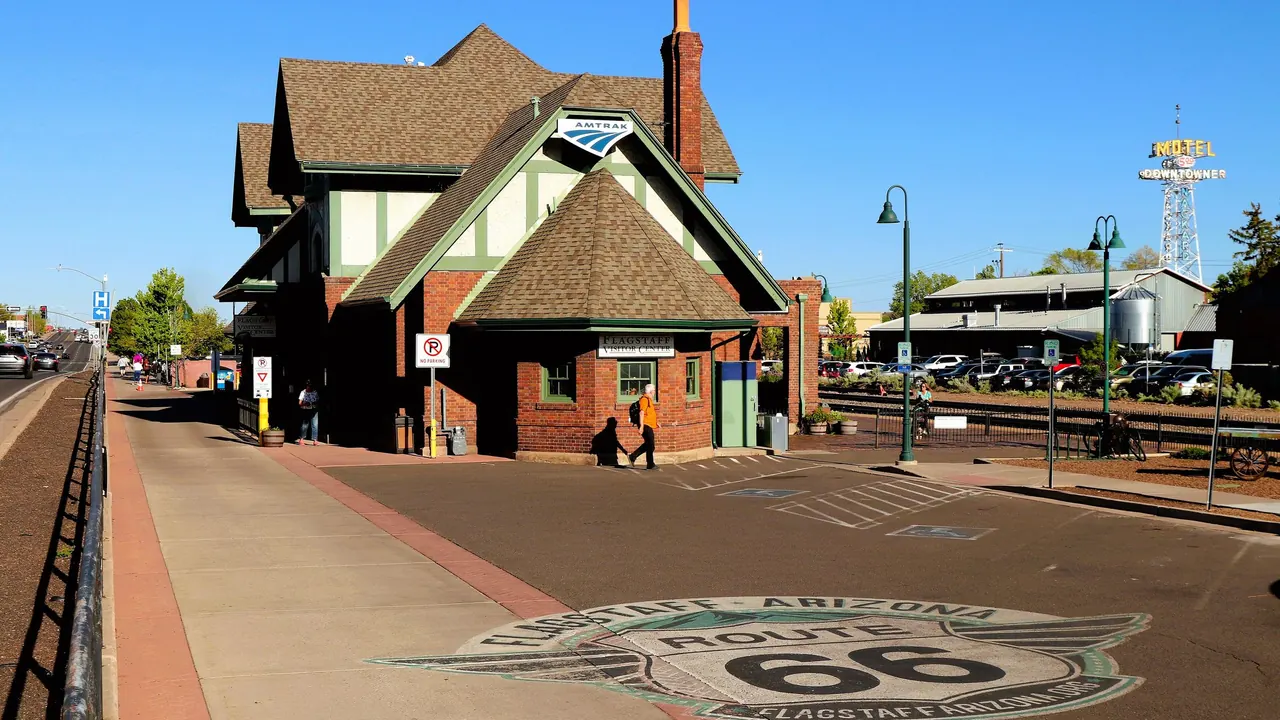
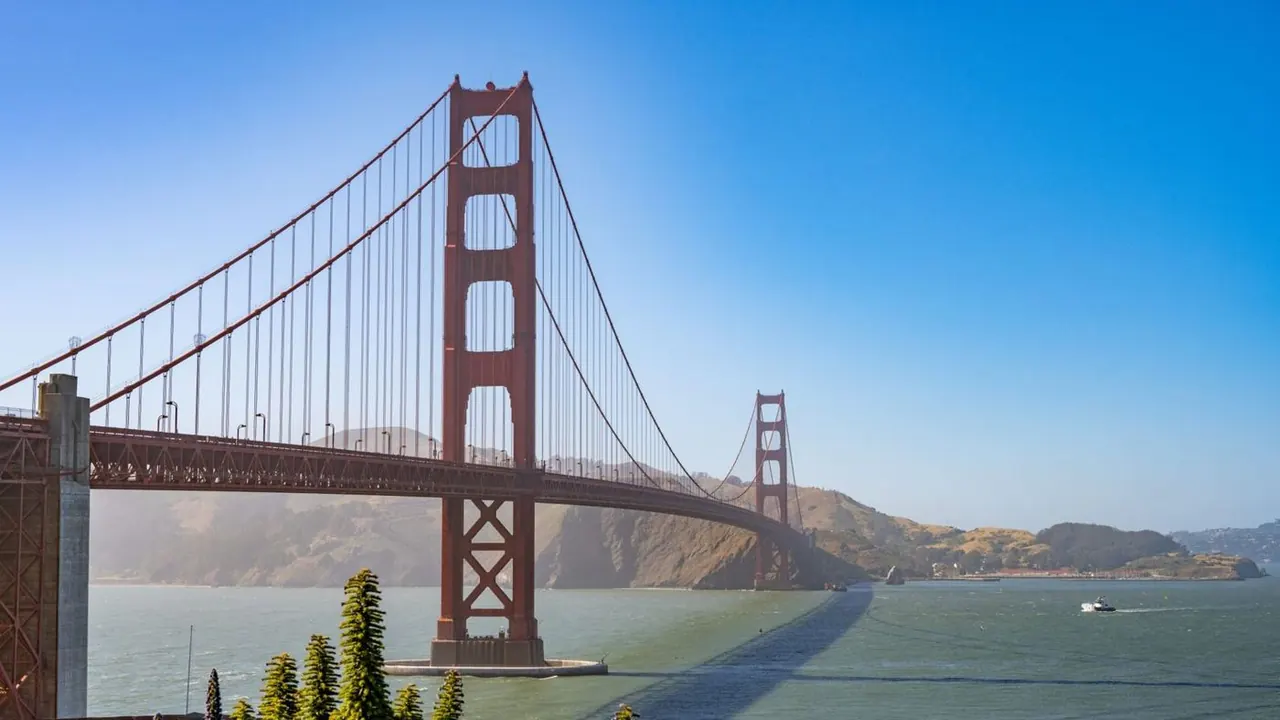
Photos: Flagstaff by Thank You (25 Millions) views, CC BY 2.0, cropped; San Francisco by Elijah Cobb, Pexels License.
Flagstaff or San Francisco?
Our verdict in twelve categories, each scored against the same fixed benchmark cities, and the climate month by month, so you can choose for your trip.
Choose Flagstaff for
- prices
- nature and the outdoors
Flagstaff is for travellers whose days happen outdoors. It puts you at the foot of a volcanic mountain range, inside a huge pine forest and within a drive of the Grand Canyon, Sedona's red rock and a string of ancient pueblo ruins. Evenings are simple: a brewery patio and a sky full of stars. It costs noticeably less than San Francisco, but you will need a car, and the town itself offers little for anyone who wants restaurants, museums or a night out.
Choose San Francisco for
- food and drink
- live music and the arts
- getting around
San Francisco suits people who want the city to be the point of the trip. You get serious food from taquerias to tasting menus, landmark sights and strong museums, opera, ballet and jazz, and neighbourhoods you can reach without a car. There is still good coastal hiking across the Golden Gate. The cost is the catch: it is one of the most expensive places in the country to stay and eat, and the fog keeps beach days cool.
Scoreboard
Twelve categories on one fixed scale from 0 to 100. The shaded stretch is the gap between the two.
Your match
Pick a travel style or drag the sliders, and both match scores follow your weighting.
Wins on prices and nature and the outdoors with your weighting.
Wins on food and drink and live music and the arts with your weighting.
What matters to you?
Category by category
What the scores mean for a trip.
Beaches & swimming
Neither city is a place for a beach vacation, but San Francisco at least has a coastline worth visiting. Ocean Beach and Baker Beach, below the Golden Gate Bridge, are good for long walks, bonfires and sunsets, although the cold Pacific and rip currents keep almost everyone out of the water except wetsuited swimmers at Aquatic Park.
Flagstaff is a long way from any sea. The closest it gets is the cold creek pools at Slide Rock in Oak Creek Canyon, which are fun for a summer splash but crowded at weekends.
Food & drink
This is one of the widest gaps between the two cities. Flagstaff eats like a small university town, with diners, Mexican and New Mexican cooking, barbecue and some Navajo frybread. Its real strength is the craft breweries around downtown and the Southside, which are good for a tired hiker but not a reason to travel.
San Francisco is a city people visit for its food. Northern California produce and bay seafood feed sourdough, cioppino and Mission burritos, Chinatown and the Sunset offer Cantonese cooking in depth, North Beach has its Italian bakeries, and the fine-dining scene is among the best in the country. The Ferry Building market alone is a better morning out than most of what Flagstaff offers.
Culture & sights
Flagstaff's sights are few, but you won't find anything like them in San Francisco. The Lowell Observatory on Mars Hill, where Pluto was discovered in 1930, is the town's signature attraction. The Museum of Northern Arizona holds a serious collection of Hopi, Navajo and Zuni art. Add the Riordan Mansion and the brick railroad-era downtown on Route 66, and a day or two covers the town.
San Francisco needs three or four days just for the essentials, and its landmarks are recognised the world over: the Golden Gate Bridge, Alcatraz and the cable cars climbing Nob Hill. Flagstaff has one regional museum, while San Francisco has SFMOMA, the de Young, the Legion of Honor and the Asian Art Museum. Chinatown, the Mission's mural alleys and the Castro then give you whole neighbourhoods to explore on foot.
Nightlife
San Francisco offers a proper night out spread across several districts, from the mezcal and cocktail bars of the Mission and the old saloons of North Beach to the Castro's gay bars and the SoMa clubs. Last orders at 2am set the limit.
Flagstaff's evenings are a short walk between brewery taprooms and Route 66 saloons, livened up by students during term. There are almost no clubs, and most visitors are in bed early for a dawn start.
Nature & outdoors
Both have impressive surroundings, but Flagstaff is built around the outdoors in a way San Francisco is not. From town you can reach Humphreys Peak's alpine trails, the aspen groves that turn gold in autumn, the ski slopes, Sunset Crater's cinder cones and the South Rim of the Grand Canyon. Its dark skies make stargazing part of every clear night.
San Francisco's nature mostly means coast and forest close to the city. You get the cliff path at Lands End, the Marin Headlands and the Muir Woods redwoods across the bridge, Point Reyes for elephant seals, and sailing or whale watching on the water. The fog and wind are part of almost every outing.
Day trips
San Francisco has the stronger range of outings, and some need no car at all. Ferries go to Sausalito and Tiburon and trains to Berkeley. Napa and Sonoma's wineries are about an hour north, and the coast road leads to Santa Cruz, Monterey's Cannery Row and Carmel.
Flagstaff's excursions are more about history and more spread out. Sinagua ruins at Walnut Canyon and Wupatki, the cliff dwellings of Montezuma Castle, the hillside mining town of Jerome and the Hopi mesas all need a car and long hours on the road.
Good for families
Both cities work well with children, and San Francisco has a slight edge. It has more for a whole day indoors in the Exploratorium and the California Academy of Sciences, plus cable cars and the sea lions at Fisherman's Wharf, although the steep hills are tiring with a pushchair.
Flagstaff's appeal is different. It offers telescope evenings at Lowell, dinosaurs at the museum, and sledding in winter, but the altitude tires small children at first and the outings involve long drives.
Getting around
In San Francisco you can leave the car behind. The city is compact, and Muni, BART, the cable cars and the ferries all work on one Clipper card. The main effort is the hills, not the distances.
Flagstaff is the reverse. Its downtown and Southside are pleasant to walk, but the mountain, the monuments, Sedona and the canyon are all beyond any useful public transport. You need a car or a tour, and winter ice can make the mountain roads difficult.
Shopping & style
San Francisco gives you more to browse. Union Square has the department stores and flagship brands, and Hayes Valley, Valencia Street and Haight-Ashbury have independent fashion, bookshops and vintage.
Flagstaff's shopping is small, but it has one thing San Francisco lacks: genuine Native American craft. You will find Navajo rugs, Hopi kachina carvings and turquoise jewellery, best bought from established dealers or directly from the artists.
Affordability
Flagstaff will cost you noticeably less, although it is moderate rather than cheap. Route 66 motels keep rooms affordable outside summer weekends, but a hire car, fuel and park entry fees add up.
San Francisco is among the most expensive US cities for hotels and sit-down meals, and taxes and tipping are added on top. The free parks and coastal trails and the cheap Mission taquerias help, but only a little.
Live music & performing arts
San Francisco is one of the country's main stages. San Francisco Opera and the country's oldest professional ballet company perform at the War Memorial Opera House, the Symphony plays at Davies Hall, and there is jazz at SFJAZZ and rock history at the Fillmore. The free Stern Grove concerts are a summer tradition.
In Flagstaff, an evening out might be a touring folk or indie band at the restored Orpheum or a university concert. It is pleasant, but not worth planning a trip around.
Wellness & relaxation
Neither city has a real bathing culture, but San Francisco offers more to book. There is the long-established communal bathhouse in Japantown, many day spas, and Calistoga's mud baths and mineral pools at the top of Napa Valley.
Flagstaff's calm comes from its setting, with pine air, cool evenings and bright stars, rather than from treatments. Anyone wanting a spa drives down to Sedona.
When should you go?
Pick your month. The climate figures are measured averages, not a forecast.
Flagstaff in July
San Francisco in July
Daytime high, °C
Rainfall in the month, mm
Where the figures come from
Flagstaff has no rain gauge within 25 km of the centre, so its rainfall comes from a gridded climate dataset read at the city rather than from a gauge further away.
Temperature and rainfall are climate normals, averaged over the years shown. Flagstaff: 1991-2020 normals, Flagstaff / Fort Tuthill (7.4 km from centre). San Francisco: 1981-2010 normals, Alameda Naval Air Station (9.1 km from centre).
Flagstaff has proper seasons because of its altitude. Winters are cold and snowy, with daytime highs around 5°C in January, which suits skiing and snow play more than walking. Late May and June are dry and pleasant, and July and August reach about 27°C, but they also bring the monsoon, with afternoon thunderstorms that push August rainfall to around 64mm. September and October are often the most comfortable months for hiking, with mild days and less rain.
San Francisco stays mild all year and never gets properly hot or cold. The rain comes between November and March, peaking at about 105mm in January, while June to September is almost completely dry. September and October are the warmest months. The sea stays around 14°C at best, so even the warmest weeks are for walking the shore, not swimming. Put simply, Flagstaff is best from late spring to early autumn, and San Francisco from late summer into autumn.
Which traveller are you?
For an outdoors trip, Flagstaff is the clear choice. Alpine trails on the San Francisco Peaks, the Arizona Trail through ponderosa pine, the Sunset Crater lava flows and the Grand Canyon rim are all close by, and in winter there is real snow for skiing.
On a food and nightlife trip, San Francisco wins easily. You can have a Mission burrito, Dungeness crab or dim sum in the Richmond, eat at fine-dining level, and then choose between Valencia Street cocktail bars, the Castro and SoMa's warehouse clubs. Flagstaff's breweries cannot match that.
For a trip on a tight budget, Flagstaff is easier to manage. The Route 66 chain motels and casual brewery meals cost far less than San Francisco's hotels and restaurants, although a hire car and park entry fees still need to fit into the budget.
Before you go
| Measure | Flagstaff | San Francisco |
|---|---|---|
| Currency | US Dollar (USD) | US Dollar (USD) |
| Sockets | AB120 V, 60 Hz | AB120 V, 60 Hz |
| Driving side | Right | Right |
| Time zone | UTC-7 | UTC-8, UTC-7 in summer |
| Emergency number | 911 | 911 |
| Elevation | 2,106 m | 16 m |
| Main airport | Flagstaff Pulliam Airport (FLG)7 km from centre2 non-stop destinations | San Francisco International Airport (SFO)18 km from centre142 non-stop destinations |
| Public holidays this year | 12 days | 13 days |
By the numbers
| Measure | Flagstaff | San Francisco |
|---|---|---|
| City population | 76,831 | 873,965 |
| People per km² | 464 | 1,455 |
| Museums within 10 km | 1 | 51 |
| UNESCO World Heritage sites within 50 km | 0 | 0 |
| Swim season, months above 21 °C | - | None |
Where else could you go?
Every comparison below shares a destination with this one, so you can follow Flagstaff or San Francisco somewhere new.