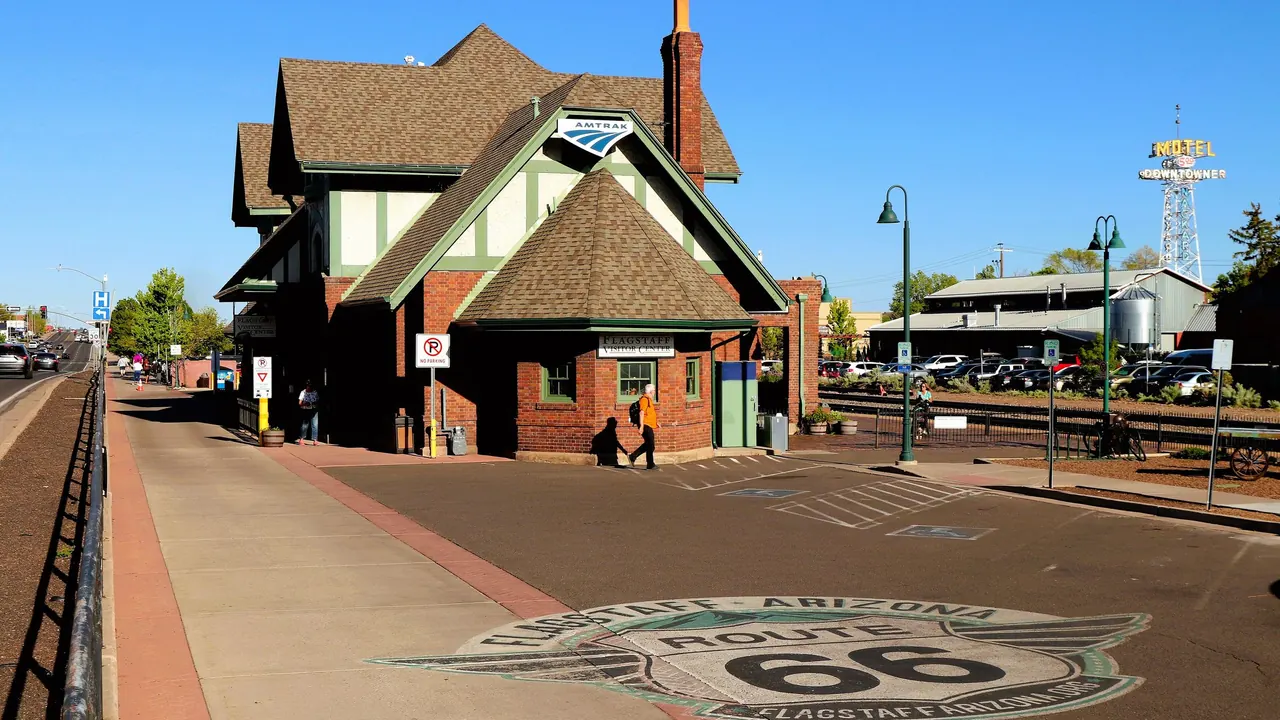
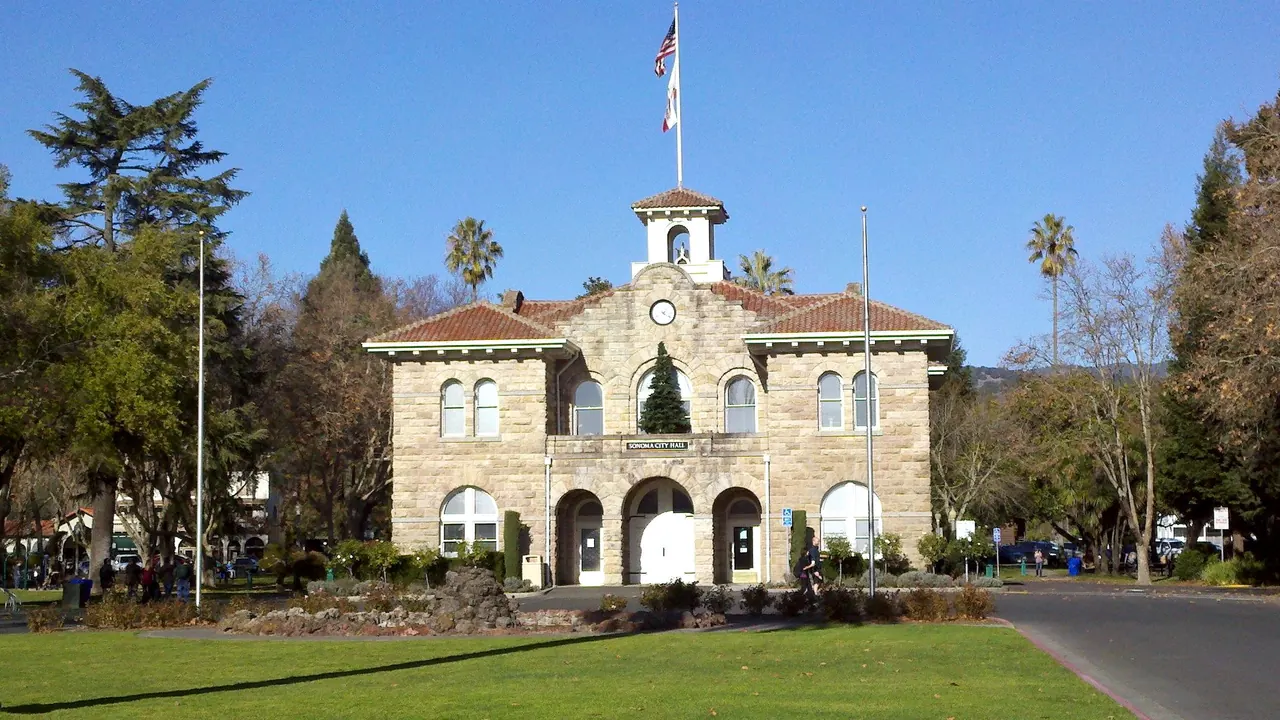
Photos: Flagstaff by Thank You (25 Millions) views, CC BY 2.0, cropped; Sonoma by Cullen328, CC BY-SA 3.0, cropped.
Flagstaff or Sonoma?
Our verdict in twelve categories, each scored against the same fixed benchmark cities, and the climate month by month, so you can choose for your trip.
Choose Flagstaff for
- families
- prices
- nature and the outdoors
Flagstaff is the better choice for an active trip into big landscapes. It puts you at the foot of a volcanic mountain range, inside a vast pine forest and within reach of the Grand Canyon and Sedona's red rock. It is also the easier town with children and much the cheaper place to stay. Evenings are simple, with brewery patios and a starry sky, and food is not the point.
Choose Sonoma for
- food and drink
- wellness
- day trips
Sonoma is for travellers who come to eat, drink and slow down. A wine valley spreads around a historic plaza, there is a hot spring resort on the edge of town, and San Francisco and Napa are close enough for day trips. It suits couples far better than families, and it costs a good deal more, so it pays off most for people who treat a long lunch with a good bottle as the main event.
Scoreboard
Twelve categories on one fixed scale from 0 to 100. The shaded stretch is the gap between the two.
Your match
Pick a travel style or drag the sliders, and both match scores follow your weighting.
Wins on families and prices with your weighting.
Wins on food and drink and wellness with your weighting.
What matters to you?
Category by category
What the scores mean for a trip.
Beaches & swimming
Neither town is a place for a beach vacation, and swimming is a side trip in both. They differ in the kind of water on offer. From Flagstaff it means the cold, slippery creek pools of Oak Creek Canyon, with Slide Rock as the summer favourite for families.
Sonoma has a real coast, the headlands and coves around Bodega Bay, but the Pacific there is too cold and rough to swim in. The gentler option is the gravel beaches of the Russian River, where summer warms the water enough for an idle afternoon.
Food & drink
Sonoma is well ahead, because eating and drinking are the reason people go. Tasting rooms around the plaza, old-vine Zinfandel, Carneros Pinot Noir and seasonal cooking built on local cheese, olive oil and coast oysters make every lunch an occasion, even if the choice of restaurants is small.
Flagstaff eats like a hungry hiking town. Its strength is the craft breweries of downtown and the Southside, and alongside them are diners, Mexican and New Mexican cooking and the odd plate of Navajo frybread or green chile. It is perfectly good after a day on the trails, but nobody plans a trip around it.
Culture & sights
The two are broadly level on culture, with short but worthwhile lists of sights, but the subjects are quite different. Flagstaff's sights are about science and Native American art. Lowell Observatory, where Pluto was found, and the Museum of Northern Arizona's Hopi, Navajo and Zuni collections are joined by the railroad-era downtown on Route 66.
Sonoma's sights are about California's early history. The plaza of the Bear Flag Revolt, the last Franciscan mission and the adobe barracks fill a pleasant half day, with Vallejo's Gothic-style house and Jack London's ruined Wolf House nearby.
Nightlife
Flagstaff offers noticeably more to do after dark. University students keep the taprooms, cocktail bars and old Route 66 saloons of downtown and the Southside busy on term-time weekends, and everything is within a short walk, though there are hardly any clubs.
Sonoma's evening is dinner, perhaps a glass in a wine bar on the plaza, and then quiet. Anyone wanting more than that has to drive to Santa Rosa or go back to San Francisco.
Nature & outdoors
This is Flagstaff's strongest ground, and its outdoors is far bigger and wilder than Sonoma's. Alpine trails climb the San Francisco Peaks towards Humphreys Peak at 3,850m. Ponderosa forest, the lava flows of Sunset Crater, Sedona's red canyons and the South Rim of the Grand Canyon are all close by, and at night the town, the world's first International Dark Sky City, sits under unusually dark skies.
Sonoma's landscape is gentler and more cultivated: vineyards between two low ranges, oak hillsides, redwood groves at Sugarloaf Ridge and quiet roads for cycling among the vines. It is lovely in spring and at harvest, but it has nothing as high, wild or dramatic as the peaks and canyons around Flagstaff.
Day trips
Sonoma has the stronger choice of outings, mainly because San Francisco is about an hour away and makes a full city day easy. Napa, Healdsburg, Petaluma's Victorian river town and Sausalito on the bay add more, though apart from the city most of these are yet another wine valley.
Flagstaff's outings are more varied but further apart. They include the hillside mining town of Jerome, the cliff dwellings of the Verde Valley, the Sinagua ruins at Walnut Canyon and Wupatki, and the Hopi mesas about two hours east. It means long hours behind the wheel.
Good for families
Flagstaff is much the better town for children. Telescope evenings, dinosaur displays, rope courses in the pines, winter sledding and the steam-era train to the Grand Canyon give children plenty to look forward to. The catches are the altitude, cold nights and long drives.
Sonoma is calm and safe, but it is built around wine. A playground on the plaza, a miniature railway and a safari park near Santa Rosa fill a day or two, and after that families tend to wish they were staying in San Francisco.
Getting around
Both towns are walkable at the centre and need a car for everything else, though Flagstaff has a little more to fall back on. It has a long-distance train station downtown, buses along the main roads and a paved urban trail network for cycling. Sonoma's buses are of little use, and tasting days bring the added problem of who drives, which is why many visitors book a driver or a tour.
Shopping & style
Shopping is small-scale in both towns, but what you would take home is different. In Flagstaff the prize is Native American craft, meaning Navajo rugs, Hopi kachina carvings and silver and turquoise jewellery, best bought from established dealers or directly from artists. In Sonoma you browse boutiques and kitchen shops around the plaza and leave with wine bought at the winery, olive oil and cheese.
Affordability
Flagstaff is the far easier place on the budget. Chain motels along Route 66 and casual brewery meals keep costs moderate, although rooms rise on summer weekends and you still need to add a hire car and park fees.
Sonoma is expensive from start to finish. Its few rooms are priced for wine-country weekends, restaurants aim at well-off visitors and tasting fees add up quickly. Many visitors on a tighter budget sleep in Santa Rosa or Petaluma instead.
Live music & performing arts
Neither is a reason to travel for the arts, and the two are much alike, but the calendars run differently. Flagstaff keeps a modest programme going all year, with the symphony and university concerts on campus and touring folk and indie acts at the restored Orpheum. Sonoma comes alive mainly in summer, with Broadway-style shows among the oaks and ruins of Jack London's park and winery concerts. Its fine concert hall for classical music is half an hour away at Sonoma State University.
Wellness & relaxation
Sonoma is clearly the better place to unwind with a treatment. The mineral water of Boyes Hot Springs feeds a historic resort spa that sells day passes, Calistoga's mud baths are within an hour, and the town's unhurried pace is restful in itself.
Flagstaff has no hot springs and very few spas. Its calm comes from cool pine-scented evenings and bright stars, and the altitude can disturb sleep for the first night or two. Anyone wanting proper pampering drives down to Sedona.
When should you go?
Pick your month. The climate figures are measured averages, not a forecast.
Flagstaff in July
Sonoma in July
Daytime high, °C
Rainfall in the month, mm
Where the figures come from
Flagstaff has no rain gauge within 25 km of the centre, so its rainfall comes from a gridded climate dataset read at the city rather than from a gauge further away.
Sonoma has no rain gauge within 25 km of the centre, so its rainfall comes from a gridded climate dataset read at the city rather than from a gauge further away.
Sonoma's sunshine is measured 87 km from the centre, at Sacramento Executive Airport.
Temperature and rainfall are climate normals, averaged over the years shown. Flagstaff: 1991-2020 normals, Flagstaff / Fort Tuthill (7.4 km from centre). Sonoma: 1991-2020 (sunshine 1981-2010) normals, Napa / Middleton (17.8 km from centre).
Flagstaff's altitude shapes its year. Winters are properly cold, with January highs around 5°C and real snow, which suits sledding and the ski slopes but not long walks around town. Late spring and early summer are dry and clear, and June to August peaks near 27°C, warm enough for the creek pools in Oak Creek Canyon. July and August also bring afternoon monsoon storms, so plan hikes for the mornings. September and October are mild, settled and probably the best time for trails.
Sonoma follows the opposite pattern. Its winters are mild but wet, with close to 169mm of rain in December and much the same in January, while June to September is almost completely dry, very sunny and steady at about 26°C. The Pacific stays cold all year and only reaches 14°C at its warmest, so the coast is for looking at, not swimming. Spring brings green hills, and autumn means harvest and still-warm days. Summer here is reliable where Flagstaff's is stormy, and winter is grey and rainy where Flagstaff's is snowy.
Which traveller are you?
On a family trip with children, Flagstaff lets the days follow the children: a morning in the forest, an outing after lunch and stars after dark. In Sonoma the days are planned around the adults' tastings and long lunches, and children spend most of them waiting.
For a relaxing and wellness trip, Flagstaff gives you fresh air and early nights, but any treatment means a drive. Sonoma lets the days slide by, a spa afternoon one day and a long lunch on a shaded terrace the next, all close at hand.
On a trip with a tight budget, Flagstaff leaves enough money for more nights and more time in the national parks. In Sonoma the same budget turns the trip into a run of trade-offs over how many nights to stay and which few wineries to visit.
Before you go
| Measure | Flagstaff | Sonoma |
|---|---|---|
| Currency | US Dollar (USD) | US Dollar (USD) |
| Sockets | AB120 V, 60 Hz | AB120 V, 60 Hz |
| Driving side | Right | Right |
| Time zone | UTC-7 | UTC-8, UTC-7 in summer |
| Emergency number | 911 | 911 |
| Elevation | 2,106 m | 26 m |
| Main airport | Flagstaff Pulliam Airport (FLG)7 km from centre2 non-stop destinations | Charles M. Schulz Sonoma County Airport (STS)39 km from centre14 non-stop destinations |
| Public holidays this year | 12 days | 13 days |
By the numbers
| Measure | Flagstaff | Sonoma |
|---|---|---|
| City population | 76,831 | 10,739 |
| People per km² | 464 | 1,513 |
| Museums within 10 km | 1 | 7 |
| UNESCO World Heritage sites within 50 km | 0 | 0 |
| Swim season, months above 21 °C | - | None |
Where else could you go?
Every comparison below shares a destination with this one, so you can follow Flagstaff or Sonoma somewhere new.
- Napavs Sonoma
- Sedonavs Flagstaff
- San Franciscovs Sonoma
- San Josevs Sonoma
- Page, Arizonavs Flagstaff
- Scottsdalevs Flagstaff