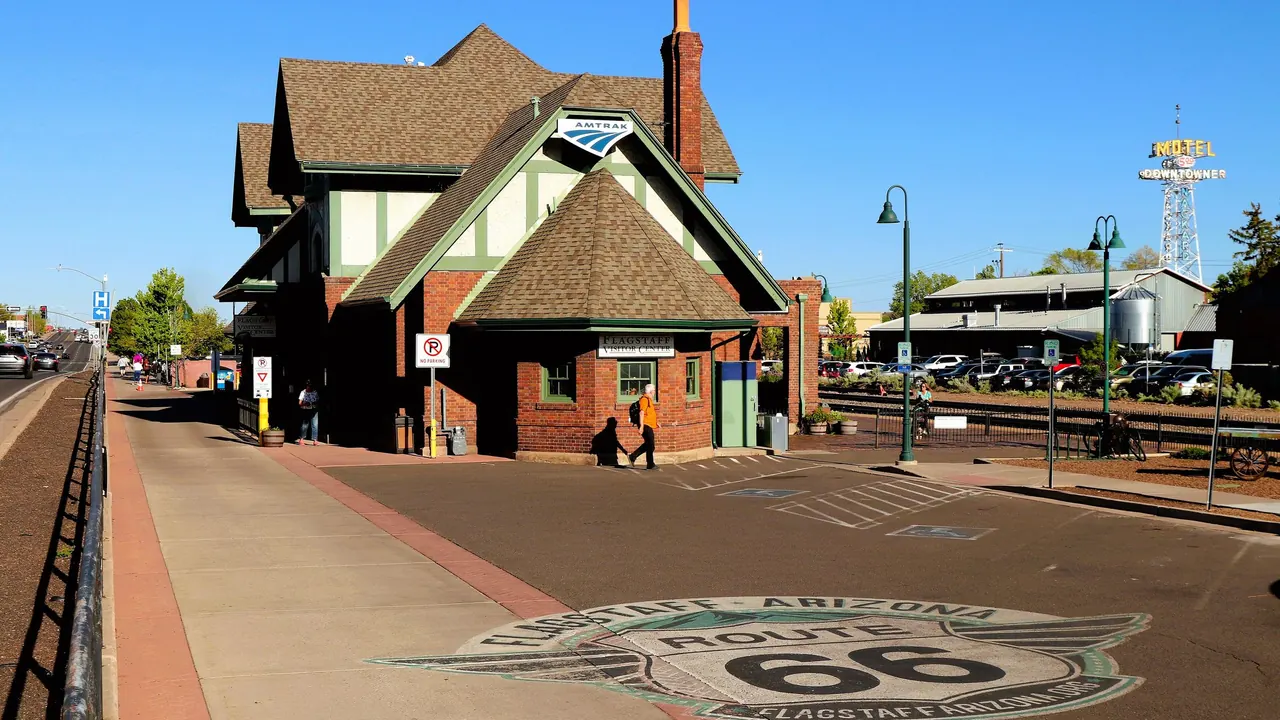
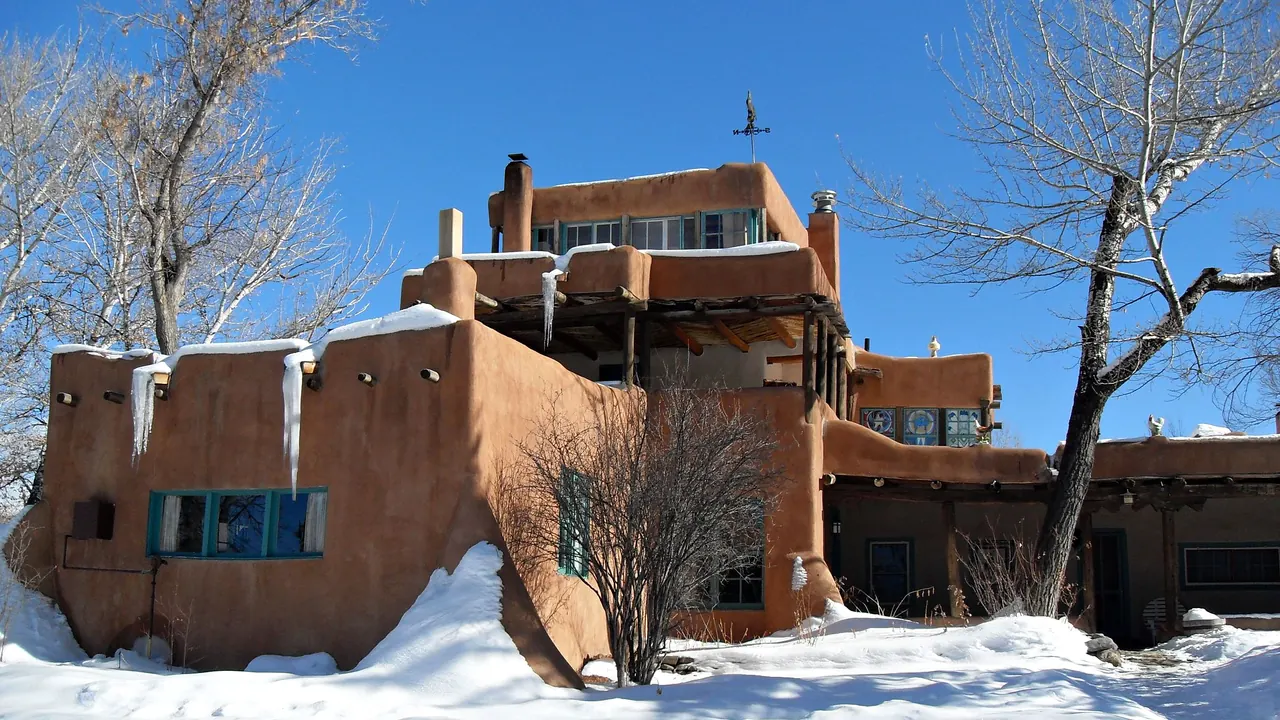
Photos: Flagstaff by Thank You (25 Millions) views, CC BY 2.0, cropped; Taos by PhictureGal, CC BY-SA 3.0, cropped.
Flagstaff or Taos?
Our verdict in twelve categories, each scored against the same fixed benchmark cities, and the climate month by month, so you can choose for your trip.
Choose Flagstaff for
- families
- nightlife
- getting around
Flagstaff is the better base for families and for anyone who wants to cover a lot of ground. The South Rim of the Grand Canyon, Sedona's red rock and the San Francisco Peaks are all within reach, and the observatory and the museum keep children interested. Its walkable downtown, train station and brewery taprooms also make it the more practical town, with a bit more going on in the evening.
Choose Taos for
- wellness
- culture and sights
- shopping
Choose Taos for a slower trip that is more about the place and its people. Taos Pueblo, the painted church at Ranchos and the art-colony museums give it more depth, and its galleries make it the better town for buying art and craft. The hot springs at Ojo Caliente and down in the gorge give it a restful side that Flagstaff lacks. It suits couples and adults better than young children, and evenings are quiet.
Scoreboard
Twelve categories on one fixed scale from 0 to 100. The shaded stretch is the gap between the two.
Your match
Pick a travel style or drag the sliders, and both match scores follow your weighting.
Too close to call, level with your weighting
Wins on families and nightlife with your weighting.
Wins on wellness and culture and sights with your weighting.
What matters to you?
Category by category
What the scores mean for a trip.
Beaches & swimming
Neither town is a place for swimming. Both sit high on inland plateaus, far from any coast. Flagstaff at least has the creek pools at Slide Rock in Oak Creek Canyon, which are cold and crowded on summer weekends. In Taos, the Rio Grande is for rafting rather than swimming, so the nearest thing is a hotel pool or a soak in a hot spring.
Food & drink
The two are about level, and neither has a food scene worth travelling for. Flagstaff's strength is beer, with a cluster of brewery patios downtown and in the Southside. Around them is a fairly standard university-town mix of diners, coffee houses and Mexican cooking.
Taos has the stronger regional character: northern New Mexican cooking with red and green chile, posole and carne adovada at old family-run places, plus bread from the ovens at the Pueblo. Go to Flagstaff for a pint after a hike and to Taos for a plate of chile you will remember.
Culture & sights
Taos has much more culture to offer. Flagstaff has nothing like Taos Pueblo, a UNESCO World Heritage site where a Tiwa-speaking community still lives. Add the buttressed church at Ranchos de Taos and the art-colony houses and museums, and Taos fills two or three unhurried days.
Flagstaff's list is shorter, though what it has is good: the Lowell Observatory, where Pluto was discovered, and the Hopi, Navajo and Zuni collections at the Museum of Northern Arizona. A day or two covers the town, and its ancient pueblo sites need a separate outing.
Nightlife
Flagstaff has more to do in the evening. Brewery taprooms, cocktail bars and old Route 66 saloons sit within a short walk of each other downtown and in the Southside. University students make term-time weekends busier than you would expect in a town this size, though there are few clubs and things wind down early.
Taos is quieter still. An evening there means a margarita in an adobe hotel bar, a saloon with a band or the winter après-ski crowd, and most nights end soon after dinner.
Nature & outdoors
Both are excellent mountain bases, and the outdoors is the main reason to visit either. Flagstaff has the volcanic San Francisco Peaks and a huge ponderosa pine forest, with famous sights close by: Sunset Crater, Sedona's red rock, Meteor Crater and the South Rim of the Grand Canyon. Its dark skies also make it a fine place for stargazing.
Taos feels wilder. It has the Rio Grande gorge for rafting and rim walks, Wheeler Peak for a serious summit hike and a ski valley known for steep runs. Flagstaff has the famous landmarks, while Taos has the river and high-mountain adventure.
Day trips
Flagstaff's outings are varied but small and spread out. Sedona's red rock and galleries are under an hour away, and beyond them is the old mining town of Jerome on its hillside. Closer in are the Sinagua ruins at Walnut Canyon and Wupatki. You can also take the historic railway from Williams to the Grand Canyon or drive about two hours east to the Hopi mesas.
Taos has slightly better day trips, mainly because Santa Fe is within reach, a real city with its plaza, the Canyon Road galleries and the O'Keeffe museum. The High Road there, through Truchas, Las Trampas and Chimayó, is worth the trip on its own, and to the west Abiquiu and Ghost Ranch lead into O'Keeffe country. From either town you need a car.
Good for families
Flagstaff is clearly better with children. Telescope evenings at the Lowell Observatory, the dinosaur displays at the museum, rope courses, winter sledding on the mountain and the steam train to the Grand Canyon add up to plenty for curious kids.
Taos is calm and welcoming but has little made for children, so it mainly suits families who like the outdoors. There is a ski school in winter, and gentle float trips on the Rio Grande and horse riding in summer. In both towns, the altitude and the long drives are hard on young children.
Getting around
Neither works well without a car, but Flagstaff makes it easier. Its downtown and Southside are walkable, a paved trail network makes cycling practical, buses run along the main roads and long-distance trains stop downtown.
Taos has a small walkable centre around the plaza and a basic bus, and little else. The Pueblo, the gorge and the ski valley are spread across a wide valley, and most visitors arrive after a long drive from Albuquerque.
Shopping & style
Both towns are known for Native American and regional craft rather than fashion, but Taos has more of it. Collectors can spend days in the gallery-lined lanes around the plaza and Kit Carson Road, looking at Pueblo micaceous pottery, Rio Grande weaving and carved santos.
Flagstaff has less to offer: Navajo rugs, Hopi kachina carvings and turquoise jewellery in downtown galleries, the museum shop and trading posts. Beyond that it has outdoor gear shops and a regional mall.
Affordability
The two cost much the same, priced like small American mountain towns. In both, tipping adds to every bill and you will almost certainly need a hire car. The expensive times differ. Flagstaff's rooms go up on summer weekends, when it fills as the place to stay for the Grand Canyon. Taos charges resort rates at its historic inns and ski lodging, and it is easiest on the budget in spring and late autumn.
Live music & performing arts
Neither is a place to plan a trip around live performance, and there is little between them, but the kind of event differs. Flagstaff has a modest, conventional calendar: a symphony orchestra and university concerts, touring bands at the restored Orpheum Theater and summer festivals in the pines.
Taos has less on most nights, but its high points are more unusual. On feast days such as San Gerónimo, Taos Pueblo holds traditional dances that visitors may watch under strict rules, and a summer chamber music festival brings serious classical concerts.
Wellness & relaxation
Taos is far better for a restful stay. It has real bathing at the historic mineral pools of Ojo Caliente, about fifty minutes away, and at the wild hot springs at the bottom of the Rio Grande gorge. The town also has yoga studios and retreat centres.
Flagstaff has no hot springs and only a few day spas. Its calm comes from pine-scented air and starry evenings, and anyone who wants treatments drives down to Sedona.
When should you go?
Pick your month. The climate figures are measured averages, not a forecast.
Flagstaff in July
Taos in July
Daytime high, °C
Rainfall in the month, mm
Where the figures come from
Flagstaff has no rain gauge within 25 km of the centre, so its rainfall comes from a gridded climate dataset read at the city rather than from a gauge further away.
Taos has no rain gauge within 25 km of the centre, so its rainfall comes from a gridded climate dataset read at the city rather than from a gauge further away.
Temperature and rainfall are climate normals, averaged over the years shown. Flagstaff: 1991-2020 normals, Flagstaff / Fort Tuthill (7.4 km from centre). Taos: 2006-2020 (rainfall 1991-2020) normals, Taos / Los Cordovas (10.5 km from centre).
Flagstaff and Taos sit at about the same altitude and follow a similar year: cold, snowy winters, a warm early summer and afternoon monsoon storms in July and August. Neither is ever warm enough for a beach trip. Midsummer highs of 27°C in Flagstaff and 29°C in Taos are pleasant rather than punishing, so late May, June and September into early October are the best months for walking and hiking in either.
For most of the year, Flagstaff is the wetter town. Its monsoon peaks at 64mm in August, and the snow that falls from December to March suits sledding and skiing. Early summer is the exception. June in Flagstaff is almost dry, with just 6mm, while Taos gets occasional showers in May and June. In winter and through the monsoon, Taos is the drier of the two, with only 15mm in January, so its cold days are crisp and clear and its summer storms are lighter. From spring to autumn, its afternoons also run a degree or two warmer.
Which traveller are you?
On a family trip with children, Flagstaff is the easier choice. Telescope evenings at the Lowell Observatory, dinosaurs at the Museum of Northern Arizona, rope courses in the pines and the steam train to the Grand Canyon give children far more to do than Taos does.
For a culture and arts trip, Taos goes deeper. Taos Pueblo, lived in for about a thousand years, the church at Ranchos de Taos and a run of art-colony museums fill several days. The galleries around the plaza then let you take some of that tradition home.
On a relaxing and wellness trip, Taos is the clear choice. It has the mineral pools at Ojo Caliente, wild hot springs beside the Rio Grande and a cluster of yoga studios and retreat centres. Flagstaff visitors have to drive down to Sedona for a spa.
Before you go
| Measure | Flagstaff | Taos |
|---|---|---|
| Currency | US Dollar (USD) | US Dollar (USD) |
| Sockets | AB120 V, 60 Hz | AB120 V, 60 Hz |
| Driving side | Right | Right |
| Time zone | UTC-7 | UTC-7, UTC-6 in summer |
| Emergency number | 911 | 911 |
| Elevation | 2,106 m | 2,124 m |
| Main airport | Flagstaff Pulliam Airport (FLG)7 km from centre2 non-stop destinations | Santa Fe Municipal Airport (SAF)99 km from centre5 non-stop destinations |
| Public holidays this year | 12 days | 13 days |
By the numbers
| Measure | Flagstaff | Taos |
|---|---|---|
| City population | 76,831 | 6,474 |
| People per km² | 464 | 415 |
| Museums within 10 km | 1 | 4 |
| UNESCO World Heritage sites within 50 km | 0 | 1 |
Where else could you go?
Every comparison below shares a destination with this one, so you can follow Flagstaff or Taos somewhere new.
- Sedonavs Flagstaff
- Santa Fevs Taos
- Scottsdalevs Flagstaff
- Phoenixvs Flagstaff
- Telluridevs Taos
- Colorado Springsvs Taos