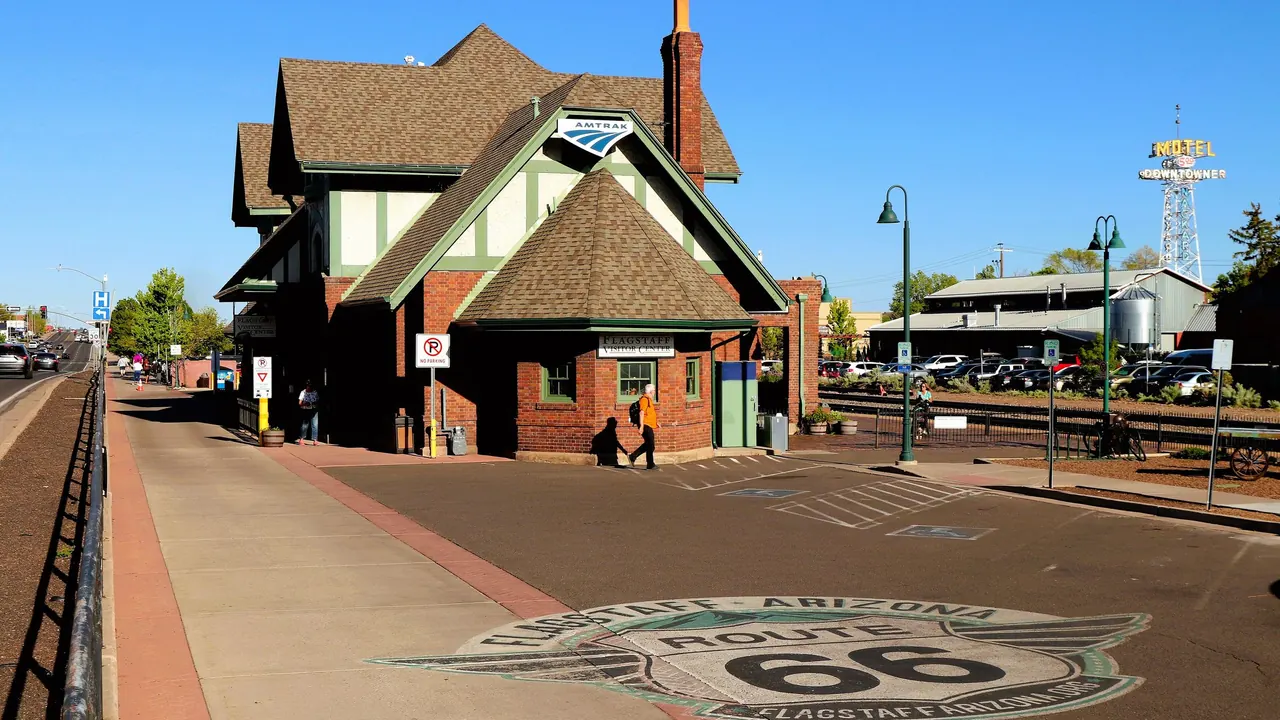
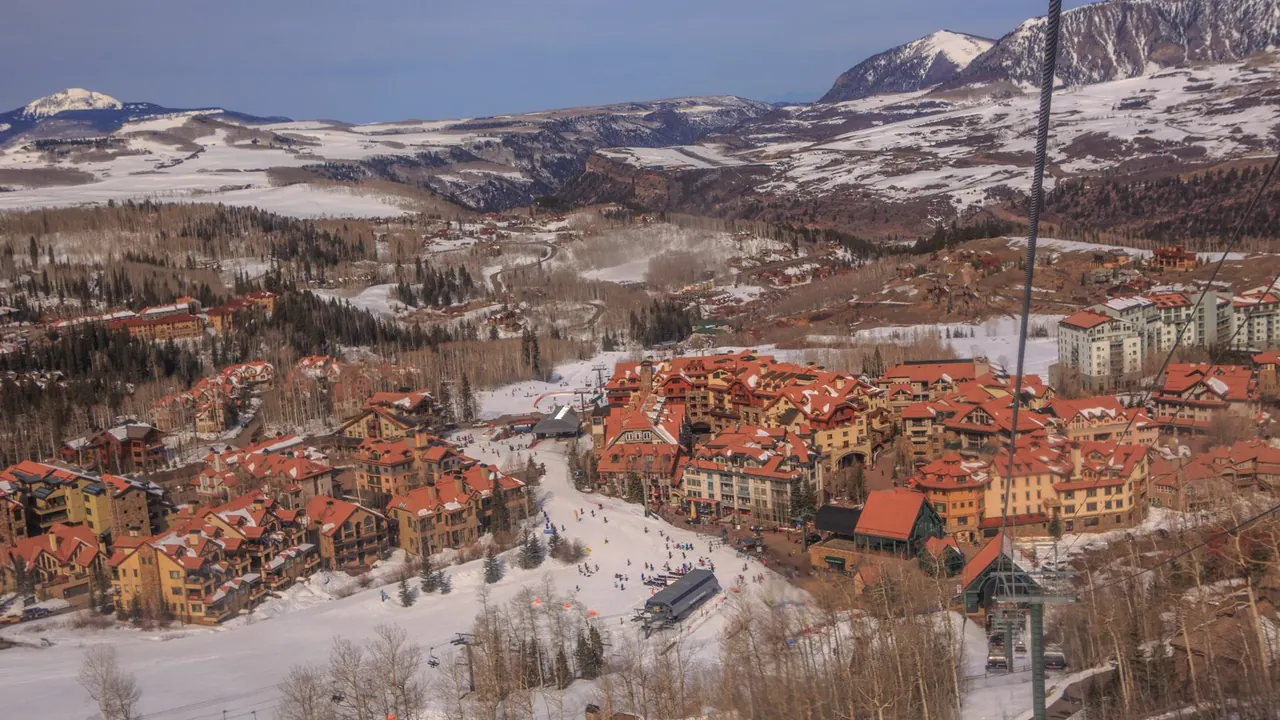
Photos: Flagstaff by Thank You (25 Millions) views, CC BY 2.0, cropped; Telluride by Murray Foubister, CC BY-SA 2.0, cropped.
Flagstaff or Telluride?
Our verdict in twelve categories, each scored against the same fixed benchmark cities, and the climate month by month, so you can choose for your trip.
Choose Flagstaff for
- prices
- day trips
- culture and sights
Flagstaff is the better pick for a road trip through the wider Southwest. It costs much less to stay in, it has a short but real list of sights in the Lowell Observatory and the Museum of Northern Arizona, and the Grand Canyon, Sedona and the Sinagua and Hopi sites are all within driving range. It also suits families who want telescope evenings and museums alongside the trails, and travellers who would rather spend on the canyon than on the room.
Choose Telluride for
- getting around
- wellness
- live music and the arts
Telluride rewards travellers who want to stay put in one spectacular valley and not drive. Once you arrive, the gondola, free buses and walkable grid take care of everything. Waterfalls, high basins and serious skiing start at the edge of town, and the Ouray and Ridgway hot springs give it the more restful side of the two. You pay heavily for all this, so it suits a well-funded ski week or a summer festival trip more than a touring vacation.
Scoreboard
Twelve categories on one fixed scale from 0 to 100. The shaded stretch is the gap between the two.
Your match
Pick a travel style or drag the sliders, and both match scores follow your weighting.
Wins on prices and day trips with your weighting.
Wins on getting around and wellness with your weighting.
What matters to you?
Category by category
What the scores mean for a trip.
Beaches & swimming
Neither is a swimming destination, and both are mountain towns far from any coast. The difference is in what cold water there is. Flagstaff's nearest dip is the creek pools of Oak Creek Canyon, such as Slide Rock, which are crowded on summer weekends. Telluride has a small reservoir swimming area near Ridgway, about an hour away, where people are more likely to raft or paddle than swim.
Food & drink
The two are broadly level, but they eat differently. Flagstaff is a university town that does best at beer, with brewery patios downtown and in the Southside. Around them you find diners, New Mexican green chile and the odd plate of Navajo frybread.
Telluride's ski-resort money supports a few serious kitchens on Colorado Avenue and in Mountain Village, cooking Colorado lamb, elk and trout with deeper wine lists. Both towns have a small circle of places, but Telluride's top end is more polished and Flagstaff's everyday eating is more relaxed.
Culture & sights
Flagstaff has more to see. The Lowell Observatory, where Pluto was found, and the Museum of Northern Arizona's Hopi, Navajo and Zuni collections are worth a proper half-day each, and the Riordan Mansion and railroad-era Route 66 downtown add more.
In Telluride the main sight is the town itself: a mining-boom grid of clapboard houses and false-fronted stores that is protected as a National Historic Landmark, with a historical museum in the old miners' hospital and mill ruins on the canyon walls. It makes a pleasant hour or two, not a full day.
Nightlife
Flagstaff makes the better night out. Students keep the downtown and Southside taprooms, cocktail bars and Route 66 saloons busy at term-time weekends, and they are all within a short walk of each other.
Telluride's evenings are about après-ski and a few Victorian saloons on Colorado Avenue. These can run late in peak ski weeks and on festival weekends, but the town goes quiet early in the shoulder seasons. Neither has clubs.
Nature & outdoors
Both are outstanding mountain bases, and they differ in shape. Flagstaff is about reach: the volcanic San Francisco Peaks, a huge ponderosa forest, Sunset Crater's lava flows, dark-sky stargazing, and the Grand Canyon and Sedona's red rock within driving range.
Telluride is about immediacy. Cliffs, Bridal Veil Falls and trails to Blue Lake rise straight from the end of the main street, and there is a via ferrata, jeep roads over the passes and a far bigger ski area than Flagstaff's small one on the peaks.
Day trips
From Flagstaff you can reach far more in a day. The Grand Canyon's South Rim, Sedona's red rock, hillside Jerome, the Verde Valley cliff dwellings, the Sinagua ruins at Walnut Canyon and Wupatki, and the Hopi mesas are all within range. The drives take you through pine forest and down the switchbacks of Oak Creek Canyon.
From Telluride the list is short: the ranching town of Ridgway, the Victorian mining towns of Ouray and Silverton, and Mesa Verde's cliff dwellings at the very edge of a day out. All of them lie over mountain roads and passes that winter can slow or close.
Good for families
Flagstaff is easier with children who have different interests. It has observatory evenings, museum dinosaurs, rope courses, sledding, a drive-through wildlife park and the steam train to the canyon, though some of these mean long drives.
Telluride suits families who come to ski or hike. The free gondola and the gentle ski school slopes are its strengths, but there are no zoos, theme parks or science museums, so a wet day leaves little to do indoors. Its higher altitude and steep costs are also harder on a family.
Getting around
Telluride is far easier once you have arrived. The compact grid, free gondola to Mountain Village and free buses mean many visitors leave the car parked all week. Arriving is the hard part, with a weather-prone local airport and larger airports one to two hours away.
Flagstaff is the reverse. A train stops downtown and the centre is walkable, but the motels are spread along Route 66 and nearly everything worth the trip is beyond any bus route, so a hire car is close to essential.
Shopping & style
Neither town is a shopping trip, but Flagstaff has the more distinctive purchases. Navajo rugs, Hopi kachina carvings and silver and turquoise jewellery are sold by galleries and trading posts, and established dealers make them a worthwhile buy. Telluride's few blocks of Colorado Avenue offer art galleries, Western clothing and ski gear at resort prices, which is pleasant for browsing but has no craft tradition behind it.
Affordability
Flagstaff costs far less, and most of the money goes on getting about rather than on sleeping. A plain motel room along old Route 66 is easy to find and brewery and diner meals are reasonable, so the bigger costs are the hire car, fuel for the long drives and entry fees for the parks and monuments. Rooms do climb on summer weekends and in school breaks, when the town fills with Grand Canyon visitors.
In Telluride it works the other way round, and the room is the biggest cost. Beds in town and Mountain Village are few and aimed at second-home owners, and the Christmas weeks and festival weekends push them higher still. Lift passes, ski hire, guides and dinners all come at resort prices, though the free gondola and buses mean you can manage without a car once you are there. A base down the valley in Ridgway eases the room bill but adds a drive of nearly an hour each way.
Live music & performing arts
These are close overall but work on different rhythms. Flagstaff has a steady year-round calendar: a symphony orchestra and university concerts, touring indie and folk acts at the restored Orpheum, and community theatre.
Telluride saves its energy for the summer. The Bluegrass Festival in Town Park, the jazz, blues and chamber music weekends, and the Labor Day film festival are worth planning a trip around, with the Sheridan Opera House filling the quieter months.
Wellness & relaxation
Telluride is the better choice for unwinding. Mountain Village hotels have full spas, and the hot springs at Ouray and near Ridgway give you an afternoon soak with peaks all around.
Flagstaff's calm comes from pine air, cool evenings and starry skies rather than treatments. It has only a few day spas, and anyone wanting more drives down to Sedona. At both towns' altitude, expect a restless first night or two.
When should you go?
Pick your month. The climate figures are measured averages, not a forecast.
Flagstaff in July
Telluride in July
Daytime high, °C
Rainfall in the month, mm
Where the figures come from
Flagstaff has no rain gauge within 25 km of the centre, so its rainfall comes from a gridded climate dataset read at the city rather than from a gauge further away.
Telluride has no rain gauge within 25 km of the centre, so its rainfall comes from a gridded climate dataset read at the city rather than from a gauge further away.
Temperature and rainfall are climate normals, averaged over the years shown. Flagstaff: 1991-2020 normals, Flagstaff / Fort Tuthill (7.4 km from centre). Telluride: 2006-2020 (rainfall 1991-2020) normals, Telluride / Lime (8.2 km from centre).
Neither town has a beach season, and summer is the best time to be outdoors in both. Flagstaff is the warmer of the two all year. From April to June it is at its driest, and by June highs reach 26°C with almost no rain, so late spring and early summer are the most reliable time for the Grand Canyon and the trails. Telluride's midsummer days stay in the low twenties, good for hiking at altitude but never hot. The monsoon reaches both in July and August, with afternoon thunderstorms that peak in August (67mm in Telluride), so set off early and be off high ground by lunchtime.
The two differ more either side of summer. In Flagstaff the rain eases through September and October, and the days stay mild. In Telluride the storms carry on into September, one of its wettest months, and October stays fairly damp as it cools. In winter Flagstaff's days reach about 6°C, with snow on the mountain and town streets you can usually walk. Telluride sits near 2°C from December to February, which makes a proper ski season but is cold for anything else. Telluride's spring is damp in March and April, then May turns drier and milder, though it stays a step behind Flagstaff.
Which traveller are you?
On a trip on a tight budget, only Flagstaff is realistic. Whatever you save on the room can go on a hire car and park passes for the canyon. In Telluride, just staying there would use up most of the money.
On a family trip with children, Flagstaff is better for mixed ages and changeable weather, because there is always an evening or indoor outing to fall back on. Telluride works when the whole family skis or hikes, and much less well when not everyone does.
For a relaxing and wellness trip, choose Telluride. You can settle into one quiet valley, leave the car parked and plan slow days around a soak. In Flagstaff the calm comes from the setting, and any treatment means a drive.
Before you go
| Measure | Flagstaff | Telluride |
|---|---|---|
| Currency | US Dollar (USD) | US Dollar (USD) |
| Sockets | AB120 V, 60 Hz | AB120 V, 60 Hz |
| Driving side | Right | Right |
| Time zone | UTC-7 | UTC-7, UTC-6 in summer |
| Emergency number | 911 | 911 |
| Elevation | 2,106 m | 2,667 m |
| Main airport | Flagstaff Pulliam Airport (FLG)7 km from centre2 non-stop destinations | Montrose Regional Airport (MTJ)64 km from centre11 non-stop destinations |
| Public holidays this year | 12 days | 12 days |
By the numbers
| Measure | Flagstaff | Telluride |
|---|---|---|
| City population | 76,831 | 2,607 |
| People per km² | 464 | 1,372 |
| Museums within 10 km | 1 | 0 |
| UNESCO World Heritage sites within 50 km | 0 | 0 |
Where else could you go?
Every comparison below shares a destination with this one, so you can follow Flagstaff or Telluride somewhere new.