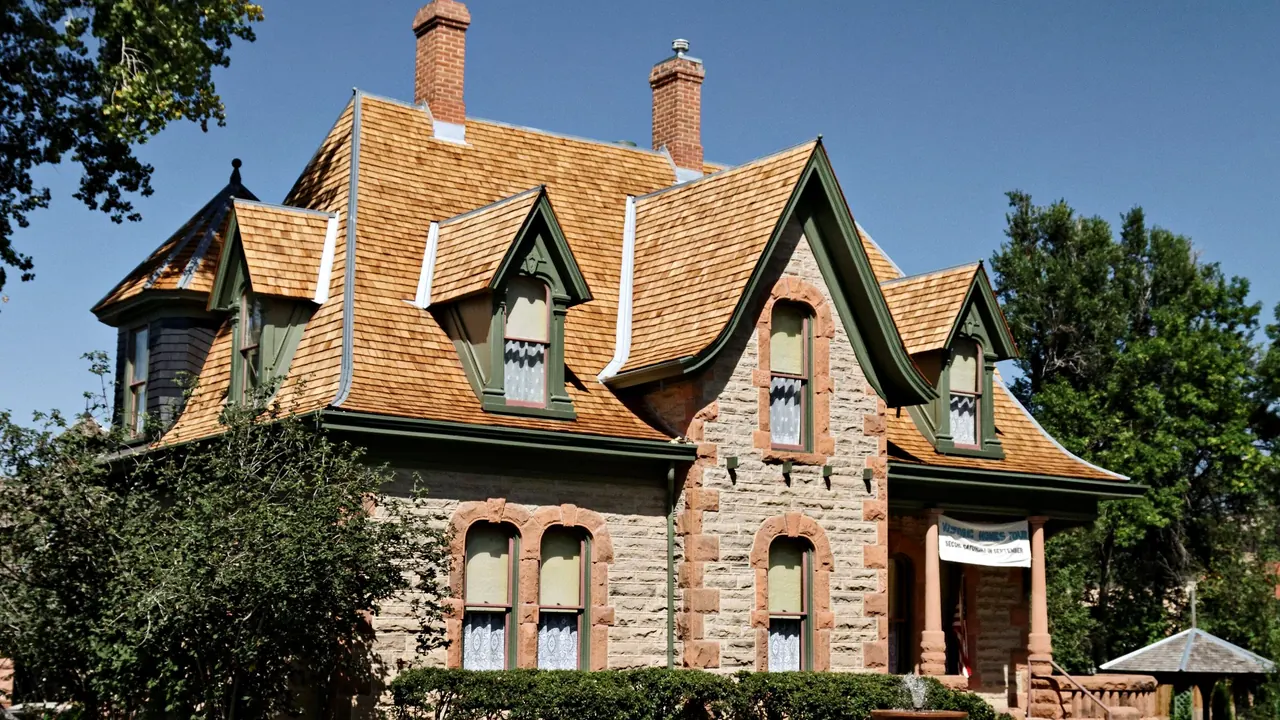
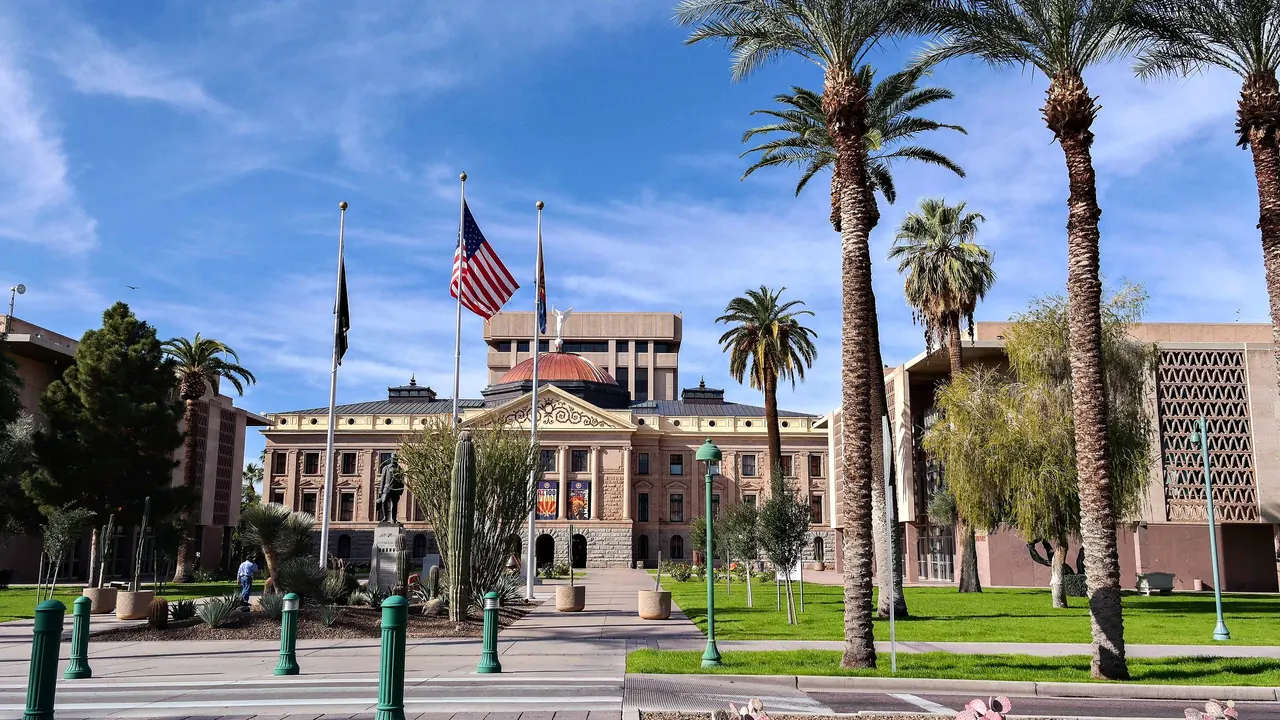
Photos: Fort Collins by Gribeco, CC BY-SA 3.0, cropped; Phoenix by Visitor7, CC BY-SA 3.0, cropped.
Fort Collins or Phoenix?
Our verdict in twelve categories, each scored against the same fixed benchmark cities, and the climate month by month, so you can choose for your trip.
Choose Fort Collins for
- getting around
- nature and the outdoors
- beaches
Fort Collins suits travellers who want the mountains on the doorstep and a small, easy town to come back to in the evening. The foothills, the Poudre canyon and Rocky Mountain National Park are all close, Old Town is compact enough to cycle between taprooms, and the beer is the real draw at the table. It is a summer and early-autumn place for hikers, cyclists and anyone who would rather spend the day outside than in a museum.
Choose Phoenix for
- wellness
- shopping
- culture and sights
Phoenix is the better pick for a winter-sun escape built around a resort. Its spas, pools and golf, its museums of Native American art and Wright architecture, its Sonoran Mexican cooking and its Scottsdale shopping give a fuller programme than Fort Collins can offer, as long as you come between autumn and spring and accept that almost everything means a drive.
Scoreboard
Twelve categories on one fixed scale from 0 to 100. The shaded stretch is the gap between the two.
Your match
Pick a travel style or drag the sliders, and both match scores follow your weighting.
Wins on getting around and nature and the outdoors with your weighting.
Wins on wellness and shopping with your weighting.
What matters to you?
Category by category
What the scores mean for a trip.
Beaches & swimming
Neither city is a beach destination, and swimming is a sideline in both. In Fort Collins it means the swim beach and coves at Horsetooth Reservoir in a short summer season. In Phoenix you swim mostly in resort pools with slides and lazy rivers, with the desert-cliff lakes on the Salt River and tubing on the lower river for a day out.
Food & drink
Phoenix eats better. It has a regional cooking of its own in Sonoran carne asada, paper-thin flour tortillas and bacon-wrapped hot dogs, plus serious wood-fired pizza and polished resort dining in Scottsdale, although getting to the good places usually means driving.
Fort Collins is mainly about the glass rather than the plate. Its long-established breweries and dense spread of taprooms are a reason to come in themselves, but the food in Old Town is pleasant gastropub and taco fare without a local cuisine.
Culture & sights
Phoenix offers more to see. The Heard Museum's Native American collections, the Musical Instrument Museum and Wright's Taliesin West are each worth a half day, though they are spread out and there is no historic core to stroll.
Fort Collins reverses that balance. It has few individual sights beyond the Museum of Discovery and the Avery House, but its red-brick Old Town and Victorian streets make a pleasant few hours on foot, and a day covers the lot.
Nightlife
Phoenix has more going on, split between the clubs and rooftop bars of Old Town Scottsdale, the student bars on Tempe's Mill Avenue and cocktail lounges around Roosevelt Row, with a ride-hail between them. Fort Collins keeps it casual: pubs, patios and taprooms around the Old Town square, a mostly student crowd and only a handful of dance floors, all within walking distance.
Nature & outdoors
Fort Collins has the edge, mainly because its outdoors works all summer and reaches high country. Foothill parks sit at the edge of town, the protected Cache la Poudre canyon offers rafting, fishing and camping, and Rocky Mountain National Park adds alpine lakes and elk.
Phoenix has a dramatic landscape of its own, with saguaro forest in the McDowell Sonoran Preserve, scrambles up Camelback and the huge South Mountain park, and Sedona's red rock within reach. Its season is the cool half of the year, though, because summer heat makes hiking dangerous after mid-morning.
Day trips
The day-trip lists are about equally good, and both need a car. From Fort Collins the outings are Boulder, Denver's museums, Estes Park and frontier Cheyenne just over the Wyoming line. Phoenix offers more of the Old West: hillside Jerome, the Montezuma Castle cliff dwelling, Sedona and Tucson's mission, though Arizona's distances make the drives longer.
Good for families
Phoenix has more for children to do, with a zoo, an aquarium, a science centre, a children's museum, water parks and pool resorts. The catch is long drives across the metro area and summer heat that rules out daytime play outdoors.
Fort Collins is gentler and smaller. It has flat river paths, the city farm at Lee Martinez Park, the Museum of Discovery and summer days at the reservoir, but for anything big families head to Denver.
Getting around
Fort Collins is much easier without a car. Old Town and the campus are flat and close together, a rapid-bus line runs north-south, and the protected lanes and off-street trails make cycling the natural choice. You still need a car for the canyon and the mountains.
Phoenix is built around driving. Its single light rail line is useful only between the airport, downtown and Tempe, the walkable pockets are small and far apart, and summer heat makes even short walks hard work.
Shopping & style
Phoenix is the better place to spend money. Scottsdale's luxury mall, the Biltmore-area centre and Old Town galleries cover brands and Western wear, and the turquoise and silver jewellery, katsina carvings and Navajo rugs are a real reason to shop. Fort Collins offers a few pleasant blocks of independent boutiques, bookshops and outdoor gear stores, good for browsing but no more.
Affordability
Costs come out much the same, and in both a hire car is the main extra while the hiking is free. What differs is timing. Fort Collins prices jump on graduation and football weekends, while Phoenix swings by season, with resorts expensive in the perfect-weather months and much cheaper in the summer heat.
Live music & performing arts
Phoenix offers the fuller programme, with a symphony, an opera company and a ballet company, Broadway tours in Wright's round ASU Gammage and concerts at the Musical Instrument Museum, mostly from autumn to spring. Fort Collins works on a regional scale, with the Lincoln Center, the university's arts centre and bluegrass and indie bands on small Old Town stages. Its free outdoor concerts are at their best in summer, which is exactly when Phoenix goes quiet.
Wellness & relaxation
Phoenix is one of the country's classic resort-rest destinations. Spa resorts along the foot of Camelback and in north Scottsdale use desert treatments with sage, clay and agave, and the winter sun makes poolside days easy, though the best of it comes at resort prices.
Fort Collins has little beyond ordinary day spas and yoga studios, and the nearest hot-spring soak is a long drive into the mountains. What calm it offers comes from shaded river paths and an unhurried pace.
When should you go?
Pick your month. The climate figures are measured averages, not a forecast.
Fort Collins in July
Phoenix in July
Daytime high, °C
Rainfall in the month, mm
Where the figures come from
Fort Collins has no rain gauge within 25 km of the centre, so its rainfall comes from a gridded climate dataset read at the destination rather than from a gauge further away.
Temperature and rainfall are climate normals, averaged over the years shown. Fort Collins: 2006-2020 (rainfall 1991-2020) normals, Fort Collins / Redmond (16.1 km from centre). Phoenix: 1991-2020 (sunshine 1981-2010) normals, Phoenix Sky Harbor Airport (2.8 km from centre).
The two cities have opposite seasons. Fort Collins is at its best from June to September, when the days are warm, July reaches about 32°C and Horsetooth Reservoir and the river are pleasant for a swim or a float. Spring is cool and brings the wettest weather, with May the rainiest month. Winter is cold, with December highs around 4°C, which suits snowshoeing but makes for chilly evenings in Old Town.
Phoenix runs the other way. From October to April the days are mild to warm, with January highs near 20°C, and this is the time for hiking, sightseeing and lying by a pool. From June to August the heat climbs past 40°C, so walking and hiking only make sense at dawn and the day moves indoors or into the pool. Phoenix gets little rain at any time of year, and that little falls in two spells: the winter months from December to March and the late-summer storms of July and August. April to June is almost completely dry. There is plenty of sunshine all year, and the most comes in late spring and early summer.
Which traveller are you?
On an outdoors trip, Fort Collins is the stronger base. Trails in Horsetooth and Lory start minutes from town, the Poudre canyon offers rafting and fly fishing, and Rocky Mountain National Park's alpine country is an easy day out in summer.
On a relaxing and wellness trip, Phoenix is the clear choice. Large desert resorts below Camelback and in north Scottsdale combine full spas, several pools and golf with dry winter warmth. Fort Collins has only ordinary day spas and no hot springs nearby.
For a short city break without a car, Fort Collins works better. Old Town, the campus and the breweries are all within a flat cycle ride, and a day covers the sights. In Phoenix the museums and districts sit far apart, and a short stay gets eaten up by driving.
Before you go
| Measure | Fort Collins | Phoenix |
|---|---|---|
| Currency | US Dollar (USD) | US Dollar (USD) |
| Sockets | AB120 V, 60 Hz | AB120 V, 60 Hz |
| Driving side | Right | Right |
| Time zone | UTC-7, UTC-6 in summer | UTC-7 |
| Emergency number | 911 | 911 |
| Elevation | 1,525 m | 331 m |
| Main airport | Denver International Airport (DEN)88 km from centre231 non-stop destinations | Phoenix Sky Harbor International Airport (PHX)6 km from centre149 non-stop destinations |
| Public holidays this year | 12 days | 12 days |
By the numbers
| Measure | Fort Collins | Phoenix |
|---|---|---|
| Population | 169,810 | 1,608,139 |
| People per km² | 1,181 | 1,199 |
| Museums within 10 km | 2 | 10 |
| UNESCO World Heritage sites within 50 km | 0 | 1 |
Where else could you go?
Every comparison below shares a destination with this one, so you can follow Fort Collins or Phoenix somewhere new.
- Scottsdalevs Phoenix
- Estes Parkvs Fort Collins
- Bouldervs Fort Collins
- Denvervs Fort Collins
- Winter Park, Coloradovs Fort Collins
- Keystonevs Fort Collins