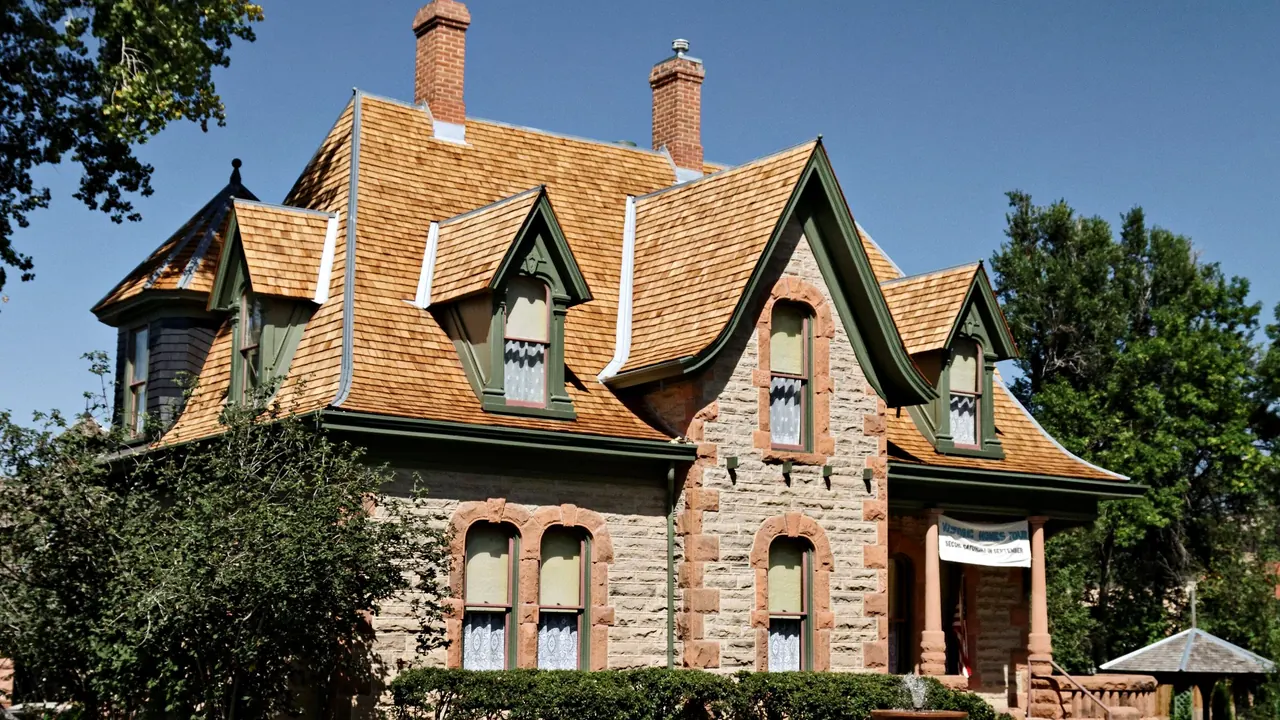
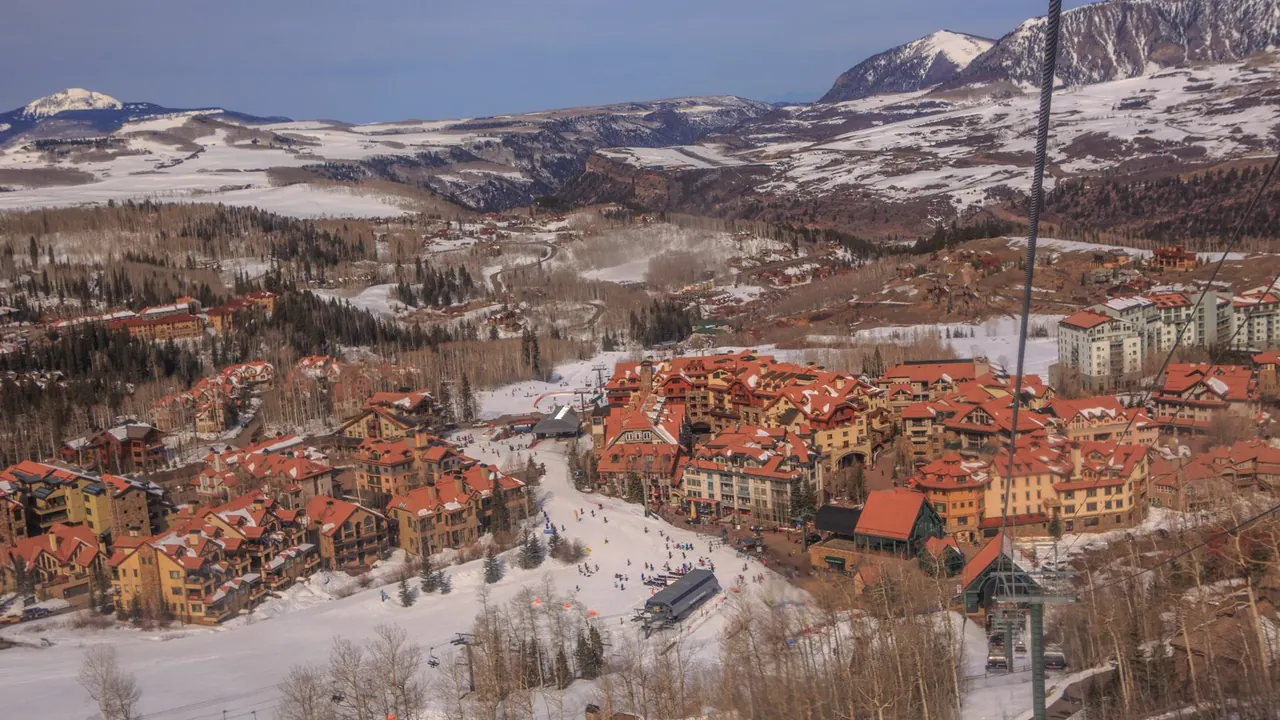
Photos: Fort Collins by Gribeco, CC BY-SA 3.0, cropped; Telluride by Murray Foubister, CC BY-SA 2.0, cropped.
Fort Collins or Telluride?
Our verdict in twelve categories, each scored against the same fixed benchmark cities, and the climate month by month, so you can choose for your trip.
Choose Fort Collins for
- prices
- day trips
- nightlife
Fort Collins suits travellers who want a relaxed, reasonably priced base with plenty going on in the evening. Old Town's breweries, taprooms and student bars give it a social life Telluride can't match, foothills trails and the Poudre Canyon are a short drive away, and Boulder, Denver and Cheyenne are all easy day trips. It is the better pick for a varied week or a trip where money matters.
Choose Telluride for
- getting around
- wellness
- nature and the outdoors
Telluride is for people who come for the mountains themselves. Waterfalls, high basins, a via ferrata and a serious ski area start where the main street ends, you can walk the whole town, and hot springs are within an hour. In return you accept some of the highest prices in North America, quiet nights outside the peak weeks and a remote position that leaves few places to visit beyond the canyon.
Scoreboard
Twelve categories on one fixed scale from 0 to 100. The shaded stretch is the gap between the two.
Your match
Pick a travel style or drag the sliders, and both match scores follow your weighting.
Wins on prices and day trips with your weighting.
Wins on getting around and wellness with your weighting.
What matters to you?
Category by category
What the scores mean for a trip.
Beaches & swimming
Neither city is a place for a swimming trip, and both send you to reservoirs. Fort Collins has the easier option: Horsetooth Reservoir is just west of town, with a designated swim beach and coves that warm up nicely in July and August. Around Telluride the nearest swim spot is near Ridgway, an hour's drive, and the mountain water stays chilly all summer, so rafting or paddling makes more sense there.
Food & drink
Fort Collins has the more rewarding food and drink, mainly because of its beer. Long-established breweries offer tours, smaller taprooms with food trucks are spread across the city, and the summer farmers' markets sell Palisade peaches and Colorado honey. The food in Old Town is good and easygoing but rarely ambitious.
Telluride goes the other way. A few serious kitchens on Colorado Avenue and in Mountain Village cook Colorado lamb, elk and trout and pour unusually good wine. The choice is small, though, so you will be back at the same tables within a week, and those tables are hard to book in the peak weeks.
Culture & sights
The two are about equal for sights, and in both cases the main attraction is the old town itself. Fort Collins has more museums: the Museum of Discovery, the Victorian Avery House and the university's art museum, set around a red-brick and sandstone centre.
Telluride tells a single story more completely. The whole mining-boom district is a National Historic Landmark, the museum in the old miners' hospital covers the labour wars, and ruined mills cling to the canyon walls above town. Either takes no more than a day.
Nightlife
Fort Collins clearly has more going on after dark. A large student population keeps Old Town's pubs, sports bars, rooftop patios and cocktail bars busy at weekends, and there are a few dance clubs. The scene is casual rather than sophisticated.
Evenings in Telluride mean après-ski and a few historic saloons on Colorado Avenue. These can stay lively late in peak ski weeks and on festival weekends, but there are no clubs, and in the shoulder seasons the town is quiet by mid-evening.
Nature & outdoors
Both are excellent outdoor bases, but Telluride is on another level. Cliffs and 4,000m peaks rise straight from the end of town, Bridal Veil Falls and Blue Lake are reachable from the centre, and summer adds a via ferrata, wildflower basins and jeep roads over old mining passes. In winter it has proper downhill skiing on steep, scenic terrain. The altitude needs a day or two of adjustment.
Fort Collins offers gentler country close to home: the summits of Horsetooth Mountain and Lory State Park, rafting and fly fishing in the Poudre Canyon, and paved riverside trails in town. Rocky Mountain National Park is about an hour and a half away, but downhill skiing is several hours off.
Day trips
Fort Collins makes the better base for exploring the region. Boulder is about an hour away under the Flatirons, Denver adds major museums, and Estes Park, Golden, Cheyenne and Laramie are all within easy reach. Few of them are remarkable, but there are plenty to choose from.
From Telluride, everything is a mountain drive. Ridgway and canyon-walled Ouray are close, and Silverton is about two hours away over Red Mountain Pass. Mesa Verde is the one major site in reach, at the very edge of a day's round trip, and winter weather can close the passes.
Good for families
Both are safe, quiet places that suit active families more than families looking for attractions. Fort Collins has more for younger children: a science museum with a dome theatre, the city farm at Lee Martinez Park, a children's garden and gentle river tubing. At its lower elevation, small children also tend to sleep better.
Telluride is better for older children who ski. It has a well-regarded ski school and beginner slopes, and the free gondola is a hit with children. There is little to do indoors on a wet day, though, and families need to allow for the altitude and the cost.
Getting around
Once you have arrived, Telluride is the easier place to get around. You can cross the historic grid on foot in a quarter of an hour, and free gondolas and buses run up to Mountain Village, so many visitors never use a car. The catch is getting there, which takes long mountain drives or flights that are often affected by weather.
Fort Collins has a flat, compact Old Town, a rapid-bus corridor and some of the country's best cycling, with protected lanes and long trails. Beyond the centre, though, the city spreads into suburbs, and the canyon and foothills need a car.
Shopping & style
Shopping is about equal and small-scale in both, and nobody should plan a trip around it. Fort Collins is the more everyday option: independent bookshops, cycling and outdoor stores, vintage clothing and Colorado-made gifts in Old Town, plus a regional mall. Telluride's few blocks lean towards art galleries, Western-style clothing and jewellery, and ski gear, all at resort prices.
Affordability
Fort Collins costs far less. Hotels are average for the country, brewery taprooms keep casual meals affordable, and the foothills trails and river paths are free. The biggest extra cost is a hire car.
Telluride is priced for wealthy second-home owners, and lift tickets, guided activities and meals out are all at the top of the market. Over Christmas and on festival weekends rates go higher still. Staying in Ridgway costs less but means driving in every day.
Live music & performing arts
The two are evenly matched, but they work in different ways. Fort Collins has a steady programme through the year: touring Broadway shows and the symphony at the Lincoln Center, opera and theatre at the university during term, and small Old Town stages for indie and bluegrass bands.
Telluride is all about its summer festivals. The Bluegrass Festival in Town Park has run since the 1970s, and the film festival takes over the town on Labor Day weekend. Outside those dates there is little beyond the occasional show at the Sheridan Opera House.
Wellness & relaxation
Telluride is the better place to unwind properly. The Mountain Village hotels have full spas for after a day on the slopes, and the hot springs pool in Ouray and the springs near Ridgway are both about an hour away, with mountain views as you soak. The altitude can make the first nights restless.
Fort Collins offers calm rather than pampering, with shaded river paths, quiet neighbourhoods and ordinary day spas. The nearest hot-spring soak is at Idaho Springs, about an hour and three-quarters away.
When should you go?
Pick your month. The climate figures are measured averages, not a forecast.
Fort Collins in July
Telluride in July
Daytime high, °C
Rainfall in the month, mm
Where the figures come from
Fort Collins has no rain gauge within 25 km of the centre, so its rainfall comes from a gridded climate dataset read at the destination rather than from a gauge further away.
Telluride has no rain gauge within 25 km of the centre, so its rainfall comes from a gridded climate dataset read at the destination rather than from a gauge further away.
Temperature and rainfall are climate normals, averaged over the years shown. Fort Collins: 2006-2020 (rainfall 1991-2020) normals, Fort Collins / Redmond (16.1 km from centre). Telluride: 2006-2020 (rainfall 1991-2020) normals, Telluride / Lime (8.2 km from centre).
Fort Collins has a real summer. July reaches around 32°C, warm enough for a swim at Horsetooth Reservoir but hot for walking Old Town in the middle of the day, so May, June and September are the most comfortable months for trails and wandering. Late spring is the wettest stretch, with May at about 60mm, though even then the totals are modest. Winters are cold, dry and often sunny, with highs only just above freezing in December and January.
Telluride is cooler than Fort Collins in every month because of its altitude. Winter highs stay near 2°C, and steady precipitation through the cold months keeps the mountains snowy for the ski season. Summer is mild, with highs of about 23°C that suit hiking. June is the driest month and the best one for the high trails. Afternoon storms build in July and August, with August the wettest month at around 67mm. September stays fairly wet too, but it brings the golden aspens. The two also get their rain at different times: Fort Collins in late spring and Telluride in late summer.
Which traveller are you?
On a trip on a tight budget, Fort Collins is the clear choice. It is mid-priced by American standards, its foothills trails and river paths cost nothing, and taprooms make eating out cheap. Telluride is one of North America's most expensive places to stay.
For an outdoors trip, choose Telluride. Peaks over 4,000m, Bridal Veil Falls and the high basins start a few minutes from the centre, and winter brings serious downhill skiing. Fort Collins has good foothills hiking and rafting, but no skiing on that scale.
For a food and nightlife trip, Fort Collins is the better bet. Its brewery scene can fill several days, and Old Town's pubs, rooftop patios and cocktail bars stay lively on weekends. Telluride offers a few fine dinners and saloons, then goes to bed early.
Before you go
| Measure | Fort Collins | Telluride |
|---|---|---|
| Currency | US Dollar (USD) | US Dollar (USD) |
| Sockets | AB120 V, 60 Hz | AB120 V, 60 Hz |
| Driving side | Right | Right |
| Time zone | UTC-7, UTC-6 in summer | UTC-7, UTC-6 in summer |
| Emergency number | 911 | 911 |
| Elevation | 1,525 m | 2,667 m |
| Main airport | Denver International Airport (DEN)88 km from centre231 non-stop destinations | Montrose Regional Airport (MTJ)64 km from centre11 non-stop destinations |
| Public holidays this year | 12 days | 12 days |
By the numbers
| Measure | Fort Collins | Telluride |
|---|---|---|
| Population | 169,810 | 2,607 |
| People per km² | 1,181 | 1,372 |
| Museums within 10 km | 2 | 0 |
| UNESCO World Heritage sites within 50 km | 0 | 0 |
Where else could you go?
Every comparison below shares a destination with this one, so you can follow Fort Collins or Telluride somewhere new.
- Estes Parkvs Fort Collins
- Bouldervs Fort Collins
- Durango, Coloradovs Telluride
- Denvervs Fort Collins
- Winter Park, Coloradovs Fort Collins
- Keystonevs Fort Collins