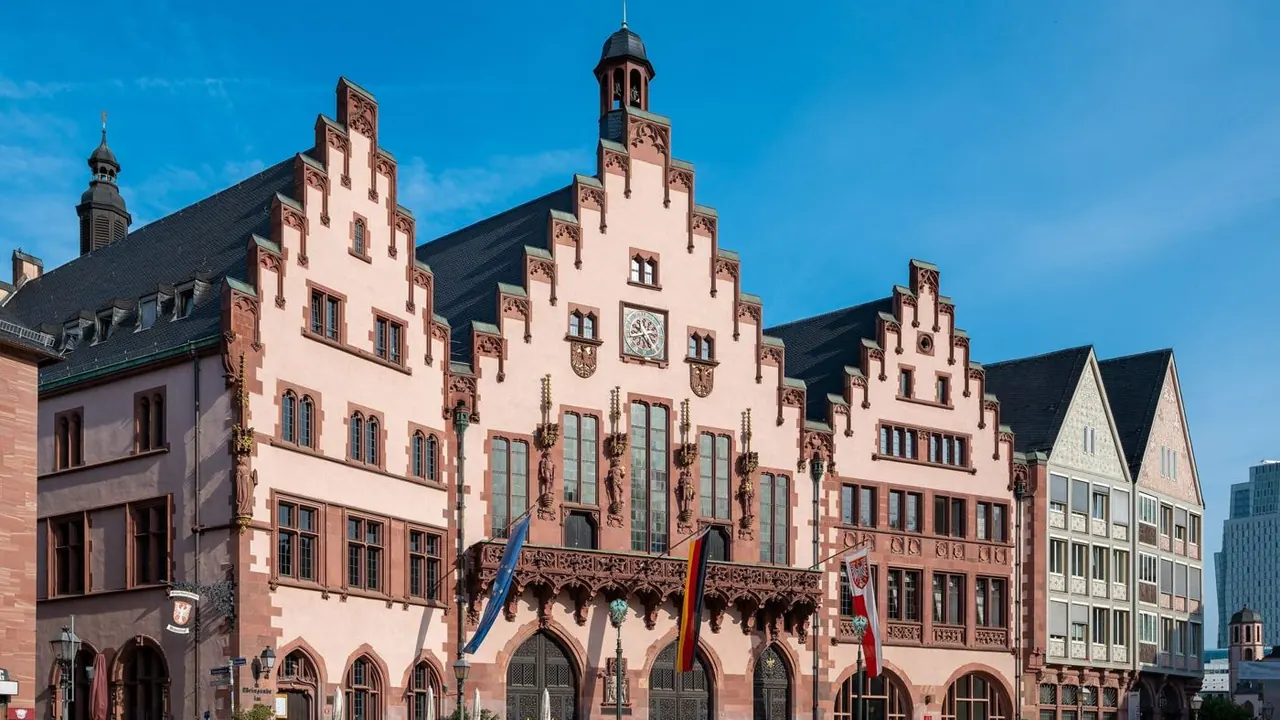
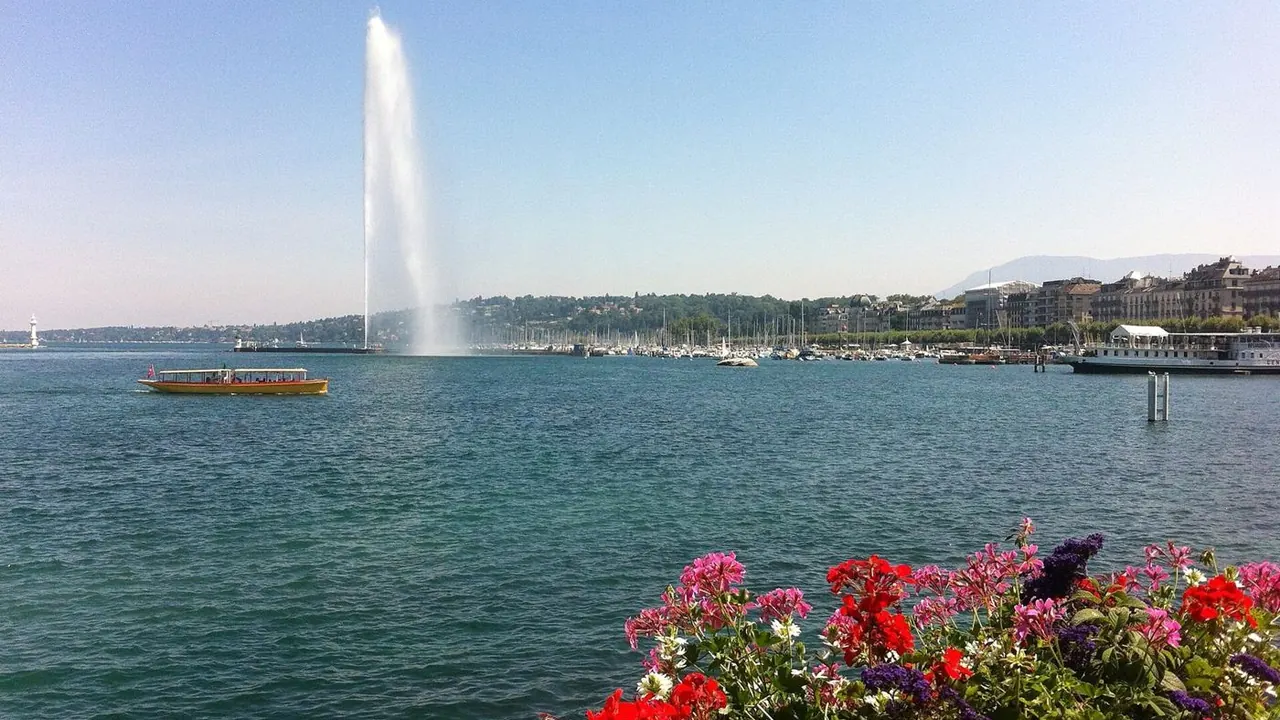
Photos: Frankfurt by Thomas Wolf, CC BY-SA 3.0 DE, cropped; Geneva by Diviosen, CC BY-SA 3.0, cropped.
Frankfurt or Geneva?
Our verdict in twelve categories, each scored against the same fixed benchmark cities, and the climate month by month, so you can choose for your trip.
Choose Frankfurt for
- prices
- nightlife
- live music and the arts
Frankfurt is the better choice for a traveller who wants a busy city base with plenty to do after dark and a rail map spread out in front of them. Its museum embankment, respected opera, weekend techno and apple-wine taverns fill the evenings. Heidelberg, Cologne and the Rhine Gorge are all within easy reach by train, and it costs a good deal less than Geneva, especially if you avoid the trade-fair weeks.
Choose Geneva for
- beaches
- nature and the outdoors
- shopping
Geneva suits someone who would rather spend the day looking at mountains than at a skyline. The lake is clean enough to swim in, the Salève and the Jura are on the doorstep and Chamonix is not far, and the city itself is orderly, quiet and very easy to get around. Come prepared to pay heavily for that calm, and for watches if you are tempted.
Scoreboard
Twelve categories on one fixed scale from 0 to 100. The shaded stretch is the gap between the two.
Your match
Pick a travel style or drag the sliders, and both match scores follow your weighting.
Too close to call, 1 point apart
Wins on prices and nightlife with your weighting.
Wins on beaches and nature and the outdoors with your weighting.
What matters to you?
Category by category
What the scores mean for a trip.
Beaches & swimming
Neither city is on the sea, but Geneva has a real swimming lake right in the centre. You can dive off the jetty at the Bains des Pâquis with the Jet d'Eau in front of you, or spend the afternoon on the lawns and pebbles of Genève-Plage. It is still more lido than beach, and the season is short.
In Frankfurt, swimming means a trip out of town to a gravel-pit lake such as the Langener Waldsee in the southern forest, or an outdoor pool. The Main is for sitting beside, not for getting into.
Food & drink
The two eat about equally well, but in very different styles. Frankfurt's cooking is hearty and informal: tart Apfelwein from stoneware jugs, Handkäs mit Musik in Sachsenhausen taverns and a lunch stop at the Kleinmarkthalle, with cheap global food in the Bahnhofsviertel.
Geneva cooks the French way with a Swiss accent. You get lake perch fillets, fondue in wood-panelled brasseries, local Chasselas and Gamay, and polished fine dining in Carouge and the Old Town, but almost nothing cheap or casual.
Culture & sights
The two are about equal for sightseeing, and each needs two or three days, but the interest is different. Frankfurt is a museum city: the Museumsufer lines both banks of the Main, the Städel holds the most important art collection of the two cities, and the rebuilt Römer and Goethe's birthplace sit beneath the tallest skyline in Germany.
Geneva's sights tell the story of Calvin and of international diplomacy. You can climb the towers of St Pierre Cathedral, walk past the Reformation Wall, then visit the Palais des Nations, the Red Cross museum and CERN, which have no equivalent in Frankfurt.
Nightlife
Frankfurt is the livelier city at night. It has a real techno and house heritage shared with Offenbach, bars in the Bahnhofsviertel with plenty of character, and rowdy cider pubs in Alt-Sachsenhausen, although it only properly fills up on Fridays and Saturdays.
The Pâquis district in Geneva plays a similar role to Frankfurt's station area, and the squat-born venues around Jonction keep a small club scene going. Otherwise, evenings mean wine bars in Carouge, drinks are expensive, and the city winds down early.
Nature & outdoors
The difference is one of scale. Frankfurt's highest ground is the Großer Feldberg, a wooded summit of about 880m that you can reach from the centre by public transport, and the country around it stays low and rolling: the quiet forests of the Odenwald, vineyard paths through the Rheingau down to the Rhine Gorge, and long, level rides beside the Main. It is a landscape for a day on foot or by bike, and you need no special kit.
Geneva has proper mountains on every horizon. Mont Blanc, the highest peak in western Europe, shows at the far end of the lake on a clear day, and paragliders launch from limestone cliffs just above the city. In winter the ski slopes and the high Alpine valley of Chamonix are near enough for a day trip by road, and in summer there is rowing on the lake and cycling along the Rhône.
Day trips
Both are excellent bases for day trips, and Frankfurt has a slight edge because of Germany's high-speed rail network. Heidelberg, the castle-lined Rhine Gorge and Cologne Cathedral are each about an hour away, with Mainz, Wiesbaden and the Rheingau vineyards even closer.
From Geneva, the outings are by lake steamer and across the French border. You can visit Lausanne, Chillon and the Lavaux terraces along the shore, Yvoire and Annecy on the French side, and Gruyères or Bern for a longer day.
Good for families
With children, the two cities are close, though Frankfurt has a little more aimed at them. It has the dinosaur hall at the Senckenberg, a central zoo, the Palmengarten glasshouses, and a wildlife park and small fairy-tale amusement park in the Taunus.
Geneva has no zoo, aquarium or theme park, but the dioramas at the Natural History Museum, the small animal enclosures at the Bois de la Bâtie and rides on the yellow harbour boats work well with younger children. A day in the mountains fills the gap.
Getting around
Both have compact centres and transport that works, but Geneva is the simpler of the two. You can walk from the station over the bridges to the Old Town and on to Carouge, the trams run on time, the yellow lake boats are part of the same network, and hotel guests usually travel free.
Frankfurt's integrated system covers far more ground, all the way to the Taunus, Wiesbaden and Mainz, and its airport and main station connect directly to long-distance trains. The cost is a tangle of lines and zones that takes a day to learn.
Shopping & style
Geneva is the better shopping city if you have something particular in mind, namely watches and jewellery. The flagship boutiques of the big Swiss watch houses line the Rue du Rhône, and the Old Town chocolatiers and Carouge craft workshops add a more affordable side.
Frankfurt is good for practical shopping. You have the department stores and malls of the Zeil, luxury labels on Goethestraße and independent shops on Berger Straße, with stoneware apple-wine jugs as the souvenir to take home.
Affordability
The gap here is huge. Frankfurt is costly for a German city, mainly because of hotels during the trade fairs, but its taverns, grills, museum pass and quieter summer weekends can bring it down to moderate.
Geneva is expensive all year at every level, from the hotel room to a glass of wine. Free city museums, free transport for hotel guests and cheap lake lidos help a little, and many budget travellers stay or eat across the border in France.
Live music & performing arts
Frankfurt has the stronger stage. Its opera company is among the most respected in Germany and known for adventurous productions, the Alte Oper hosts the radio symphony orchestra, and a post-war jazz tradition lives on in cellar clubs.
Geneva does well for a city of its size. It has opera and ballet at the Grand Théâtre, the Orchestre de la Suisse Romande in Victoria Hall and concerts in a former pumping station in the Rhône. In summer it has the edge, with open-air concerts at a time when Frankfurt's season goes quiet.
Wellness & relaxation
Neither city is built around wellness, and the two are about equal. In Frankfurt, relaxing usually means a short trip out to the spa towns: the thermal baths in Bad Homburg or Wiesbaden's Art Nouveau Kaiser-Friedrich-Therme.
Geneva has its own bathing habit in the city itself. In winter you can take a sauna at the Bains des Pâquis and then plunge into the cold lake, Évian and Divonne are close by, and quiet Sundays make the whole place feel slower.
When should you go?
Pick your month. The climate figures are measured averages, not a forecast.
Frankfurt in July
Geneva in July
Daytime high, °C
Rainfall in the month, mm
Temperature and rainfall are climate normals, averaged over the years shown. Frankfurt: 1991-2020 normals, Frankfurt Westend (2 km from centre). Geneva: 1991-2020 normals, Geneve-Cointrin (5.7 km from centre).
The two cities have almost the same temperatures through the year: around 5°C in January, low twenties by late May and a summer peak of 26°C in Frankfurt and 27°C in Geneva. June to August is the time for outdoor swimming in both, at Frankfurt's forest lakes and in Geneva's lake. Spring and September are the most comfortable for long days on foot, while December to February is cold and grey in both and best kept for museums, concerts or, from Geneva, the ski slopes.
The real difference is rain and sun. Frankfurt is the drier city, with as little as 38mm in April and no truly wet month. Geneva gets more rain all year, and autumn is the wettest stretch, peaking at 94mm in October. In return, Geneva gets a little more sunshine in most months, particularly in winter and high summer, so a clear August day on the lake there is brighter than one on the Main.
Which traveller are you?
On a trip on a tight budget, Frankfurt is the clear choice. Cider taverns, Turkish grills and market stalls keep meals cheap, and weekend hotel rooms come down once the business crowd leaves. In Geneva even a simple meal costs a lot.
For an outdoors trip, choose Geneva. A cable car climbs the Salève above the city, the Jura has forest ridges for hiking and cross-country skiing, and you can sail and paddleboard on the lake. Frankfurt's Taunus is pleasant but much gentler walking and cycling country.
On a food and nightlife trip, Frankfurt gives you more evening. You can eat Grüne Soße at shared tavern tables in Sachsenhausen and then go on to Bahnhofsviertel cocktail bars or a serious techno club. Geneva eats very well, the French way, but the city goes quiet early.
Before you go
| Measure | Frankfurt | Geneva |
|---|---|---|
| Official language | German | French, German, Italian, Romansh |
| Currency | Euro (EUR) | Swiss Franc (CHF) |
| Sockets | CF230 V, 50 Hz | CJ230 V, 50 Hz |
| Driving side | Right | Right |
| Time zone | UTC+1, UTC+2 in summer | UTC+1, UTC+2 in summer |
| Emergency number | 112 | 112 |
| Elevation | 101 m | 403 m |
| Main airport | Frankfurt Main Airport (FRA)13 km from centre281 non-stop destinations | Geneva International Airport (GVA)5 km from centre150 non-stop destinations |
| Public holidays this year | 10 days | 9 days |
By the numbers
| Measure | Frankfurt | Geneva |
|---|---|---|
| City population | 760,656 | 211,152 |
| People per km² | 3,063 | 13,280 |
| Museums within 10 km | 53 | 34 |
| UNESCO World Heritage sites within 50 km | 4 | 2 |
Where else could you go?
Every comparison below shares a destination with this one, so you can follow Frankfurt or Geneva somewhere new.