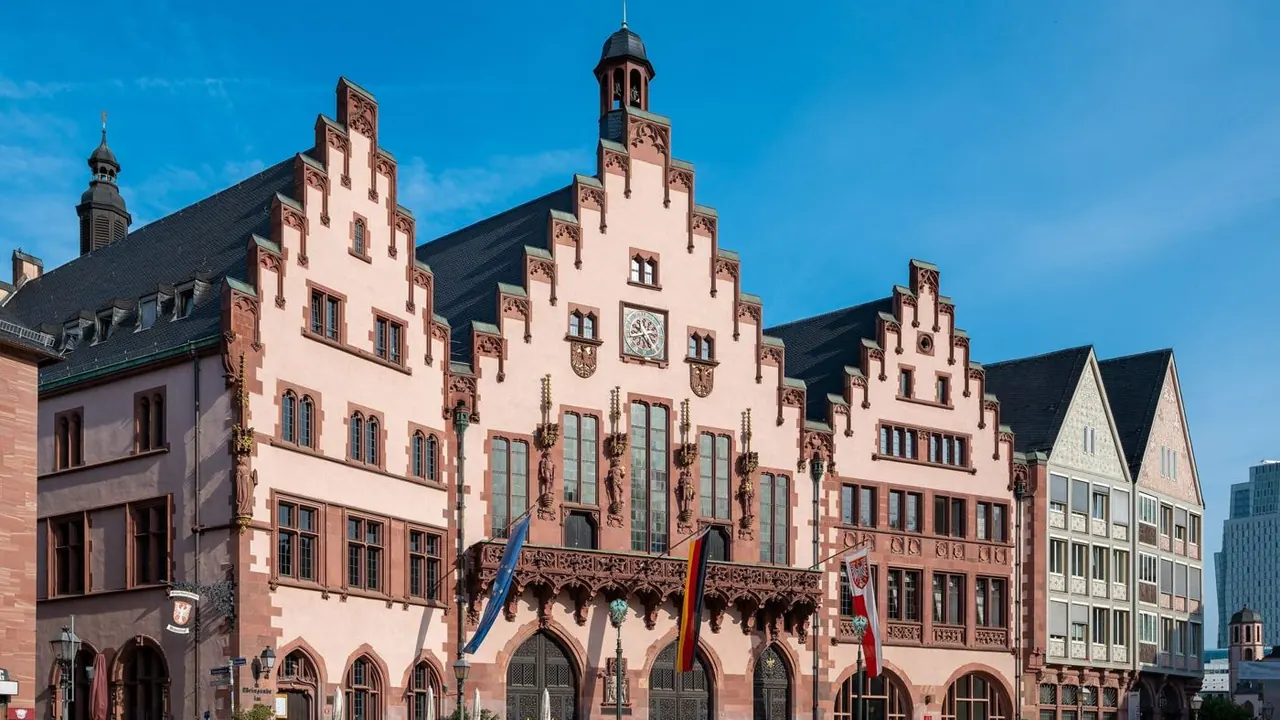
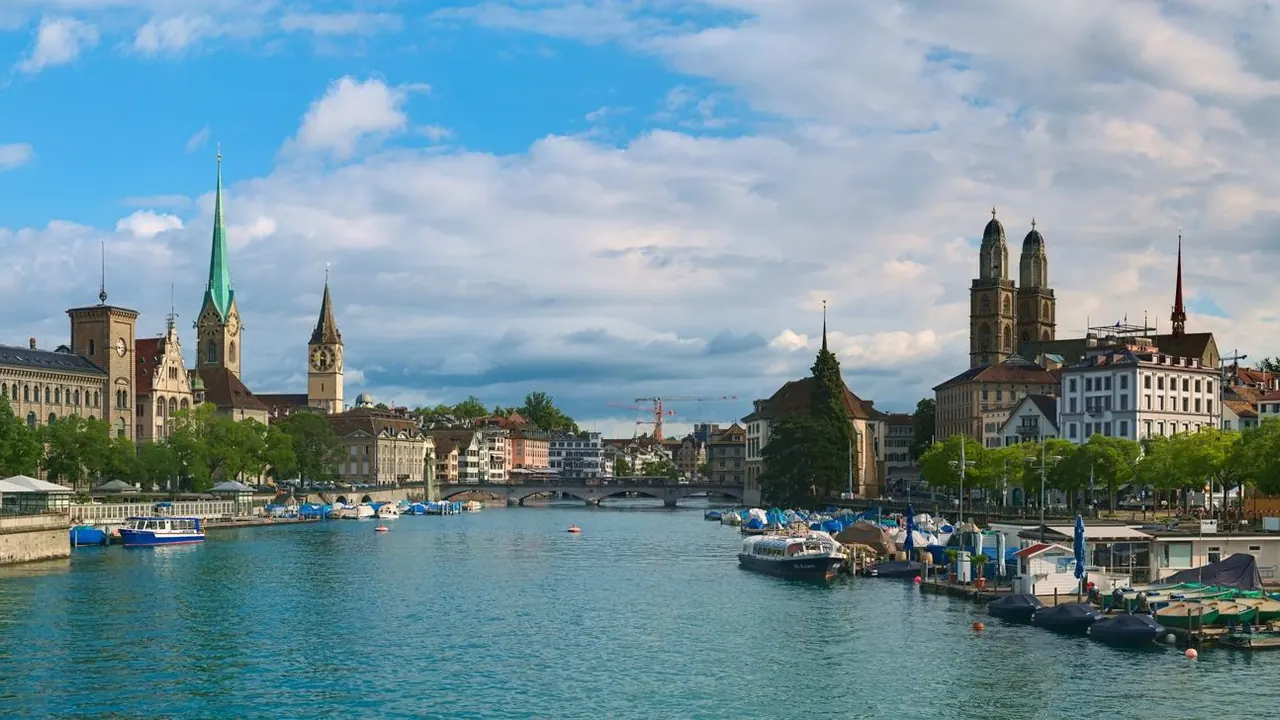
Photos: Frankfurt by Thomas Wolf, CC BY-SA 3.0 DE, cropped; Zurich by Daniel Kraft, CC BY-SA 3.0, cropped.
Frankfurt or Zurich?
Our verdict in twelve categories, each scored against the same fixed benchmark cities, and the climate month by month, so you can choose for your trip.
Choose Frankfurt for
- prices
- culture and sights
- day trips
Frankfurt suits travellers who want a well-connected base without the extreme costs, especially those planning to spend half their time on trains. Heidelberg, the Rhine Gorge, Cologne and the spa towns are all within easy reach. In town there's a long run of museums on the Museumsufer, apple-wine taverns in Sachsenhausen and a skyline unlike anywhere else in Germany. Choose it if money matters and you can avoid the trade-fair weeks.
Choose Zurich for
- beaches
- nature and the outdoors
- getting around
Zurich is the better pick when the setting matters more than the bill. The lake for swimming, the Alps on the horizon and the easiest transport in Europe make it ideal for families, walkers and anyone who wants a summer swim between sights. It also goes out harder at night and has finer shopping streets. The catch is cost: almost everything is dearer than in Frankfurt, so it suits a shorter stay or a generous budget.
Scoreboard
Twelve categories on one fixed scale from 0 to 100. The shaded stretch is the gap between the two.
Your match
Pick a travel style or drag the sliders, and both match scores follow your weighting.
Wins on prices and culture and sights with your weighting.
Wins on beaches and nature and the outdoors with your weighting.
What matters to you?
Category by category
What the scores mean for a trip.
Beaches & swimming
Neither city has a coast, but Zurich does far more with its water. In summer you can swim from wooden bathing houses and lawned lidos along a clean lake, float down the Limmat at the Letten river baths, or step into the historic baths in the old town. All of it is from grass and decks, not sand.
Frankfurt's Main is for sitting beside, not swimming in. In July and August, the sandy gravel-pit lakes such as the Langener Waldsee are your best option, and getting there means a trip out of town.
Food & drink
The two are evenly matched at the table, but the character is quite different. Frankfurt's charm is rustic and communal: long shared tables in Sachsenhausen taverns, grey jugs of Apfelwein, Grüne Soße, and the Kleinmarkthalle for sausage and cheese. The cheap global food of the Bahnhofsviertel makes eating out easy on the wallet.
Zurich is more polished. You'll find veal in cream with rösti in panelled guild houses, fondue in winter, and the chocolate and confectionery of the Paradeplatz tea rooms. What it lacks is Frankfurt's market hall and street food, and every meal costs more.
Culture & sights
Both make good material for two or three days, and each leans a different way. Frankfurt has more institutions to choose from, with over a dozen museums lining the Museumsufer, led by the Städel. Its old town is a rebuilt one around the Römer, set against Germany's only real skyline of towers.
Zurich's old town is the original, compact and well kept, with the Grossmünster and Chagall's windows in the Fraumünster. Its museums are fewer but strong, notably the Kunsthaus and the Rietberg in its lakeside villa.
Nightlife
Both cities have deep roots in electronic music, but Zurich has the larger and later scene. Clubs in Kreis 4 and 5 and in Zurich West stay open until morning, and the August Street Parade is a major techno event. In summer, the lake bathing houses become bars. The main drawback is the price of a round.
Frankfurt's clubs are fewer and more serious. Evenings revolve around the cocktail bars of the Bahnhofsviertel, the rowdy pubs of Alt-Sachsenhausen and the neighbourhood bars on Berger Straße. It is cheaper but quieter, and only really fills up at weekends.
Nature & outdoors
Zurich has the more dramatic setting. The Glarus Alps are visible across the lake, the Uetliberg ridge is a short train ride away, and Rigi, Pilatus and ski slopes such as Flumserberg can all be reached in about an hour.
Frankfurt's countryside is greener and softer. You'll find beech forest and Roman frontier trails on the Großer Feldberg in the Taunus, the vast Stadtwald, flat cycle paths along the Main, and vineyard walks in the Rheingau. It is lovely for a day on foot or by bike, but there are no mountains.
Day trips
Both are outstanding bases, each at the heart of its country's railways, so the choice comes down to the kind of day out. From Frankfurt, it's mostly German towns and river scenery: Heidelberg's castle, the castle-lined Rhine Gorge, Cologne Cathedral, Würzburg's Residenz, and imperial cathedrals in Speyer and Worms.
From Zurich, the trips are lakes and old towns: Lucerne's wooden bridges, Bern's arcades, the St Gallen abbey library, the Rhine Falls with Stein am Rhein, and Rapperswil by boat.
Good for families
Zurich is the easier city for children. It is safe and orderly, with a zoo that has an indoor rainforest and an elephant park, shallow lake lidos in summer, and lake boats. Technorama in Winterthur and the Swiss Museum of Transport in Lucerne make easy day outings.
Frankfurt works well for a few days. The dinosaur skeletons at the Senckenberg, the central zoo, the Palmengarten glasshouses and the wildlife park in the Taunus will keep children busy, but there is less to build a whole family trip around.
Getting around
Neither city needs a car and both centres are small enough to walk, but Zurich asks less of you. In Frankfurt it is only minutes on foot from the Römer and the cathedral across the bridges to the Museumsufer. One regional network carries you out to Mainz, Wiesbaden and the Taunus, and the airport train takes about a quarter of an hour. The cost of that reach is a tangle of lines and fare zones that can take a day to read with confidence.
Zurich's ticket is integrated too, but it is far easier to use from the first day, and it takes in more than streets and rails. One pass covers a tram through the old town, the climb up the Uetliberg and a boat across the lake, so a day that mixes hill, water and sightseeing needs almost no planning. The main station puts the airport and the rest of Switzerland a short ride away.
Shopping & style
Zurich has the stronger draw. Bahnhofstrasse runs from the station to the lake, lined with watchmakers and jewellers. Watches are the speciality, chocolate is the easy souvenir, and the old viaduct arches in Zurich West house design shops.
Frankfurt is more practical. The Zeil offers department stores and malls, Goethestraße has luxury fashion, and Berger Straße and Schweizer Straße hold independent shops, but the city has no speciality to rival Swiss watches.
Affordability
This is where the two cities differ most. Frankfurt is expensive by German standards, mainly because of hotels priced for business travellers, but its taverns, grills and market stalls keep meals cheap. If you avoid the trade fairs and visit at a weekend, it can be a moderate trip.
Zurich is among the most expensive cities in the world. Rooms, lunches, drinks, transport and museums are all costly. Picnics by the lake, supermarket lunches and the free lidos help a little, but they don't change the overall picture.
Live music & performing arts
Opera leads the bill in each city, and the difference lies in what surrounds it and when. Frankfurt's company is known for adventurous productions. The Alte Oper is home to the radio symphony orchestra, Mousonturm stages contemporary dance, and cellar clubs keep a post-war jazz tradition going. The English-language theatre is a real help if you don't speak German. The season runs from autumn to early summer, though, so there is less on in July and August.
Zurich puts opera and ballet together at the Opernhaus on the lake, and the Tonhalle Orchestra plays in its restored hall. The Schauspielhaus is a major stage, but it performs mostly in German. Summer is where Zurich pulls ahead: open-air film and the Theater Spektakel come to the lake shore, and the Rote Fabrik hosts jazz, indie and electronic acts.
Wellness & relaxation
Zurich makes it a little easier to unwind without leaving town. There are thermal pools in the vaults of the old Hürlimann brewery with a rooftop pool, wooden lake houses that become saunas in winter with cold-water dips, and Baden's Roman hot springs twenty minutes away.
Frankfurt's own offer is limited to municipal pools and the Palmengarten. The spa towns around it make up for that, with the Art Nouveau Kaiser-Friedrich-Therme in Wiesbaden and the spa park at Bad Homburg.
When should you go?
Pick your month. The climate figures are measured averages, not a forecast.
Frankfurt in July
Zurich in July
Daytime high, °C
Rainfall in the month, mm
Temperature and rainfall are climate normals, averaged over the years shown. Frankfurt: 1991-2020 normals, Frankfurt Westend (2 km from centre). Zurich: 1991-2020 normals, Zurich Town / Ville. (2.2 km from centre).
Frankfurt is the warmer and drier of the two all year, and its summer is the easier one for walking the streets and sitting out by the Main. July and August reach about 26°C, with long sunny days and moderate rain. Its gravel-pit lakes are only really worth a swim in those two months. Spring and September are mild and settled, which makes them good for sightseeing and for day trips to the Rhine.
Zurich runs a couple of degrees cooler, peaking around 24°C, and is much wetter. From May to August it gets about 126mm a month, roughly double Frankfurt's rain, so pack for regular showers. Even so, the lake and river baths are open from June to early September. In both cities December and January are cold and dull, with highs of only about 4°C to 6°C. Zurich gets slightly more winter sunshine, and the mountains above the fog are often clear.
Which traveller are you?
On a trip on a tight budget, Frankfurt is the clear choice. Cider taverns, Turkish grills and market stalls keep meals cheap, and hotels become reasonable at weekends. In Zurich, even a casual lunch or a simple room strains a careful budget.
For an outdoors trip, Zurich wins easily. You can swim in the lake, walk the Uetliberg ridge, and reach high-mountain hiking on Rigi or Pilatus within an hour. Frankfurt's Taunus and Rhine vineyards offer pleasant walking, but they are gentle by comparison.
On a family trip with young children, Zurich is easier. It is clean and calm, its zoo has a Madagascar rainforest hall, and the shallow lake lidos are perfect for summer afternoons. Frankfurt's dinosaur hall at the Senckenberg is a highlight, but there is less to fill the days.
Before you go
| Measure | Frankfurt | Zurich |
|---|---|---|
| Official language | German | French, German, Italian, Romansh |
| Currency | Euro (EUR) | Swiss Franc (CHF) |
| Sockets | CF230 V, 50 Hz | CJ230 V, 50 Hz |
| Driving side | Right | Right |
| Time zone | UTC+1, UTC+2 in summer | UTC+1, UTC+2 in summer |
| Emergency number | 112 | 112 |
| Elevation | 101 m | 408 m |
| Main airport | Frankfurt Main Airport (FRA)13 km from centre281 non-stop destinations | Zürich Airport (ZRH)9 km from centre226 non-stop destinations |
| Public holidays this year | 10 days | 10 days |
By the numbers
| Measure | Frankfurt | Zurich |
|---|---|---|
| City population | 760,656 | 440,935 |
| People per km² | 3,063 | 5,016 |
| Museums within 10 km | 53 | 63 |
| UNESCO World Heritage sites within 50 km | 4 | 1 |
Where else could you go?
Every comparison below shares a destination with this one, so you can follow Frankfurt or Zurich somewhere new.