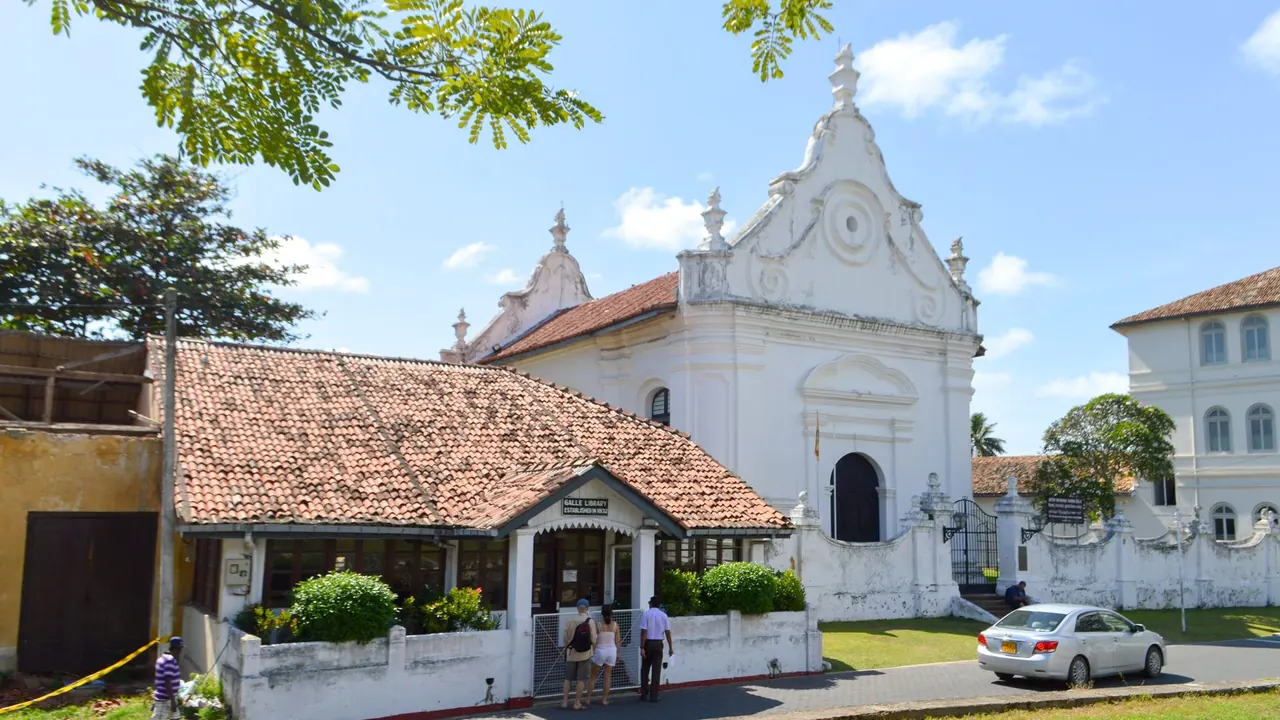
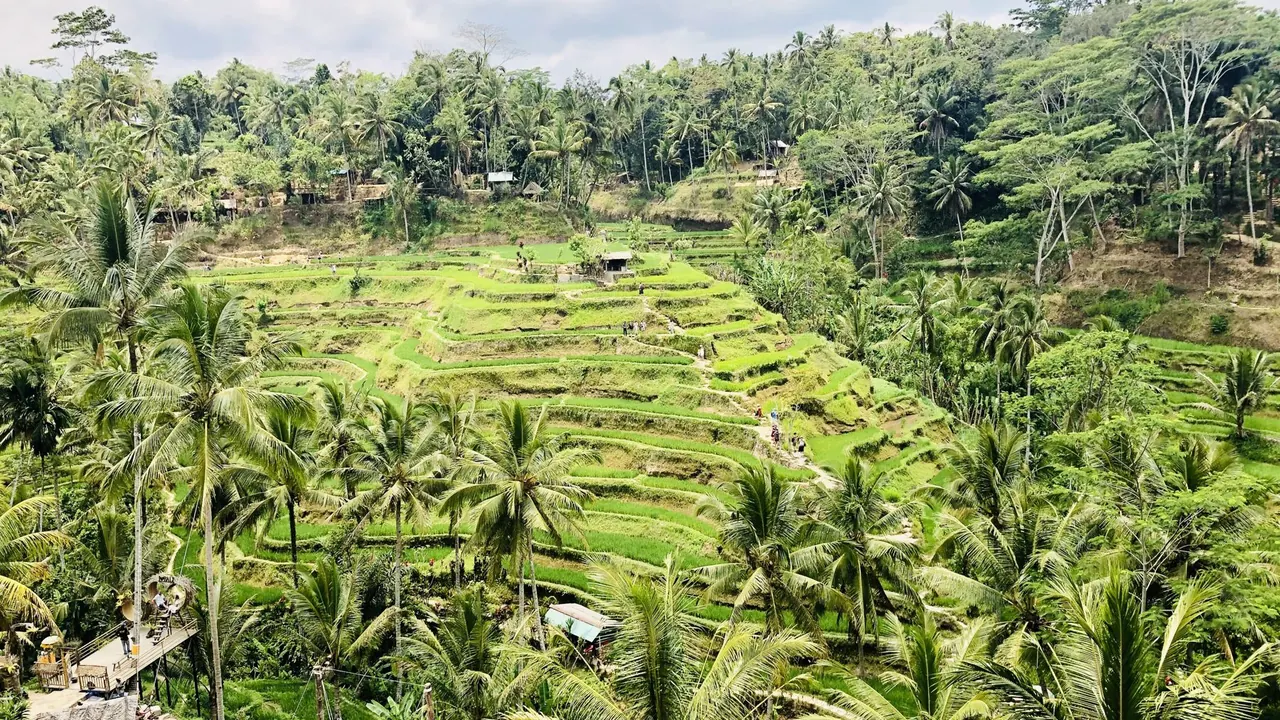
Photos: Galle by Francisco Anzola, CC BY 2.0, cropped; Ubud by Pinterpandai, CC BY-SA 3.0, cropped.
Galle or Ubud?
Our verdict in twelve categories, each scored against the same fixed benchmark cities, and the climate month by month, so you can choose for your trip.
Choose Galle for
- beaches
- getting around
- nightlife
Galle is the pick for a sun-and-sea trip with some history on the side. You can spend the morning snorkelling over the reef at Dalawella or swimming in Unawatuna's sheltered bay, and the evening walking the ramparts of the old Dutch fort. Inside the walls everything is close enough to walk to, so the days take little planning. Come between December and April, when the sea is calm.
Choose Ubud for
- live music and the arts
- wellness
- day trips
Ubud suits travellers who want to slow down far from the coast. It has yoga at dawn, massage that is part of everyday life, walks through rice terraces and Balinese dance with a gamelan orchestra every night. It also makes a better base for temples and volcano trips than Galle does for exploring Sri Lanka. In return there is no beach, and almost every outing depends on a driver.
Scoreboard
Twelve categories on one fixed scale from 0 to 100. The shaded stretch is the gap between the two.
Your match
Pick a travel style or drag the sliders, and both match scores follow your weighting.
Wins on beaches and getting around with your weighting.
Wins on live music and the arts and wellness with your weighting.
What matters to you?
Category by category
What the scores mean for a trip.
Beaches & swimming
Galle is on the coast, and the beaches are a big part of a stay there. Unawatuna's calm, curved bay is a few minutes south by tuk-tuk. Jungle Beach lies below Rumassala, and Mirissa and Weligama are within an hour. The catch is the season: from May to September the surf makes many of these beaches unsafe for swimming.
Ubud has no beach at all. Sanur, the closest calm swim, takes the best part of an hour by car, and the black-sand Gianyar coast is better for watching surfers than for swimming. Most guests swim in their villa pool instead.
Food & drink
Ubud gives you more variety. It has Balinese dishes such as babi guling and slow-cooked bebek betutu from family warungs, and a large international side too, with plant-based cafés, Kintamani coffee and a few tasting-menu restaurants built on local produce.
Galle's best cooking is Sri Lankan: rice and curry with many small dishes, hoppers at breakfast, and fish curries made sour with goraka. The fort's courtyard cafés add good coffee and seafood, but a few days covers the choice. In both towns the best meals are away from the streets aimed at visitors.
Culture & sights
The two are about even here, but the culture is of a different kind. Galle's appeal is a single preserved townscape: the UNESCO-listed fort, with its Dutch church, colonial verandas, maritime museum and lighthouse, all inside 17th-century ramparts.
Ubud's culture is something you see happening around you. There are offerings on doorsteps, temple processions and a royal palace. Its painting collections at Neka, ARMA and Puri Lukisan cover a century of Balinese art, and the ancient Elephant Cave of Goa Gajah is on the edge of town. Choose Galle for colonial architecture and Ubud for living religion and art.
Nightlife
Neither town is the place for a night out, and in both the evening is mostly dinner. A quiet night in Galle is set by the sea. You walk the ramparts at sunset, then have a slow drink on a colonial veranda, and the walled town has emptied out well before late. For music, the beach bars at Unawatuna are a short tuk-tuk ride away and get a little louder in the dry season.
Ubud's evenings are set among the trees. You eat at a garden table, perhaps hear a band in one of the few music bars, and go to bed early because so many visitors have a dawn yoga class or a Batur climb ahead. What Ubud has is a club scene on the same island: Seminyak and Canggu are a long drive away, but Galle has nothing comparable within reach.
Nature & outdoors
Ubud has the more striking scenery, and it starts on the edge of town. You can walk the rice terraces along the Campuhan Ridge or go to Tegallalang, raft the Ayung gorge, swim under jungle waterfalls or climb Mount Batur in the dark for sunrise over the crater lake.
Galle's outdoors is mostly about the sea. There are reefs to snorkel and dive, surf breaks at Weligama and Hikkaduwa that suit beginners, and blue whales off Mirissa from December to April. Inland, the Kanneliya rainforest and the mangroves of Koggala Lake add some green, but there is less to walk through than around Ubud.
Day trips
Ubud makes the better base for days out. The holy spring of Tirta Empul, the cliff-cut tombs of Gunung Kawi, Besakih on the slopes of Mount Agung and the Jatiluwih terraces are all within a day, and each one is quite different from the next. Bali's slow roads limit how many you can fit into one day.
From Galle, the coast road leads to Ambalangoda's mask workshops, the Mulkirigala cave temple and Colombo. Much of the rest is more beaches, though, and Sri Lanka's ancient cities and hill country are too far away for a day trip.
Good for families
Neither town is designed for children, but Ubud has a few more outings to fill the days. There is a safari park and a zoo nearby, and children enjoy the dance shows and the gentle rafting. It suits older children who like being outdoors, rather than toddlers.
Galle is simpler: a quiet fort to explore, paddling in Unawatuna's bay, turtle hatcheries and whale-watching boats. In both places the heat, poor pavements and busy main roads are hard on small children.
Getting around
Getting around is much easier in Galle. Inside the fort you can walk everywhere on flat lanes, tuk-tuks are always on hand for the beaches, and the coastal train and buses run to Colombo and along the south coast.
Ubud has no public transport you can rely on. Its pavements are broken, and the roads climb steeply in and out of the river valleys. Most visitors use ride-hailing apps or hire a driver for the day, so if you want to walk to dinner, stay near the centre.
Shopping & style
Ubud is much the better place to buy crafts. The Art Market across from the palace sells sarongs, baskets and carvings. On the road in, Mas is known for woodcarving, Celuk for silver and Batuan for painting, and the road towards Tegallalang is lined with furniture workshops.
Galle's shopping fits into a few fort lanes: linen boutiques, tea and spices, beeralu lace and gem dealers, where you should be careful before buying anything valuable. Neither town has fashion streets or department stores.
Affordability
Both towns have cheap and expensive sides, but Ubud is a little cheaper overall. Its garden homestays and warungs are right in the centre, and massages and day drivers cost very little.
In Galle, the cheap options are mostly outside the walls: local curry houses, guesthouses at Unawatuna, trains and tuk-tuks. The restored villas and cafés inside the fort, where most visitors want to be, charge prices closer to a European resort.
Live music & performing arts
Ubud has far more to watch. Every evening there is Legong, Barong or Kecak with a live gamelan orchestra, in the palace courtyard, on the lotus-pond stage at Pura Taman Saraswati or in village temple grounds. If you come across a temple festival, you will see the same dances performed for their original purpose.
Galle offers little beyond the occasional dance and drumming show put on by a hotel. To see the coast's mask-dance tradition you need to go to Ambalangoda.
Wellness & relaxation
Both are good places to slow down, but in Ubud wellness is what the town is built around. Yoga runs from dawn to dusk in open pavilions, there are spas above the Ayung and Petanu gorges, and flower baths, traditional healers and the purification ritual at Tirta Empul are part of ordinary local life.
Galle's strength is Ayurveda. Residential retreats there offer doctors' consultations, herbal treatments and set diets over a week or more, and there are yoga studios at Unawatuna and Thalpe. The calm of the fort and the sea do the rest.
When should you go?
Pick your month. The climate figures are measured averages, not a forecast.
Galle in July
Ubud in July
Daytime high, °C
Rainfall in the month, mm
Where the figures come from
Galle has no weather station within reach, so its figures come from a gridded climate model rather than a measured record, and read a broad area rather than the city itself.
Ubud's temperatures are measured 29 km from the centre, at Denpasar / Ngurah-Rai.
Ubud's station stands 209 m below the city centre, so the centre is likely a little cooler than the figures say.
Ubud has no rain gauge within 25 km of the centre, so its rainfall comes from a gridded climate dataset read at the city rather than from a gauge further away.
Temperature and rainfall are climate normals, averaged over the years shown. Galle: 2001-2020 normals, NASA POWER reanalysis grid, no weather station within 90 km. Ubud: 1991-2020 normals, Denpasar / Ngurah-Rai (29 km from centre).
Both towns are hot and humid all year, with afternoon highs that barely move, so the season you choose is really about rain. The two follow almost opposite patterns. Galle is driest from January to March. That is also when the sea is calm and clear, so it is the time for a beach trip. The southwest monsoon brings rough surf from May to September, and the heaviest rain comes in October and November, at over 330mm in November.
Ubud is at its best from May to September. August is the driest month, with only 36mm of rain and the most sunshine of the year. From December to February the rain is heavy, close to 300mm in January, but the rice fields are at their greenest. Highs around 31°C make Ubud slightly hotter than Galle. If you are travelling in the northern winter, Galle is the better choice. In the northern summer, Ubud is.
Which traveller are you?
For a beach and sun trip, choose Galle. Unawatuna, Jungle Beach and the reef pools at Dalawella are all a short tuk-tuk ride away, with warm water and turtles to snorkel with in the dry season. Ubud is inland, and its nearest good swimming beach is about an hour's drive.
On a relaxing and wellness trip, Ubud is the stronger choice. Yoga pavilions, riverside spas, flower baths and Balinese healers shape the whole town. Galle has serious Ayurveda retreats, but Ubud offers a wider range of ways to unwind.
For a short city break, Galle works better. The walled fort is flat, quiet and compact, so you can see it on foot in a day or two. In Ubud the sights are spread over steep valleys, and you need a driver to reach most of them.
Before you go
| Measure | Galle | Ubud |
|---|---|---|
| Official language | Tamil, Sinhala | Indonesian |
| Currency | Sri Lanka Rupee (LKR) | Rupiah (IDR) |
| Sockets | GM230 V, 50 Hz | CF50 Hz |
| Driving side | Left | Left |
| Time zone | UTC+5:30 | UTC+8 |
| Emergency number | Police 119, ambulance 110, fire 110 | 112 |
| Elevation | 0 m | 210 m |
| Main airport | Bandaranaike International Colombo Airport (CMB)133 km from centre56 non-stop destinations | Denpasar I Gusti Ngurah Rai International Airport (DPS)29 km from centre64 non-stop destinations |
By the numbers
| Measure | Galle | Ubud |
|---|---|---|
| City population | 93,118 | - |
| Museums within 10 km | 2 | 14 |
| UNESCO World Heritage sites within 50 km | 2 | 1 |
| Swim season, months above 21 °C | 12 months | 12 months |
Where else could you go?
Every comparison below shares a destination with this one, so you can follow Galle or Ubud somewhere new.