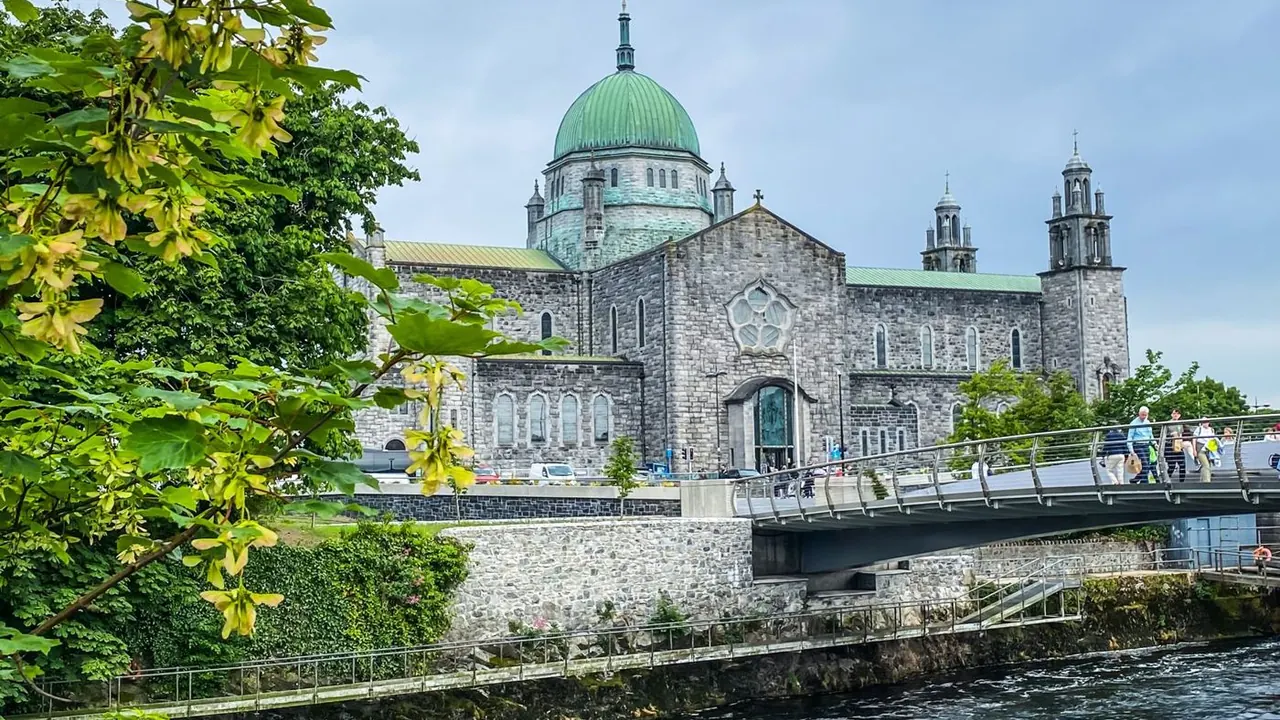
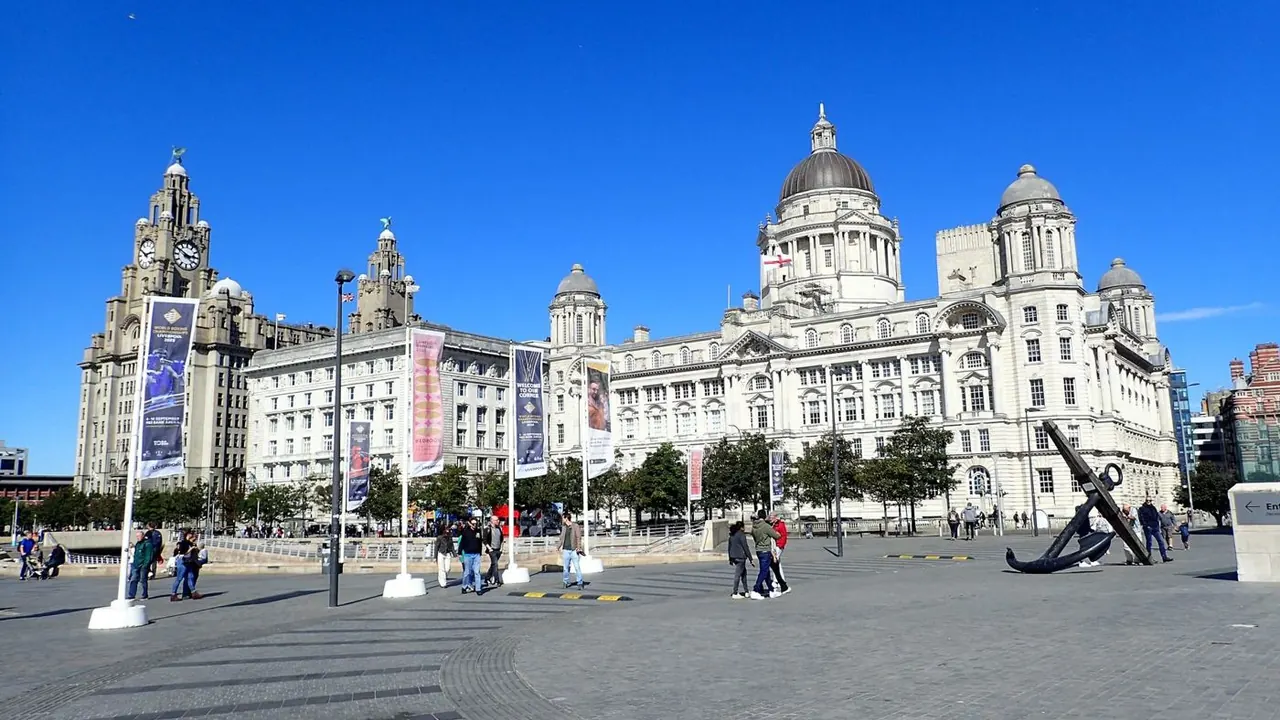
Photos: Galway by Dieglop, CC BY-SA 4.0, cropped; Liverpool by Marathon, CC BY-SA 2.0, cropped.
Galway or Liverpool?
Our verdict in twelve categories, each scored against the same fixed benchmark cities, and the climate month by month, so you can choose for your trip.
Choose Galway for
- nature and the outdoors
- beaches
- wellness
Galway suits travellers who want wild country on the doorstep and a small, sociable town to come back to. Connemara, the Burren and the Aran Islands are all within easy reach, the evenings belong to traditional music sessions in Latin Quarter pubs, and the whole centre can be crossed on foot in minutes. It works best for walkers, drivers and anyone happy to trade big sights and low prices for landscape, sea air and the fiddle in the corner.
Choose Liverpool for
- culture and sights
- prices
- nightlife
Liverpool is the better pick for a city break built on museums, music and nights out. The waterfront at the Pier Head and the Royal Albert Dock, the galleries on William Brown Street and the two cathedrals give it far more to see, most of the major collections are free, and trains run simply to Chester, Manchester and the coast. Families, budget travellers and anyone who wants clubs as well as pubs will find more here.
Scoreboard
Twelve categories on one fixed scale from 0 to 100. The shaded stretch is the gap between the two.
Your match
Pick a travel style or drag the sliders, and both match scores follow your weighting.
Wins on nature and the outdoors and beaches with your weighting.
Wins on culture and sights and prices with your weighting.
What matters to you?
Category by category
What the scores mean for a trip.
Beaches & swimming
Neither is a place to come for a swim, but Galway at least has a swimming culture right in town. Salthill's promenade starts a short walk from the centre, the Blackrock diving tower draws hardy regulars all year, and Silver Strand offers a sheltered cove.
Liverpool's shore is broader and more striking, with Gormley's iron figures at Crosby and the pine-backed dunes at Formby, but it is a train ride out. There the tide retreats a long way and soft mud and currents make swimming unwise, so it is a beach for walks and sunsets.
Food & drink
The two eat about as well as each other, in different ways. Galway's strength is its produce: Galway Bay oysters, mussels and chowder, Connemara lamb and Burren cheese, best found at the Saturday market by St Nicholas', plus a small, ambitious fine-dining tier, though the range is narrow and prices are high.
Liverpool has less fine dining but more variety. Beyond scouse with pickled red cabbage, there is a long-standing Chinatown, small international kitchens along Bold Street and the street-food halls of the Baltic Triangle, all of it easier on the pocket.
Culture & sights
Liverpool has much more to see. The Three Graces at the Pier Head, the Grade I listed warehouses of the Royal Albert Dock with the Maritime and International Slavery museums, the Walker Art Gallery and the two 20th-century cathedrals on Hope Street easily fill two or three days.
Galway's heritage takes an afternoon on foot: the Spanish Arch, Lynch's Castle on Shop Street, St Nicholas' Collegiate Church and the City Museum. Its charm lies in the lanes of the Latin Quarter and the walk past the Claddagh rather than in major collections.
Nightlife
Liverpool goes later and offers more choice. Concert Square and Seel Street fill with bars and clubs at weekends, the Baltic Triangle's warehouses run late electronic nights, and many evenings end well after 2am.
Galway is a pub town first and last, and a very good one: snugs, open fires and student crowds keep the centre loud even midweek. Clubs are few and most nights finish by the early hours, though race week at Ballybrit turns the town raucous for days. Stag and hen groups are part of the weekend in both.
Nature & outdoors
Galway is far stronger here. Connemara's bogs, lakes and the Twelve Bens lie about an hour west, the bare limestone of the Burren and the Cliffs of Moher are across the bay, and Lough Corrib runs north from the city itself for kayaking and fishing.
Liverpool is flat, and its outdoors is gentler: Sefton Park and its palm house, the Mersey promenade, red squirrels in Formby's pinewoods and the Wirral Way out to the Dee estuary. Real mountains are around two hours away in North Wales or the Lake District.
Day trips
Liverpool has the easier and broader list, much of it by train. Chester's Roman walls and Rows are about 45 minutes away and Manchester under an hour, with Port Sunlight and Southport closer still and Conwy's castle a longer day by car.
Galway's outings are more dramatic but scattered: Dún Aonghasa on Inis Mór, Kylemore Abbey, Cong and Clonmacnoise. They are mostly single sites and villages reached by ferry, coach tour or hired car, with only Ennis and Limerick on the railway.
Good for families
Liverpool is the easier city with children. The free World Museum has dinosaurs, an aquarium room and a planetarium, the Museum of Liverpool has a play gallery, the Mersey ferry is a simple treat, and Chester Zoo and Knowsley Safari Park are close by.
Galway is safe and welcoming but has little made for children beyond Salthill's aquarium, playgrounds and summer funfair, and the buskers on Shop Street. Wet days are the real problem there, with few indoor options to fall back on.
Getting around
Both have centres made for walking, but Liverpool connects better beyond them. Its docks, Ropewalks and cathedrals lie within about 2km of one another, and Merseyrail runs often to Crosby, Formby, Southport and the Wirral, though Sefton Park and Anfield need a bus or taxi.
Galway's pedestrian spine from Eyre Square to the Spanish Arch takes only minutes, and the prom to Salthill is a pleasant half-hour walk. The difficulty is the west: Connemara, the Burren and the Aran ferry mean coaches, tours or driving on narrow, winding roads.
Shopping & style
Along its single pedestrian street from Eyre Square to Quay Street, Galway offers the craft tradition Liverpool lacks. Claddagh rings are made in the city where they began, Aran knitwear hangs in shop after shop, and the bookshops, music shops and Saturday market stalls reward a slow browse. Beyond that there is one shopping centre for the chains, and much of Quay Street leans towards souvenirs.
For a proper day of shopping, though, Liverpool goes much further. Liverpool ONE spreads the major British chains and department stores across open-air streets towards the docks, Bold Street adds vintage clothes, records and independent boutiques, and the Baltic Triangle has small makers' studios. Its souvenirs run to Beatles memorabilia and football shirts.
Affordability
Liverpool is clearly the cheaper stay. Its hotels cost noticeably less than Britain's most visited cities for most of the year, and free entry to the maritime, slavery, world and Walker collections keeps sightseeing cheap, though big match weekends and the Grand National push rooms up.
Galway has too few rooms for its visitors, and they become very expensive in summer and at weekends, with the arts festival and race week booked out months ahead. The walkable streets and free pub music help, but tours and car hire for the west soon add up.
Live music & performing arts
Galway's stage is narrower but deeply rooted. Traditional sessions with fiddles and bodhráns fill Latin Quarter pubs most nights, Druid, founded here in 1975, is one of Ireland's leading theatre companies, An Taibhdhearc performs in Irish, and the July arts festival takes over the town. Classical music is only occasional.
For a music lover, Liverpool offers more on every front. Live bands play most nights around Mathew Street, Seel Street and the Baltic Triangle, the Cavern's cellar draws pilgrims, the Royal Liverpool Philharmonic plays a full season in its art deco hall on Hope Street, and the Everyman and Playhouse make their own theatre while the Empire takes the big touring shows.
Wellness & relaxation
Galway has the slight edge, because the sea gives it a real way to reset. Cold-water swims at Blackrock, windy walks on the Salthill prom and traditional seaweed baths along the west coast within a drive all help, and true quiet is close at hand in Connemara or on the Aran Islands. The centre itself gets loud on summer nights.
Liverpool has no bathing culture at all, so calm comes from slower things: Sefton Park, an unhurried crossing of the Mersey or an afternoon in the free galleries, with hotel and day spas around the docks. Weekend nights in the centre are loud, and a restful stay means moving out to the Wirral or the coast.
When should you go?
Pick your month. The climate figures are measured averages, not a forecast.
Galway in July
Liverpool in July
Daytime high, °C
Rainfall in the month, mm
Where the figures come from
Galway's temperatures are measured 64 km from the centre, at Shannon Airport.
Galway has no rain gauge within 25 km of the centre, so its rainfall comes from a gridded climate dataset read at the city rather than from a gauge further away.
Liverpool's temperatures are measured 47 km from the centre, at Manchester Airport.
Liverpool has no rain gauge within 25 km of the centre, so its rainfall comes from a gridded climate dataset read at the city rather than from a gauge further away.
Temperature and rainfall are climate normals, averaged over the years shown. Galway: 1991-2020 normals, Shannon Airport (64.2 km from centre). Liverpool: 1991-2020 normals, Manchester Airport (47.4 km from centre).
Neither city is ever warm enough for a beach vacation. In both the sea only reaches about 16°C in late summer, and summer highs are almost identical, around 20°C in July, which is pleasant weather for walking the streets. Winters in both are cool and grey rather than freezing, and short days make them better for pubs and museums than for long outings.
The real difference is rain. Galway is wetter in every month, and from October to December it gets more than 120mm a month, so autumn and early winter are its hardest season. Its best spell is late April to early June, when rainfall drops to about 75mm and May is its sunniest month, ideal for Connemara and the Aran Islands. Liverpool is drier overall and keeps its sunshine steady from May right through August, so its high summer is more reliable than Galway's.
Which traveller are you?
On an outdoors trip, Galway is the clear choice. The peaks of the Twelve Bens, the limestone of the Burren, the Cliffs of Moher and cycling on Inis Mór are all close, while Liverpool's best open country is Formby's dunes and the Wirral Way.
For a culture and arts trip, Liverpool has far more to offer. The maritime and slavery museums at the Royal Albert Dock, the Pre-Raphaelites at the Walker, two great cathedrals and a full orchestral season outweigh Galway's afternoon of medieval fragments.
On a trip with a tight budget, Liverpool makes the money go further. Its hotels cost less for most of the year and its major museums are free, while Galway has few rooms, high prices and a region that is costly to explore without coach tours or car hire.
Before you go
| Measure | Galway | Liverpool |
|---|---|---|
| Official language | English, Irish | English |
| Currency | Euro (EUR) | Pound Sterling (GBP) |
| Sockets | G230 V, 50 Hz | G230 V, 50 Hz |
| Driving side | Left | Left |
| Time zone | UTC, UTC+1 in summer | UTC, UTC+1 in summer |
| Emergency number | 112 | 112 or 999 |
| Elevation | 25 m | 70 m |
| Main airport | Shannon Airport (SNN)64 km from centre39 non-stop destinations | Liverpool John Lennon Airport (LPL)12 km from centre75 non-stop destinations |
| Public holidays this year | 11 days | 8 days |
By the numbers
| Measure | Galway | Liverpool |
|---|---|---|
| City population | 83,456 | 513,441 |
| People per km² | 1,563 | 4,592 |
| Museums within 10 km | 4 | 31 |
| UNESCO World Heritage sites within 50 km | 0 | 2 |
| Swim season, months above 21 °C | None | None |
Where else could you go?
Every comparison below shares a destination with this one, so you can follow Galway or Liverpool somewhere new.