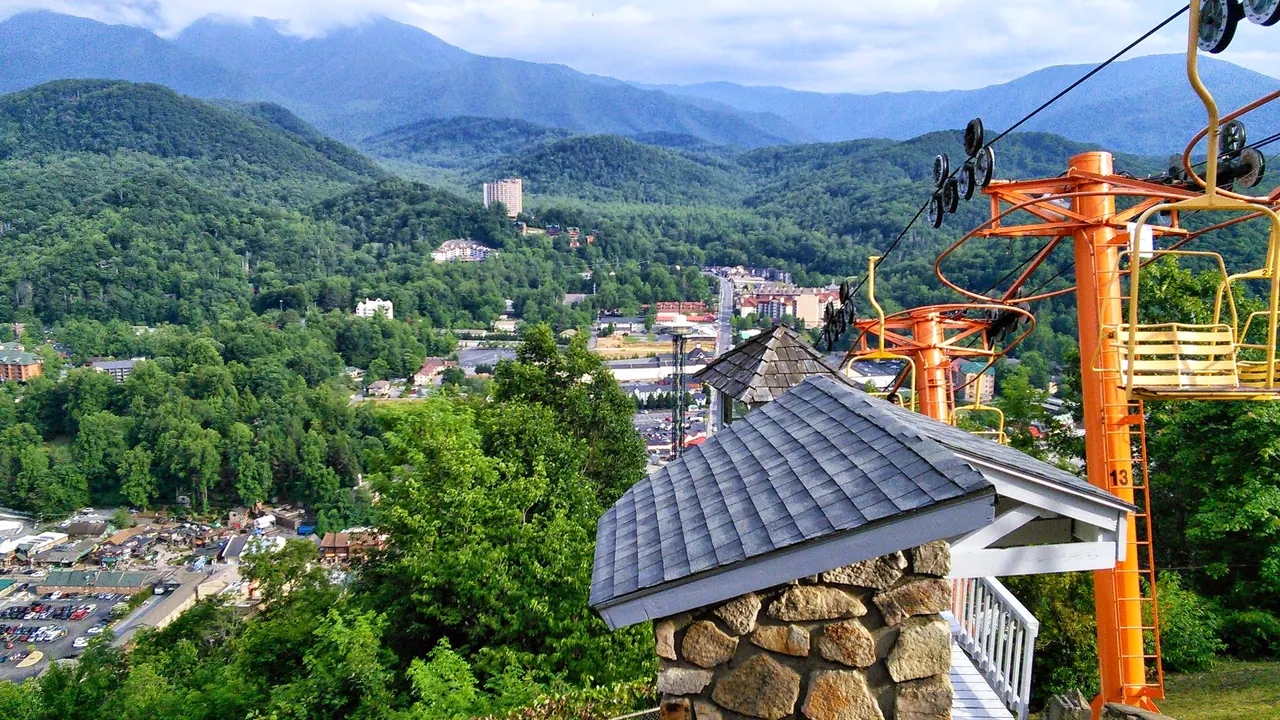
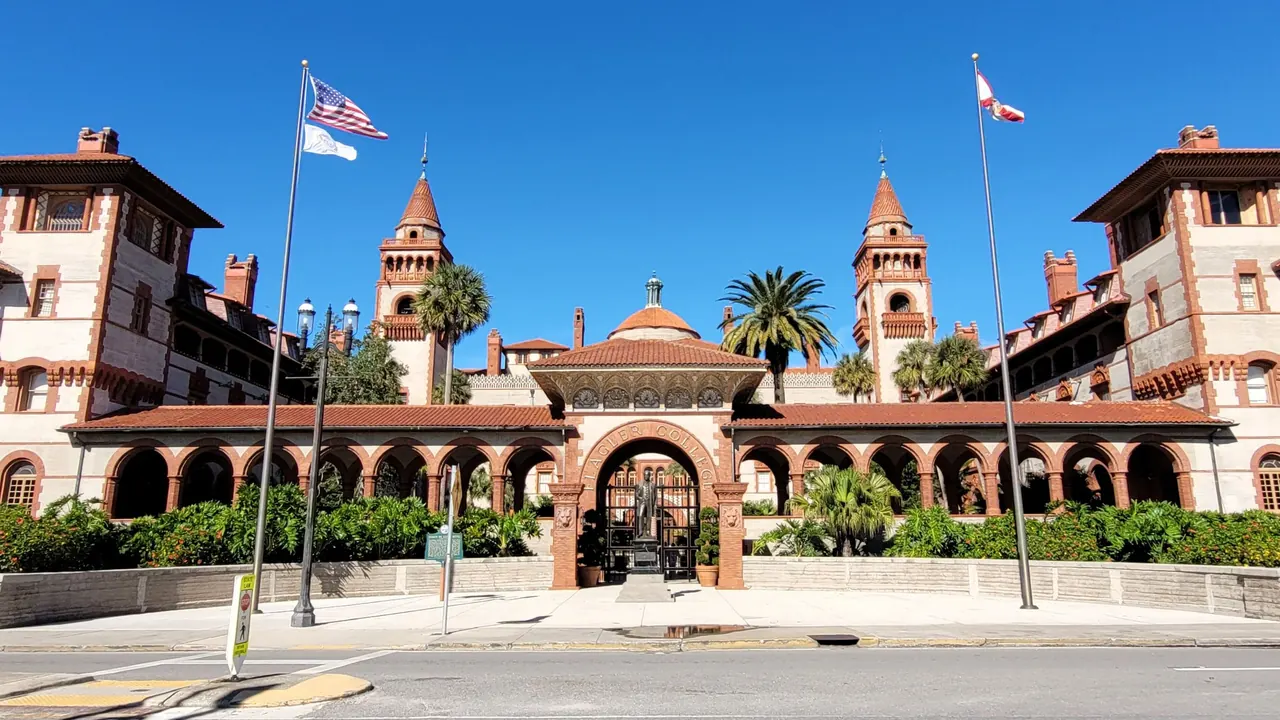
Photos: Gatlinburg by Evan Nichols, CC BY 3.0, cropped; St. Augustine by Farragutful, CC BY-SA 4.0, cropped.
Gatlinburg or St. Augustine?
Our verdict in twelve categories, each scored against the same fixed benchmark cities, and the climate month by month, so you can choose for your trip.
Choose Gatlinburg for
- nature and the outdoors
- families
- prices
Gatlinburg is the choice for a trip built around the mountains. It sits at the edge of the Great Smoky Mountains National Park, so waterfall walks, bear sightings and the drive up to Clingmans Dome are minutes from the door. Families also get a long strip of attractions, with Dollywood close by. Expect cabins, hearty casual food and quiet evenings, not history or a night out.
Choose St. Augustine for
- beaches
- culture and sights
- nightlife
Travellers who want old streets and the sea in one stay will be happier in St. Augustine. The Spanish colonial quarter, the Castillo de San Marcos and Flagler's Gilded Age hotels give it a real sightseeing core, and Anastasia Island's wide sand is a short drive across the bridge. Its seafood, courtyard bars and mild winters also make it the easier choice for couples travelling outside summer.
Scoreboard
Twelve categories on one fixed scale from 0 to 100. The shaded stretch is the gap between the two.
Your match
Pick a travel style or drag the sliders, and both match scores follow your weighting.
Wins on nature and the outdoors and families with your weighting.
Wins on beaches and culture and sights with your weighting.
What matters to you?
Category by category
What the scores mean for a trip.
Beaches & swimming
This is the widest gap between the two. Gatlinburg is deep in the mountains, so swimming means cold, fast river pools such as the Little River near Townsend, the lakeshore at Douglas Lake, or simply the cabin hot tub.
St. Augustine has miles of wide, pale sand on Anastasia Island, running from the state park dunes down to Crescent Beach, with Vilano Beach to the north. The surf is easy and the water is warm in summer, though it turns cool in winter and is greenish rather than clear.
Food & drink
Neither town is a food destination, but St. Augustine gives you more to remember. Gatlinburg feeds a resort crowd with pancake houses, barbecue and Southern comfort plates along the Parkway. Moonshine tastings are the local ritual, and good Appalachian cooking turns up only in the odd restaurant.
In St. Augustine, casual waterfront seafood, local shrimp and the datil pepper brought by Minorcan settlers give meals a sense of place, and a few chef-led restaurants around the old town make an evening out more interesting. Serious eaters in either town still end up driving to a bigger city.
Culture & sights
St. Augustine is far richer here. The Spanish colonial quarter, the star-shaped Castillo de San Marcos, the old city gate and the Cathedral Basilica stand alongside Flagler's Gilded Age hotels, which now house a college and the Lightner Museum. Together they reward several days of walking.
Gatlinburg is a strip of attractions, and its main landmark is an observation tower. Its heritage lives in the working studios of the Arts and Crafts Community and in the mountain cabins, mills and churches at Cades Cove and Roaring Fork, which are outings into the park rather than sights in town.
Nightlife
Neither town is for clubbing, but St. Augustine has a real evening scene. Its pubs, taverns and courtyard cocktail bars around St. George Street and the bayfront fill up at weekends, and students add some life in term time. In Gatlinburg an evening means a stroll along the lit Parkway, a moonshine tasting and an early return to the cabin hot tub.
Nature & outdoors
Gatlinburg is the far stronger base. The Great Smoky Mountains begin at the edge of town, with hardwood forest, waterfall trails, the climb to Mount LeConte, Clingmans Dome and wildlife from black bears to elk. Rafting on the Pigeon River adds variety. The price is heavy traffic at weekends and in leaf season.
St. Augustine's outdoors is flat and watery: salt marsh, dunes and the Matanzas River, best explored by kayak, paddleboard or bicycle, with dolphins and wading birds as the highlights. In summer the heat limits outdoor plans to early mornings.
Day trips
Both towns need a car for day trips, and Gatlinburg's options are a little more rewarding. Asheville and the Biltmore Estate, the Cherokee museums over Newfound Gap and Knoxville's market square offer real variety within an hour or two.
From St. Augustine the choices are spread along the coast: Jacksonville's museums, Victorian Fernandina Beach and Daytona. Kennedy Space Center and the Orlando theme parks make longer days out.
Good for families
Gatlinburg is built for families. An aquarium, mirror mazes, alpine coasters and gondola parks line the Parkway, Dollywood is a short drive away, and the national park adds creek wading and bear spotting. The catch is high-season traffic and long queues.
St. Augustine also works well for children, in a gentler way, with the Alligator Farm, cannon firing at the fort, the lighthouse climb and easy summer surf. Thrill rides mean a two-hour drive to Orlando.
Getting around
Both have a small centre you can walk, with most other places reachable only by car. St. Augustine's historic district is flat and compact, with the fort, St. George Street and Flagler College minutes apart, though you need a car or bike to reach the beaches.
Gatlinburg's Parkway strip is walkable and a trolley runs out to Pigeon Forge. Most visitors stay in hillside cabins on steep roads, however, and traffic in the park can stall for long stretches.
Shopping & style
The better buys are where the two towns differ. Gatlinburg's Arts and Crafts Community sells handmade quilts, pottery, brooms, baskets and woodwork straight from the makers' studios, so a souvenir comes with the person who made it. In St. Augustine the equivalent is Aviles Street and the lanes around it, with art galleries, antique dealers and bottles of datil-pepper sauce to take home.
Beyond that, the two are much alike. Each has a central strip of fudge, T-shirt and souvenir shops along the Parkway or St. George Street, with moonshine and novelty knife outlets adding a mountain touch in Gatlinburg. Both have a large outlet mall a short drive out and almost no fashion or luxury.
Affordability
Gatlinburg is the cheaper of the two, mainly because of the way people stay. A big cabin shared by a group or an extended family, or an older motel midweek or in winter, keeps the cost of a bed down, and the national park costs little to enjoy. The money goes on paid attractions instead, as Dollywood and the Parkway rides add up quickly with children.
In St. Augustine it is the other way round. Walking the old streets and lying on the public beaches cost nothing, but a bed near them is the expensive part. The historic inns and B&Bs by the old town cost more per head than a shared mountain cabin, especially at weekends and in spring and summer. A chain motel on the island or by the highway narrows the gap, at the price of driving in each day.
Live music & performing arts
The two are broadly level, and both send lovers of opera and orchestras to the nearest city. Gatlinburg leans on family entertainment, with dinner shows and gospel revues in Pigeon Forge, bluegrass in the tasting rooms and mountain music at Dollywood.
St. Augustine's main stage is its open-air amphitheatre in the Anastasia Island woods, which brings touring rock, country and folk acts. Cover bands play on the old-town patios most nights.
Wellness & relaxation
A hot tub on a cabin deck above the trees and a chair on a B&B veranda are the two kinds of rest on offer here, and Gatlinburg's is slightly the more secluded. Up on the hillsides the nights are quiet and mist settles on the ridges, while the Parkway below is crowded and noisy, so it pays to stay above it.
St. Augustine's calm is gentler and more sociable, with courtyard gardens, an unhurried evening along the bayfront seawall and a noticeably quieter town midweek. Spa treatments are limited in both towns to a few day spas and hotel treatment rooms.
When should you go?
Pick your month. The climate figures are measured averages, not a forecast.
Gatlinburg in July
St. Augustine in July
Daytime high, °C
Rainfall in the month, mm
Where the figures come from
Gatlinburg's temperatures are measured 45 km from the centre, at McGhee Tyson Airport.
Gatlinburg has no rain gauge within 25 km of the centre, so its rainfall comes from a gridded climate dataset read at the city rather than from a gauge further away.
St. Augustine has no rain gauge within 25 km of the centre, so its rainfall comes from a gridded climate dataset read at the city rather than from a gauge further away.
St. Augustine's sunshine is measured 73 km from the centre, at Jacksonville International.
Temperature and rainfall are climate normals, averaged over the years shown. Gatlinburg: 1991-2020 (sunshine 1981-2010) normals, McGhee Tyson Airport (44.9 km from centre). St. Augustine: 2006-2020 (sunshine 1991-2020, rainfall 1991-2020) normals, St Augustine / Kingsley Mobile Home Park (7.6 km from centre).
Gatlinburg has four distinct seasons. Winters are chilly, with January highs around 9°C and the odd snowfall, and summer reaches 31°C in humid, hazy air. Rain falls steadily all year and October is the driest month. The best walking weather is from April to early June and in September and October, when the days are mild and the forest is either flowering or turning colour.
St. Augustine is far milder. Winter afternoons of about 18°C make January sightseeing comfortable, though the sea is too cool for most swimmers then. The water is warm enough for swimming from May to October and reaches 28°C at its peak. June to September is also the stormy season, with sticky heat and up to 173mm of rain in September. May is the sweet spot, sunny and fairly dry with a swimmable sea, and November suits the old town well.
Which traveller are you?
On a beach and sun trip, St. Augustine is the clear pick. Anastasia Island's wide, gently shelving sand and warm summer Atlantic are minutes from the old town. Gatlinburg is landlocked and offers only cold river pools and a cabin hot tub.
For a culture and arts trip, St. Augustine wins again. Its Spanish colonial lanes, the coquina Castillo and Flagler's Gilded Age buildings fill two or three days. Gatlinburg's heritage lies mostly in its craft studios and the old cabins out in the park.
On an outdoors trip, Gatlinburg is well ahead. The national park starts where the town ends, with the Mount LeConte trail, waterfalls, black bears and rafting nearby. St. Augustine's flat marshes and dunes are good for kayaking and birding but offer much less variety.
Before you go
| Measure | Gatlinburg | St. Augustine |
|---|---|---|
| Currency | US Dollar (USD) | US Dollar (USD) |
| Sockets | AB120 V, 60 Hz | AB120 V, 60 Hz |
| Driving side | Right | Right |
| Time zone | UTC-5, UTC-4 in summer | UTC-5, UTC-4 in summer |
| Emergency number | 911 | 911 |
| Elevation | 393 m | 152 m |
| Main airport | McGhee Tyson Airport (TYS)46 km from centre34 non-stop destinations | Jacksonville International Airport (JAX)76 km from centre48 non-stop destinations |
| Public holidays this year | 13 days | 11 days |
By the numbers
| Measure | Gatlinburg | St. Augustine |
|---|---|---|
| City population | 3,577 | 14,329 |
| People per km² | 133 | 433 |
| Museums within 10 km | 4 | 12 |
| UNESCO World Heritage sites within 50 km | 1 | 0 |
| Swim season, months above 21 °C | - | 8 months |
Where else could you go?
Every comparison below shares a destination with this one, so you can follow Gatlinburg or St. Augustine somewhere new.
- Pigeon Forgevs Gatlinburg
- Daytona Beachvs St. Augustine
- Ashevillevs Gatlinburg
- Orlandovs St. Augustine
- Cocoa Beachvs St. Augustine
- Atlantavs Gatlinburg