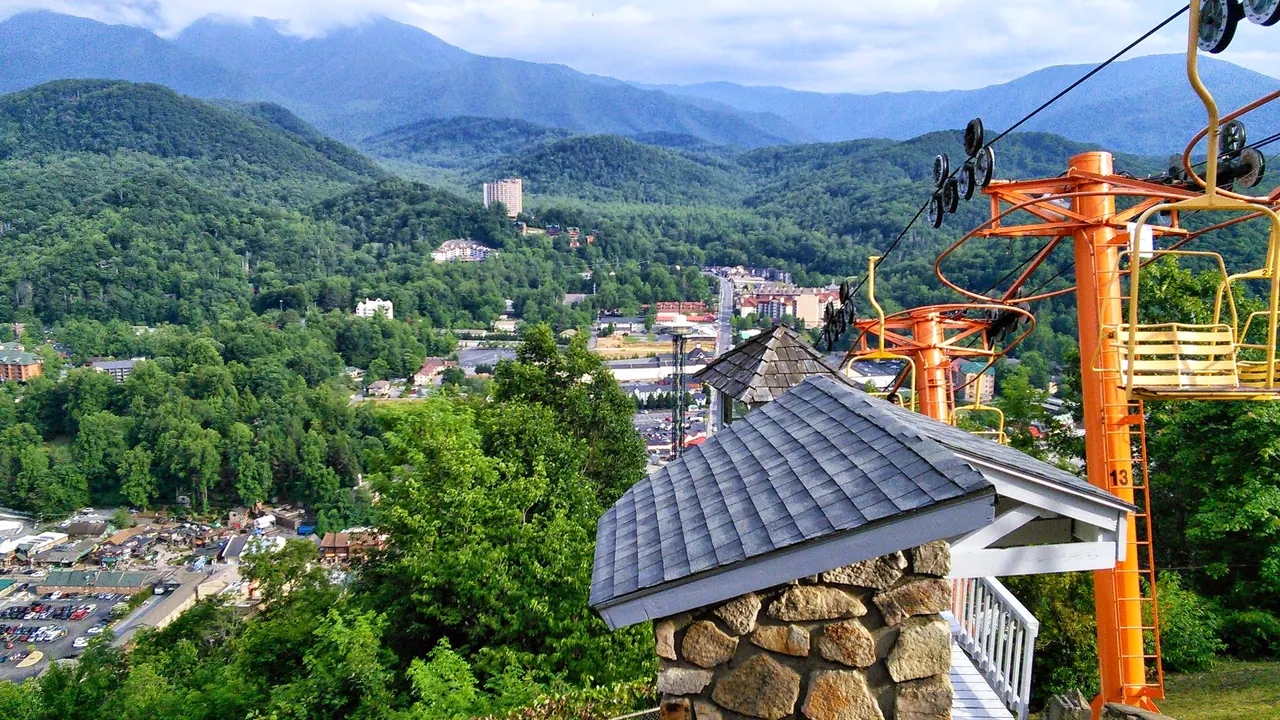

Photos: Gatlinburg by Evan Nichols, CC BY 3.0, cropped; Washington DC by Guohua Song, Pexels License.
Gatlinburg or Washington DC?
Our verdict in twelve categories, each scored against the same fixed benchmark cities, and the climate month by month, so you can choose for your trip.
Choose Gatlinburg for
- nature and the outdoors
- prices
- wellness
Gatlinburg suits travellers whose vacation is really about the Great Smoky Mountains. You get waterfall trails, bears and deer in Cades Cove, a hillside cabin with a hot tub above the trees, and a strip of attractions for children when it rains. Families and couples who want forest by day and quiet evenings will be happier here, as long as they bring a car and accept that the town offers little in the way of food, history or nightlife.
Choose Washington DC for
- culture and sights
- nightlife
- food and drink
Anyone who wants a proper city should go to Washington. The free Smithsonian museums, the monuments of the Mall, serious theatre and a wide restaurant scene can fill a week without a car, and the Metro reaches as far as Alexandria. Rooms cost more and the outdoors is gentler, but the evenings are much livelier, and there are far more day trips into colonial and Civil War history.
Scoreboard
Twelve categories on one fixed scale from 0 to 100. The shaded stretch is the gap between the two.
Your match
Pick a travel style or drag the sliders, and both match scores follow your weighting.
Wins on nature and the outdoors and prices with your weighting.
Wins on culture and sights and nightlife with your weighting.
What matters to you?
Category by category
What the scores mean for a trip.
Beaches & swimming
Neither city is a beach destination, and in both you leave town to swim. Gatlinburg's water is the cold, clear rivers of the national park, with tubing on the Little River near Townsend and some lakeshore swimming at Douglas Lake. Washington's nearest sand is the small, brackish beaches of the Chesapeake Bay around Annapolis, which are warmer in summer but a proper outing, and the Atlantic resorts are a weekend trip.
Food & drink
Gatlinburg feeds a resort crowd: pancake houses, barbecue and Southern comfort cooking along the Parkway, with fudge shops and moonshine tasting rooms in between. Good Appalachian trout, country ham and stack cake do exist, but you have to seek them out, and keen eaters usually drive to Knoxville or Asheville.
Washington is in a different league. There are Ethiopian restaurants around Shaw and U Street, pupusas in Columbia Heights, Chesapeake oysters and blue crabs in season, and plenty of grazing at Eastern Market and Union Market. Serious tasting menus around Penn Quarter and Logan Circle cover the top end.
Culture & sights
There is little sightseeing in Gatlinburg itself. Its landmarks are an observation tower and mountaintop amusements, and its living heritage is the loop of working craft studios. The real mountain history, the log cabins, mills and churches at Cades Cove and Elkmont, is out in the park and makes a drive rather than a stroll.
Washington is one of the great museum cities. Most of the Smithsonian collections, the National Gallery and the National Museum of African American History and Culture are free and stand side by side on the Mall, surrounded by the Capitol, the Lincoln Memorial and the other monuments. A week here can be full without repeating yourself.
Nightlife
Gatlinburg barely has a night out. People stroll the lit Parkway, try moonshine and have a drink on a brewery terrace, and the strip is quiet by late evening. Washington has a real bar scene, driven by young staffers and students, with cocktail bars and rooftops on 14th and U Streets, cheap late drinking in Adams Morgan, dives on H Street and the long-established LGBTQ+ heart of Dupont Circle.
Nature & outdoors
Gatlinburg is the gateway to the Great Smoky Mountains, and within minutes you are among old hardwood forest, waterfalls such as Laurel Falls and Grotto Falls, and black bears. The Alum Cave climb to Mount LeConte, elk in the eastern valleys and the synchronous fireflies of spring give it real wilderness.
Washington is green for a capital, with Rock Creek Park, the flat C&O Canal towpath and the gorge at Great Falls close at hand. The proper mountains, Shenandoah and the Blue Ridge, are a long drive away, so your outdoor time is mostly spent walking and cycling by the river.
Day trips
Gatlinburg has a few strong outings. Asheville and the Biltmore Estate are the best of them, and Cherokee, on the far side of the mountains, tells the story of the Eastern Band. After those, plus Knoxville and the theme parks of Pigeon Forge, there is not much else.
Washington has many more, and nearly all of them are about history. Old Town Alexandria is on the Metro, and Mount Vernon, Baltimore and Annapolis are each about an hour away. Gettysburg, Antietam and Harpers Ferry cover the Civil War, and Philadelphia's Independence Hall is a fast train ride off.
Good for families
Both work well with children, but in different ways, and Gatlinburg has the edge for a classic family vacation. It offers an aquarium, alpine coasters, chairlift rides to treetop bridges, Dollywood nearby, and creek wading and junior ranger badges in the park. The downsides are traffic and queues.
Washington's appeal is learning without an entry fee: dinosaurs at Natural History, rockets at Air and Space and the free National Zoo. With the Metro's lifts, buggies are easy, but the long, hot Mall and the lack of theme parks make it better for school-age children than for toddlers.
Getting around
Washington is far easier without a car. The centre is flat and laid out on a grid, and the Metro reaches Arlington, Alexandria and the airport, with bike-share filling the gaps. Only Georgetown needs a bus or a walk. In Gatlinburg the Parkway strip is walkable and a trolley runs to Pigeon Forge, but the cabins, trailheads and day trips all need a car, and the park roads can stall for long stretches on busy weekends.
Shopping & style
Gatlinburg's Parkway is mostly souvenirs, candy kitchens and novelty knives, so the worthwhile buys are the quilts, pottery, brooms and woodwork sold straight from the studios of the Arts and Crafts Community, with outlet malls a short drive away. Washington has more variety: brick-fronted boutiques and antique shops in Georgetown, luxury labels at CityCenterDC, weekend stalls at Eastern Market and good museum shops. It has no craft tradition to match Gatlinburg's, though.
Affordability
Gatlinburg is the cheaper stay. Older motels and big cabins shared between families can be good value, especially midweek and in winter, and the park costs little to enjoy, though the paid attractions and Dollywood quickly add up for a family.
Washington's rooms and restaurants are priced for expense accounts. What balances that is the free sightseeing, since the museums, the zoo and the memorials cost nothing, and staying out in Arlington helps with the hotel bill.
Live music & performing arts
In Gatlinburg, live entertainment means bluegrass in the tasting rooms and the dinner shows and country revues of Pigeon Forge, with mountain music at Dollywood. It is fun, but there is no theatre or orchestra.
Washington has a real stage culture. Arena Stage, the Shakespeare Theatre Company, the Folger and Ford's Theatre are all here, alongside the National Symphony and the opera, and the Lincoln and Howard theatres on U Street put on big touring acts. In summer there are lawn concerts at Wolf Trap.
Wellness & relaxation
Neither has a spa tradition, but Gatlinburg is the more restful place to stay. A secluded cabin with a hot tub and a rocking chair, looking out over misty ridges, makes slowing down easy, as long as you stay up the hillside and away from the noisy strip. In Washington, rest comes down to hotel spas and quiet moments you find for yourself, such as an early walk round the Tidal Basin or a bench in the Dumbarton Oaks gardens.
When should you go?
Pick your month. The climate figures are measured averages, not a forecast.
Gatlinburg in July
Washington DC in July
Daytime high, °C
Rainfall in the month, mm
Where the figures come from
Gatlinburg's temperatures are measured 45 km from the centre, at McGhee Tyson Airport.
Gatlinburg has no rain gauge within 25 km of the centre, so its rainfall comes from a gridded climate dataset read at the city rather than from a gauge further away.
Temperature and rainfall are climate normals, averaged over the years shown. Gatlinburg: 1991-2020 normals, McGhee Tyson Airport (44.9 km from centre). Washington DC: 1991-2020 normals, Washington National Airport (5 km from centre).
The two run on almost the same calendar: hot, humid summers, mild springs and autumns, and chilly winters. Gatlinburg is the wetter of the two for most of the year. July is its rainiest month, with about 145mm, so summer hiking at around 31°C often means humid haze and a soaking. Its best spells are late April and May, when the wildflowers are out, and late September into October. Autumn is the exception to the rain pattern: these are Gatlinburg's driest months, and drier than Washington's, so the forest trails are cool and comfortable. Winter brings cold days and occasional snow higher up.
Washington gets slightly hotter in high summer, about 32°C in July, which makes the long, exposed walks along the Mall hard going. April, May, September and October are the comfortable months for sightseeing on foot, though early autumn brings more rain here than in the mountains. The Chesapeake Bay warms to about 26°C in August, warm enough for a swim on a day out, but from autumn to late spring the water is far too cold.
Which traveller are you?
For an outdoors trip, Gatlinburg wins easily. The national park begins where the town ends, with waterfall walks, the climb up Mount LeConte, the road to Clingmans Dome and black bears in the woods. Washington's Rock Creek Park and Great Falls are pleasant escapes from a city, not a wilderness.
On a culture and arts trip, Washington is the only real choice. The Smithsonian museums, the National Gallery, the Capitol and the memorials are within walking distance of each other, and in the evening there is Arena Stage, Shakespeare or the opera. Gatlinburg has craft studios and little more.
For a food and nightlife trip, choose Washington. You can eat Ethiopian food around Shaw, Chesapeake crabs in season and half-smokes, then go on to the bars of 14th Street, U Street and Adams Morgan, which stay busy late. In Gatlinburg the evening ends with fudge, moonshine tastings and the cabin hot tub.
Before you go
| Measure | Gatlinburg | Washington DC |
|---|---|---|
| Currency | US Dollar (USD) | US Dollar (USD) |
| Sockets | AB120 V, 60 Hz | AB120 V, 60 Hz |
| Driving side | Right | Right |
| Time zone | UTC-5, UTC-4 in summer | UTC-5, UTC-4 in summer |
| Emergency number | 911 | 911 |
| Elevation | 393 m | 72 m |
| Main airport | McGhee Tyson Airport (TYS)46 km from centre34 non-stop destinations | Ronald Reagan Washington National Airport (DCA)5 km from centre105 non-stop destinations |
| Public holidays this year | 13 days | 11 days |
By the numbers
| Measure | Gatlinburg | Washington DC |
|---|---|---|
| City population | 3,577 | 689,545 |
| People per km² | 133 | 3,896 |
| Museums within 10 km | 4 | 98 |
| UNESCO World Heritage sites within 50 km | 1 | 0 |
| Swim season, months above 21 °C | - | 3 months |
Where else could you go?
Every comparison below shares a destination with this one, so you can follow Gatlinburg or Washington DC somewhere new.