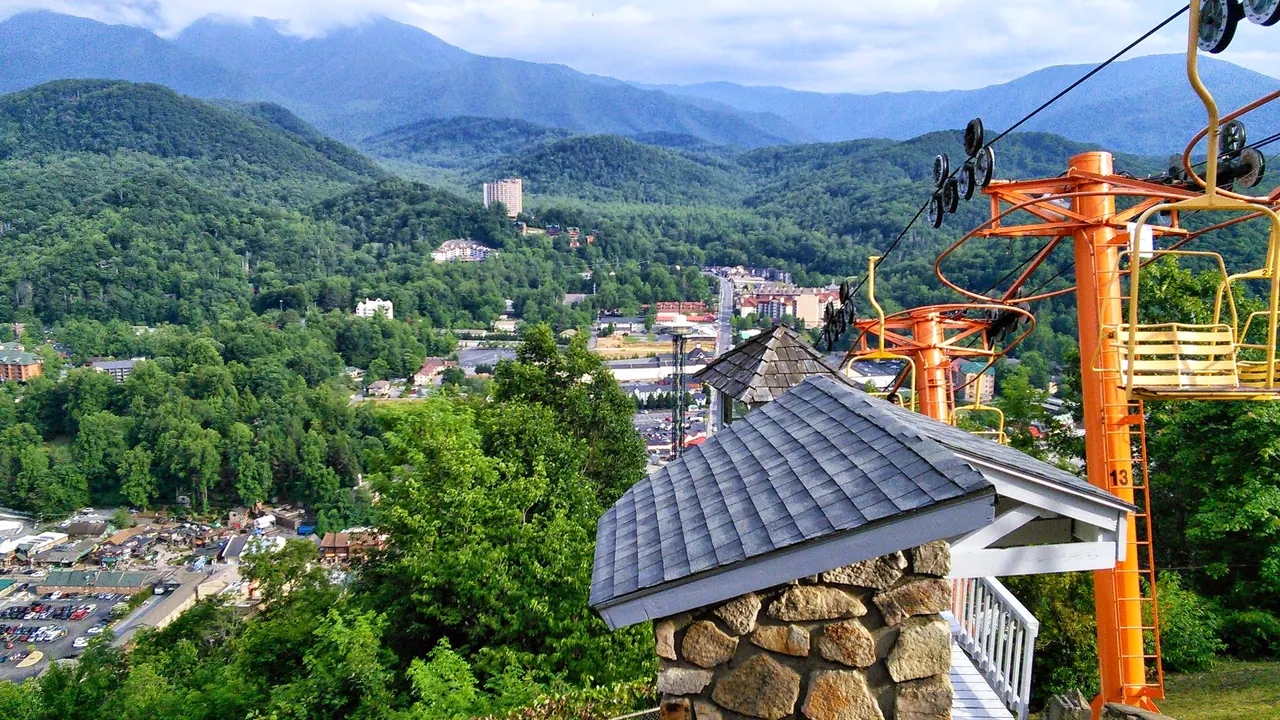
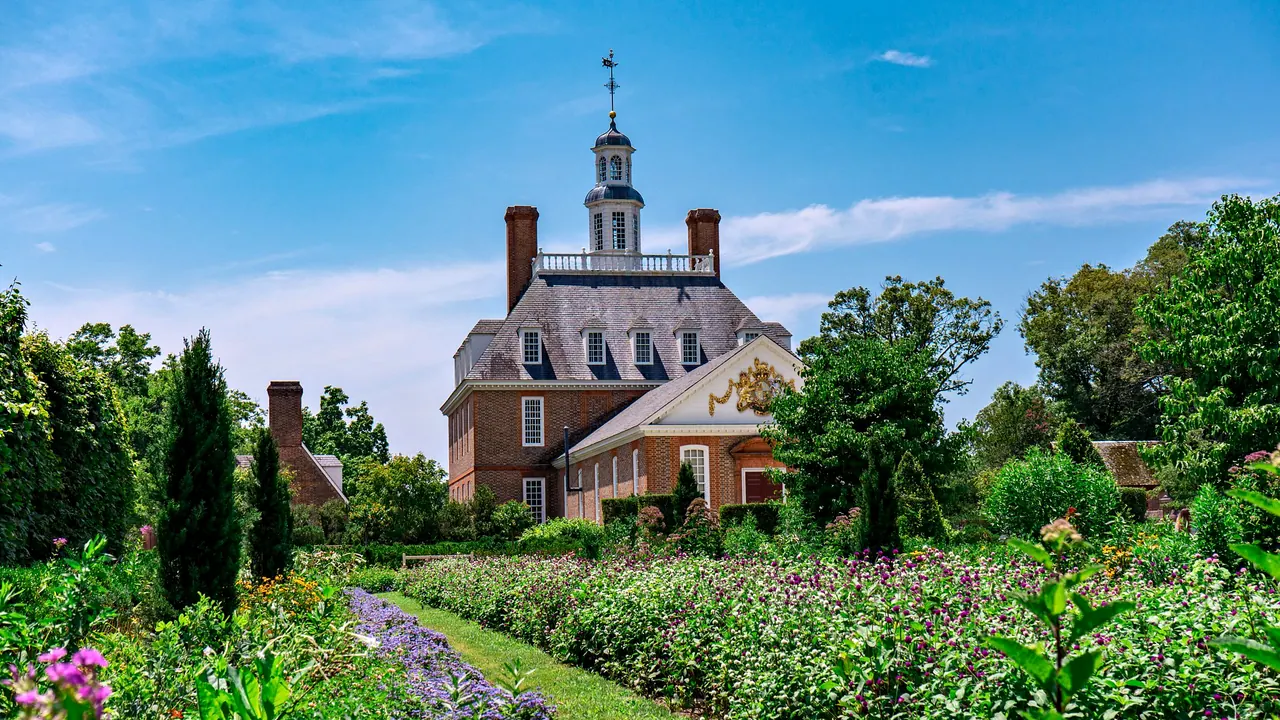
Photos: Gatlinburg by Evan Nichols, CC BY 3.0, cropped; Williamsburg, Virginia by Brian Magill, Pexels License.
Gatlinburg or Williamsburg, Virginia?
Our verdict in twelve categories, each scored against the same fixed benchmark cities, and the climate month by month, so you can choose for your trip.
Choose Gatlinburg for
- nature and the outdoors
- prices
- live music and the arts
Gatlinburg is the pick for travellers who want the mountains on the doorstep. The Great Smoky Mountains National Park begins where the town ends, so waterfall walks, bear sightings, the drive to Clingmans Dome and evenings in a hillside cabin hot tub are the core of the stay. It suits families and couples who care more about forest trails and a slow cabin pace than about history or dining.
Choose Williamsburg, Virginia for
- culture and sights
- beaches
- food and drink
Williamsburg rewards anyone who wants a vacation built around American history. Colonial Williamsburg, Jamestown and Yorktown sit within a short drive of each other, the food leans a little more towards real regional cooking, and the Chesapeake Bay and Virginia Beach are close enough for a swim. The countryside is flat and gentle rather than dramatic, so it suits history lovers and families mixing museums with theme parks.
Scoreboard
Twelve categories on one fixed scale from 0 to 100. The shaded stretch is the gap between the two.
Your match
Pick a travel style or drag the sliders, and both match scores follow your weighting.
Wins on nature and the outdoors and prices with your weighting.
Wins on culture and sights and beaches with your weighting.
What matters to you?
Category by category
What the scores mean for a trip.
Beaches & swimming
Neither town is a beach destination, but Williamsburg at least puts real salt water within easy reach. The calm sand at Yorktown is about 20 minutes away, Buckroe Beach looks onto the Chesapeake Bay, and the Atlantic beaches of Virginia Beach make a single beach day in summer easy to add.
Gatlinburg is hundreds of kilometres from any coast. Summer swimming there means wading in cold mountain streams, tubing on the Little River near Townsend or a lakeshore at Douglas Lake, and the river pools can run fast after rain.
Food & drink
Williamsburg eats a little better, mainly because its local food has more to it: country ham biscuits, peanut soup, Chesapeake crab cakes and oysters, plus a few bistros and wine bars around Merchants Square and the college.
Gatlinburg's Parkway is mostly pancake houses, barbecue and volume-cooking family restaurants, with moonshine tastings and fudge shops as the local flavour. Good Appalachian cooking such as trout and stack cake exists but is scattered, and both towns have their strips of pancake houses and chains for the theme-park crowds.
Culture & sights
This is where the two towns differ most. Williamsburg is effectively a whole town of history: the restored colonial capital along Duke of Gloucester Street, the Governor's Palace, Bruton Parish Church and the Wren Building, with costumed tradespeople at work and serious collections of American folk and decorative art.
Gatlinburg's town centre is attractions and motels, and its heritage lives in the Great Smoky Arts and Crafts Community studios and in the old cabins, mills and churches out at Cades Cove and along the Roaring Fork. Those are rewarding drives, but they make a half-day outing rather than a reason to come.
Nightlife
Both towns go quiet early, so neither suits a night out. Gatlinburg's evenings are a stroll along the lit Parkway, moonshine tasting rooms and a few rooftop and brewery terraces, then back to the cabin hot tub. Williamsburg trades that for a candlelit tavern dinner or ghost walk, with student pubs near the college livelier in term time.
Nature & outdoors
Gatlinburg has the far stronger outdoors, as the front door of the Great Smoky Mountains National Park. Within minutes you are among hardwood forest and mountain streams, with Laurel Falls, Alum Cave and Clingmans Dome near 2,025m, black bears and elk in the valleys, and rafting on the Pigeon River. The trade-off is traffic at popular trailheads in leaf season.
Williamsburg's Tidewater countryside is flat and gentle: marsh, tidal creeks and river estuaries. Its pleasures are quieter ones, like cycling the Colonial Parkway or the Virginia Capital Trail and kayaking the Chickahominy past ospreys and bald eagles, but there are no hills to climb.
Day trips
Williamsburg has the more useful set of outings because its partner sites are so close. Jamestown and Yorktown are each under half an hour away, the James River plantations line Route 5, and Richmond, Norfolk and Monticello stretch the range further.
Gatlinburg's best day out is Asheville and the Biltmore Estate, about an hour and a half away, with Cherokee and its museum over Newfound Gap and Knoxville about an hour off. Past those and Pigeon Forge, the options thin out quickly.
Good for families
Both are classic family vacation towns, built on a theme park nearby and plenty to keep children busy. Gatlinburg mixes Parkway attractions, an aquarium, alpine coasters and Dollywood with easy waterfall walks, creek wading and bears seen from the car.
Williamsburg pairs Busch Gardens and Water Country USA with history children can touch: musket firings, fife-and-drum parades and replica ships at Jamestown. The main difference is that Williamsburg's history teaches as it entertains, while Gatlinburg is mostly about nature and amusements.
Getting around
Both towns have a small walkable core and need a car for everything else. Gatlinburg's Parkway strip has a trolley out to Pigeon Forge, but cabins sit up steep, winding roads and park traffic can stall in October. Williamsburg's Historic Area is flat and car-free by day, and an Amtrak station sits near the centre, though the sights beyond are spread along highways.
Shopping & style
Williamsburg's shopping is a touch more rewarding, with colonial-style shops selling pewter, silver and reproduction furniture, brick-fronted Merchants Square and a large outlet centre on Richmond Road.
Gatlinburg's Parkway is mostly souvenirs, candy kitchens and novelty outlets. Its real strength is the Arts and Crafts Community loop, where you buy quilts, brooms and pottery straight from the maker's studio. Pigeon Forge supplies the outlet brands.
Affordability
Costs are broadly similar, and the difference lies in where the money goes. In Gatlinburg a big cabin shared between families can be good value and the national park costs little to enjoy, but rates jump in October and over Thanksgiving, Christmas and New Year.
In Williamsburg rooms are easy to find at fair prices outside the peak vacation weeks. The admission fees for the colonial sites and theme parks add up quickly, so combination passes help.
Live music & performing arts
Neither offers opera or serious theatre, but the shows differ in kind. Gatlinburg leans on mountain music, with bluegrass in the tasting rooms and dinner shows and gospel revues in Pigeon Forge. Williamsburg's performances are period pieces, such as candlelit eighteenth-century recitals and fife-and-drum corps, plus college concerts in term time.
Wellness & relaxation
Neither has a bathing tradition, and both offer only a few resort spas. The calm comes from different places. In Gatlinburg it is a secluded hillside cabin with a hot tub above misty ridges. In Williamsburg it is a riverside golf resort, an early walk across empty colonial greens or a slow drive down the Colonial Parkway.
When should you go?
Pick your month. The climate figures are measured averages, not a forecast.
Gatlinburg in July
Williamsburg, Virginia in July
Daytime high, °C
Rainfall in the month, mm
Where the figures come from
Gatlinburg's temperatures are measured 45 km from the centre, at McGhee Tyson Airport.
Gatlinburg has no rain gauge within 25 km of the centre, so its rainfall comes from a gridded climate dataset read at the city rather than from a gauge further away.
Williamsburg, Virginia's sunshine is measured 60 km from the centre, at Richmond International Airport.
Temperature and rainfall are climate normals, averaged over the years shown. Gatlinburg: 1991-2020 (sunshine 1981-2010) normals, McGhee Tyson Airport (44.9 km from centre). Williamsburg, Virginia: 2006-2020 (sunshine 1981-2010, rainfall 1991-2020) normals, Williamsburg / Kingspoint (3.6 km from centre).
Both towns have a humid southern summer, but the year runs differently in each. Gatlinburg is the cooler of the two, with highs around 31°C in July. Its winters are chilly, with occasional snow on the ridges. Rain falls steadily all year and peaks in July. The sunniest months are May to August, but October is the driest, with about 69mm and cooler highs, which makes it the best month for long hikes. Late spring is also excellent on the trails, with warm days and wildflowers.
Williamsburg runs a little hotter, near 33°C in July, and its wettest stretch comes in late summer and early autumn. Winters are slightly milder and noticeably sunnier than in the mountains, so walking the Historic Area is comfortable well into November and again from March. The bay warms to around 26°C in July and August, so June to September is the time for a beach day. Spring and autumn are the best seasons for walking the colonial streets without the heat.
Which traveller are you?
On an outdoors trip, Gatlinburg is the clear choice. The national park starts at the edge of town, with trails from easy waterfall walks to the climb up Mount LeConte, plus wildlife, rafting on the Pigeon River and riding.
For a culture and arts trip, Williamsburg wins easily. Its restored colonial capital, the Wren Building, the folk and decorative art museums and the nearby Jamestown and Yorktown sites give days of serious history, which Gatlinburg's attraction strip cannot match.
On a beach and sun trip, Williamsburg is the better of two inland options. The York River, the Chesapeake Bay and Virginia Beach are all within an hour, while Gatlinburg offers only cold mountain rivers and a lake about forty minutes away.
Before you go
| Measure | Gatlinburg | Williamsburg, Virginia |
|---|---|---|
| Currency | US Dollar (USD) | US Dollar (USD) |
| Sockets | AB120 V, 60 Hz | AB120 V, 60 Hz |
| Driving side | Right | Right |
| Time zone | UTC-5, UTC-4 in summer | UTC-5, UTC-4 in summer |
| Emergency number | 911 | 911 |
| Elevation | 393 m | 15 m |
| Main airport | McGhee Tyson Airport (TYS)46 km from centre34 non-stop destinations | Newport News Williamsburg International Airport (PHF)24 km from centre1 non-stop destination |
| Public holidays this year | 13 days | 13 days |
By the numbers
| Measure | Gatlinburg | Williamsburg, Virginia |
|---|---|---|
| City population | 3,577 | 15,425 |
| People per km² | 133 | 656 |
| Museums within 10 km | 4 | 8 |
| UNESCO World Heritage sites within 50 km | 1 | 0 |
| Swim season, months above 21 °C | - | 4 months |
Where else could you go?
Every comparison below shares a destination with this one, so you can follow Gatlinburg or Williamsburg, Virginia somewhere new.
- Pigeon Forgevs Gatlinburg
- Virginia Beachvs Williamsburg, Virginia
- Ashevillevs Gatlinburg
- Chattanoogavs Gatlinburg
- Washington DCvs Williamsburg, Virginia
- Ocean City, Marylandvs Williamsburg, Virginia