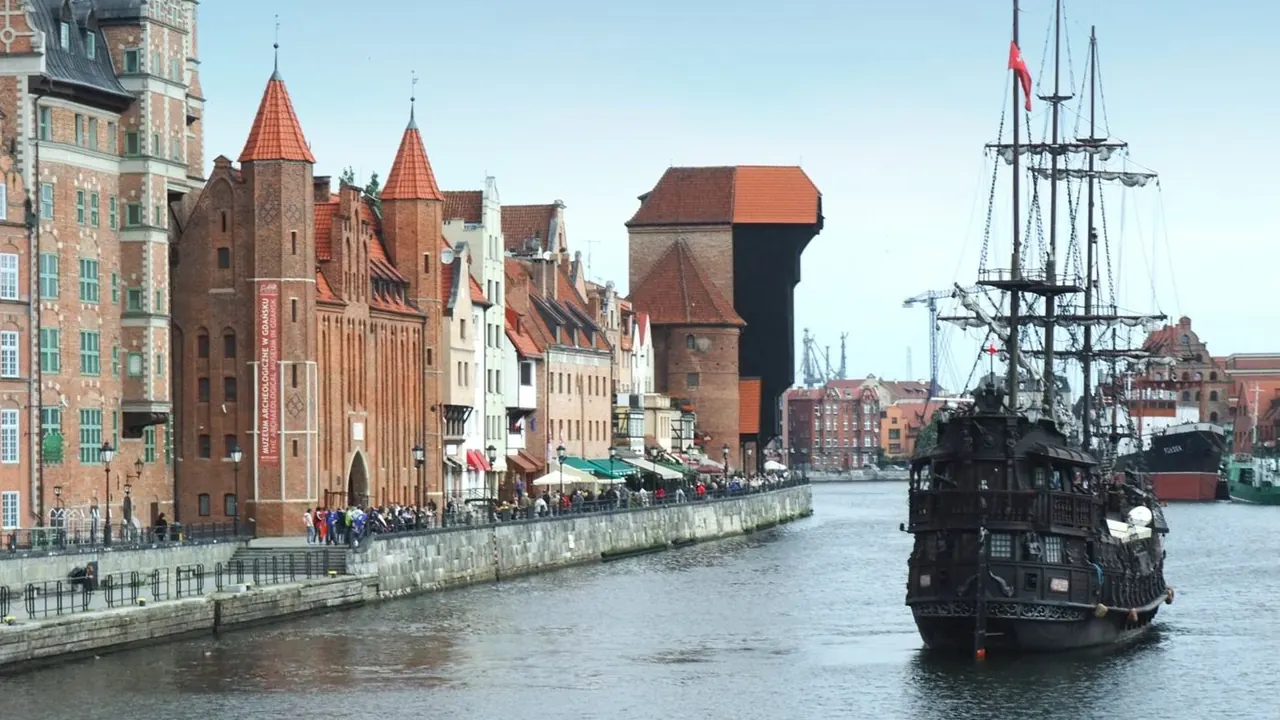
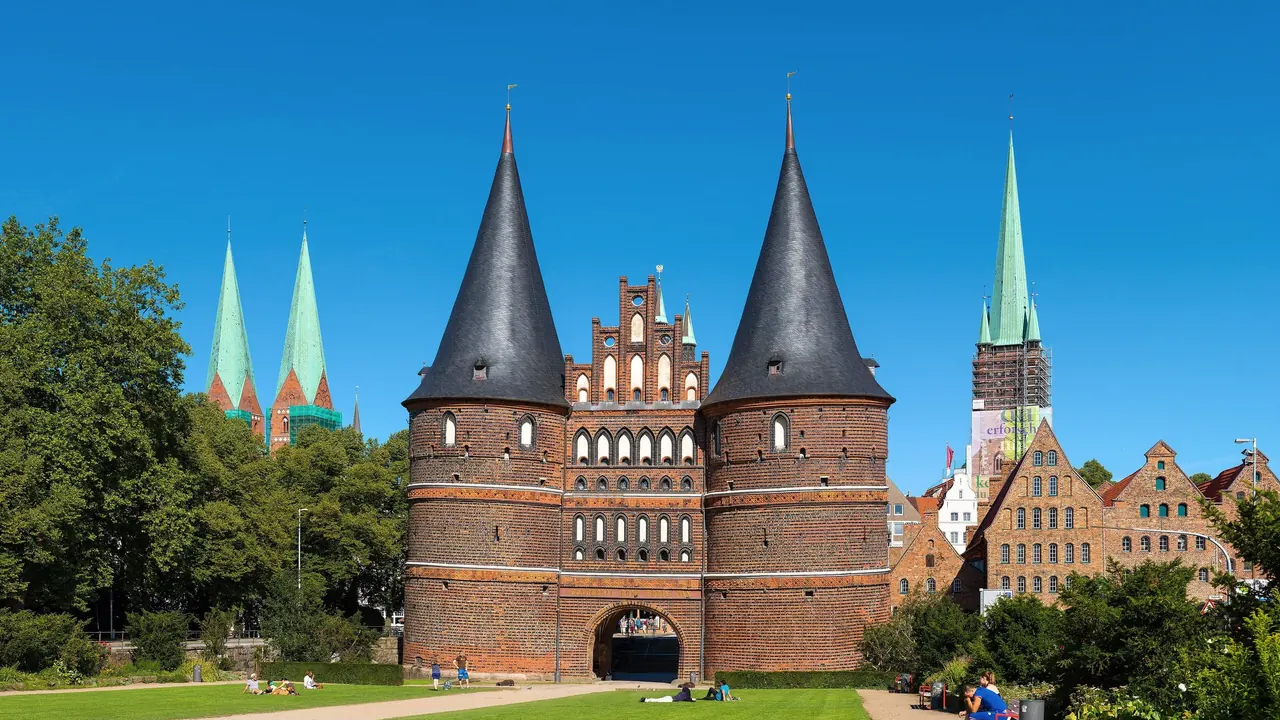
Photos: Gdansk by Nikater, CC BY-SA 3.0, cropped; Lubeck by Christian Wolf (www.c-w-design.de), CC BY-SA 3.0 DE, cropped.
Gdansk or Lubeck?
Our verdict in twelve categories, each scored against the same fixed benchmark cities, and the climate month by month, so you can choose for your trip.
Choose Gdansk for
- nightlife
- prices
- nature and the outdoors
Gdansk suits the traveller who wants more than an old town. Its rebuilt Hanseatic core comes with the most serious twentieth-century history on the Baltic, from Westerplatte to the shipyard where Solidarity began. Sopot's summer nights, the forested hills behind the coast and noticeably lower costs make it the better choice for a longer stay, a younger group or anyone who wants evenings out as well as sightseeing.
Choose Lubeck for
- wellness
- day trips
Lübeck is the quieter, more complete medieval town, an island of brick Gothic churches, gabled merchants' houses and courtyard passages that has never had to be rebuilt in the way Gdansk was. It rewards a slow few days of walking, marzipan cafés and organ music, with Travemünde's beach chairs twenty minutes away and Hamburg close enough for a day. Choose it for calm and charm rather than late nights or a tight budget.
Scoreboard
Twelve categories on one fixed scale from 0 to 100. The shaded stretch is the gap between the two.
Your match
Pick a travel style or drag the sliders, and both match scores follow your weighting.
Wins on nightlife and prices with your weighting.
Wins on wellness and day trips with your weighting.
What matters to you?
Category by category
What the scores mean for a trip.
Beaches & swimming
The beaches are much the same, with fine sand, shallow, calm water and a cold Baltic, so either works for a few summer afternoons rather than a beach vacation. In Gdansk the sand runs almost unbroken from Brzeźno and Jelitkowo to Sopot, a tram ride from the centre, with quieter, pine-backed Stogi across the port and the Hel Peninsula further out.
Lübeck's seaside is more of a resort. Travemünde, twenty minutes by train, has the classic hooded wicker beach chairs, and Timmendorfer Strand, Niendorf and Scharbeutz follow along the bay.
Food & drink
Gdansk gives you more to eat. Pierogi, żurek, Baltic fish and Kashubian country cooking go alongside cheap milk bars, serious craft beer and flavoured vodkas, and the better kitchens in Wrzeszcz, the shipyard area, Sopot and Gdynia reward a little searching beyond the tourist restaurants on Długa.
Lübeck's strengths are narrower: marzipan in every form, herring and fish sandwiches from harbour kiosks, Rotspon wine and a meal at the old sea captains' guild house. Past those it is provincial German fare, pleasant but rarely memorable.
Culture & sights
Both are great brick Hanseatic ports and equally strong for sightseeing, but in different ways. Gdansk's Main Town was carefully rebuilt after 1945, and the city's real weight lies in the twentieth century: the Museum of the Second World War, Westerplatte and the European Solidarity Centre at the shipyard.
Lübeck is the more intact medieval town, a UNESCO-listed island of seven spires, the Holstentor and the Marienkirche that set the pattern for brick Gothic across the north. Its museums are literary and mercantile, from the Hansemuseum to Thomas Mann's Buddenbrookhaus, and the whole set fits into two days.
Nightlife
Gdansk is far better for going out. Main Town cocktail bars, student pubs in Wrzeszcz and club nights in old shipyard warehouses keep it going all year, and in summer Sopot's Monte Cassino street fills until the small hours, with local trains running back.
Lübeck offers a quiet drink in an old town pub, a wine bar or the waterfront along the Obertrave, and little after midnight. For a proper night out, people take the train to Hamburg.
Nature & outdoors
Gdansk has more country close by. The beech woods and ravines of the Tricity Landscape Park climb straight up behind Oliwa and Sopot, the Kashubian lakes are about an hour inland, and the sheltered Bay of Puck behind the Hel Peninsula draws kitesurfers and windsurfers.
Lübeck's surroundings are softer: canoeing on the reed-lined Wakenitz, the clay cliff walk above the sea north of Travemünde and the Holstein Switzerland lakes. It is lovely for flat cycling, but there is less to climb or explore.
Day trips
Day trips are equally good from both, but they lead to different places. From Gdansk the highlight is Malbork, the huge Teutonic castle a short train ride away, followed by Gothic Torun, Copernicus's Frombork and boats out to Hel, with Sopot and Gdynia as easy half-days.
Lübeck's best day out is a big city: Hamburg, with its harbour, Speicherstadt and Elbphilharmonie. Wismar and Schwerin's island castle are about an hour away, and lake towns such as Ratzeburg and Eutin are closer still.
Good for families
Both are easy, safe and flat with children in summer and harder work in the cold months. Gdansk has more to fill the days in town: a large zoo in the Oliwa hills, Gdynia's aquarium and science centre, and the Hevelianum in its hilltop fort, though many of the headline museums are about war and suit older children better.
Lübeck leans on the coast. Travemünde's gentle beach and Hansa-Park, half an hour along the shore, are the big draws, with the Holstentor and marzipan shops as treats in town.
Getting around
Gdansk is a city you ride through, while Lübeck is one you mostly walk, though neither needs a car. The Main Town, the Motława quay and the big museums in Gdansk are flat and close together. But Oliwa, Sopot and Gdynia lie along the coast, so you will spend real time on the SKM commuter trains. Trams run to the beaches at Brzeźno and the shipyard, buses go to Westerplatte, and a rail link serves the airport.
In Lübeck, almost everything you come for sits on the old town island, on pedestrian streets with some cobbles. The station is just over the river from the Holstentor, and regional trains reach Travemünde in about twenty minutes. You would only want a car for the lakes and small coastal villages.
Shopping & style
Neither is a shopping destination, and each has one signature buy. In Gdansk it is Baltic amber from the workshops on Mariacka Street, plus the medieval St Dominic's Fair in summer. In Lübeck it is boxed marzipan, with independent galleries tucked into the courtyards off Hüxstrasse. For serious fashion, Lübeck sends you to Hamburg.
Affordability
Gdansk costs clearly less. Meals, beer, coffee, museum tickets and transport all sit well below Western European levels, so a week there stretches much further.
Lübeck is moderately priced for Germany, with reasonable taverns and fish kiosks and fairly priced rooms in the old town. In both cities, seaside accommodation in July and August, in Sopot or Travemünde, is where the bill climbs.
Live music & performing arts
Gdansk has the fuller programme: opera and ballet at the Baltic Opera, the Philharmonic in a converted power station on Ołowianka, a Shakespeare festival in a theatre with an opening roof and a large summer rock festival in Gdynia.
Lübeck is smaller but has real depth in classical music. Theater Lübeck stages opera and drama, Buxtehude's organ tradition lives on at the Marienkirche, and the Schleswig-Holstein Music Festival fills its churches each summer. For rock and jazz, it relies on Hamburg.
Wellness & relaxation
Lübeck is the better place to unwind. Its old town is calm almost all year, with quiet courtyards and riverside benches, and Travemünde's long spa-resort history continues in the wellness hotels and the indoor seawater pools at Scharbeutz.
Gdansk's version centres on Sopot's grand spa hotels, but summer crowds on Długa make the centre busier. Its one real local custom is bracing rather than soothing: winter sea dipping in the icy Baltic.
When should you go?
Pick your month. The climate figures are measured averages, not a forecast.
Gdansk in July
Lubeck in July
Daytime high, °C
Rainfall in the month, mm
Where the figures come from
Gdansk's sunshine is measured 55 km from the centre, at Elblag.
Temperature and rainfall are climate normals, averaged over the years shown. Gdansk: 1991-2020 (rainfall 1971-2000) normals, Gdansk-Rebiechowo (12.7 km from centre). Lubeck: 1991-2020 normals, Luebeck-Blankensee (6 km from centre).
Both cities are summer destinations, and the beach only really works from late June to early September, when the sea in both reaches about 18-19°C. Lübeck is slightly warmer at the height of summer, with afternoons around 24°C against Gdansk's 22°C, but Gdansk gets more sun from April to August and its long, bright days make it the better pick for a beach afternoon. Summer is also the wettest stretch in both, with Gdansk's rain peaking in July.
Late spring and early September are the best months for walking either old town in mild weather. Winter is where they part: Gdansk is colder, with January highs near freezing, while Lübeck stays a few degrees milder but greyer and damper, with almost twice as much winter rain. Neither is a cold-season beach trip, though Gdansk's crisper winters suit a museum break better than Lübeck's drizzle.
Which traveller are you?
For a food and nightlife trip, Gdansk is the clear choice. Its eating is broader and cheaper, with craft beer, Goldwasser and better tables in Wrzeszcz and Sopot, and in summer Sopot's clubs run late, while Lübeck is mostly asleep by midnight.
On a trip with a tight budget, Gdansk again comes out ahead. Meals from milk bars upwards, beer, coffee, museums and transport all cost less than in Lübeck, which sits in the Western European middle range, especially if you avoid the high summer weeks.
For a short city break, Lübeck fits two days neatly. The whole UNESCO-listed old town lies on one small island by the station, so you walk from the Holstentor to the Marienkirche and the Hansemuseum without taking a bus, whereas Gdansk spreads its sights along 30km of coast.
Before you go
| Measure | Gdansk | Lubeck |
|---|---|---|
| Official language | Polish | German |
| Currency | Zloty (PLN) | Euro (EUR) |
| Sockets | CE50 Hz | CF230 V, 50 Hz |
| Driving side | Right | Right |
| Time zone | UTC+1, UTC+2 in summer | UTC+1, UTC+2 in summer |
| Emergency number | 112 | 112 |
| Elevation | 11 m | 13 m |
| Main airport | Gdańsk Lech Wałęsa Airport (GDN)13 km from centre73 non-stop destinations | Hamburg Helmut Schmidt Airport (HAM)53 km from centre120 non-stop destinations |
| Public holidays this year | 14 days | 10 days |
By the numbers
| Measure | Gdansk | Lubeck |
|---|---|---|
| City population | 487,834 | 217,061 |
| People per km² | 714 | 1,013 |
| Museums within 10 km | 34 | 23 |
| UNESCO World Heritage sites within 50 km | 2 | 1 |
| Swim season, months above 21 °C | None | None |
Where else could you go?
Every comparison below shares a destination with this one, so you can follow Gdansk or Lubeck somewhere new.