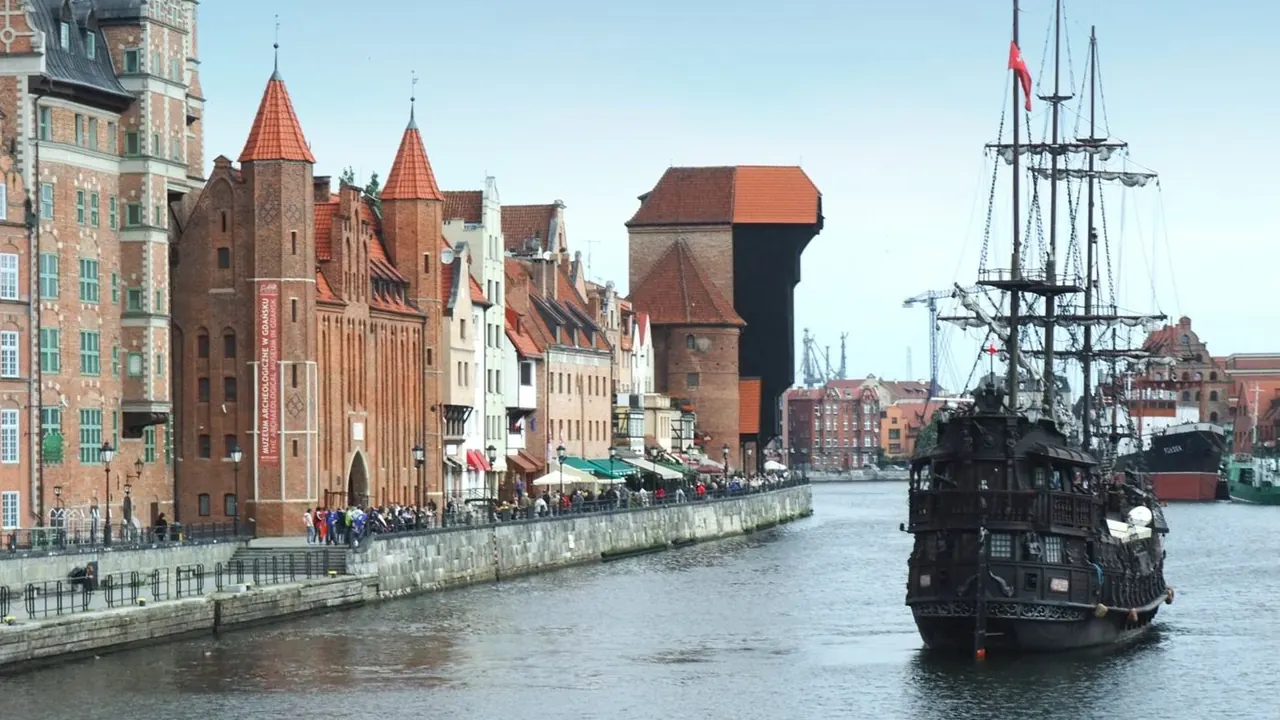
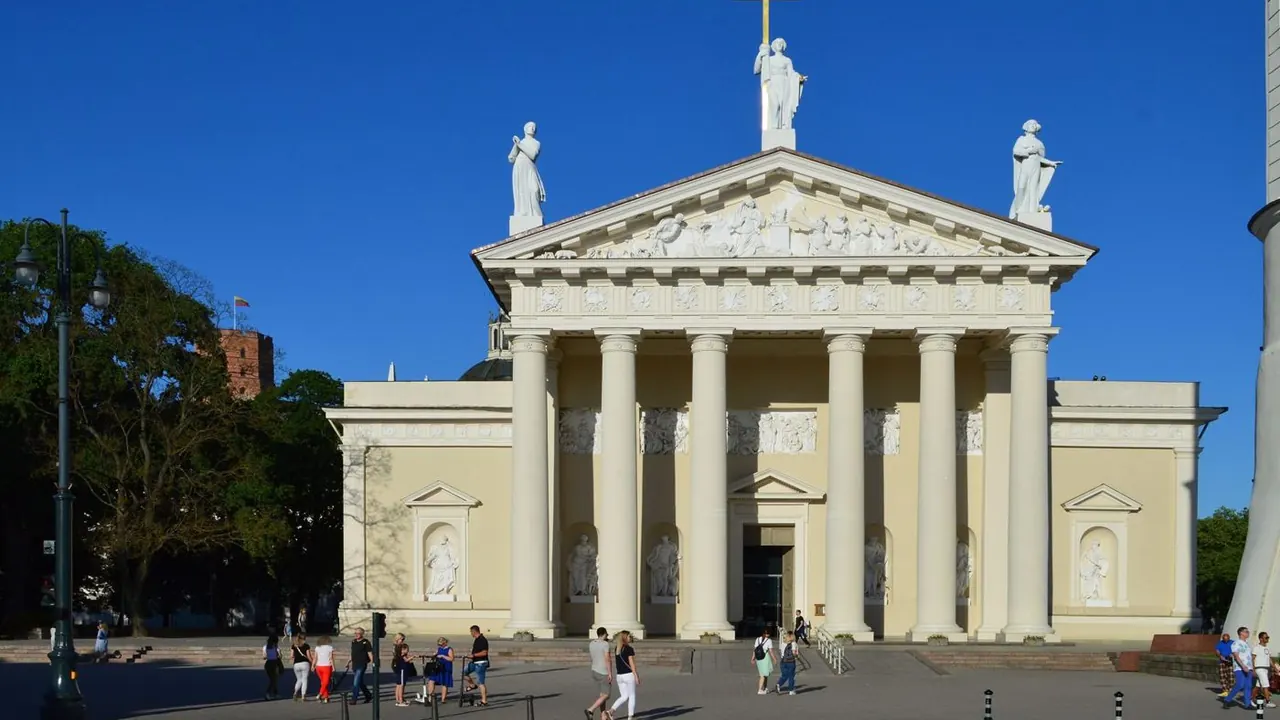
Photos: Gdansk by Nikater, CC BY-SA 3.0, cropped; Vilnius by Scotch Mist, CC BY-SA 4.0, cropped.
Gdansk or Vilnius?
Our verdict in twelve categories, each scored against the same fixed benchmark cities, and the climate month by month, so you can choose for your trip.
Choose Gdansk for
- beaches
- families
- nightlife
Gdansk suits a summer trip that mixes history with the seaside. Sand runs from the city's edge to Sopot, the Main Town is flat and easy with children, and the zoo, aquarium and science centres give families plenty to do. The coast, the forested hills and the Hel Peninsula also make it the better base if you want to spend time outdoors.
Choose Vilnius for
- live music and the arts
Choose Vilnius for an inland capital that reveals itself on foot. Its baroque Old Town survived largely intact rather than being rebuilt, and a long weekend of churches, courtyards, Užupis cafés and Lithuanian cooking suits it well. It works best for adults happy to swap the beach for a lake in the pine woods.
Scoreboard
Twelve categories on one fixed scale from 0 to 100. The shaded stretch is the gap between the two.
Your match
Pick a travel style or drag the sliders, and both match scores follow your weighting.
Wins on beaches and families with your weighting.
Wins on live music and the arts with your weighting.
What matters to you?
Category by category
What the scores mean for a trip.
Beaches & swimming
Gdansk has a real seaside on its doorstep. Fine sand runs almost without a break from Brzeźno to Sopot, Stogi is quieter and backed by pines, and the Hel Peninsula adds calm bay water. The sea is cool and the swimming season short, but a beach afternoon fits easily into a city stay.
Vilnius is landlocked, and the coast is too far for a day out. Summer swimming means the Green Lakes, Balžis or the shores around Trakai: pleasant on a hot day, but more of a bonus than a reason to go.
Food & drink
The two are equally good for eating, but the menus point in different directions. Gdansk leans towards the sea, with smoked and fried fish, herring in many forms, Kashubian country cooking, milk bars and gold-flecked Goldwasser. Its best meals tend to be in Wrzeszcz, Sopot and Gdynia rather than along the tourist quay.
Vilnius is the place for Lithuanian potato-and-rye cooking: cepelinai, cold pink beetroot soup, garlic bread with beer and Karaim kibinai. Halės market sells smoked meats, cheese, honey and forest berries. Both cities take craft beer seriously.
Culture & sights
These two are evenly matched, but their old towns tell different stories. Gdansk's Hanseatic Main Town was carefully rebuilt from post-war ruins around Długa, the Long Market and the vast brick bulk of St Mary's. Its real strength is the twentieth century: the Museum of the Second World War, Westerplatte and the European Solidarity Centre at the shipyard.
Vilnius's UNESCO-listed Old Town largely survived, so the pleasure is in wandering its baroque streets past the Gate of Dawn and St Anne's. Its museums focus on Soviet occupation, in the former KGB building, and on the Jewish heritage of the "Jerusalem of the North".
Nightlife
Gdansk has more ways to spend an evening, mainly because it reaches beyond its own old town. Main Town cocktail bars, student pubs in Wrzeszcz and warehouse club nights in the shipyard are joined in summer by Sopot, where Monte Cassino street and the pier area stay busy until late and the trains run back into the small hours.
Vilnius packs its nights into the Old Town and the streets west of it, with craft beer pubs, student cellars and a small but serious electronic scene in old industrial spaces. Weekends are lively, but it is a compact scene for a night or two.
Nature & outdoors
Gdansk has the wider range of scenery: beech woods and ravines in the Tricity Landscape Park, a cycle path along the shore, the Kashubian lakes about an hour away, and the dunes of the Hel Peninsula, where the Bay of Puck draws kitesurfers and windsurfers.
Vilnius has no coast, but forest comes almost into the city centre. Pavilniai and Verkiai parks are a short bus ride away, there are dawn balloon flights over the Old Town, and canoe routes run through Aukštaitija's chains of lakes.
Day trips
Day trips are equally good from both, and each city has a famous brick castle nearby. From Gdansk it is Malbork, the huge Teutonic fortress about 35 minutes away by train, plus Torun's Gothic old town, Copernicus's Frombork and Pelplin Abbey. Sopot and Gdynia are easy half-days.
From Vilnius, Trakai's island castle is only half an hour away. Kaunas offers interwar modernist architecture, and Kernavė's hill forts and the Rumšiškės folk museum give a sense of rural and early Lithuania.
Good for families
Gdansk is much easier with children, at least in summer. It has shallow beaches, the Oliwa zoo, Gdynia's aquarium and science centre, the Hevelianum in its hilltop fort, and boat trips to Westerplatte, all from a flat, largely pedestrian centre.
Vilnius is safe and calm, and children enjoy the funicular to Gediminas Tower, the rowing boats at Trakai and the indoor water parks. Beyond those, its sights are mostly churches and history museums, and the cobbles make pushchairs hard work.
Getting around
Both are easy to get around without a car, but in different ways. Gdansk's centre is flat and mostly pedestrian, with trams to the beaches and the SKM commuter railway along the coast to Sopot and Gdynia. The main effort is the distance along that 30km strip.
In Vilnius, almost everything a visitor wants is a short walk apart, though on hilly cobbles. Beyond the centre it relies on buses and trolleybuses rather than trams, and the airport is unusually close.
Shopping & style
Neither city is a shopping destination, and in both the souvenir worth buying is Baltic amber. Gdansk has the longer amber tradition, with workshops lining Mariacka Street, and the medieval St Dominic's Fair fills the old town every summer.
Vilnius offers a wider range of crafts: linen, ceramics, woven sashes and wooden pieces from Užupis workshops, plus the Kaziukas folk fair each March. In both cities, choose amber sellers carefully.
Affordability
Both are good value next to Western Europe, with cheap transport, modest museum tickets and inexpensive beer and coffee. The main difference is when rooms get expensive. In Gdansk, July and August bring seaside prices, especially in Sopot, so late spring or early autumn costs noticeably less.
Vilnius is cheap for a capital, and only Old Town hotels on summer weekends and the smarter modern restaurants push the bill up.
Live music & performing arts
In Gdansk the buildings are often the draw, while in Vilnius it is what happens on the stage. Gdansk has the Shakespeare Theatre with its opening roof, the Philharmonic in a converted power station on Ołowianka island and organ recitals in Oliwa Cathedral. In summer, Gdynia hosts a big rock and pop festival.
Vilnius has a celebrated tradition of avant-garde theatre directors, and its National Opera and Ballet is affordable. The autumn jazz festival suits a trip outside summer.
Wellness & relaxation
Neither city is a place to go for treatments. What they have is hotel spas and saunas. Gdansk has the stronger spa heritage through Sopot, the nineteenth-century resort with its grand seafront hotels, and locals keep up the bracing custom of winter sea dipping.
Around Vilnius, the wood-fired pirtis sauna is found at lakeside guesthouses outside the city, and Druskininkai's mineral springs are the proper spa trip. In the city itself, slow mornings in Užupis cafés are the main way to unwind.
When should you go?
Pick your month. The climate figures are measured averages, not a forecast.
Gdansk in July
Vilnius in July
Daytime high, °C
Rainfall in the month, mm
Where the figures come from
Gdansk has no rain gauge within 25 km of the centre, so its rainfall comes from a gridded climate dataset read at the city rather than from a gauge further away.
Gdansk's sunshine is measured 55 km from the centre, at Elblag.
Temperature and rainfall are climate normals, averaged over the years shown. Gdansk: 1991-2020 normals, Gdansk-Rebiechowo (12.7 km from centre). Vilnius: 1991-2020 normals, Vilnius (13 km from centre).
Both cities are at their best from late May to early September, and both are cold, dark and grey from November to March. Gdansk is the milder of the two in winter and a little cooler in summer, reaching about 22°C in July and August with the sea breeze. The Baltic is only good for swimming in those two months, when it reaches around 19°C. Vilnius has the more continental swing. Summer days are warmer, around 24°C in July, and January highs drop to about -1°C, so winter walks on its cobbled streets are short and icy.
Midsummer is also the wettest time in both, with July bringing about 90mm, usually in showers rather than whole grey days. Sunshine peaks from May to August in both. June and early September are probably the sweet spot: warm enough for terraces and long walks, with less rain than high summer. Gdansk's sea stays mild into September for a paddle.
Which traveller are you?
For a beach and sun trip, Gdansk is the clear choice. You can stay in Sopot, the old spa town with its long wooden pier, and take the local train into the Main Town for sightseeing. From Vilnius, a swim is a half-day outing to a lake.
On a family trip with children, Gdansk works better in summer because swimming, sightseeing and rainy-day indoor options all lie along one rail line. Teenagers keen on history also get Westerplatte. In Vilnius, the sights mostly suit adults rather than children.
For a short city break, Vilnius is the neater fit. Two or three days are enough to see its UNESCO-listed Old Town properly, with Trakai as an easy extra morning. Gdansk keeps asking for more days, with Sopot, Gdynia and Malbork all within reach.
Before you go
| Measure | Gdansk | Vilnius |
|---|---|---|
| Official language | Polish | Lithuanian |
| Currency | Zloty (PLN) | Euro (EUR) |
| Sockets | CE50 Hz | CF220 V, 50 Hz |
| Driving side | Right | Right |
| Time zone | UTC+1, UTC+2 in summer | UTC+2, UTC+3 in summer |
| Emergency number | 112 | 112 |
| Elevation | 11 m | 98 m |
| Main airport | Gdańsk Lech Wałęsa Airport (GDN)13 km from centre72 non-stop destinations | Vilnius International Airport (VNO)6 km from centre82 non-stop destinations |
| Public holidays this year | 14 days | 14 days |
By the numbers
| Measure | Gdansk | Vilnius |
|---|---|---|
| City population | 487,834 | 619,405 |
| People per km² | 714 | 1,545 |
| Museums within 10 km | 34 | 31 |
| UNESCO World Heritage sites within 50 km | 2 | 3 |
| Swim season, months above 21 °C | None | - |
Where else could you go?
Every comparison below shares a destination with this one, so you can follow Gdansk or Vilnius somewhere new.