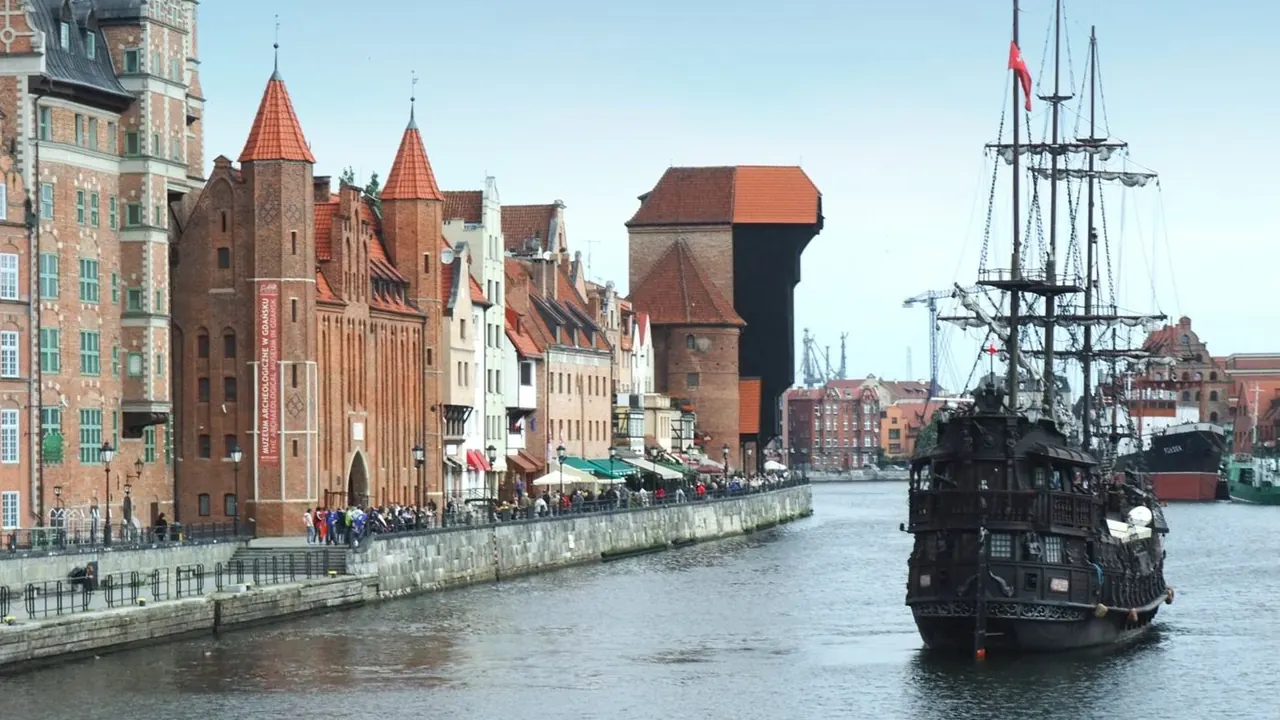
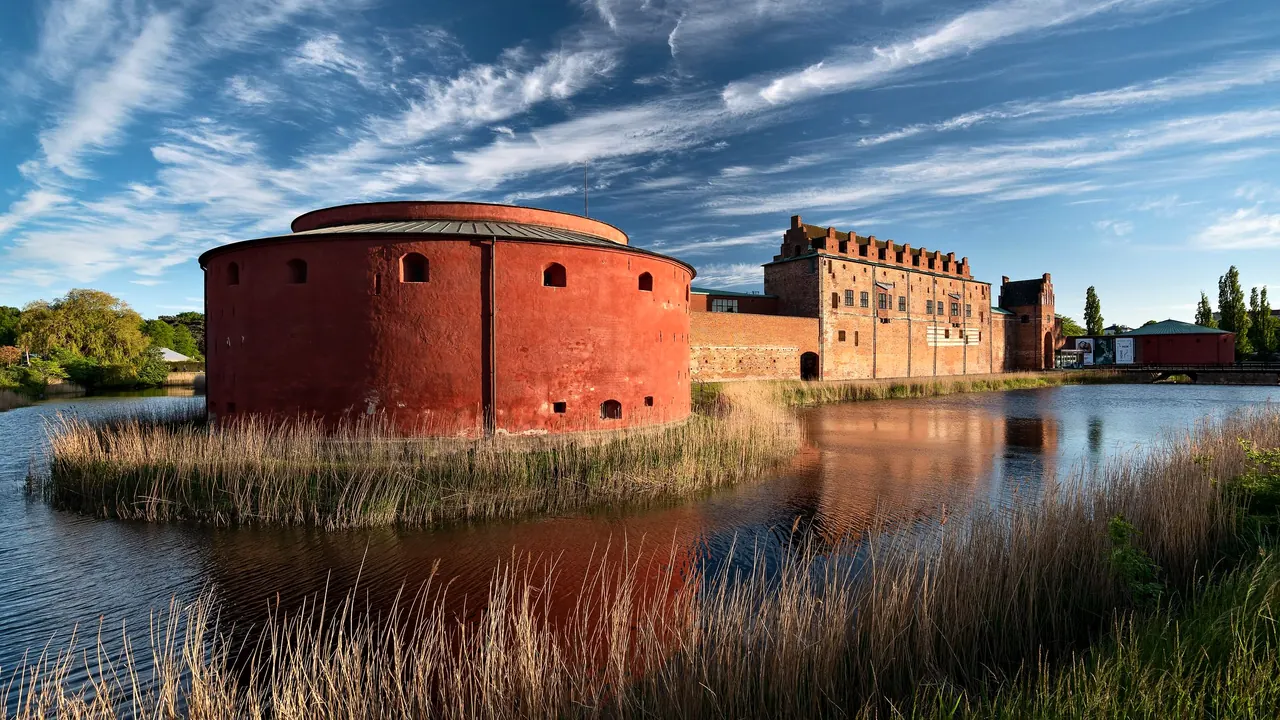
Photos: Gdansk by Nikater, CC BY-SA 3.0, cropped; Malmo by Kateryna Baiduzha, CC BY-SA 4.0, cropped.
Gdansk or Malmo?
Our verdict in twelve categories, each scored against the same fixed benchmark cities, and the climate month by month, so you can choose for your trip.
Choose Gdansk for
- prices
- culture and sights
- nightlife
Gdansk is the stronger choice for travellers who want history they can walk through and a trip that doesn't cost much. The rebuilt Hanseatic Main Town, the Museum of the Second World War and the Solidarity story at the shipyard give it real depth. Summer evenings in Sopot add a livelier night out, and food, drink and transport all cost far less than across the water.
Choose Malmo for
- wellness
- day trips
- shopping
Malmo makes more sense as a calm, well-run base than as a destination in its own right. Copenhagen, Lund and the castles and coast of Skåne are all close by train, so it suits travellers who like to fill their days with excursions. They should come back to a city that is easy on a bike and has a sauna on a pier. Expect Scandinavian prices, especially in the evenings.
Scoreboard
Twelve categories on one fixed scale from 0 to 100. The shaded stretch is the gap between the two.
Your match
Pick a travel style or drag the sliders, and both match scores follow your weighting.
Too close to call, 2 points apart
Wins on prices and culture and sights with your weighting.
Wins on wellness and day trips with your weighting.
What matters to you?
Category by category
What the scores mean for a trip.
Beaches & swimming
Neither city is a beach destination, and in both the water stays cool. The difference is in how you reach the sand. In Gdansk, a long strand runs from Brzeźno and Jelitkowo to Sopot by tram or train, Stogi is quieter and backed by pines, and the Hel Peninsula is further out.
Malmo's Ribersborg starts barely 2km from the centre, close enough to cycle, with jetties to swim from and the Öresund Bridge in view. For finer, emptier sand, Skanör and Falsterbo are about half an hour away.
Food & drink
Gdansk cooks Polish and Baltic: pierogi, żurek sour rye soup, herring and smoked fish, Kashubian plates of potatoes, mushrooms and berries, and simple canteen food in the old milk bars, with a glass of gold-flecked Goldwasser to finish. The better meals are in Wrzeszcz, the shipyard area and Sopot, not on Długa.
Malmo eats falafel first, from counters all over town and the Middle Eastern bakeries and grocers around Möllevångstorget. Add the market hall in the old harbour, Skåne goose and smoked eel, and a cinnamon bun at fika around Lilla Torg. Malmo has more variety, while Gdansk offers heartier home cooking.
Culture & sights
Gdansk is in another class here. The Royal Way of Długa, the Long Market, Artus Court, the medieval crane and the vast brick bulk of St Mary's make up a historic city worth days of exploring. Its museums of war and Solidarity are among the most serious in Europe.
Malmo's historic centre is pleasant but small: Stortorget, half-timbered Lilla Torg, St Petri and the moated Malmöhus with its museums. The Turning Torso is the sight people remember, and a couple of days covers the lot.
Nightlife
Gdansk offers more choice after dark. You can pick quiet cocktail bars in the Main Town, student bars in Wrzeszcz or warehouse club nights in the old shipyard. In summer, Monte Cassino street in Sopot fills with clubs, and trains run late along the coast.
Malmo's evenings centre on Möllevången's small clubs and late kitchens, and on the terraces of Lilla Torg in summer. Weeknights are quiet, drinks are heavily taxed, and locals often cross to Copenhagen for a bigger night.
Nature & outdoors
Gdansk has slightly more varied country nearby. The beech woods and ravines of the Tricity Landscape Park rise right behind Oliwa and Sopot, and the Kashubian lakes, about an hour inland, are good for canoeing. On the Bay of Puck, behind the Hel Peninsula, the water is excellent for kitesurfing.
Malmo's surroundings are flatter farmland, ideal for easy cycling to the coast. Further out, Söderåsen's ravine, the sea cliffs of Kullaberg and the autumn birds of prey over Falsterbo are well worth the trip.
Day trips
Day trips are Malmo's trump card. Copenhagen is about thirty-five minutes away over the bridge and Lund's cathedral about ten. Kronborg, Louisiana and Roskilde are all on the Danish side, and Ystad and Ales Stenar lie to the east.
Gdansk has one superb outing in Malbork, the Teutonic Knights' huge brick castle, along with Copernicus's Frombork and the Gothic old town of Torun. These are rewarding trips, but they are fewer and further apart.
Good for families
Both cities are calm and safe with children, but in different ways. Gdansk has more attractions built for children: the large Oliwa zoo, Gdynia's aquarium and science centre, the Hevelianum in its hilltop fort, and boat trips to Westerplatte. Its war museums, however, suit older children better.
Malmo has little made specifically for families. Instead, the whole city is set up for them, with playgrounds in every park, prams riding free on buses, and a real submarine to climb inside at the maritime museum.
Getting around
Gdansk runs on rails. The SKM commuter line links Wrzeszcz, Oliwa, Sopot and Gdynia along some 30km of coast, trams run out to the beaches at Brzeźno and Jelitkowo, and you can walk the flat, mostly pedestrian Main Town.
In Malmo the bicycle does the work, with separate lanes and a bike-share scheme that take you out to the Western Harbour and Ribersborg. There is no tram or metro, but an underground rail link through the centre puts Lund, Copenhagen Airport and Copenhagen itself a short ride away.
Shopping & style
Malmo has slightly more to browse. Swedish design, homeware and boutiques fill the lanes around Lilla Torg and Gamla Väster, and Möllevångstorget has an open-air market. Serious shoppers still head to Copenhagen.
Gdansk really has one thing to buy: Baltic amber from the workshops on Mariacka Street. If you visit in summer, St Dominic's Fair fills the old town with craft and antique stalls.
Affordability
Gdansk is far cheaper. Meals, beer, coffee, museums and transport all cost well below Western European levels. The main thing to watch is hotel rooms in July and August, especially in Sopot.
Malmo is mild by Nordic standards but still expensive. Set lunches and falafel keep the daytime affordable, while dinners, drinks and taxis eat into a budget quickly.
Live music & performing arts
The two cities are evenly matched, and much of the theatre in both is not in English. Gdansk's Shakespeare Theatre, with its opening roof, the Philharmonic in an old power station and the organ recitals at Oliwa have more historic character.
Malmo has the bigger stage in Malmö Opera and a modern concert hall in Malmö Live. Its August festival fills the streets with free music, and Copenhagen's halls are close by.
Wellness & relaxation
Both cities have a winter sea-dipping custom, and comparing the two shows the gap. In Gdansk, morsowanie is a hardy local habit of wading into the icy Baltic from an open beach, and nothing has been built around it for visitors to join. The spa side of the trip means a booked treatment in one of Sopot's grand seafront hotels, a reminder of its days as a nineteenth-century resort. Outside high summer, a slow cake-and-coffee afternoon in the Main Town is the gentler alternative.
Malmo has a proper building for the same cold-water habit. At the Kallbadhus, sauna and sea are a few steps apart, so a visitor can try the January plunge and warm up straight afterwards. What would be a dare in Gdansk becomes an easy outing here. Neither city has a thermal tradition, and Malmo's hotel spas and swimming halls are no better than Gdansk's, but this one place makes it the better choice for unwinding.
When should you go?
Pick your month. The climate figures are measured averages, not a forecast.
Gdansk in July
Malmo in July
Daytime high, °C
Rainfall in the month, mm
Where the figures come from
Gdansk's sunshine is measured 55 km from the centre, at Elblag.
Malmo's temperatures are measured 27 km from the centre, at Falsterbo.
Malmo has no rain gauge within 25 km of the centre, so its rainfall comes from a gridded climate dataset read at the city rather than from a gauge further away.
Temperature and rainfall are climate normals, averaged over the years shown. Gdansk: 1991-2020 (rainfall 1971-2000) normals, Gdansk-Rebiechowo (12.7 km from centre). Malmo: 1991-2020 normals, Falsterbo (27.3 km from centre).
The two cities share almost the same climate. Summer highs reach about 22°C in Gdansk and a degree less in Malmo, and in both the sea only warms to 18 or 19°C in July and August. That makes the swimming season a few weeks long in either place. Gdansk has its wettest month in July, at 73mm, so a summer trip there should allow for some heavy showers. Malmo's rain is spread more evenly through the year.
For walking the streets, May, June and September are the best months in both cities. In Gdansk, late spring is also the sunniest time, with long bright days from April to August. Winter is cold and dark in both, and Gdansk is slightly colder, with January highs close to freezing. From November to March, plan around museums, cafés and, in Malmo, the sauna.
Which traveller are you?
For a culture and arts trip, Gdansk is the clear pick. Its merchant houses and St Mary's are only the start. The Museum of the Second World War, Westerplatte and the European Solidarity Centre tell twentieth-century history with a weight that Malmo's small old core cannot match.
On a trip on a tight budget, Gdansk is the easier city by a wide margin. Milk bars, cheap beer and coffee, modest museum tickets and low transport fares keep costs down. In Malmo, falafel and set lunches help, but drinks and dinners soon add up.
For a relaxing and wellness trip, Malmo has the edge. Ribersborgs Kallbadhus, the old wooden bathhouse on its pier, offers wood-fired saunas and cold sea dips all year. Add quiet parks and a long, flat seafront, and Malmo is calmer than Gdansk, where the summer crowds fill Długa.
Before you go
| Measure | Gdansk | Malmo |
|---|---|---|
| Official language | Polish | Swedish |
| Currency | Zloty (PLN) | Swedish Krona (SEK) |
| Sockets | CE50 Hz | CF230 V, 50 Hz |
| Driving side | Right | Right |
| Time zone | UTC+1, UTC+2 in summer | UTC+1, UTC+2 in summer |
| Emergency number | 112 | 112 |
| Elevation | 11 m | 12 m |
| Main airport | Gdańsk Lech Wałęsa Airport (GDN)13 km from centre73 non-stop destinations | Copenhagen Kastrup Airport (CPH)22 km from centre196 non-stop destinations |
| Public holidays this year | 14 days | 16 days |
By the numbers
| Measure | Gdansk | Malmo |
|---|---|---|
| City population | 487,834 | 339,316 |
| People per km² | 714 | 4,205 |
| Museums within 10 km | 34 | 24 |
| UNESCO World Heritage sites within 50 km | 2 | 2 |
| Swim season, months above 21 °C | None | None |
Where else could you go?
Every comparison below shares a destination with this one, so you can follow Gdansk or Malmo somewhere new.