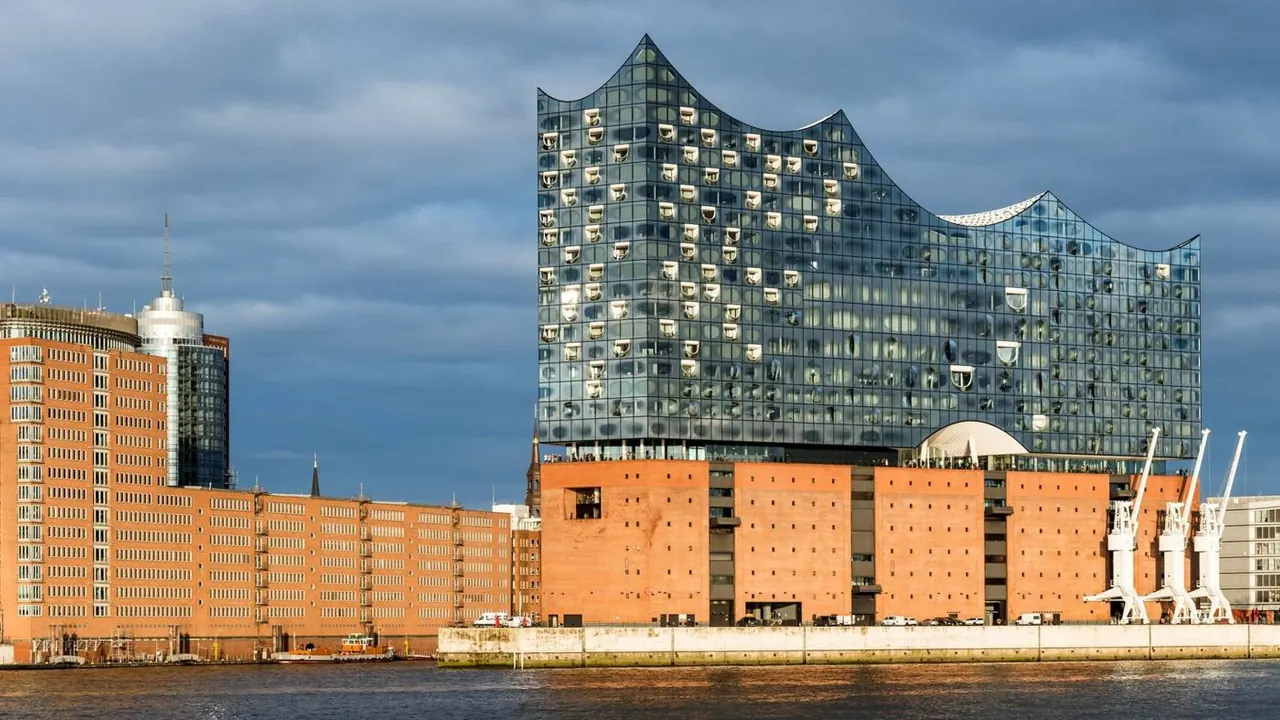
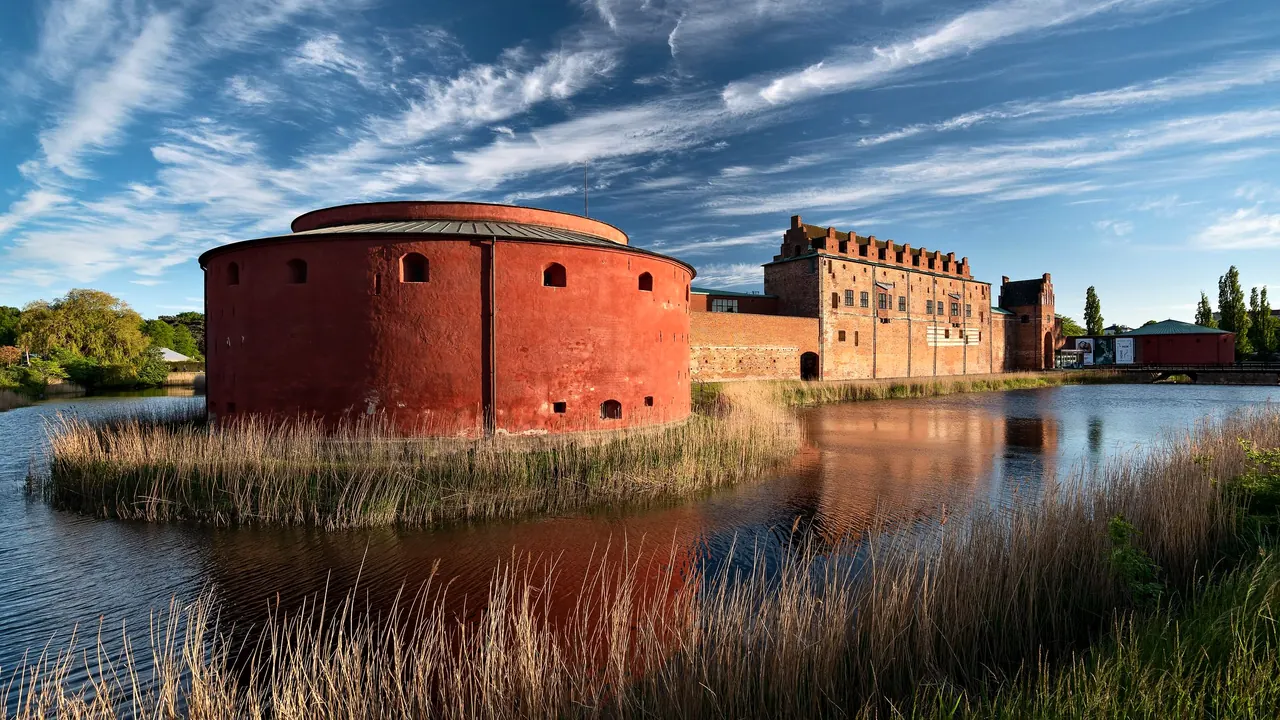
Photos: Hamburg by Wolfgang Weiser, Pexels License; Malmo by Kateryna Baiduzha, CC BY-SA 4.0, cropped.
Hamburg or Malmo?
Our verdict in twelve categories, each scored against the same fixed benchmark cities, and the climate month by month, so you can choose for your trip.
Choose Hamburg for
- nightlife
- live music and the arts
- culture and sights
Hamburg is the better choice for a full city trip with a lot going on in the evenings. It has the Elbphilharmonie, opera and ballet, musicals across the harbour and a late, rough-edged night scene on the Reeperbahn and in the Schanzenviertel. It also has more for children, from Miniatur Wunderland to Hagenbeck, and much better shopping, so it can fill a week without help from anywhere else.
Choose Malmo for
- wellness
- beaches
- day trips
Travellers who want a quieter, slower trip should look at Malmo. Its own sights take a couple of days, but Copenhagen is half an hour across the bridge and Lund is ten minutes up the line, so it works best as a calm base for cycling and exploring both sides of the Öresund. It also has a city beach you can cycle to and the sea sauna at Ribersborgs Kallbadhus, which suits easy days more than big nights.
Scoreboard
Twelve categories on one fixed scale from 0 to 100. The shaded stretch is the gap between the two.
Your match
Pick a travel style or drag the sliders, and both match scores follow your weighting.
Wins on nightlife and live music and the arts with your weighting.
Wins on wellness and beaches with your weighting.
What matters to you?
Category by category
What the scores mean for a trip.
Beaches & swimming
Hamburg's sand at Oevelgoenne and below Blankenese is a place to sit with a drink while container ships glide by at sunset, not a place to go in. The Elbe is a busy shipping lane with a strong pull, so unlike in Malmo, a real swim means a day out. That means the Baltic resorts of Travemuende or Timmendorfer Strand, about an hour away, with their wicker beach chairs.
Malmo is the better choice for a swim because its beach is part of the city. Ribersborg begins about 2km from the centre, with grassy dunes, shallow, calm water that suits small children, and the Öresund Bridge on the horizon. Skanör and Falsterbo have finer, emptier sand half an hour south. The sea stays cool and the season is short, but on a warm day you can simply cycle down and swim.
Food & drink
The two cities eat equally well, and neither is a reason to travel in itself, but the food is very different. Hamburg eats like a port, with fish rolls on the Landungsbruecken piers, Labskaus, eel soup and Franzbroetchen with coffee from a city full of roasteries, plus a serious fine-dining tier.
Malmo's food comes from immigration and farmland. You get falafel and Middle Eastern bakeries around Möllevångstorget, then Skåne goose, smoked eel and spettekaka, with fika in the cafés around Lilla Torg as the daily habit.
Culture & sights
Hamburg has much more to see. The UNESCO-listed Speicherstadt and Kontorhaus district, the Elbphilharmonie plaza, the Rathaus, St Michael's and the Kunsthalle's collection, from old masters to Caspar David Friedrich, fill several days. War damage means you see the city through its districts and waterside walks rather than an old core.
Malmo's centre is pleasant and small. There is Stortorget, the half-timbered houses of Lilla Torg, St Petri and the museums inside the moated Malmöhus castle, with the Turning Torso as the modern landmark. A couple of days covers it, and visitors who love history usually go on to Lund and Copenhagen.
Nightlife
Hamburg is the place for a big night out. The Reeperbahn fills up at weekends, bars have no fixed closing time and nights can end at dawn by the harbour. The Schanzenviertel, Ottensen and the Alster each have a different mood, and clubs range from bunker basements to harbour-side venues.
Malmo is quieter and more controlled, with relaxed bars and small clubs around Möllevången, summer terraces on Lilla Torg and empty weeknights. Strict licensing and expensive drinks keep things in check, and locals who want a late night often take the train to Copenhagen.
Nature & outdoors
Both sit on flat land and have about as much outdoors to offer, but of different kinds. In Hamburg it is water inside the city: sailing and paddling on the Alster, canoeing the northern canals, the Elbe path to Blankenese and cycling through the orchards of the Altes Land, with the heather of Lueneburg Heath an hour south.
Malmo looks to the coast and countryside, with seafront cycling along Ribersborg, the forested ravine of Söderåsen, the sea cliffs and kayaking at Kullaberg, and migrating birds of prey over Falsterbo in autumn.
Day trips
Malmo is the better base, mostly because a whole foreign capital is thirty-five minutes away. Copenhagen's palaces, museums and canals make an easy day out, and Lund is ten minutes off. Kronborg, Louisiana and Roskilde's Viking ships are also within reach, with Ystad and Ales Stenar on the Swedish side.
Hamburg is very good too, though its trips share one theme, the brick Gothic Hanseatic towns. Luebeck is under an hour by train and Lueneburg about half an hour, and Bremen, Schwerin and Wismar fill more days.
Good for families
Hamburg gives children much more to do. Miniatur Wunderland can take up a whole afternoon, Hagenbeck shows animals across moats and has an aquarium for rainy days, and a harbour day of ferries, museum ships and the old Elbe tunnel needs no planning. Heide Park and Hansa-Park are each about an hour away.
Malmo is relaxed and welcoming to children in everyday life: prams ride free on buses, nearly every park has a playground and the city beach is shallow. Climbing inside the submarine at the technology and maritime museum is the highlight, but there is no zoo or theme park, so older children may run out of things to do after a few days.
Getting around
Both are easy without a car, and Hamburg covers more ground. Its U-Bahn and S-Bahn reach every district a visitor needs, the airport included, and the harbour ferries run on the same ticket, so getting around the port doubles as sightseeing.
Malmo has no metro or tram but hardly needs one. The centre is compact and flat, separate bike lanes and bike-share make cycling the natural way to the Western Harbour and the beach, and the rail tunnel under the centre runs to Lund, Copenhagen and its airport.
Shopping & style
Hamburg is the better shopping city by some way. Luxury labels line Neuer Wall around the Jungfernstieg, covered arcades link them on wet days, the Alsterhaus anchors the area, and the Karolinenviertel and Schanzenviertel add vintage and streetwear shops.
Malmo is pleasant for shopping but not a reason to go. It has high-street chains along Södergatan, Swedish design and homeware around Lilla Torg and Gamla Väster, and a large mall at Hyllie. There are few big department stores or luxury labels, and keen shoppers usually wait for Copenhagen.
Affordability
Both are expensive by European standards, but the money goes in different places. In Hamburg, hotels are the big cost, especially during trade fairs and on summer weekends. A day ticket covering trains and ferries, free sights such as the Elbphilharmonie plaza and cheap fish rolls help balance it.
In Malmo, rooms are reasonable for Scandinavia, and the weekday set lunch and falafel counters are good value, but heavily taxed alcohol makes evenings the expensive part. In short, Hamburg's budget goes on the bed, Malmo's on the bar.
Live music & performing arts
This is where Hamburg pulls furthest ahead. The Elbphilharmonie and Laeiszhalle give it a full classical season, the State Opera and Hamburg Ballet are internationally known, and the Schauspielhaus and Thalia are among Germany's leading stages. Add the long-running musicals and the St Pauli rock clubs where the Beatles started out.
Malmo does well for its size, with one of Scandinavia's biggest opera stages, the symphony orchestra at Malmö Live and free concerts at the Malmö Festival in August. Theatre is mostly in Swedish, though, and for a bigger programme many visitors go to Copenhagen.
Wellness & relaxation
Malmo has the one experience worth travelling for here: Ribersborgs Kallbadhus, a wooden bathhouse from the 1890s on a pier. Locals go all year to sit in its wood-fired saunas and climb down into the sea, even in winter. The slow pace and long seafront make the rest of the stay calm too.
Hamburg shares the German love of saunas, with the art nouveau Holthusenbad and the big sauna areas in its public baths. For quiet time there is the Japanese garden in Planten un Blomen or a boat on the Alster. It is a pleasant place to unwind, but it has nothing like a sauna followed by a dip in the sea.
When should you go?
Pick your month. The climate figures are measured averages, not a forecast.
Hamburg in July
Malmo in July
Daytime high, °C
Rainfall in the month, mm
Where the figures come from
Malmo's temperatures are measured 27 km from the centre, at Falsterbo.
Malmo has no rain gauge within 25 km of the centre, so its rainfall comes from a gridded climate dataset read at the city rather than from a gauge further away.
Temperature and rainfall are climate normals, averaged over the years shown. Hamburg: 1991-2020 normals, Hamburg Airport (9.3 km from centre). Malmo: 1991-2020 normals, Falsterbo (27.3 km from centre).
Both cities are at their best from late May to early September, and neither ever gets too hot for walking. Hamburg runs a couple of degrees warmer, with summer highs around 23°C against Malmo's 21°C, and from May to August its days are long and often sunny. But summer is also Hamburg's wettest time, with rain peaking at around 82mm in July, so pack a jacket even then. Malmo is drier through the whole year.
Swimming in Malmo is limited to a short window. The sound only warms to about 18°C in August, so July and August are the months for Ribersborg, and the water is still cool. From November to March both cities are cold, grey and dark, with highs of a few degrees. In those months Hamburg's concert halls and museums, or a session in Malmo's sea sauna, have to carry the trip.
Which traveller are you?
For a food and nightlife trip, Hamburg is the clear pick. The food is about as good in both, fish rolls against falafel, but the Reeperbahn, the Schanzenviertel bars and late closing give Hamburg nights that Malmo's small, tightly licensed scene cannot match.
On a family trip with children, Hamburg has far more to fill the days. There is Miniatur Wunderland, Hagenbeck's moated enclosures and aquarium, the harbour ferries and two theme parks about an hour away. Malmo is gentle and easy with a pram but has no zoo or theme park.
For a relaxing and wellness trip, Malmo is the better fit. Hamburg has nothing like Ribersborgs Kallbadhus, with its wood-fired saunas and steps down into the sea. Malmo's slow pace, quiet parks and long, flat seafront also make it easy to take things slowly.
Before you go
| Measure | Hamburg | Malmo |
|---|---|---|
| Official language | German | Swedish |
| Currency | Euro (EUR) | Swedish Krona (SEK) |
| Sockets | CF230 V, 50 Hz | CF230 V, 50 Hz |
| Driving side | Right | Right |
| Time zone | UTC+1, UTC+2 in summer | UTC+1, UTC+2 in summer |
| Emergency number | 112 | 112 |
| Elevation | 6 m | 12 m |
| Main airport | Hamburg Helmut Schmidt Airport (HAM)9 km from centre120 non-stop destinations | Copenhagen Kastrup Airport (CPH)22 km from centre196 non-stop destinations |
| Public holidays this year | 10 days | 16 days |
By the numbers
| Measure | Hamburg | Malmo |
|---|---|---|
| City population | 1,869,473 | 339,316 |
| People per km² | 2,476 | 4,205 |
| Museums within 10 km | 77 | 24 |
| UNESCO World Heritage sites within 50 km | 1 | 2 |
| Swim season, months above 21 °C | - | None |
Where else could you go?
Every comparison below shares a destination with this one, so you can follow Hamburg or Malmo somewhere new.
- Copenhagenvs Malmo
- Aarhusvs Malmo
- Gothenburgvs Malmo
- Berlinvs Hamburg
- Copenhagenvs Hamburg
- Aarhusvs Hamburg