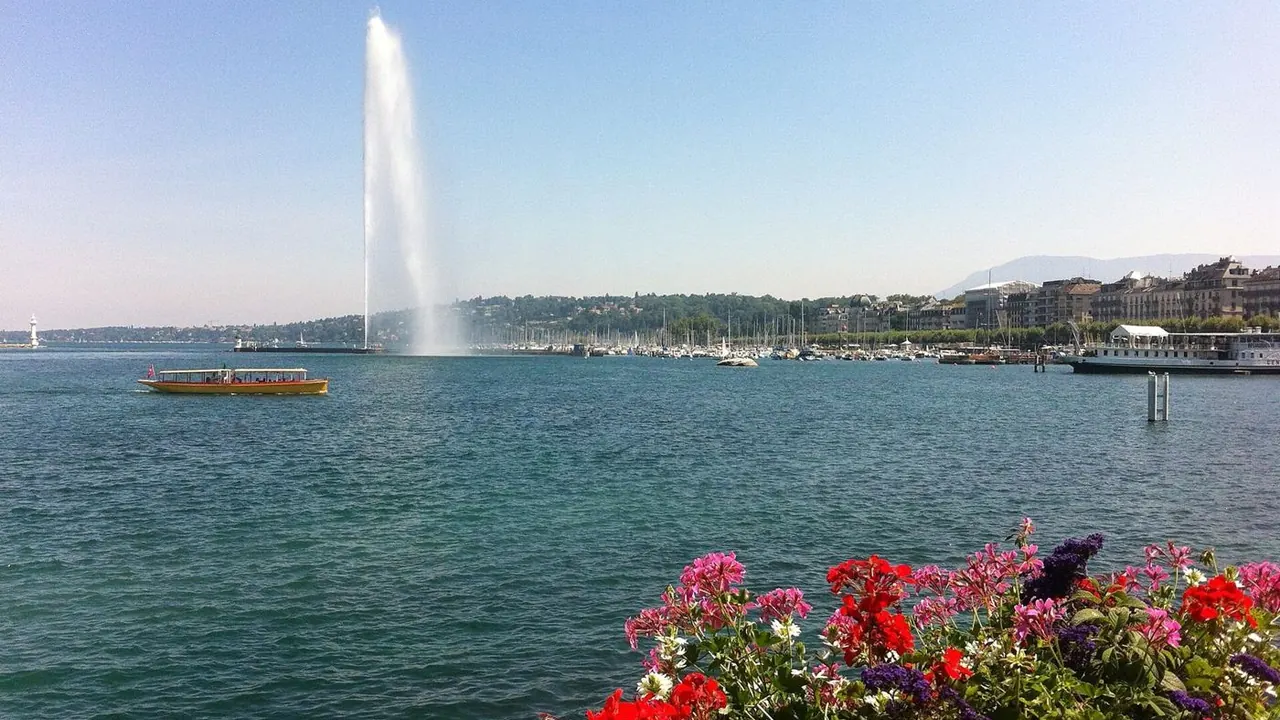
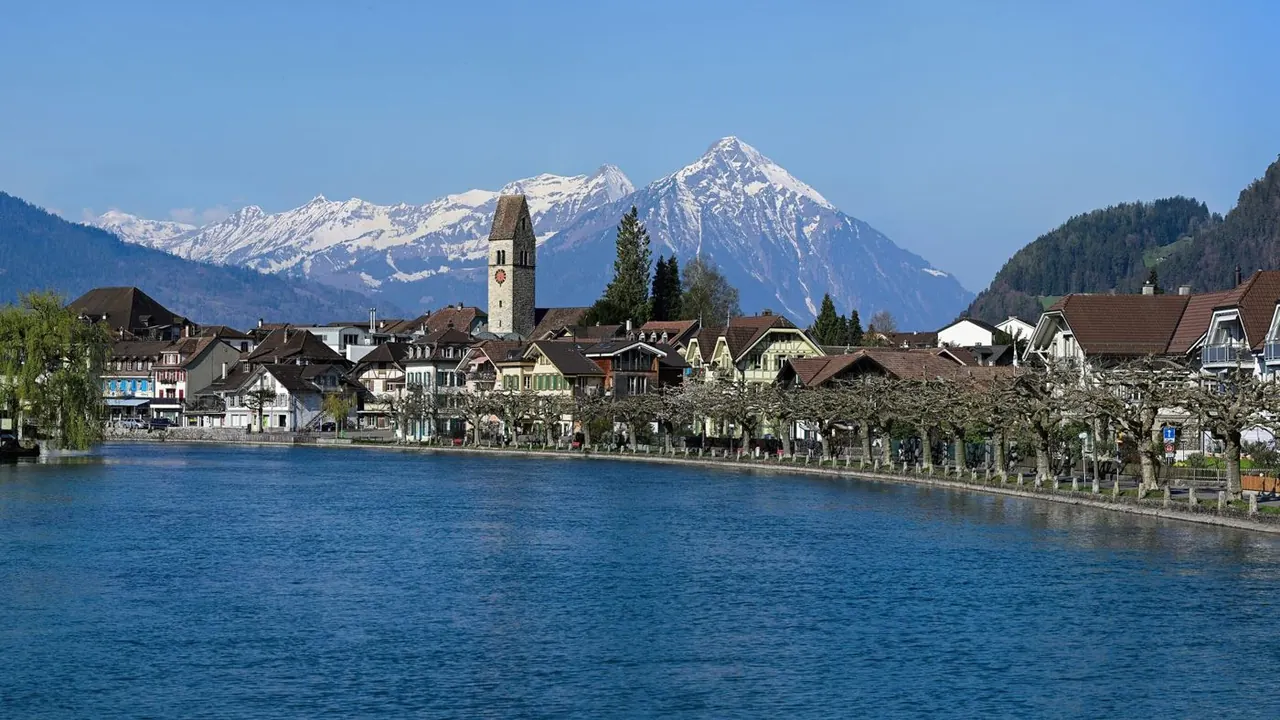
Photos: Geneva by Diviosen, CC BY-SA 3.0, cropped; Interlaken by Roy Egloff, CC BY-SA 4.0, cropped.
Geneva or Interlaken?
Our verdict in twelve categories, each scored against the same fixed benchmark cities, and the climate month by month, so you can choose for your trip.
Choose Geneva for
- culture and sights
- shopping
- live music and the arts
Geneva suits a traveller who wants a proper city with the mountains as a backdrop. It has the Reformation Old Town around St Pierre, the Palais des Nations and CERN, an opera season at the Grand Théâtre, French-leaning cooking with the canton's own Chasselas, and a lake you can swim in from the Bains des Pâquis. The peaks are about an hour away when you want them, and evenings and rainy days still have plenty to fill them.
Choose Interlaken for
- nature and the outdoors
- families
- prices
Pick Interlaken if the mountains are the whole point. The Jungfrau, the Lauterbrunnen valley and the high trails above Grindelwald and Mürren are right there, not a day's outing away, and paragliding, canyoning and the ski areas all start in town. Families whose children love trains and gondolas do well here too. Expect little in the way of museums, restaurants or nights out, and plan around the weather.
Scoreboard
Twelve categories on one fixed scale from 0 to 100. The shaded stretch is the gap between the two.
Your match
Pick a travel style or drag the sliders, and both match scores follow your weighting.
Wins on culture and sights and shopping with your weighting.
Wins on nature and the outdoors and families with your weighting.
What matters to you?
Category by category
What the scores mean for a trip.
Beaches & swimming
Neither has a beach in the usual sense, but Geneva makes more of its water. The Bains des Pâquis jetty, the lawns at Genève-Plage and the Eaux-Vives shore turn the lake into a city lido, and by August the water is pleasant for a proper swim.
Interlaken's two lakes are cooler, Lake Brienz especially, and a dip at Neuhaus or Bönigen is something to cool off with after a hike rather than a reason to spend the afternoon by the water. The snow peaks behind the water are the one thing Geneva cannot match.
Food & drink
Geneva is the far better place to eat. Its French-Swiss cooking runs from lake perch and winter cardoons in old wood-panelled brasseries to polished fine dining in Carouge and the Old Town, with Chasselas and Gamay from the canton's own vineyards and a wide range of international kitchens.
Interlaken feeds people well enough on fondue, rösti and a row of Indian and Asian places, but there is little beyond that. Its best meals are on hut terraces above Grindelwald or Mürren, and many visitors live on supermarket picnics.
Culture & sights
Geneva has a real city's worth of sights. You can climb the towers of St Pierre Cathedral and go down into the excavations beneath it, see the Reformation Wall, visit the Palais des Nations and the Red Cross museum, and tour CERN. That is enough for two or three full days.
Interlaken has almost none of this. A walk past the grand hotels and the Kursaal and a look at Unterseen's timber houses takes an hour or so. For history and museums you take the train to Bern or Thun.
Nightlife
Neither is a place for big nights out, but Geneva at least gives you choices: late bars in the Pâquis, wine terraces in Carouge, club nights in the alternative centres of Plainpalais and Jonction, and summer drinks along the Rhône. In Interlaken an evening means a backpacker pub, a basement club or the casino in the Kursaal, and the streets are quiet before midnight because everyone has an early train up the mountain.
Nature & outdoors
Geneva is a fine base for the outdoors. There is the cable car up the Salève, forest walks on the Jura ridge, sailing on the lake, and Chamonix about an hour away. But the big mountains sit on the horizon, and reaching them is a trip.
In Interlaken they are right in front of you. The Eiger, Mönch and Jungfrau, the Lauterbrunnen waterfalls and the railway to the Jungfraujoch are all within an hour, paragliders land on the meadow in the middle of town, and canyoning, rafting and the ski areas at Grindelwald and Wengen all start from here. Low cloud is the only thing that can spoil it.
Day trips
Both make excellent bases, but for different outings. From Geneva the draw is the lakeshore and France: steamers and trains to Nyon, Lausanne, the Lavaux vineyard terraces and Chillon, a boat to Yvoire, and Annecy under an hour away by road.
Interlaken's trips lean towards castles and country life. Steamers stop at Thun, Spiez and Oberhofen, and you can see the woodcarvers of Brienz and the Ballenberg open-air museum. Bern is closer from here, under an hour, and Lucerne is reached on a scenic line over the Brünig Pass.
Good for families
Interlaken is the better place to bring children, because getting up the mountain is itself the fun. There are cog railways and gondolas, playgrounds and summer toboggan runs at the summit stations, the St Beatus caves and the farm animals at Ballenberg. Wet days and the highest altitudes with toddlers are the catches.
Geneva is safe and easy with a pushchair, and the Natural History Museum's dioramas and the yellow harbour boats go down well. Beyond those there is little made for children, and families usually end up heading to the mountains anyway.
Getting around
Both are among the easiest places to manage without a car, and Geneva has the slight edge within town. Its centre is walkable, trams run often, the harbour boats are part of the same network and the airport is a few minutes from the main station.
Interlaken itself is just a flat strip between two stations. Its strength is the chain of mountain railways, gondolas and lake steamers that link the whole Jungfrau region, though the most popular trains get crowded in summer.
Shopping & style
Geneva is a serious shopping city, with the flagship watch and jewellery houses along the Rue du Rhône, small craft workshops in Carouge and the Plainpalais flea market for antiques. Interlaken's Höheweg sells watches too, but to tour groups, alongside army knives, cuckoo clocks and outdoor gear. Carved wood from Brienz is the one local thing worth taking home.
Affordability
Both are very expensive, and there is little to choose between them on cost. In Geneva the bill comes mostly from hotels and restaurants. Free museums, free local transport for hotel guests and the option of sleeping or eating across the border in France take some of the edge off.
In Interlaken the mountain railways and adventure activities are what push it up, the Jungfraujoch above all. Hostels, regional passes and picnics only help so much.
Live music & performing arts
Geneva has a proper season: opera and ballet at the Grand Théâtre, the Orchestre de la Suisse Romande in Victoria Hall and French-language theatre at the Comédie. In Interlaken the stage is mostly the summer William Tell play performed in the woods and folklore evenings of yodelling and alphorns. These are charming but limited, and for serious music you go to Bern.
Wellness & relaxation
Geneva is the calmer place to unwind. In winter there is the sauna and hammam at the Bains des Pâquis with a cold plunge into the lake, and there are lakefront hotel spas, very quiet Sundays and Évian just across the border.
Interlaken's grand hotels have good spas and the town has a public wellness area, but the centre is busy with coach groups and people heading off on adventure trips. The restful side is found on slow steamer crossings and up in Wengen or Mürren, not in the centre.
When should you go?
Pick your month. The climate figures are measured averages, not a forecast.
Geneva in July
Interlaken in July
Daytime high, °C
Rainfall in the month, mm
Where the figures come from
Interlaken has no rain gauge within 25 km of the centre, so its rainfall comes from a gridded climate dataset read at the city rather than from a gauge further away.
Temperature and rainfall are climate normals, averaged over the years shown. Geneva: 1991-2020 normals, Geneve-Cointrin (5.7 km from centre). Interlaken: 2005-2020 (rainfall 1991-2020) normals, Meiringen / Unterbach (19.3 km from centre).
Geneva has the warmer summer, with highs of about 27°C in July. July and August are long, sunny months when the lake lidos are at their best, and the heat stays comfortable for walking the Old Town. Rain falls steadily all year and is heaviest in autumn, around 94mm in October. From November to January the city is chilly and grey, with little sunshine.
Interlaken's summer is a few degrees cooler, about 24°C in July, so swimming in its lakes is really limited to July and August. It is noticeably wetter, especially in spring and summer, with around 74mm of rain in April. That makes May to September a long, settled season for hiking, and June and September are the best months. Winter in the valley is cold, about 3°C in January. That is the time for the ski slopes above town rather than for walking the streets.
Which traveller are you?
For a culture and arts trip, Geneva is the clear choice. St Pierre Cathedral, the Palais des Nations, CERN and the art and watchmaking museums fill the days, and evenings can go on opera at the Grand Théâtre or the orchestra in Victoria Hall. Interlaken has almost nothing comparable.
On an outdoors trip, stay in Interlaken. The Jungfrau peaks, the Lauterbrunnen waterfalls and the high trails at Mürren and Schynige Platte are all within an hour by train. Paragliding, canyoning and rafting start in town, while from Geneva every mountain day begins with a journey.
On a family trip with children, Interlaken has the edge. Reaching the summits is half the adventure, at least while the weather holds. Geneva is safe and easy with children, but most families have seen what it offers them within two or three days.
Before you go
| Measure | Geneva | Interlaken |
|---|---|---|
| Official language | French, German, Italian, Romansh | French, German, Italian, Romansh |
| Currency | Swiss Franc (CHF) | Swiss Franc (CHF) |
| Sockets | CJ230 V, 50 Hz | CJ230 V, 50 Hz |
| Driving side | Right | Right |
| Time zone | UTC+1, UTC+2 in summer | UTC+1, UTC+2 in summer |
| Emergency number | 112 | 112 |
| Elevation | 403 m | 571 m |
| Main airport | Geneva International Airport (GVA)5 km from centre150 non-stop destinations | Zürich Airport (ZRH)100 km from centre226 non-stop destinations |
| Public holidays this year | 9 days | 10 days |
By the numbers
| Measure | Geneva | Interlaken |
|---|---|---|
| City population | 211,152 | 6,123 |
| People per km² | 13,280 | 1,424 |
| Museums within 10 km | 34 | 3 |
| UNESCO World Heritage sites within 50 km | 2 | 2 |
Where else could you go?
Every comparison below shares a destination with this one, so you can follow Geneva or Interlaken somewhere new.