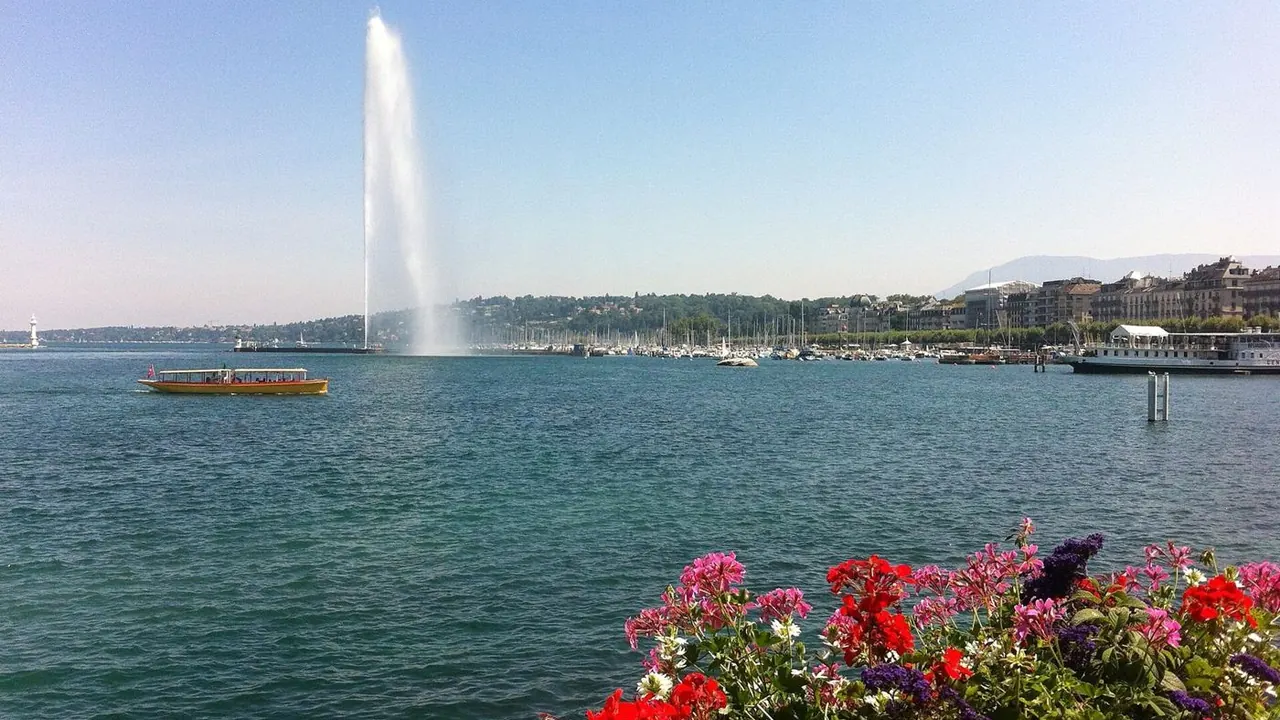
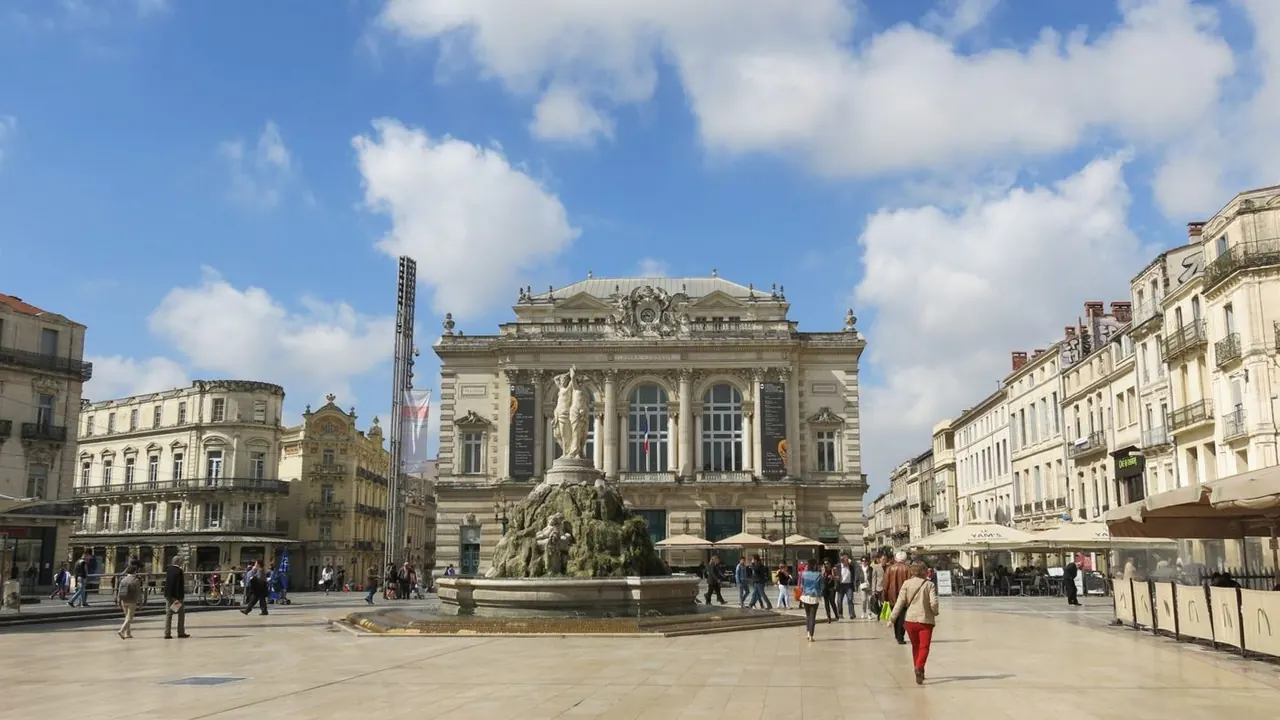
Photos: Geneva by Diviosen, CC BY-SA 3.0, cropped; Montpellier by Peter, CC BY 2.0, cropped.
Geneva or Montpellier?
Our verdict in twelve categories, each scored against the same fixed benchmark cities, and the climate month by month, so you can choose for your trip.
Choose Geneva for
- shopping
- wellness
- getting around
Geneva suits travellers who want mountains on the doorstep and a city that runs like clockwork. The Salève, the Jura and the high Alps around Chamonix are all close, the trams and lake boats make every outing simple, and the watch boutiques of the Rue du Rhône are among the best anywhere. It is a calm, orderly base for walkers, skiers and anyone with a generous budget, though you pay heavily for everything, and the evenings are quiet.
Choose Montpellier for
- prices
- beaches
- nightlife
Montpellier is the better pick for a warmer, cheaper and livelier stay. A student city on the edge of the Languedoc, it has sandy beaches a short ride away, terraces that fill on weeknights, market halls and local wine at fair prices, and Roman Nîmes, Arles and Avignon within easy reach by train. Choose it for sun, food and day trips into southern France rather than for shopping or the high mountains.
Scoreboard
Twelve categories on one fixed scale from 0 to 100. The shaded stretch is the gap between the two.
Your match
Pick a travel style or drag the sliders, and both match scores follow your weighting.
Wins on shopping and wellness with your weighting.
Wins on prices and beaches with your weighting.
What matters to you?
Category by category
What the scores mean for a trip.
Beaches & swimming
Neither city has the water at its door, but Montpellier has a real coast within reach. A tram and bus take you to Palavas and Carnon, and from there fine, gently shelving sand runs east to the dunes of l'Espiguette. Sète adds more long beaches. It is warm, easy swimming, though the nearer beaches are crowded in high summer.
Geneva offers lake bathing instead: diving off the jetty at the Bains des Pâquis, or lawns and pebbles at Genève-Plage. It is a charming summer habit, but the season is short and it feels more like a lido than a beach.
Food & drink
Montpellier eats with more local character and far less strain on the wallet. Pic Saint-Loup wine, Thau oysters, Sète's tielle and the counters of the Halles Laissac give it a market-led, southern table, and cheap casual places are everywhere.
Geneva is stronger at the top end and in its range of international cuisines, thanks to the international organisations. Lake perch, fondue and Chasselas from the canton's own vineyards are worth seeking out. What it lacks is easy, inexpensive everyday eating.
Culture & sights
The two are well matched in sights, and both are covered in two or three days, but their stories differ. Geneva is about the Reformation and diplomacy: Calvin's St Pierre Cathedral, the Reformation Wall, the Palais des Nations, the Red Cross museum and a visit to CERN.
Montpellier offers a medieval old town to wander, with hidden courtyards, the Peyrou terrace and its aqueduct, and France's oldest botanical garden. The Musée Fabre gives it the stronger art collection, and Bofill's Antigone adds bold twentieth-century architecture.
Nightlife
Montpellier is plainly the better night out. The terraces and small bars of the Écusson fill with students even midweek, and later the crowd heads to clubs towards Lattes and the coast. In summer, though, much of the action moves to the beach towns.
Geneva is subdued and costly by comparison. The Pâquis has late bars, and Jonction's alternative centres put on club nights, but weeknights are sleepy.
Nature & outdoors
Geneva has the grander outdoors. Mont Blanc on the horizon, the Salève cable car and paragliding, forest hikes on the Jura and ski resorts within a day's reach make it a true mountain base, with sailing and paddleboarding on the lake as well.
Montpellier's landscapes are gentler and more southern: flamingos on the lagoons, the Camargue marshes, the garrigue climb up Pic Saint-Loup and canoeing in the Hérault gorges. It is best in spring and autumn, as summer in the hills is hot and dry.
Day trips
Both are excellent bases, with a slight edge to Montpellier, but the outings feel quite different. From Montpellier you head into Roman and medieval France: the arena at Nîmes, the Pont du Gard, Arles, Avignon's papal palace and the walls of Carcassonne, with Sète and Aigues-Mortes nearer by. Some of the smaller villages are much easier with a car.
Geneva's trips are by lake steamer and Swiss train. They take in Lausanne, the Lavaux vineyard terraces, the Château de Chillon at Montreux, and across the border Yvoire and Annecy, with Gruyères and Bern for a longer day.
Good for families
Both cities are easy with children, and Montpellier has a little more aimed at them. It has the Zoo de Lunaret in its wooded park, an aquarium and a planetarium at Odysseum, and nearby beaches with shallow, warm water. The midsummer heat means planning beach mornings and indoor afternoons.
Geneva has no zoo, aquarium or theme park. It makes up for that with the dioramas of the Natural History Museum, small animal enclosures, lakeside playgrounds and rides on the yellow harbour boats. After a few days, a trip into the mountains fills the gap.
Getting around
Geneva is the smoother city to get about. Its compact centre is mostly flat, trams and buses are frequent and punctual, the harbour boats are part of the same network, and the airport is only minutes away by train. Even the mountains are largely reachable without a car.
Montpellier's trams are handy across town, and the car-free Écusson is easy on foot, despite its slopes and uneven paving. The beach trip by tram and bus is slow in summer, though, and the Camargue, gorges and hill villages really need a car.
Shopping & style
This is one of Geneva's clearest advantages. Few places match its watch and jewellery boutiques, and chocolatiers, Carouge's craft workshops and the Plainpalais flea market widen the choice beyond luxury.
Montpellier has no luxury street and little in the way of crafts. Its old lanes hold small boutiques and bookshops, and the Polygone and Odysseum handle the big brands. What to take home is edible: wine, olive oil and honey from the markets.
Affordability
The gap here is huge. Geneva is among the most expensive cities in the world, from hotel rooms to a single glass of wine. Free museums, free transport for hotel guests and cheap lidos help a little, and many visitors cross into France to sleep or eat.
Montpellier is moderately priced for Western Europe, with cheap student eating and good lunch menus. Costs climb mainly with sit-down dinners and with coastal rooms in July and August.
Live music & performing arts
The two stages are close in strength but differ in emphasis. Geneva's are classical and indoor: opera and ballet at the Grand Théâtre, the Orchestre de la Suisse Romande in the fine acoustics of Victoria Hall, French-language theatre at the Comédie, and concerts in the old pumping station on the Rhône.
Montpellier's speciality is contemporary dance, with the Montpellier Danse festival and a national choreographic centre. Its summer is busier, with the Radio France festival's many free concerts and open-air theatre at the Domaine d'O.
Wellness & relaxation
Geneva has more of a bathing culture. In winter the Bains des Pâquis becomes a sauna and hammam, and regulars plunge from the heat straight into the lake. Add serious hotel spas, the spa towns of Évian and Divonne close by, and a quiet, orderly pace with very calm Sundays.
Montpellier's thermal water is out of town, at Balaruc-les-Bains on the Thau lagoon. In the city itself, rest comes from long lunches and shady squares rather than from spas, in a centre that is lively more than peaceful.
When should you go?
Pick your month. The climate figures are measured averages, not a forecast.
Geneva in July
Montpellier in July
Daytime high, °C
Rainfall in the month, mm
Temperature and rainfall are climate normals, averaged over the years shown. Geneva: 1991-2020 normals, Geneve-Cointrin (5.7 km from centre). Montpellier: 1991-2020 normals, Montpellier (7.8 km from centre).
Geneva is at its best from May to September, when the days are long and sunny and July reaches highs of about 27°C, warm enough for lake swimming from June onwards. Rain is spread fairly evenly through the year, with autumn and early winter a little wetter. From November to February the days are short, grey and cold for sightseeing, with January highs of around 5°C. In winter you come for the snow in the nearby mountains, not for the city streets.
Montpellier is warmer and sunnier than Geneva in every month. Even in midwinter it reaches about 12°C by day, mild enough to walk the Écusson in comfort. The beach season runs from June to September, and the sea is warmest in August at about 22°C. July is the driest and sunniest month, but at around 30°C the stone streets get hot, so late spring and early autumn are the easiest times for the city itself. September to November are the wettest months, with October the wettest of all.
Which traveller are you?
On a trip on a tight budget, Montpellier wins easily. Its student population keeps cheap counters, bars and lunch menus going, and hotels are moderately priced. Geneva is among the costliest cities anywhere, and even with free museums and transport it stays expensive.
For a shopping trip, Geneva is the clear choice. The Rue du Rhône holds the flagship boutiques of the great Swiss watch houses, and Carouge's workshops and the Plainpalais flea market add character. Montpellier's shops are pleasant, but its best buys are mainly wine and olive oil.
On a food and nightlife trip, Montpellier gives you more. You get Languedoc wine, oysters from the Thau lagoon and busy terraces around Place Jean-Jaurès on weeknights as well as weekends. Geneva eats well in polished French style but goes quiet early, and a night out costs a great deal.
Before you go
| Measure | Geneva | Montpellier |
|---|---|---|
| Official language | French, German, Italian, Romansh | French |
| Currency | Swiss Franc (CHF) | Euro (EUR) |
| Sockets | CJ230 V, 50 Hz | CE230 V, 50 Hz |
| Driving side | Right | Right |
| Time zone | UTC+1, UTC+2 in summer | UTC+1, UTC+2 in summer |
| Emergency number | 112 | 112 |
| Elevation | 403 m | 7 m |
| Main airport | Geneva International Airport (GVA)5 km from centre150 non-stop destinations | Montpellier-Méditerranée Airport (MPL)8 km from centre41 non-stop destinations |
| Public holidays this year | 9 days | 11 days |
By the numbers
| Measure | Geneva | Montpellier |
|---|---|---|
| City population | 211,152 | 310,240 |
| People per km² | 13,280 | 5,452 |
| Museums within 10 km | 34 | 14 |
| UNESCO World Heritage sites within 50 km | 2 | 2 |
| Swim season, months above 21 °C | - | 2 months |
Where else could you go?
Every comparison below shares a destination with this one, so you can follow Geneva or Montpellier somewhere new.