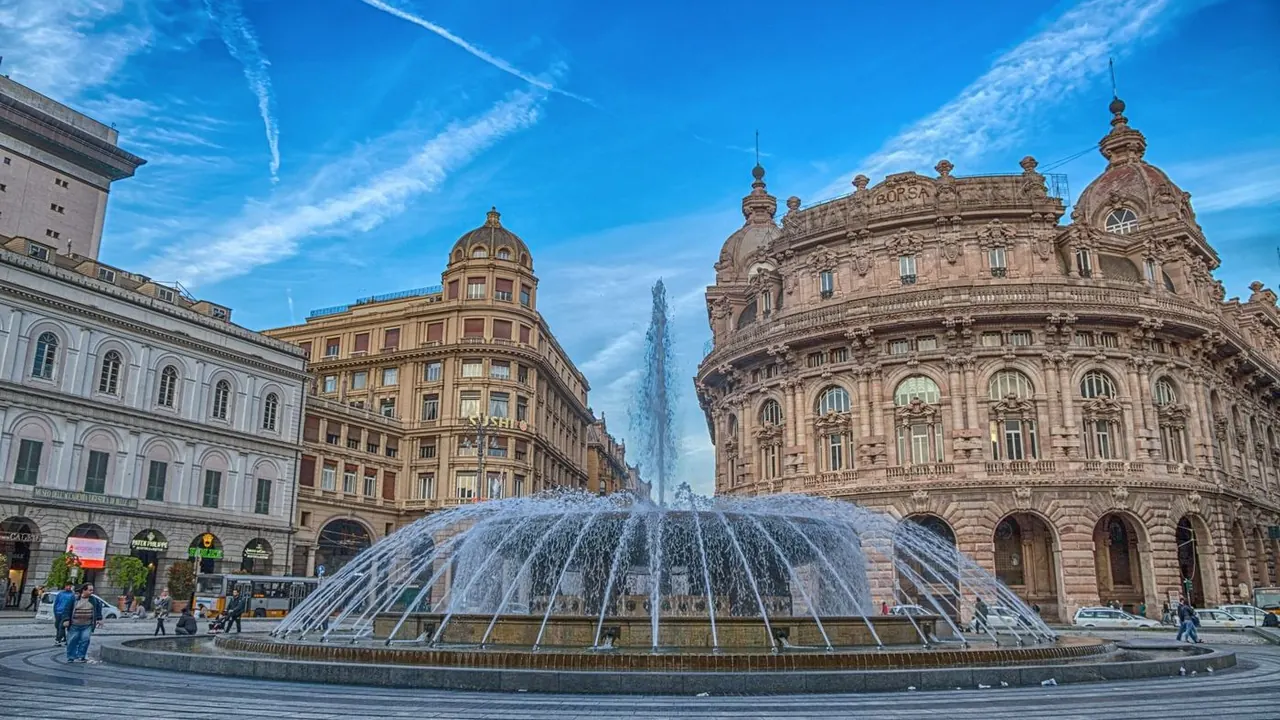
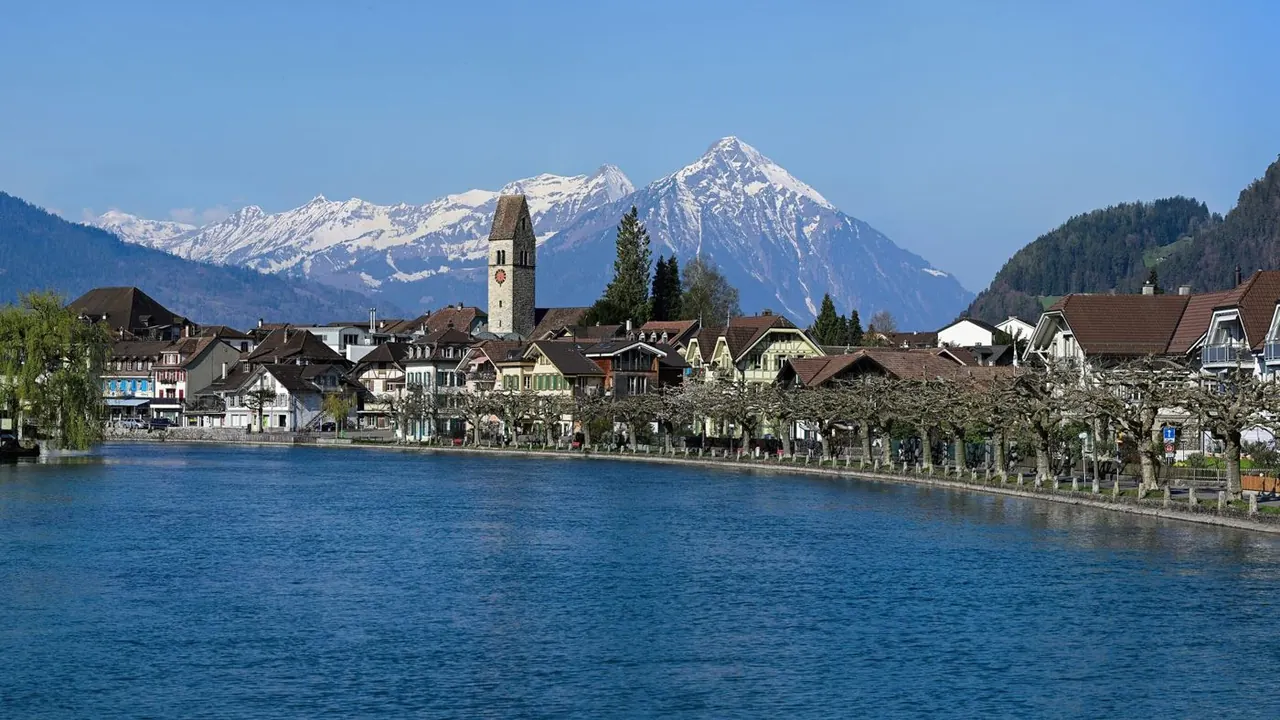
Photos: Genoa by Faber1893, CC BY-SA 4.0, cropped; Interlaken by Roy Egloff, CC BY-SA 4.0, cropped.
Genoa or Interlaken?
Our verdict in twelve categories, each scored against the same fixed benchmark cities, and the climate month by month, so you can choose for your trip.
Choose Genoa for
- culture and sights
- food and drink
- prices
Genoa suits travellers who want a real city with the sea at its edge. It has a vast medieval old town and palace museums, pesto and focaccia eaten where they were invented, aperitivo in old squares in the evening, and Riviera villages a short train ride away for an afternoon swim. It also costs far less, so the money goes further on every part of the trip.
Choose Interlaken for
- nature and the outdoors
- getting around
- families
Interlaken is for people who come for the mountains rather than the town. The Eiger, the Jungfrau and the Lauterbrunnen valley are within an hour by rail, linked trains, cable cars and steamers make high walks and adventure sports easy without a car, and families with children find it simpler going. You will pay a great deal, eat plainly and go to bed early.
Scoreboard
Twelve categories on one fixed scale from 0 to 100. The shaded stretch is the gap between the two.
Your match
Pick a travel style or drag the sliders, and both match scores follow your weighting.
Wins on culture and sights and food and drink with your weighting.
Wins on nature and the outdoors and getting around with your weighting.
What matters to you?
Category by category
What the scores mean for a trip.
Beaches & swimming
Genoa has the sea on its doorstep. The pebble cove at Boccadasse, the bathing establishments along Corso Italia and the rock platforms at Nervi are all within the city. Camogli, Sestri Levante and the sandier shore at Varazze are a short train ride away, with clear, warm water from June into September.
In Interlaken, swimming means a cool lake dip after a day in the mountains. You can swim from the grassy lidos and shingle at Neuhaus on Lake Thun, or in the colder turquoise water of Lake Brienz at Bönigen, but only in high summer. Neither is a true beach vacation, but only Genoa lets a swim become part of most days.
Food & drink
Genoa is the home of pesto, and eating there is a reason to go in itself. You can start the day with focaccia, have trofie or pansoti in walnut sauce at lunch, and pick up farinata and fried fish from the friggitorie in the old town. The harbour trattorias serve seafood with a glass of Vermentino, and the Mercato Orientale shows off what Liguria grows.
Interlaken feeds its visitors adequately on fondue, rösti and an international mix of restaurants, but little is worth seeking out. Its best meals are on hut terraces above Grindelwald or Mürren, and many visitors simply live on supermarket picnics.
Culture & sights
On culture the two are about as far apart as they could be. Genoa has one of Europe's largest medieval quarters in its caruggi and the Rolli palaces on Via Garibaldi, with Van Dyck and Rubens in their painted halls. Add the Cathedral of San Lorenzo, the Lanterna lighthouse and the marble sculpture of Staglieno cemetery, and there is enough for several full days.
Interlaken has a row of grand nineteenth-century hotels, the Kursaal and a few old timber houses in Unterseen, and little more. From there, museums mean a train to Bern or Lucerne.
Nightlife
Neither is a place for a big night out, but Genoa has evenings worth staying up for. There is aperitivo in the small bars around Piazza delle Erbe and the university lanes, waterfront drinks at the Porto Antico, and in summer the evenings move out to Corso Italia. Interlaken goes to bed early, and going out there means a few backpacker pubs and basement clubs near the hostels, a drink on the Höheweg or the casino in the Kursaal.
Nature & outdoors
For a city, Genoa has good walking. There are fortress trails on the ridges above Righi, cliff paths across the Portofino promontory down to San Fruttuoso and the Cinque Terre by train, and boats leave the harbour to see whales and dolphins in the Pelagos Sanctuary.
Interlaken is on another level, because the Alps start at the edge of town. Lauterbrunnen's waterfalls, the Jungfraujoch above the Aletsch glacier and the high trails from Grindelwald First or Schynige Platte are all within an hour by rail. Paragliding, canyoning and rafting run from the town, and in winter there is skiing at Wengen and Mürren. The one catch is low cloud, which can hide the peaks for days.
Day trips
Both make excellent bases, and the difference is in the kind of trip. From Genoa the trips are mostly along the coast: Portofino, Camogli, Sestri Levante and the Cinque Terre all lie on one railway line, and Milan or Turin are about an hour and a half inland for a museum day.
From Interlaken you get Swiss towns and lakes instead of fishing villages. Bern's arcaded old town is under an hour away, and paddle steamers reach the castles at Thun, Spiez and Oberhofen. There is woodcarving at Brienz and the open-air museum at Ballenberg, and Lucerne is reached on the scenic line over the Brünig Pass.
Good for families
Interlaken is the easier place with children. It is safe and flat on the valley floor, and its rack railways, gondolas and steamers are outings in themselves. The summit stations have playgrounds, summer toboggan runs and cliff walks, and the St Beatus caves make a change. Its weak points are rainy days and the high altitudes, which can trouble very young children.
Genoa's big attraction is the large aquarium at the Porto Antico, with the Galata museum's walk-through submarine beside it. Away from the harbour, though, the steep, dark lanes and endless stairs are hard work with a pushchair.
Getting around
Getting around Genoa takes some effort. The old town and the Porto Antico are close enough to walk, but the caruggi twist back on themselves and anything above the harbour means stairs, a funicular or one of the old public lifts. Buses crawl through the narrow streets, so the coastal train does most of the useful work.
Interlaken is the easier of the two by some way. Its flat town can be crossed on foot between the two stations, and beyond it mainline trains, mountain railways, cable cars and lake steamers run to timetables that meet, so one day can take in Bern and a high ridge without a car. The only snag is the summer crush on the busiest trains to the peaks.
Shopping & style
Genoa is the better place to browse, although neither is a shopping destination. Its old town keeps long-established shops selling candied fruit, olive oil and pesto, alongside workshops making silver filigree and coral, and the arcades of Via XX Settembre cover the familiar Italian labels. Interlaken's Höheweg is given over to watch stores, army knives, cuckoo clocks and souvenirs for tour groups, and Brienz woodcarving is the one craft worth taking home.
Affordability
Money goes much further in Genoa. A sit-down trattoria lunch is fairly priced, and a room in the centre costs less than a similar one in Venice or Florence. The bill rises mainly on Riviera beach days, when loungers at the bathing establishments and summer prices in Portofino or Santa Margherita add up.
Interlaken charges full Swiss rates for beds, meals and even a glass of wine, and the excursions that justify the trip cost the most of all: the train to the Jungfraujoch first, then paragliding or canyoning on top. Hostels, regional passes and the transport card many hotels give their guests all help, but however carefully you spend, it stays expensive.
Live music & performing arts
Genoa has a proper stage. There are opera, ballet and symphony concerts at the Teatro Carlo Felice on Piazza De Ferrari, Italian drama at the Teatro Nazionale, Paganini concerts, and small clubs that carry on the city's singer-songwriter tradition. Interlaken's offer is seasonal and folkloric, mainly the amateur open-air William Tell in the woods each summer and evenings of yodelling and alphorns, so serious concert-goers head to Bern.
Wellness & relaxation
Neither city has a bathing culture, and in both the spas are mostly in the better hotels. The difference is in where you find calm. In Genoa it is the seafront promenade and villa gardens at Nervi and slow lunches in the Riviera villages, with the thermal waters of Acqui Terme a little over an hour inland.
Several of the grand Höheweg hotels in Interlaken have sizeable spas, and the town has a public wellness area. Early mornings on the lakeshore, steamer crossings and the quiet of Wengen or Mürren do the rest. Both town centres are busy rather than restful.
When should you go?
Pick your month. The climate figures are measured averages, not a forecast.
Genoa in July
Interlaken in July
Daytime high, °C
Rainfall in the month, mm
Where the figures come from
Genoa has no rain gauge within 25 km of the centre, so its rainfall comes from a gridded climate dataset read at the city rather than from a gauge further away.
Genoa's sunshine is measured 80 km from the centre, at Capo Mele.
Interlaken has no rain gauge within 25 km of the centre, so its rainfall comes from a gridded climate dataset read at the city rather than from a gauge further away.
Temperature and rainfall are climate normals, averaged over the years shown. Genoa: 1991-2020 normals, Genova / Sestri (6.7 km from centre). Interlaken: 2005-2020 (rainfall 1991-2020) normals, Meiringen / Unterbach (19.3 km from centre).
Genoa is at its best from late spring to early autumn. The sea is warm enough for swimming from June to September and reaches 25°C in August. Summer is dry and sunny, with highs around 28°C in August, which is warm for climbing the steep streets at midday, although the narrow caruggi stay in shade. Rain sets in from September and peaks in November at 195mm. Winters are mild, fine for the palaces and museums but not for the beach.
Interlaken is a place for summer and winter. July and August, with highs of about 24°C, are the months for lake swims and high walks. Rain is spread fairly evenly through the year, and summer is slightly wetter than spring. Winter is cold, about 3°C by day in January, which suits the ski slopes above rather than lingering in town. In April and October Genoa is still pleasant for walking, while Interlaken is noticeably cooler.
Which traveller are you?
For a culture and arts trip, Genoa is the clear choice. Its medieval caruggi, the Rolli palaces hung with Van Dyck and Rubens, the striped cathedral and Staglieno cemetery fill several days, and evenings can end at the opera. Interlaken offers mostly scenery.
On an outdoors trip, Interlaken wins easily. High trails, glacier views from the Jungfraujoch, paragliding, canyoning and winter skiing all start within an hour by rail. Genoa's fortress walks and Portofino cliff paths are good, but they are a smaller alternative.
On a tight budget, Genoa goes much further. Focaccia and farinata make cheap meals, the funiculars and buses cost little and central hotels are fair for Italy. Interlaken's Swiss prices and costly mountain railways leave no cheap way to see the region properly.
Before you go
| Measure | Genoa | Interlaken |
|---|---|---|
| Official language | Italian | French, German, Italian, Romansh |
| Currency | Euro (EUR) | Swiss Franc (CHF) |
| Sockets | CFL230 V, 50 Hz | CJ230 V, 50 Hz |
| Driving side | Right | Right |
| Time zone | UTC+1, UTC+2 in summer | UTC+1, UTC+2 in summer |
| Emergency number | 112 | 112 |
| Elevation | 20 m | 571 m |
| Main airport | Genoa Cristoforo Colombo Airport (GOA)7 km from centre25 non-stop destinations | Zürich Airport (ZRH)100 km from centre226 non-stop destinations |
| Public holidays this year | 13 days | 10 days |
By the numbers
| Measure | Genoa | Interlaken |
|---|---|---|
| City population | 558,745 | 6,123 |
| People per km² | 2,325 | 1,424 |
| Museums within 10 km | 51 | 3 |
| UNESCO World Heritage sites within 50 km | 1 | 2 |
| Swim season, months above 21 °C | 4 months | - |
Where else could you go?
Every comparison below shares a destination with this one, so you can follow Genoa or Interlaken somewhere new.