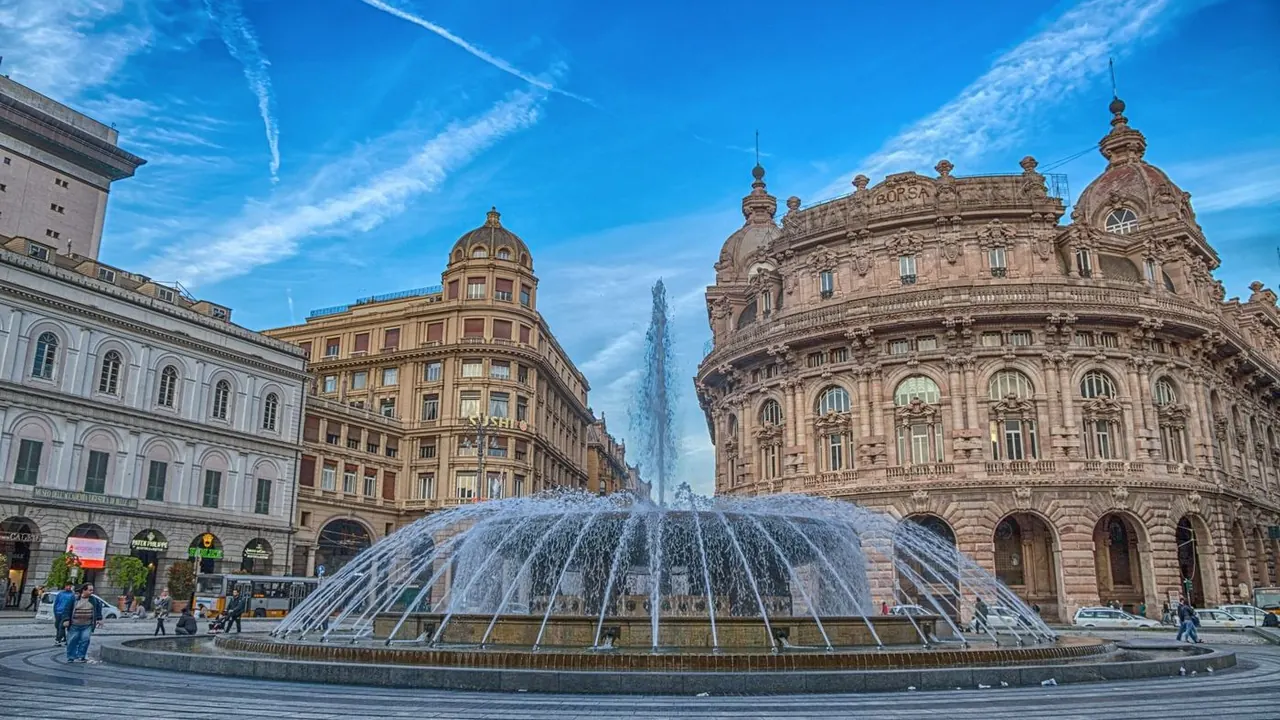
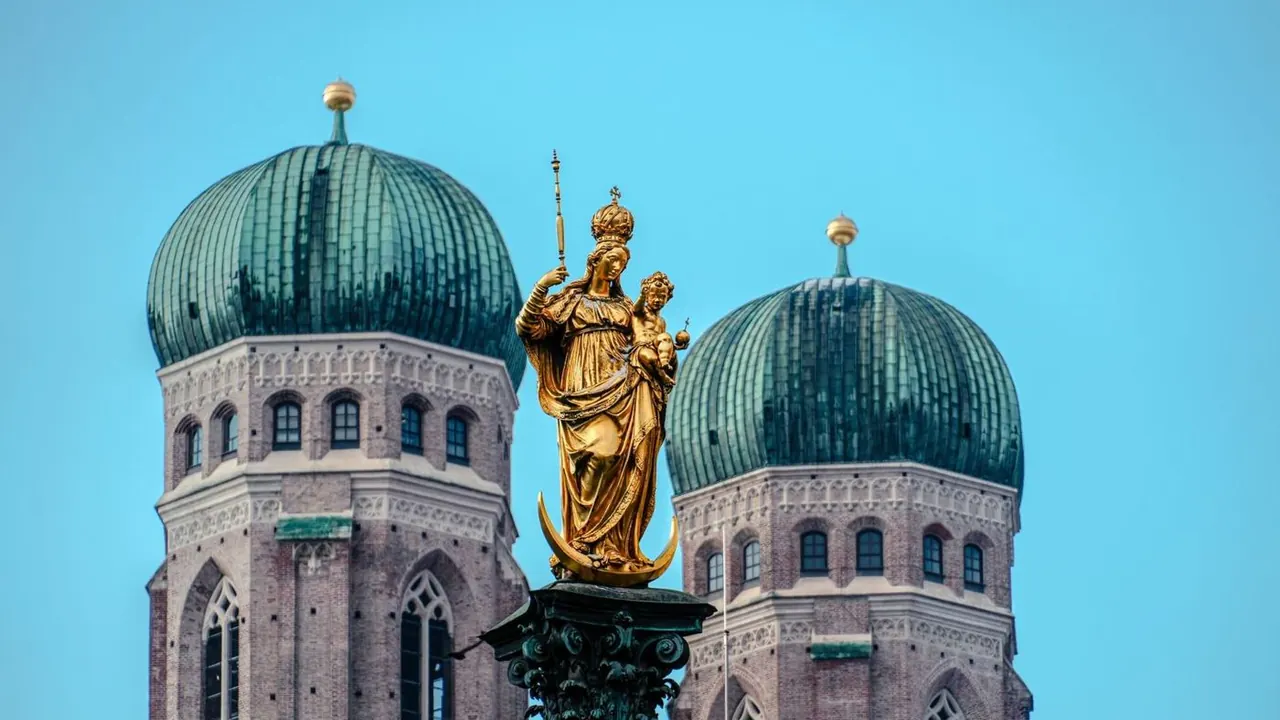
Photos: Genoa by Faber1893, CC BY-SA 4.0, cropped; Munich by 0xd1ma, Pexels License.
Genoa or Munich?
Our verdict in twelve categories, each scored against the same fixed benchmark cities, and the climate month by month, so you can choose for your trip.
Choose Genoa for
- beaches
- prices
- food and drink
Genoa is for the traveller who wants the sea to be part of the trip. You can swim off the rocks at Boccadasse or Nervi in the afternoon, take the train along the Riviera to Camogli or the Cinque Terre, and have pesto and fried fish in medieval lanes in the evening. It costs less than Munich, and it suits someone who doesn't mind steep stairs and prefers a quiet glass of Vermentino in a square to a big night out.
Choose Munich for
- live music and the arts
- wellness
- shopping
Munich is the stronger choice for a smooth, comfortable city break built around great galleries and world-class opera. One transport network covers everything, so sightseeing takes little effort. Children are well looked after, the Alps and lakes are an hour to the south, and on a slow day there are steam rooms and thermal baths to go to. The cost is a much bigger bill, and summers that bring more rain than swimming.
Scoreboard
Twelve categories on one fixed scale from 0 to 100. The shaded stretch is the gap between the two.
Your match
Pick a travel style or drag the sliders, and both match scores follow your weighting.
Wins on beaches and prices with your weighting.
Wins on live music and the arts and wellness with your weighting.
What matters to you?
Category by category
What the scores mean for a trip.
Beaches & swimming
Genoa has the Mediterranean on its doorstep. There is a pebble cove at Boccadasse, bathing establishments line the Corso Italia, and Nervi has rocks to swim from. Better bays at Camogli, Sestri Levante and Varazze are a short train ride away. The shores are pebbly and crowded on summer weekends, but a daily swim fits easily into a city trip.
Munich is a long way from any sea. Swimming there means sunbathing on the Isar's gravel banks or taking the S-Bahn out to the Starnberger See and the Ammersee, where the water stays fresh even in high summer. It is a pleasant break from sightseeing, not a beach trip.
Food & drink
Genoa eats better day to day. This is the home of pesto, and the food is local at every turn: focaccia at breakfast, trofie or pansoti at lunch, and farinata and fried fish by the slice in the old town. The fishing hamlets serve excellent seafood with Ligurian white wines.
Munich's food is heavier and built around beer: roast pork, white sausage and pretzels in vast beer halls and chestnut-shaded beer gardens. It has more starred restaurants than Genoa, but otherwise it lacks the herbs, olive oil and seafood that make eating in Genoa such a pleasure.
Culture & sights
Both cities have plenty to fill several days, but the experience is different. In Genoa the city itself is the sight: a huge medieval maze of shaded caruggi, the painted halls of the Rolli palaces on Via Garibaldi, and the marble sculpture of Staglieno cemetery. Visitors often find much more there than they expected.
Munich has the great collections. The Kunstareal holds old masters, classical sculpture and the Blue Rider painters, and the Deutsches Museum and the state rooms of the Residenz are major visits in their own right. Its old town is handsome, but much of it was rebuilt after the war, so the galleries matter more than the streets.
Nightlife
Munich offers more after dark. An evening can stay in a beer hall, or it can move on to the cocktail bars and gay bars around Gärtnerplatz and Glockenbach, and then to the techno clubs that run until morning at weekends. Oktoberfest takes over the whole city for just over two weeks.
Genoa's nights are smaller and quieter: aperitivo with students in Piazza delle Erbe, waterfront bars at the Porto Antico, and beach clubs along the coast in summer. It is good for a late glass of wine, but there is little for anyone looking to dance.
Nature & outdoors
Both cities are good bases for walkers, but the landscapes are very different. From Genoa, the paths run along the sea: the ridge trail linking the forts above Righi, the cliff paths of the Portofino park down to San Fruttuoso, and the Cinque Terre terraces. Boats also go out to look for whales and dolphins in the Pelagos Sanctuary.
From Munich, you head for the mountains. The Zugspitze, the Wetterstein and Tegernsee offer alpine hiking in summer and skiing in winter, and the Five Lakes are good for cycling and sailing. In town, the English Garden and the Eisbach surfers give it more green space than Genoa's steep hills allow.
Day trips
The real difference is sea against land. From Genoa, almost every outing follows one coastal railway: Camogli, Santa Margherita and Portofino are within the hour, and the terraced villages of the Cinque Terre are only a little further. To the west, the walled town of Finale Ligure Borgo and little Noli show a quieter coast, and Milan and Turin are close enough for a museum day. On the coast in summer, an early start pays off.
From Munich, the trips head inland and across borders. Augsburg is half an hour away, Nuremberg and Regensburg are easy rides by fast train, and Salzburg and Innsbruck bring Austria within a day. The royal castles are the classic outing, with Neuschwanstein about two hours away and Herrenchiemsee on its island in the Chiemsee, and the painted villages of Oberammergau and Mittenwald add some alpine character.
Good for families
Munich is much easier with children. It is clean, flat and green, there are playgrounds in every park, and pushchairs go easily on public transport. The Hellabrunn zoo, the hands-on sections of the Deutsches Museum and beer gardens with play areas fill the days.
Genoa has one very strong half-day, the aquarium and the other attractions around the Porto Antico, and the funiculars delight children. Beyond the harbour, though, the dark, steep lanes and endless stairs are hard work with a pushchair, and there are few parks.
Getting around
Getting around Munich takes little thought. The pedestrianised old town is compact, and U-Bahn, S-Bahn, trams and buses share one network that reaches the museums, Nymphenburg, the lakes and the airport. The flat streets also make cycling easy.
Genoa is more of a climb. You walk the old town's maze and ride funiculars and public lifts up the hillsides. There is one short metro line, and the buses crawl through congested streets. The coastal railway is what saves it, linking Nervi and the Riviera towns without a car.
Shopping & style
Munich is the place for a real shopping trip. Maximilianstrasse has the luxury houses, Kaufingerstrasse has the department stores, and Glockenbach and Schwabing have independent boutiques. Its distinctive buy is Tracht, the dirndls and lederhosen made by specialist tailors.
Genoa's shopping is smaller and more about food and craft. The old shops sell candied fruit, olive oil and pesto, workshops make silver filigree and coral, and the Mercato Orientale is good for food to take home. Its fashion streets cover the familiar Italian names and not much more.
Affordability
Genoa is clearly the cheaper stay. Street food like focaccia and farinata costs very little, trattoria lunches are fair, and central hotels are good value for northern Italy. Costs mainly add up in the smart Riviera resorts and on loungers at the bathing establishments.
Munich is Germany's most expensive city, and hotel rooms are where you feel it most, especially during Oktoberfest and the big trade fairs. Free parks and lakes, picnics in beer gardens and fairly priced transport soften the bill, but it stays high.
Live music & performing arts
Munich is a city where the stage can be a reason to go. The Bavarian State Opera in the National Theatre is among the world's leading companies, three orchestras of real standing play in halls such as the Herkulessaal, and the rococo Cuvilliés Theatre stages chamber opera. There is also jazz and German-language drama.
Genoa has enough for an evening or two. The Teatro Carlo Felice stages opera and ballet, there are Paganini concerts, and small clubs carry on its singer-songwriter tradition. It does not match Munich's depth.
Wellness & relaxation
Munich has a bathing culture Genoa lacks. You can swim under the vaults of the Art Nouveau Müller'sches Volksbad, try the German sauna rituals, or take the short trip out to the huge thermal complex at Erding. Long afternoons in the English Garden help you slow down too.
In Genoa, relaxing mostly means Nervi's promenade and villa gardens or a long lunch in a Riviera village. Spas are mostly in the hotels, and the nearest thermal waters are over an hour away at Acqui Terme.
When should you go?
Pick your month. The climate figures are measured averages, not a forecast.
Genoa in July
Munich in July
Daytime high, °C
Rainfall in the month, mm
Where the figures come from
Genoa has no rain gauge within 25 km of the centre, so its rainfall comes from a gridded climate dataset read at the city rather than from a gauge further away.
Genoa's sunshine is measured 80 km from the centre, at Capo Mele.
Temperature and rainfall are climate normals, averaged over the years shown. Genoa: 1991-2020 normals, Genova / Sestri (6.7 km from centre). Munich: 1991-2020 normals, München (1.9 km from centre).
Genoa's summers are dry and sunny. July gets only about 27mm of rain, and from late June to early September the sea is warm enough for daily swims, reaching about 25°C in August. Midsummer afternoons are hot for climbing the city's steep streets, so May, June and September are the best balance of beach and walking. The rain arrives in autumn and peaks in November at around 195mm. Winters are mild enough to wander the lanes in comfort.
Munich has a sharper year. Winter highs sit around 4°C, with short, grey days. Summer is pleasantly warm for the lakes and beer gardens, but it is also the wettest time, with about 120mm a month from June to August. Late spring and September are the most comfortable months for walking, and in midwinter Genoa is the gentler and sunnier of the two.
Which traveller are you?
On a beach and sun trip, Genoa is the clear pick. It has warm Mediterranean water, swimming platforms within the city, and the Riviera villages a short train ride away. In Munich, swimming means cool alpine lakes or the gravel banks of the Isar.
For a culture and arts trip, Munich is the better choice. The Alte Pinakothek and the Deutsches Museum are major collections, and the Bavarian State Opera and three fine orchestras fill the evenings. Genoa's palaces and medieval lanes are lovely, but its stages are modest.
On a trip on a tight budget, Genoa makes the money last much longer. Focaccia and farinata are cheap street food, and central hotels cost far less than in Munich. In Munich, room prices are high all year and rise sharply during Oktoberfest.
Before you go
| Measure | Genoa | Munich |
|---|---|---|
| Official language | Italian | German |
| Currency | Euro (EUR) | Euro (EUR) |
| Sockets | CFL230 V, 50 Hz | CF230 V, 50 Hz |
| Driving side | Right | Right |
| Time zone | UTC+1, UTC+2 in summer | UTC+1, UTC+2 in summer |
| Emergency number | 112 | 112 |
| Elevation | 20 m | 519 m |
| Main airport | Genoa Cristoforo Colombo Airport (GOA)7 km from centre25 non-stop destinations | Munich Airport (MUC)29 km from centre210 non-stop destinations |
| Public holidays this year | 13 days | 12 days |
By the numbers
| Measure | Genoa | Munich |
|---|---|---|
| City population | 558,745 | 1,505,036 |
| People per km² | 2,325 | 4,844 |
| Museums within 10 km | 51 | 74 |
| UNESCO World Heritage sites within 50 km | 1 | 1 |
| Swim season, months above 21 °C | 4 months | - |
Where else could you go?
Every comparison below shares a destination with this one, so you can follow Genoa or Munich somewhere new.