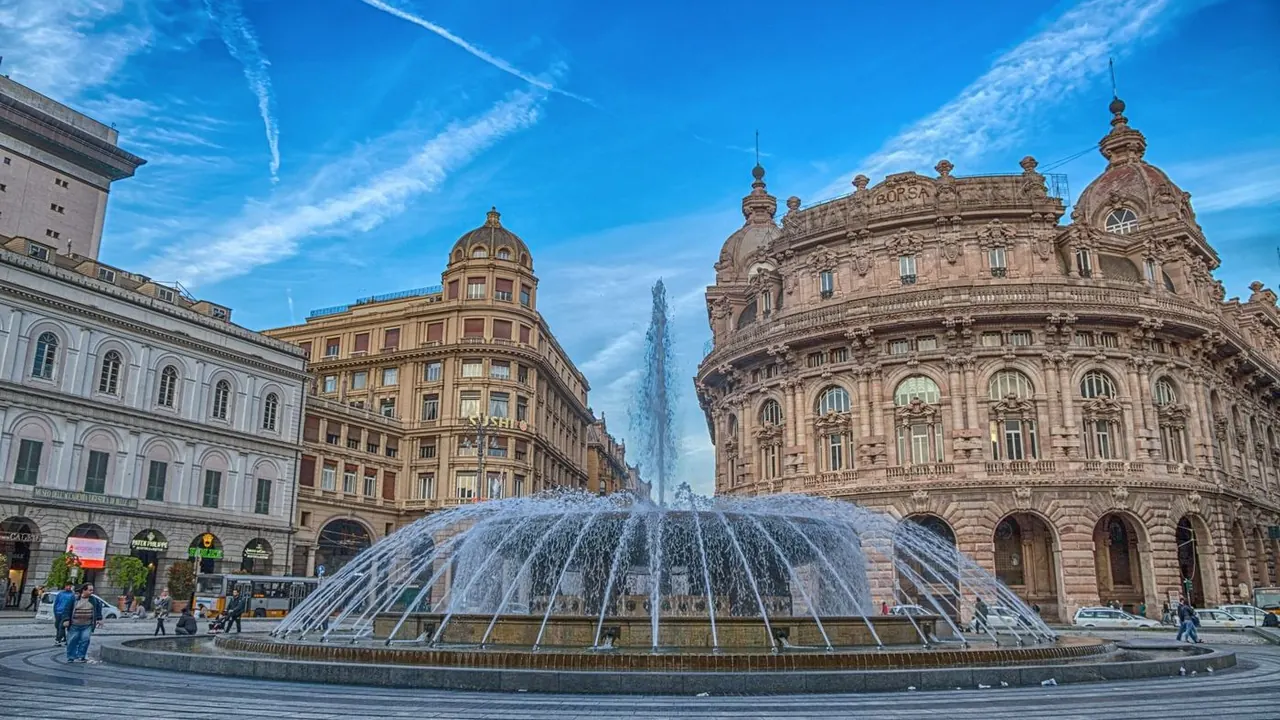
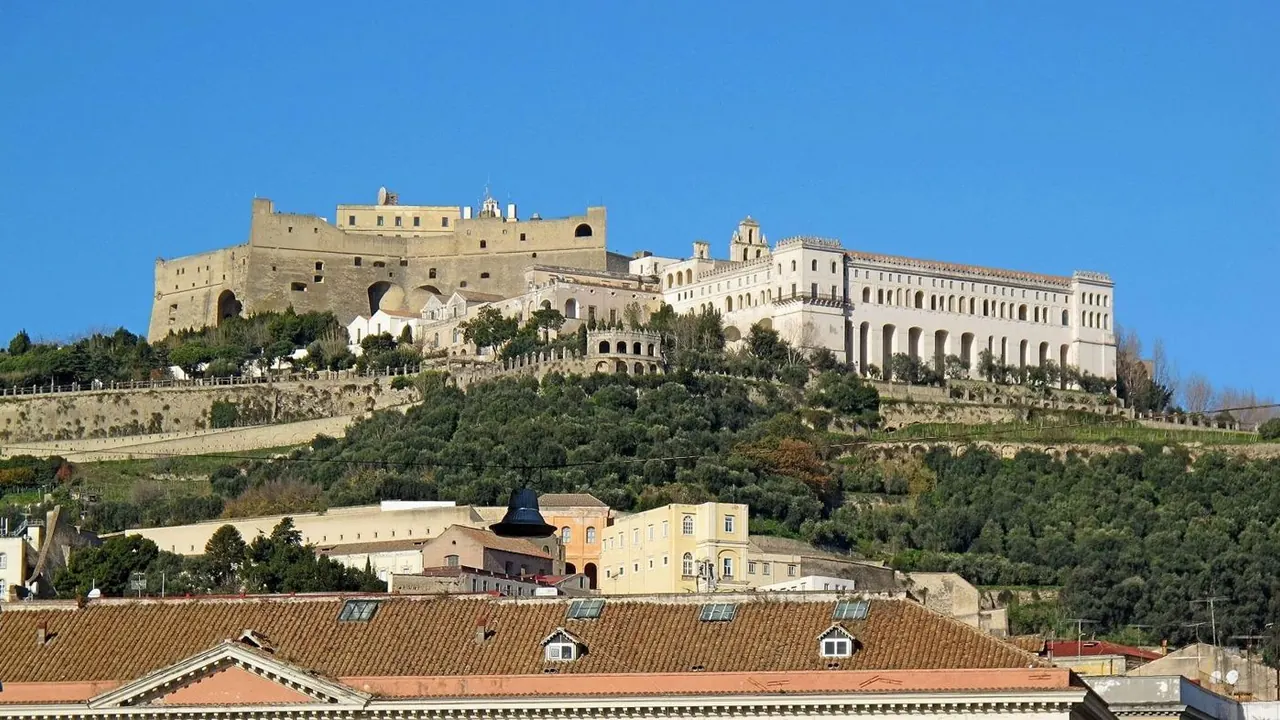
Photos: Genoa by Faber1893, CC BY-SA 4.0, cropped; Naples by pietro scerrato, CC BY 3.0, cropped.
Genoa or Naples?
Our verdict in twelve categories, each scored against the same fixed benchmark cities, and the climate month by month, so you can choose for your trip.
Choose Genoa for
- families
- beaches
- getting around
Genoa suits a traveller who wants a calmer Italian city with a swim most afternoons and good walking right on the edge of town. Its palace-lined Strade Nuove and shaded caruggi are best explored slowly. The Porto Antico, with its aquarium and submarine, makes it the easier choice with children, and the coastal railway turns Camogli, Portofino and the Cinque Terre into simple outings.
Choose Naples for
- nightlife
- live music and the arts
- day trips
Pick Naples if the trip is about eating, ancient history and long evenings in the street. Pizza in the city that invented it, the Pompeii treasures in the Archaeological Museum, the tunnels of the underground city and the late crowds in Piazza Bellini give it far more intensity than Genoa. Pompeii, Herculaneum, Capri and the Amalfi Coast are all within a day's reach. It is louder and harder work on foot, and better for adults than for small children, but your money goes further day to day.
Scoreboard
Twelve categories on one fixed scale from 0 to 100. The shaded stretch is the gap between the two.
Your match
Pick a travel style or drag the sliders, and both match scores follow your weighting.
Wins on families and beaches with your weighting.
Wins on nightlife and live music and the arts with your weighting.
What matters to you?
Category by category
What the scores mean for a trip.
Beaches & swimming
Genoa has swimming inside the city: the little pebble cove at Boccadasse, bathing platforms built over the rocks along Corso Italia, and ladders into clear water below Nervi's promenade. Camogli, Sestri Levante and the sandier shore at Varazze are all on the coastal train line. Naples has people sunbathing on the rocks under the Lungomare and a few lidos in Posillipo, but the water near the port is not always clean.
To swim well from Naples, you take a ferry to Procida, Ischia or Capri, or head out along the Sorrento peninsula, so a swim becomes a day out rather than something you fit into an afternoon. Neither city is a sandy-beach destination. Both coasts are mostly pebble and rock, with rented loungers taking up much of the space in summer.
Food & drink
Both cities are the birthplace of a famous dish, pesto in Genoa and pizza in Naples, but Naples eats with more intensity. Its street food is everywhere: fried pizza, cones of fried seafood, sfogliatelle and babà. The Pignasecca and Porta Nolana markets are full of buffalo mozzarella and San Marzano tomatoes.
Genoa's cooking is gentler and built on herbs. You get focaccia at breakfast, trofie with pesto, pansoti in walnut sauce, and farinata and panissa from the old friggitorie, with Vermentino to drink alongside. Neither city offers much international food, and in both the most ambitious restaurants are thin on the ground in town.
Culture & sights
Both have one of Europe's largest historic centres, but the sights in Naples are on another scale. The National Archaeological Museum holds the frescoes and mosaics of Pompeii and Herculaneum, the Veiled Christ lies in the Cappella Sansevero, and below the Greek street grid there are tunnels, cisterns and the catacombs of San Gennaro. Capodimonte, the Royal Palace and San Martino could fill the rest of a week.
Genoa's appeal is quieter and more architectural. The UNESCO palaces of Via Garibaldi have painted halls hung with Van Dyck and Rubens, the striped cathedral of San Lorenzo sits in the old centre, and the marble tombs of Staglieno are a remarkable sight. It makes a rewarding few days, but it has nothing to match the Archaeological Museum.
Nightlife
Neither city has much club culture, but Naples stays out later and louder. Students drink on the steps of Piazza Bellini beside the old Greek walls, and Chiaia's bars draw a smarter crowd that fills the alleys past midnight, especially in summer.
In Genoa, evenings mean aperitivo around Piazza delle Erbe and the university lanes, a waterfront drink at the Porto Antico or Foce, and quiet weeknights. It suits a glass of wine in a medieval square better than a long night.
Nature & outdoors
These two are about level for the outdoors, but the landscapes are very different. Genoa's walking is green and coastal. A funicular climbs to Righi and the fortress trail on the ridges, cliff paths cross the Portofino park to San Fruttuoso, and the Apennines rise behind the city. Boats also go out from the harbour to watch whales in the Pelagos Sanctuary.
The landscape around Naples is volcanic. You can climb to the crater rim of Vesuvius, walk through the oak-filled crater at Astroni or round Lake Avernus, and snorkel in the Gaiola underwater park. The Path of the Gods above the Amalfi Coast is within reach for a long day. Naples gets hotter in summer, so midday walks there are more of an effort.
Day trips
Genoa's outings run along a single coastal railway. Camogli, Santa Margherita and Portofino are under an hour east, the Cinque Terre about an hour and a half, and to the west lie the walled Finale Ligure Borgo and the old towers of Albenga. Milan and Turin are close enough for a day of museums or the Last Supper, but the Riviera villages are the real reason to go.
Naples has more to choose from and more of it is ancient. Pompeii, Herculaneum and the villas at Oplontis are under an hour away on the Circumvesuviana, which runs on to Sorrento for buses and boats to Positano, Amalfi and Ravello. Ferries leave Molo Beverello for Capri, Ischia and Procida, the palace at Caserta is a short train ride inland, and a separate trip south by train reaches the Greek temples of Paestum.
Good for families
Genoa is the better choice with children, mainly because of the Porto Antico. One of Europe's largest aquariums sits beside a children's science centre, the biosphere and the Galata museum's submarine, and the old public lifts are fun in themselves. The old town's stairs and dark lanes are still hard going with a pushchair.
Naples welcomes children warmly in its pizzerias, but the streets are tough with small ones because of scooters, broken pavements and summer heat. Older children enjoy the underground tunnels and Pompeii, and many families stay in Sorrento or on an island and visit the city for the day.
Getting around
Genoa's sights are packed into the old town and the Porto Antico, so most days are spent on foot. The climbs are handled by funiculars, a rack railway and old public lifts, and the coastal train is an easy way to reach Nervi and the Riviera towns. Its one short metro line matters less than its compact core.
Naples relies more on its Line 1 metro, whose art-gallery stations link the main station, the centre and Vomero, with four funiculars running up the hills. Outside that network it gets harder. Buses are unreliable in the traffic, the Circumvesuviana to Pompeii is crowded and often late, and you share the lanes with scooters. A car is more trouble than it is worth in either city.
Shopping & style
Naples has more worth seeking out. There are tailors in Chiaia making suits, shirts and silk ties by hand, nativity workshops along Via San Gregorio Armeno, and coral and cameos from Torre del Greco. Via Toledo, the Galleria Umberto I and Via dei Mille cover fashion, with a few luxury labels.
Genoa's arcaded Via XX Settembre and Galleria Mazzini carry the familiar Italian names. Its best buys are old-town food shops selling candied fruit, pesto and olive oil, and small workshops making silver filigree. It is good for browsing rather than for a shopping trip.
Affordability
Naples is the cheaper city. Pizza, street food and coffee at the bar cost noticeably less than in the north, and the historic centre has plenty of modest B&Bs. Genoa is fair value for northern Italy, with focaccia and farinata for cheap meals and hotels that cost less than in Italy's most visited cities.
The catch is similar in both. Costs rise in the resort towns, Portofino and Santa Margherita on one side and Capri and the Amalfi Coast on the other, and beach loungers add up. In Naples, the entry fees at the big archaeological sites add to the bill as well.
Live music & performing arts
The Teatro di San Carlo gives Naples the edge. It is Europe's oldest working opera house, with a red-and-gold auditorium that is a reason to go in itself. Neapolitan song is also still alive in trattorias and small shows, and the conservatory and churches add chamber concerts.
Genoa's Teatro Carlo Felice on Piazza De Ferrari has a solid season, and the city honours Paganini with concerts and its singer-songwriters in small clubs. It is enough for an evening or two. In both cities, the spoken theatre is in Italian.
Wellness & relaxation
Thermal water is what separates these two, and Genoa has little of it nearby. Its closest springs are at Acqui Terme, over an hour inland in the Piedmont hills, and in the city spas mostly mean the better hotels. For quiet, people head to Nervi's villa gardens and seafront promenade.
Naples sits on volcanic ground that produces the real thing. The spa at Agnano, on the edge of the city, uses springs that date back to Roman times. Ischia, about an hour away by hydrofoil, has terraced thermal parks with pools of different temperatures above the sea, and makes a calmer base than the loud city itself.
When should you go?
Pick your month. The climate figures are measured averages, not a forecast.
Genoa in July
Naples in July
Daytime high, °C
Rainfall in the month, mm
Where the figures come from
Genoa has no rain gauge within 25 km of the centre, so its rainfall comes from a gridded climate dataset read at the city rather than from a gauge further away.
Genoa's sunshine is measured 80 km from the centre, at Capo Mele.
Naples has no rain gauge within 25 km of the centre, so its rainfall comes from a gridded climate dataset read at the city rather than from a gauge further away.
Naples's sunshine is measured 28 km from the centre, at Grazzanise.
Temperature and rainfall are climate normals, averaged over the years shown. Genoa: 1991-2020 normals, Genova / Sestri (6.7 km from centre). Naples: 2005-2020 (sunshine 1991-2020, rainfall 1991-2020) normals, Napoli / Capodichino (4.6 km from centre).
The two cities follow the same Mediterranean pattern, but Naples runs hotter. Genoa peaks at about 28°C in August, warm enough for the beach from June to September without being oppressive, so even high summer stays workable for walking its shaded lanes. Naples reaches 30°C in July and August, and walking the centre in the middle of the day gets tiring. In both cities the sea warms into the mid-20s by late summer and stays swimmable into September, and July and August bring the most sunshine and almost no rain.
For sightseeing, May and late September to early October suit both best. The autumn rain then arrives in both cities and is heavier in Naples, which gets about 148mm in November against Genoa's 195mm. Winters are mild in both, a degree or two warmer in Naples, with grey, damp spells rather than real cold.
Which traveller are you?
On a family trip with young children, Genoa is the easier base. The aquarium, science centre and walk-through submarine are all together at the Porto Antico, and gentle swimming coves are close by. Naples, with its scooters, missing pavements and summer crowds, asks more of parents.
For a food and nightlife trip, Naples wins clearly. Pizza, fried street food and pastries are part of daily life there, and the evenings run late and loud around Piazza Bellini and Chiaia. Genoa's aperitivo hour in the old town winds down earlier and more quietly.
On a beach and sun trip, Genoa puts you nearer the water. You can swim at Boccadasse, Corso Italia or Nervi without leaving town, and the Riviera bays are a short train ride away. From Naples, clean water usually means a boat to the islands.
Before you go
| Measure | Genoa | Naples |
|---|---|---|
| Official language | Italian | Italian |
| Currency | Euro (EUR) | Euro (EUR) |
| Sockets | CFL230 V, 50 Hz | CFL230 V, 50 Hz |
| Driving side | Right | Right |
| Time zone | UTC+1, UTC+2 in summer | UTC+1, UTC+2 in summer |
| Emergency number | 112 | 112 |
| Elevation | 20 m | 17 m |
| Main airport | Genoa Cristoforo Colombo Airport (GOA)7 km from centre25 non-stop destinations | Naples International Airport (NAP)7 km from centre131 non-stop destinations |
| Public holidays this year | 13 days | 13 days |
By the numbers
| Measure | Genoa | Naples |
|---|---|---|
| City population | 558,745 | 913,462 |
| People per km² | 2,325 | 7,676 |
| Museums within 10 km | 51 | 65 |
| UNESCO World Heritage sites within 50 km | 1 | 5 |
| Swim season, months above 21 °C | 4 months | 5 months |
Where else could you go?
Every comparison below shares a destination with this one, so you can follow Genoa or Naples somewhere new.