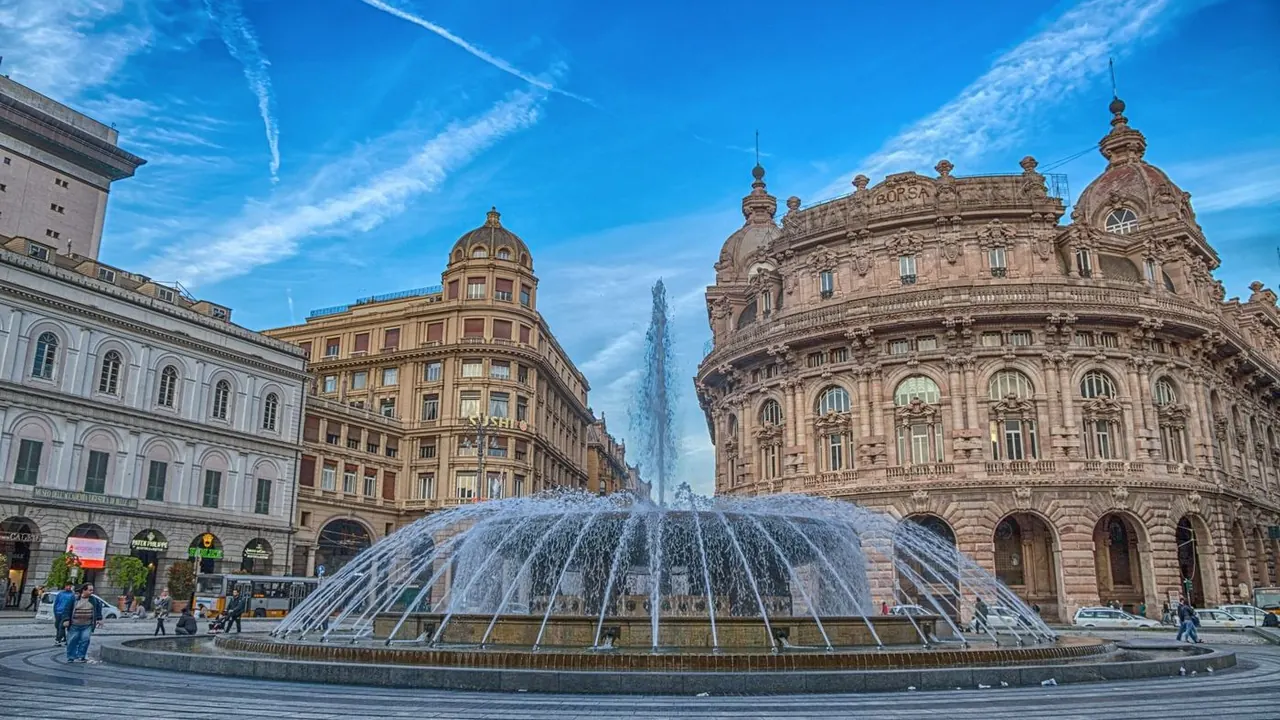
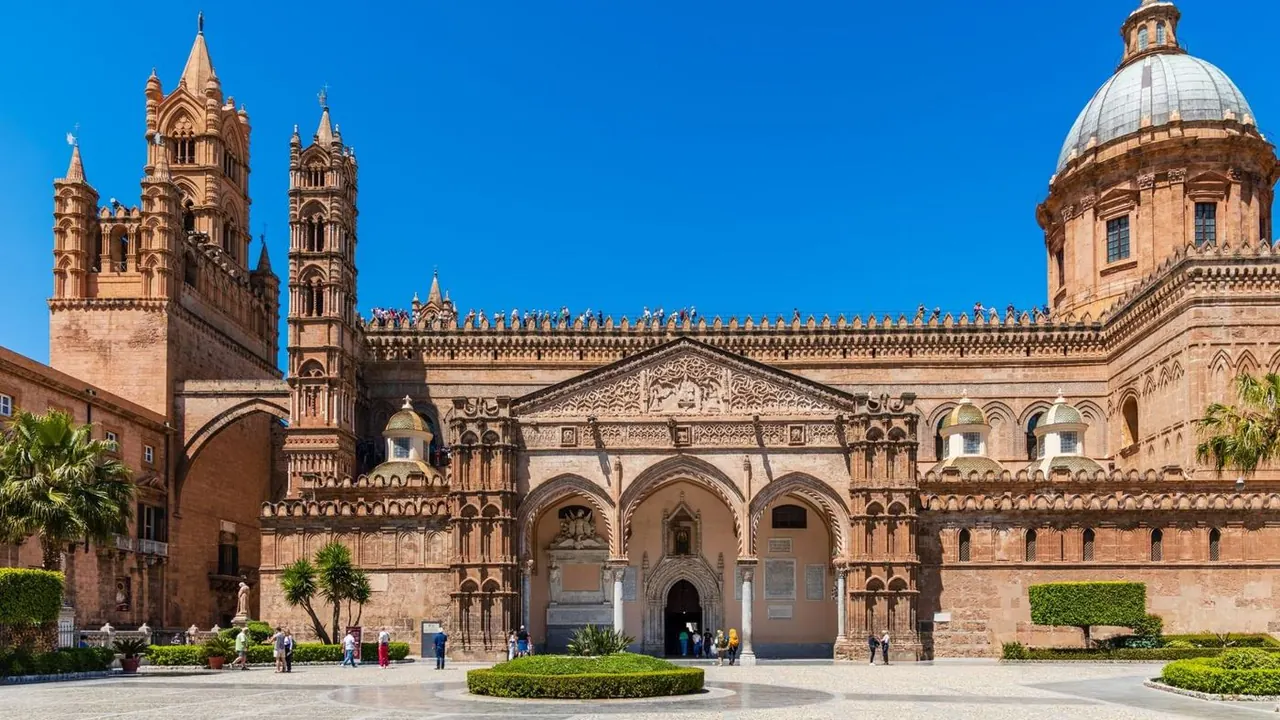
Photos: Genoa by Faber1893, CC BY-SA 4.0, cropped; Palermo by Antonino Giangrasso, Pexels License.
Genoa or Palermo?
Our verdict in twelve categories, each scored against the same fixed benchmark cities, and the climate month by month, so you can choose for your trip.
Choose Genoa for
- families
- getting around
- nature and the outdoors
Genoa suits the traveller who likes to walk out of a city into the hills and along the coast. Funiculars climb to the ridge forts, the Portofino cliff paths and the Cinque Terre are a train ride away, and the coastal railway does the work a car would do elsewhere. It is also the easier base with children, thanks to the aquarium and the cluster of attractions around the Porto Antico. Evenings are quieter: palace halls and shaded caruggi by day, an aperitivo in a medieval square after dark.
Choose Palermo for
- nightlife
- beaches
- live music and the arts
If you travel for appetite, warmth and late nights, Palermo is the better choice. Its markets make street food a full meal, Mondello's sandy bay gives it the better swimming, and on warm evenings people stay out on the street long after midnight. It costs less and has the stronger opera house, but it is noisier and harder going with a pushchair, and its great ancient sites are much easier to reach with a hire car.
Scoreboard
Twelve categories on one fixed scale from 0 to 100. The shaded stretch is the gap between the two.
Your match
Pick a travel style or drag the sliders, and both match scores follow your weighting.
Too close to call, 1 point apart
Wins on families and getting around with your weighting.
Wins on nightlife and beaches with your weighting.
What matters to you?
Category by category
What the scores mean for a trip.
Beaches & swimming
Swimming in Genoa means pebble coves and rocks: the little cove at Boccadasse, the bathing establishments built over the rocks along Corso Italia and the platforms below Nervi's promenade. For a proper beach day you take the train to Camogli or Sestri Levante, and on those days you pay for a lounger.
Palermo has the better beach close at hand. Mondello's pale, sandy bay is a short bus ride away, the water is shallow and clear, and the season runs a month longer. If you want deeper, quieter water, the flat rocks at Sferracavallo and Capo Gallo are nearby. In neither city can you step from the hotel straight onto the sand.
Food & drink
The two cities share a fondness for fried chickpeas, Genoa's panissa and Palermo's panelle, but they cook in different directions. Genoa is all herbs and olive oil: focaccia at breakfast, trofie with pesto, farinata from old friggitorie, and Vermentino with harbour seafood. It is honest, local cooking with a fairly narrow range.
Palermo eats with more abandon and more variety. Its three great markets are full of fryers, sfincione is sold from vans, and the Arab past shows in the raisins, saffron and sweet-and-sour sauces. On top of that comes a sweet tradition Genoa cannot match: cannoli filled to order, cassata, and brioche with granita for breakfast.
Culture & sights
Both cities have outstanding heritage, from different golden ages. Genoa's is the wealth of a merchant republic: the Rolli palaces on Via Garibaldi with painted halls, Van Dyck and Rubens, above a medieval maze of caruggi, plus the marble sculpture of Staglieno cemetery.
Palermo's high point is the twelfth century, when Norman kings mixed Byzantine gold mosaic with Arab craftsmanship, as in the Palatine Chapel and the red domes of San Giovanni degli Eremiti. Its museums hold Greek metopes from Selinunte and Antonello's Annunciata. Parts of the old centre are visibly crumbling, which gives it a rawer feel than Genoa's lanes.
Nightlife
Palermo has the livelier evenings. After dark the Vucciria market turns into an open-air bar with grills and music, the wine bars of the Kalsa fill up after a late dinner, and on warm nights the streets are busy past midnight.
Genoa is more reserved. Students crowd the small bars around Piazza delle Erbe at weekends, but weeknights are quiet and the evening usually means aperitivo and a glass of wine. In both cities the clubbing is thin, and in summer the dancing moves to the beach.
Nature & outdoors
Genoa has the edge, mainly because its walks are so easy to reach. A funicular takes you up to Righi and the ring of hill forts, the Portofino park's cliff path to San Fruttuoso and the Cinque Terre trails are reached by train, and boats leave the harbour for whale watching in the Pelagos Sanctuary.
Palermo's limestone setting is just as dramatic. You can climb Monte Pellegrino straight from town or snorkel off Capo Gallo. But the Zingaro coast and the Madonie peaks near 2,000m really need a car, and the summer heat cuts walking down to early mornings.
Day trips
Both are excellent bases for day trips. Genoa's are about pretty harbours and easy logistics: Portofino, Camogli and the Cinque Terre all lie on one coastal railway, and Milan or Turin are close enough for a day among museums.
Palermo's trips go deeper into history. There are the mosaics at Monreale just up the hill, Segesta's lone Doric temple, hilltop Erice and the Valley of the Temples at Agrigento, which is one of the great Greek sites anywhere. Many of these are much easier by car than by train.
Good for families
Genoa is clearly easier with children. The aquarium, one of Europe's largest, sits by the harbour next to a children's science centre, a tropical biosphere and a walk-through submarine, and the funiculars and public lifts are an outing in themselves. The steep, stepped lanes are hard with a pushchair, though.
Palermo has one strong card in Mondello's shallow, sandy bay, and older children enjoy the puppet shows. Beyond that, few attractions are aimed at children, scooters squeeze through lanes without pavements, and summer heat lasts from June to September.
Getting around
Genoa is steep and Palermo mostly flat, yet Genoa is the easier city to get around. Funiculars, a rack railway and the old public lifts carry you up the hillsides, a single short metro line runs along the valley through the centre, and the coastal railway reaches Nervi and the Riviera towns without a car.
Palermo's main sights lie along Corso Vittorio Emanuele, which runs from the Norman Palace down to the sea, and Via Maqueda, which crosses it at the Quattro Canti, so the centre is a level walk. Away from those two streets, the side lanes often have no pavements, buses crawl through traffic and the trams mostly serve the suburbs. Driving is stressful, yet a hire car is still the easiest way to reach Segesta, Erice and the interior.
Shopping & style
Neither city is a shopping destination, and in both the best finds are food and crafts. In Genoa that means candied fruit, olive oil and pesto from long-established old-town shops, along with silver filigree and coral, while the arcades of Via XX Settembre cover the usual Italian labels.
Palermo has a little more luxury along Via Libertà. Its souvenirs are more colourful: painted moor's-head vases, handmade marionettes, pistachio pesto and capers from the markets, and a flea market near the cathedral.
Affordability
Palermo is the cheaper of the two. You can make a meal of several market stops, and trattorie, local wine and pastries cost noticeably less than in the north. July, August and a hire car are what push the bill up.
Genoa is fair value for northern Italy, with cheap focaccia and farinata and modest hotel prices, but your spending rises in the smart Riviera towns and with paid loungers on beach days.
Live music & performing arts
Palermo has more to see on stage. The Teatro Massimo, a vast neoclassical opera house, runs a full season, the Politeama is home to the Sicilian symphony orchestra, and the Opera dei Pupi, with armoured marionettes fighting Charlemagne's battles, is a tradition you won't see in Genoa.
Genoa has the Teatro Carlo Felice for opera and ballet, concerts in Paganini's honour, and small clubs that keep its singer-songwriter tradition going. It is enough for an evening or two, and the drama at the Teatro Nazionale is in Italian.
Wellness & relaxation
Neither city is a place to unwind, and neither has a bathing culture of its own. Genoa has the calmer refuge within the city, Nervi's villa gardens and seafront promenade, while its nearest thermal waters at Acqui Terme are more than an hour away.
Palermo is the noisier of the two. Its quiet hours come in the Orto Botanico, in cloisters and on the evening walk along the Foro Italico, and the spa town of Termini Imerese is a short train ride east.
When should you go?
Pick your month. The climate figures are measured averages, not a forecast.
Genoa in July
Palermo in July
Daytime high, °C
Rainfall in the month, mm
Where the figures come from
Genoa has no rain gauge within 25 km of the centre, so its rainfall comes from a gridded climate dataset read at the city rather than from a gauge further away.
Genoa's sunshine is measured 80 km from the centre, at Capo Mele.
Palermo has no rain gauge within 25 km of the centre, so its rainfall comes from a gridded climate dataset read at the city rather than from a gauge further away.
Palermo's sunshine is measured 67 km from the centre, at Ustica.
Temperature and rainfall are climate normals, averaged over the years shown. Genoa: 1991-2020 normals, Genova / Sestri (6.7 km from centre). Palermo: 1991-2020 (sunshine 1961-1990) normals, Palermo / Punta Raisi (24.1 km from centre).
Both cities are warm from June to September, with highs around 30°C in August. That is fine for swimming, but make the midday walk short. The real difference is in the sea and the rain. Palermo's water reaches 27°C in August against Genoa's 25°C, and it stays warm enough for a comfortable swim well into October. Palermo's summers are also almost rainless, with only 2mm in July, and it gets noticeably more sunshine through the warm months.
Genoa turns wet sooner and harder. Rain builds from September and peaks in November at 195mm, so late autumn there is better spent in museums than on cliff paths. Palermo's autumn rain is lighter. Winters are mild and similar in both, cool but fine for sightseeing. Spring is good walking weather in either city, and Palermo is actually a touch warmer in April.
Which traveller are you?
On a family trip with young children, Genoa is the easier choice. The aquarium, the science centre, the submarine at the maritime museum and the funiculars are all close together at the harbour, and the coastal railway takes you to swimming coves without a car.
For a beach and sun trip, choose Palermo. Mondello's pale sand and shallow turquoise water are half an hour away, the sea stays warmer for longer into autumn, and summers are drier and sunnier than in Genoa, where the shores are mostly pebble.
For a food and nightlife trip, Palermo has more to offer. You can graze your way through the Ballarò and Vucciria markets on fritters, arancine and cannoli, and the evenings carry on outdoors with drinks in the Kalsa until well past midnight, while Genoa's evenings wind down earlier.
Before you go
| Measure | Genoa | Palermo |
|---|---|---|
| Official language | Italian | Italian |
| Currency | Euro (EUR) | Euro (EUR) |
| Sockets | CFL230 V, 50 Hz | CFL230 V, 50 Hz |
| Driving side | Right | Right |
| Time zone | UTC+1, UTC+2 in summer | UTC+1, UTC+2 in summer |
| Emergency number | 112 | 112 |
| Elevation | 20 m | 14 m |
| Main airport | Genoa Cristoforo Colombo Airport (GOA)7 km from centre25 non-stop destinations | Falcone–Borsellino Airport (PMO)25 km from centre106 non-stop destinations |
| Public holidays this year | 13 days | 13 days |
By the numbers
| Measure | Genoa | Palermo |
|---|---|---|
| City population | 558,745 | 630,167 |
| People per km² | 2,325 | 3,924 |
| Museums within 10 km | 51 | 42 |
| UNESCO World Heritage sites within 50 km | 1 | 1 |
| Swim season, months above 21 °C | 4 months | 5 months |
Where else could you go?
Every comparison below shares a destination with this one, so you can follow Genoa or Palermo somewhere new.