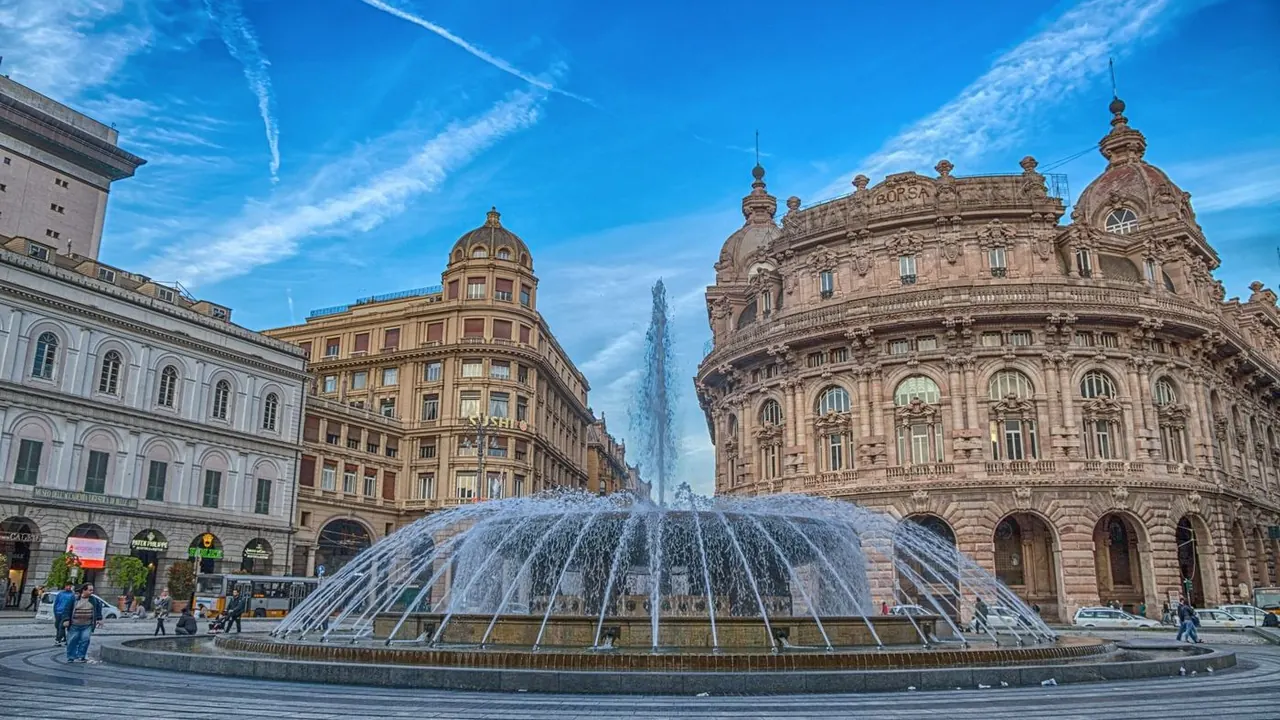
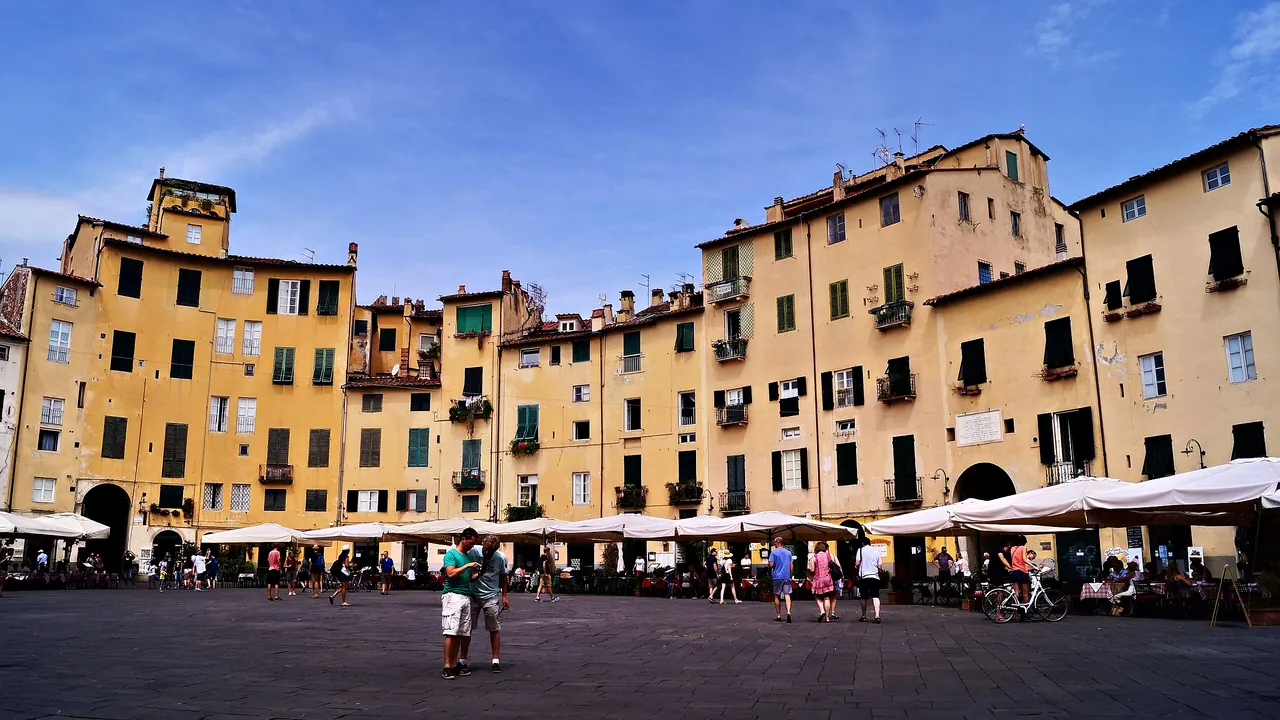
Photos: Genoa by Faber1893, CC BY-SA 4.0, cropped; Lucca by Stefano Sansavini, CC BY-SA 4.0, cropped.
Genoa or Lucca?
Our verdict in twelve categories, each scored against the same fixed benchmark cities, and the climate month by month, so you can choose for your trip.
Choose Genoa for
- nightlife
- food and drink
- culture and sights
Genoa suits travellers who want a real port city with plenty to get into: the shaded lanes of the caruggi and the palace museums of the Strade Nuove, pesto and focaccia where they were born, livelier evenings, and cliff paths and Riviera coves a short train ride away. It is hard on the legs, with steep hills and endless stairs, but it gives more back on food, sights and the outdoors.
Choose Lucca for
- wellness
- day trips
- getting around
Lucca is the better pick for a slower, gentler stay. Inside its complete walls the town is flat, mostly closed to traffic and easy to cross by bike, and it makes an unusually good base for Pisa, Florence, the sandy Versilia coast and the old spa towns. Evenings end early and quietly, which suits couples and anyone who wants rest after a full day out.
Scoreboard
Twelve categories on one fixed scale from 0 to 100. The shaded stretch is the gap between the two.
Your match
Pick a travel style or drag the sliders, and both match scores follow your weighting.
Wins on nightlife and food and drink with your weighting.
Wins on wellness and day trips with your weighting.
What matters to you?
Category by category
What the scores mean for a trip.
Beaches & swimming
You can swim without leaving Genoa, from the pebble cove at Boccadasse, the bathing platforms along Corso Italia or the rocks below Nervi, and the bays of Camogli and Sestri Levante are close by train. The shores are pebbly and the loungers crowded, but the water is clear and a swim fits easily into a city afternoon.
From Lucca you have to travel to the sea, about 25 minutes by train to Viareggio, but you get a different kind of beach: long, gently shelving sand, with the pine-backed dunes of the Lecciona for a free stretch. It works as a half-day trip rather than a quick dip.
Food & drink
Genoa eats better and more distinctively. Pesto, focaccia dunked at breakfast, pansoti in walnut sauce, fried fish from the old town friggitorie and seafood in the harbour trattorias give it a range that Lucca cannot match.
Both sell chickpea flatbread by the slice, called farinata in Genoa and cecina in Lucca. Beyond that, Lucca's cooking is plainer and comes from inland: spelt soup, tordelli in ragù, chestnut flour in the colder months, mild olive oil and Montecarlo wines. It is reliable, but the menus repeat sooner.
Culture & sights
Genoa has more to see and a deeper historic fabric. There is a vast medieval quarter, the UNESCO-listed Rolli palaces with Van Dyck and Rubens in their painted halls, the striped cathedral, and the marble sculpture of Staglieno cemetery. It fills several days, and most visitors underestimate it.
Lucca's appeal is the town as a whole: complete Renaissance walls, the carved Romanesque fronts of San Michele and San Frediano, and the oval piazza built into the Roman amphitheatre. Its museums are modest, and two unhurried days cover it.
Nightlife
Neither city is made for clubbing, but Genoa has the livelier evenings. Students and locals fill the small bars around Piazza delle Erbe and the university until late at weekends, and there are waterfront bars at the Porto Antico and beach clubs along Corso Italia in summer.
Lucca's evening is an aperitivo in Piazza San Michele, dinner and a walk on the walls, and the centre is calm by midnight. Dancing means the Versilia discos and a late taxi back.
Nature & outdoors
Genoa's outdoors starts at the door. A funicular climbs to the trail linking the hilltop forts, the Portofino promontory and the Cinque Terre paths are on the coastal railway, and boats leave the harbour for whale and dolphin watching in the Pelagos Sanctuary.
Lucca's own green space is gentler: the tree-lined ring of the walls, cycle paths along the Serchio and olive-covered hills. The serious landscapes are the Apuan Alps' marble peaks and the Garfagnana woods, about an hour north, and they are much easier with a car.
Day trips
Lucca is the stronger base, because it combines great art cities with the coast. Pisa is half an hour away, Florence a little over an hour, and Pistoia, the Montecatini spas, the villa gardens at Marlia, the sculptors' town of Pietrasanta and the Versilia beaches are all within easy reach.
Genoa's trips run mainly along one superb stretch of railway: Camogli, Portofino, Sestri Levante and the Cinque Terre to the east, with quieter Noli and Finale Ligure Borgo to the west. Milan and Turin are within range for a museum day, but there is less variety than Tuscany offers.
Good for families
Genoa gives children more to do. The Porto Antico groups one of Europe's largest aquariums with a science centre, the tropical biosphere and the Galata museum's walk-through submarine, and the funiculars and public lifts are rides in themselves. The catch is the steep, stair-filled old town, which is hard work with a pushchair.
Lucca is physically easier: flat, small and mostly free of traffic, and a family quadricycle ride around the walls is a highlight. Add the Pinocchio Park at Collodi and the sandy beaches, but the town itself has little made for children.
Getting around
Lucca is the simpler place to move around. Inside the walls everything is flat and close enough to walk or cycle, and the station just outside the southern gate has trains to Pisa, Viareggio and Florence. Only the rural villas and the Garfagnana call for a car.
Genoa takes more effort. The old town is a maze, the city climbs sharply from the water, and you rely on funiculars, lifts and slow buses, with a single short metro line. Its strength is the coastal railway, which reaches Nervi and the Riviera towns without a car.
Shopping & style
Neither city is worth a dedicated shopping trip, but Genoa has a little more variety. There are the arcades of Via XX Settembre and Galleria Mazzini, plus long-established old town shops for candied fruit, pesto and olive oil, and workshops making silver filigree and coral.
Lucca's offer is smaller and more intimate: the Liberty shopfronts of Via Fillungo, delicatessens selling farro and buccellato, and, best of all, its monthly antiques market around the cathedral.
Affordability
Genoa stretches a budget further. Focaccia and farinata make very cheap meals, central hotels cost less than in Italy's most visited cities, and the funiculars and lifts cost little. The expense comes on days in the smart Riviera resorts and on paid loungers.
Lucca is cheaper than Florence, and its walls and many churches are free. Rooms are the problem: there are few hotels inside the walls, and they fill up in summer and during festivals, so staying outside the walls is often the sensible choice.
Live music & performing arts
There is little to choose between the two, though they differ in style. Genoa has a conventional season at the Teatro Carlo Felice, an established Italian-language drama company, Paganini concerts and small clubs that carry on the singer-songwriter tradition.
Lucca is easier for a short visit, with Puccini recitals in a central church most of the year. In summer it adds big outdoor concerts in Piazza Napoleone and open-air opera by the lake at Torre del Lago.
Wellness & relaxation
Lucca is far more restful. Its quiet, traffic-free lanes and the shaded walls at dusk set a slow rhythm, and Montecatini's belle époque baths, Monsummano's warm cave pools and the steam grottoes of Bagni di Lucca are all within an hour.
Genoa's centre is all port, traffic and crowded lanes. Calm means the villa gardens and promenade at Nervi or a long lunch in a Riviera village, and the nearest thermal waters, at Acqui Terme, are over an hour away.
When should you go?
Pick your month. The climate figures are measured averages, not a forecast.
Genoa in July
Lucca in July
Daytime high, °C
Rainfall in the month, mm
Where the figures come from
Genoa has no rain gauge within 25 km of the centre, so its rainfall comes from a gridded climate dataset read at the city rather than from a gauge further away.
Genoa's sunshine is measured 80 km from the centre, at Capo Mele.
Temperature and rainfall are climate normals, averaged over the years shown. Genoa: 1991-2020 normals, Genova / Sestri (6.7 km from centre). Lucca: 1991-2020 normals, Pisa / S. Giusto (21.4 km from centre).
Both cities are at their best in May, June and September. Genoa's sea is warm enough for swimming from June and reaches 25°C in August, while summer highs top out around 28°C, so the lanes stay walkable in the afternoon. Lucca sits inland on the plain and reaches 30°C in July and August, which makes midday sightseeing heavy going, though the Versilia sea warms as much as Genoa's. Both get plenty of sunshine through high summer, and July is the driest month in each.
The autumn rain arrives in September and hits Genoa much harder, with about 212mm in October. In Lucca the rain is lighter and peaks in November at around 132mm. Winters are mild and much alike. Genoa gets a little more winter sun, which makes it the slightly brighter choice for a city visit between November and February.
Which traveller are you?
For a food and nightlife trip, Genoa is the pick. You can graze all day on street food and seafood with far more range than Lucca's rustic menus, then join the students in old town bars long after Lucca has gone quiet.
For an outdoors trip, Genoa has the edge, above all for walkers without a car: cliff and ridge paths start from the railway, and kayaking or diving can fill the afternoons. Lucca suits gentle cycling, and mountain hikers willing to drive.
On a relaxing and wellness trip, Lucca wins. In Genoa calm is confined to a few quiet corners of a busy port, while all of central Lucca runs at a slow pace, and its old spa towns make an easy day out for a proper soak.
Before you go
| Measure | Genoa | Lucca |
|---|---|---|
| Official language | Italian | Italian |
| Currency | Euro (EUR) | Euro (EUR) |
| Sockets | CFL230 V, 50 Hz | CFL230 V, 50 Hz |
| Driving side | Right | Right |
| Time zone | UTC+1, UTC+2 in summer | UTC+1, UTC+2 in summer |
| Emergency number | 112 | 112 |
| Elevation | 20 m | 19 m |
| Main airport | Genoa Cristoforo Colombo Airport (GOA)7 km from centre25 non-stop destinations | Pisa International Airport (PSA)21 km from centre82 non-stop destinations |
| Public holidays this year | 13 days | 13 days |
By the numbers
| Measure | Genoa | Lucca |
|---|---|---|
| City population | 558,745 | 88,798 |
| People per km² | 2,325 | 478 |
| Museums within 10 km | 51 | 20 |
| UNESCO World Heritage sites within 50 km | 1 | 4 |
| Swim season, months above 21 °C | 4 months | 4 months |
Where else could you go?
Every comparison below shares a destination with this one, so you can follow Genoa or Lucca somewhere new.