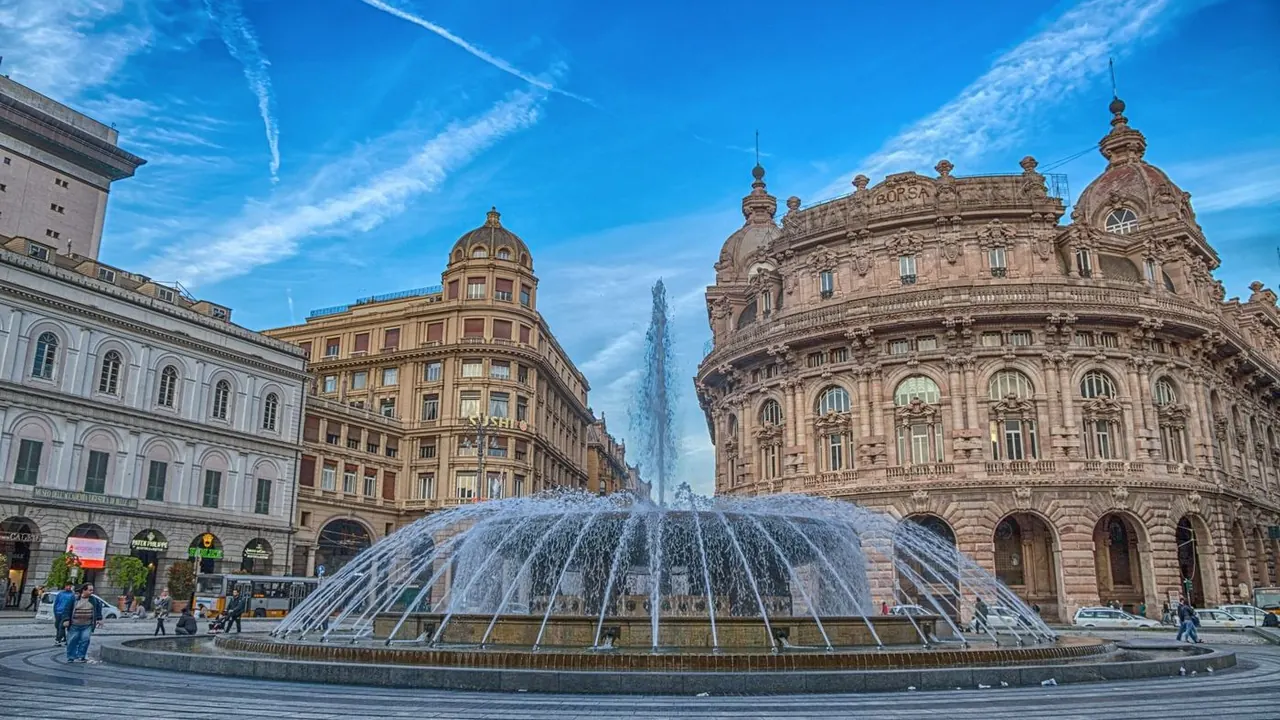
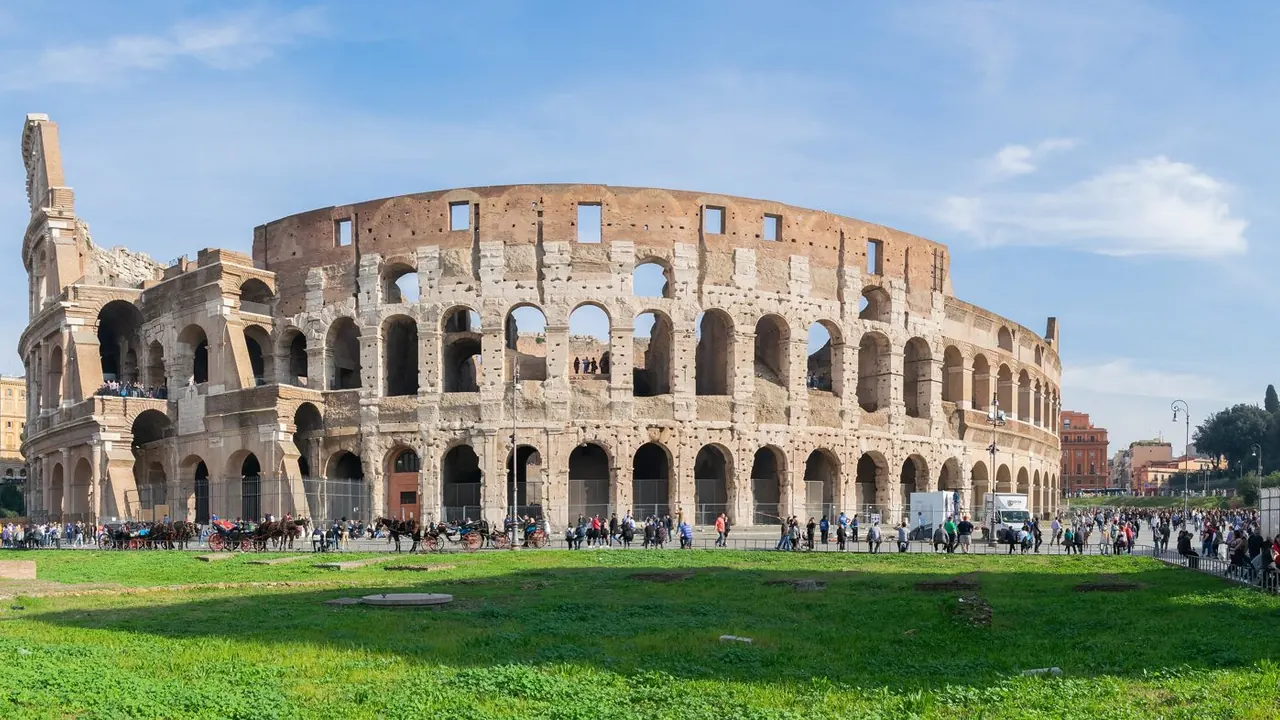
Photos: Genoa by Faber1893, CC BY-SA 4.0, cropped; Rome by Tournasol7, CC BY-SA 4.0, cropped.
Genoa or Rome?
Our verdict in twelve categories, each scored against the same fixed benchmark cities, and the climate month by month, so you can choose for your trip.
Choose Genoa for
- nature and the outdoors
- prices
- families
Genoa suits a traveller who wants the Italian Riviera on the doorstep of a real working port. The trails above the city, the Portofino promontory and the Cinque Terre are all a train ride away, a swim is easy on most summer afternoons, and the city costs noticeably less to stay in. Its medieval lanes and painted palaces are a fine discovery, but it is a quieter, more reserved place after dark.
Choose Rome for
- shopping
- culture and sights
- nightlife
Choose Rome when the trip is built around history, art and eating. No other city puts the Colosseum, the Vatican Museums and Bernini's piazzas within walking distance of each other. Its trattorias, evening life in the piazzas, shopping and summer opera at Caracalla give both the days and the nights more depth. Expect higher room prices and heavier crowds, and treat the sea as an excursion rather than part of the stay.
Scoreboard
Twelve categories on one fixed scale from 0 to 100. The shaded stretch is the gap between the two.
Your match
Pick a travel style or drag the sliders, and both match scores follow your weighting.
Wins on nature and the outdoors and prices with your weighting.
Wins on shopping and culture and sights with your weighting.
What matters to you?
Category by category
What the scores mean for a trip.
Beaches & swimming
In Genoa you can swim without leaving town. There is the pebble cove at Boccadasse, the bathing establishments along Corso Italia and the rock platforms below Nervi's promenade, all with clear water. The Riviera bays of Camogli and Sestri Levante are a short train ride away. Expect pebbles and coarse sand rather than a soft beach, and rented loungers take up much of the space.
In Rome the sea is a separate outing. Ostia's dark volcanic sand is half an hour away by suburban train, but it is mostly paid lidos and the water is rarely clear. The prettier coves at Sperlonga and Sabaudia are a long trip south. Both coasts fill up on summer weekends.
Food & drink
Both cities cook with a strong regional identity, but Rome has the richer table. There are its four classic pastas, artichokes fried the Jewish way in the Ghetto, Testaccio's offal dishes and serious street food in pizza al taglio and supplì. That gives a visitor far more to work through, as long as they eat in Trastevere, Monti or Testaccio rather than beside the big sights.
Genoa's cooking is narrower and very local: pesto with trofie, pansoti in walnut sauce, focaccia for breakfast and farinata from the old friggitorie in the caruggi. Its seafood and Ligurian white wines are a step above Rome's modest local wines, and the Mercato Orientale is Genoa's answer to Testaccio's market.
Culture & sights
Rome is in a different league. With the Colosseum, the Forum and the Pantheon, the Vatican Museums and the Sistine Chapel, the Borghese Gallery and Bernini's piazzas, a week feels short, and the hard part is choosing what to leave out.
Genoa's appeal is quieter and more contained. It has the shaded medieval caruggi, the Rolli palaces on Via Garibaldi with their painted halls, Van Dyck and Rubens in the Palazzo Rosso and the Palazzo Bianco, and the marble sculpture of Staglieno cemetery. It rewards two or three days of discovery rather than handing you a long list.
Nightlife
Neither is a clubbing city, and in both the evening runs on aperitivo and drinks in the squares. Rome simply has more of it. Trastevere's lanes stay full until late, Monti has cocktail and wine bars, and San Lorenzo and Pigneto add student and arty crowds.
Genoa is more reserved and quiet on weeknights. Evenings centre on the small bars around Piazza delle Erbe and the university, with waterfront bars at the Porto Antico and beach clubs along Corso Italia in summer.
Nature & outdoors
Genoa sits between steep hills and the sea, so the outdoors starts at the edge of town. A funicular to Righi leads to the ring of fortresses above the port, and the Portofino promontory has cliff paths down to San Fruttuoso. The Cinque Terre trails are a train ride away, and boats go out into the Pelagos Sanctuary to watch whales and dolphins.
Rome's nature is gentler and further away. In town, the highlights are the villa parks and a bike ride along the Appian Way. For proper hiking you head to the crater lakes of the Alban Hills or to the Apennines, about ninety minutes away.
Day trips
Both are excellent bases, but Rome reaches further and in more directions. Ostia Antica, the Villa d'Este and Hadrian's Villa are close by. The Etruscan tombs, Orvieto and Civita di Bagnoregio lie to the north, and fast trains bring Florence, Naples and even Pompeii within reach.
Genoa's strength is one coastline. Camogli, Portofino, Sestri Levante and the Cinque Terre lie along the eastern Riviera, quieter Noli and Finale Ligure Borgo lie to the west, and Milan and Turin are about an hour and a half inland. For a run of seaside villages it is hard to beat.
Good for families
Genoa has a ready-made day out for children at the Porto Antico. The large aquarium, a children's science centre, the glass biosphere and the walk-through submarine at the Galata museum sit side by side, and the funiculars and public lifts are rides in themselves. The steep, dark lanes of the old town are hard going with a pushchair, though.
Rome asks more patience of young visitors. Its great sights are aimed at adults, the queues are long, and summer heat and cobbles wear families down. Villa Borghese, with its zoo, rowing boats and space to run, is the main break.
Getting around
Genoa's funiculars, rack railway and public lifts do the climbing for you, and the coastal railway runs straight out to Nervi and the Riviera towns, which gives it a slight edge. In the old town you are on foot in a maze of lanes, and the buses crawl through the narrow streets.
Rome's main sights sit closer together, and the walk from the Colosseum past the Pantheon to Trastevere is a pleasure in itself. Beyond that, the metro barely touches the historic core, buses and trams stall in traffic, and cobbles and summer heat wear you down. A car is more trouble than help in either city.
Shopping & style
Rome is the shopping city of the two. You can go from luxury to leather and handmade shoes: there are the fashion houses on Via Condotti near the Spanish Steps, the independent boutiques and vintage shops of Monti, the antique dealers of Via dei Coronari and the sprawling Porta Portese flea market.
In Genoa, shopping means things to eat and things made by hand. Long-established shops in the old town sell candied fruit, olive oil and pesto, workshops make silver filigree and coral, and the Mercato Orientale is good for food to take home. Via XX Settembre covers the familiar Italian labels without much depth.
Affordability
Genoa is the easier city on the wallet. Central hotels cost less, focaccia and farinata make cheap meals, and the funiculars are inexpensive. The smart Riviera resorts and paid loungers do push up costs in summer.
Rome's daily eating is fair value, with espresso drunk standing at the bar, pizza al taglio and free water from the city's fountains. But central rooms are expensive and small, and the Vatican Museums, the Colosseum and the Borghese Gallery all charge substantial entry fees. Staying outside the centre helps.
Live music & performing arts
Rome has more evenings worth planning around. There is opera and ballet at the Teatro dell'Opera, which moves outdoors to the Baths of Caracalla in summer, and the Santa Cecilia orchestra plays at the Auditorium Parco della Musica. Church concerts are frequent and the city has a long-running jazz scene.
Genoa has a respectable season at the Teatro Carlo Felice on Piazza De Ferrari, Paganini concerts and small clubs that keep its singer-songwriter tradition alive, which is enough for a night or two. In both cities the theatre is in Italian.
Wellness & relaxation
Genoa's calm is by the sea, on the promenade and in the villa gardens at Nervi, or over a long lunch in a Riviera village, well away from the port traffic of the centre. Apart from hotel spas, the nearest thermal water is inland at Acqui Terme, a little over an hour away.
Rome has hot water closer at hand. The sulphur-fed outdoor pools at Bagni di Tivoli are just outside the city, and there are free open-air springs around Viterbo. In town, hammam-style day spas add to the hotel spas, and the villa gardens and the Aventine hill are the quiet places to sit.
When should you go?
Pick your month. The climate figures are measured averages, not a forecast.
Genoa in July
Rome in July
Daytime high, °C
Rainfall in the month, mm
Where the figures come from
Genoa has no rain gauge within 25 km of the centre, so its rainfall comes from a gridded climate dataset read at the city rather than from a gauge further away.
Genoa's sunshine is measured 80 km from the centre, at Capo Mele.
Rome's sunshine is measured 31 km from the centre, at Vigna Di Valle.
Temperature and rainfall are climate normals, averaged over the years shown. Genoa: 1991-2020 normals, Genova / Sestri (6.7 km from centre). Rome: 1991-2020 normals, Roma / Ciampino (15.1 km from centre).
The two cities share a Mediterranean pattern: dry, sunny summers, then heavy rain from September that peaks in October in Genoa and November in Rome, at over 100mm in each. The real difference is heat. In July and August Genoa stays near 28°C, warm enough for a swim every day from June to September, with the sea reaching 25°C, yet still bearable for climbing its lanes and stairs. Rome rises to around 31°C in high summer. It gets more sunshine, but the heat makes midday sightseeing hard work.
For walking the streets, Rome is at its best in April, May and from late September into October, before and after the heat. Genoa's best walking falls in the same spring and early autumn windows, and the autumn rains reach both cities by October. Winters are mild and much alike, around 12°C in the day, which is pleasant enough for museums but not for the coast.
Which traveller are you?
On an outdoors trip, Genoa lets you walk straight out of the city onto hill ridges and coastal paths and be back in town for dinner, with no car needed. From Rome, a proper hike means first spending part of the day getting out to the hills.
On a tight budget, Genoa stretches the money further. A bed costs less and the street food is cheap enough to live on for days. Rome can be done cheaply, but only by staying outside the centre and choosing carefully which paid sights are worth it.
For a culture and arts trip, Rome is the clear pick. Genoa rewards a few curious days among its palaces, but Rome can fill a week of sightseeing with no fear of running short, then add an evening at the opera or a concert.
Before you go
| Measure | Genoa | Rome |
|---|---|---|
| Official language | Italian | Italian |
| Currency | Euro (EUR) | Euro (EUR) |
| Sockets | CFL230 V, 50 Hz | CFL230 V, 50 Hz |
| Driving side | Right | Right |
| Time zone | UTC+1, UTC+2 in summer | UTC+1, UTC+2 in summer |
| Emergency number | 112 | 112 |
| Elevation | 20 m | 21 m |
| Main airport | Genoa Cristoforo Colombo Airport (GOA)7 km from centre25 non-stop destinations | Rome–Fiumicino Leonardo da Vinci International Airport (FCO)23 km from centre242 non-stop destinations |
| Public holidays this year | 13 days | 13 days |
By the numbers
| Measure | Genoa | Rome |
|---|---|---|
| City population | 558,745 | 2,748,109 |
| People per km² | 2,325 | 2,135 |
| Museums within 10 km | 51 | 178 |
| UNESCO World Heritage sites within 50 km | 1 | 7 |
| Swim season, months above 21 °C | 4 months | 5 months |
Where else could you go?
Every comparison below shares a destination with this one, so you can follow Genoa or Rome somewhere new.