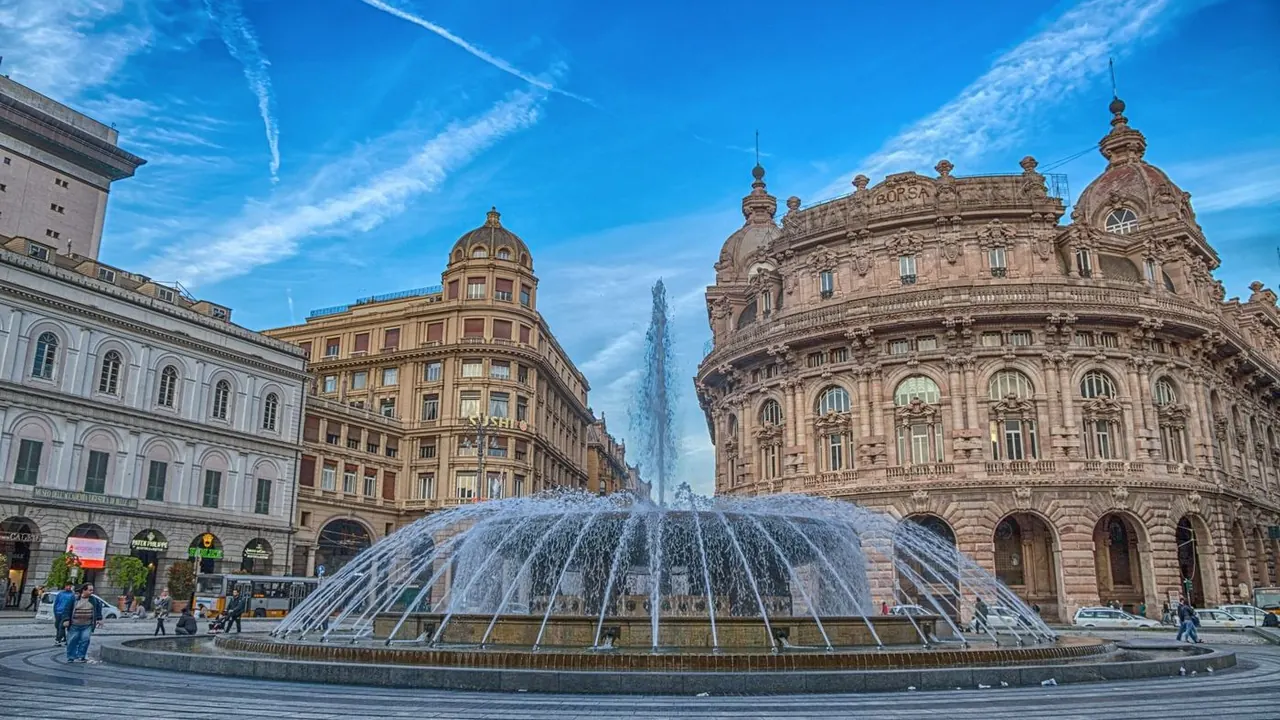
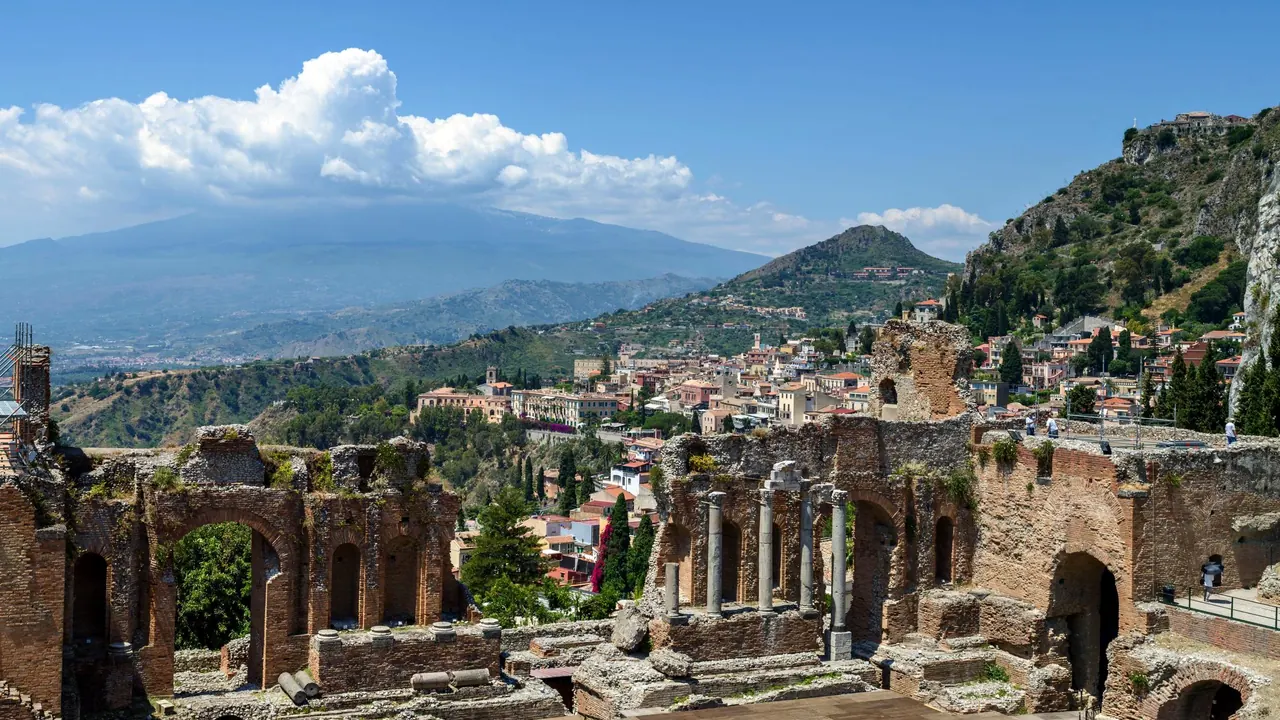
Photos: Genoa by Faber1893, CC BY-SA 4.0, cropped; Taormina by Reinhard Bruckner, Pexels License.
Genoa or Taormina?
Our verdict in twelve categories, each scored against the same fixed benchmark cities, and the climate month by month, so you can choose for your trip.
Choose Genoa for
- culture and sights
- prices
- families
Genoa suits the traveller who wants a real working city with depth. The palaces of the Strade Nuove, the shaded caruggi, pesto and farinata, and a railway line that puts Portofino, the Cinque Terre and even Milan within a day's reach make it the richer base. It also costs less, works better with children thanks to the Porto Antico and has more going on after dark, though its beaches are a side dish rather than the main course.
Choose Taormina for
- beaches
- wellness
- nature and the outdoors
Taormina is for a slower stay led by the sun, on a terrace above the Ionian. Mornings in the coves at Isola Bella or Mazzarò, afternoons on Etna and evenings with a glass of Etna red as the volcano changes colour are its rhythm. It is warmer, drier and calmer, but small, expensive and thin on museums, so it rewards couples who want scenery and ease more than sightseeing.
Scoreboard
Twelve categories on one fixed scale from 0 to 100. The shaded stretch is the gap between the two.
Your match
Pick a travel style or drag the sliders, and both match scores follow your weighting.
Wins on culture and sights and prices with your weighting.
Wins on beaches and wellness with your weighting.
What matters to you?
Category by category
What the scores mean for a trip.
Beaches & swimming
Both offer pebble swimming in clear water rather than long sandy strands, but Taormina makes the better beach base. The coves at Mazzarò and Isola Bella, reached by cable car, are good for snorkelling, the sea is slightly warmer and stays swimmable into October, and Giardini Naxos and Letojanni add longer stretches of sand.
In Genoa, swimming is something the city offers alongside everything else: the little cove at Boccadasse, the platforms below Nervi's promenade and the bathing establishments of Corso Italia, with Camogli and Sestri Levante a train ride away. It works for an afternoon dip between sights, less well for whole days on the sand.
Food & drink
Genoa is the stronger place to eat, because it is a city with a deep repertoire of its own: trofie with pesto, pansoti in walnut sauce, focaccia dunked at breakfast and farinata or panissa from the old town friggitorie, with the Mercato Orientale showing where it all comes from.
Taormina has Sicily's bolder flavours, from granita and brioche to pasta alla Norma and cannoli, Etna wines that are among Italy's most interesting, and a better choice for a refined dinner with a sea view. But it is a small resort, and the tourist menus on the Corso mean good everyday meals take some finding.
Culture & sights
Here the gap is wide. Genoa has one of Europe's largest medieval quarters, the UNESCO-listed palaces of Via Garibaldi with Van Dyck and Rubens, the striped cathedral, the Palazzo Ducale and the marble sculpture of Staglieno, enough for several full days.
Taormina has one great sight, the Greek theatre with Etna framed behind its broken stage, and a handsome Corso of Arab-Norman and Gothic palaces between two gates. It is unforgettable but done in a day, and serious museums mean a trip to Syracuse or Catania.
Nightlife
Neither is a party town, but Genoa has more life after dark. Students and locals fill the bars around Piazza delle Erbe and the university lanes on weekends, and in summer the evenings move out to Corso Italia and the beach clubs. Taormina's nights are an aperitivo in Piazza IX Aprile, the passeggiata and piano bars over the sea, with an older crowd of couples and a town that goes quiet after dinner out of season.
Nature & outdoors
Both put serious outdoors on the doorstep, and they differ in kind. Genoa's is coast and ridge: the fortress trail above Righi, the cliff paths of the Portofino promontory down to San Fruttuoso, the Cinque Terre by train, and whale and dolphin watching in the Pelagos Sanctuary.
Taormina has a volcano. Etna's lava fields and Silvestri craters, with skiing in winter, and the basalt columns of the Alcantara gorges are an hour or less away, and the Isola Bella reserve adds snorkelling and diving among grottoes.
Day trips
One railway line does most of the work from Genoa. Camogli, Santa Margherita and Portofino are under an hour east, Sestri Levante and the Cinque Terre a little further, and westward lies the walled town of Finale Ligure Borgo. Milan and Turin are near enough for a museum day, so a week of trips needs nothing more than a timetable, and that ease gives Genoa the edge.
Taormina's best outings involve more travel but are rich in history. Catania's black lava-stone baroque is about an hour away, Ortigia and the Greek quarries of Syracuse are about two hours south, Noto needs an early start, and Etna's wine villages such as Randazzo make for slow days of cellar visits. Closer to home, Castelmola and the film villages of Savoca and Forza d'Agrò make easy half-days.
Good for families
Genoa is easier with children because of the Porto Antico. The large aquarium, the children's science centre, the glass biosphere and the walk-through submarine at the Galata can fill whole days, and the funiculars and public lifts are a treat in themselves, even if the old town is steep and short of parks.
Taormina welcomes children but has little made for them. Its steps and crowded pebble coves are hard going with a pushchair, so families often stay in Giardini Naxos instead, and Etna and snorkelling suit school-age children best.
Getting around
Genoa has the fuller set of tools: a metro line, funiculars, a rack railway and public lifts up to the hills, and a coastal railway to Nervi and the Riviera, though the buses crawl through narrow streets. Taormina's pedestrian centre is a short walk from end to end, with a cable car to Mazzarò and the station down by the sea, but Etna and the inland villages realistically need a tour or a hired car. Both are built on slopes, so expect stairs either way.
Shopping & style
Genoa gives a shopper more to work with, although it is not a city to plan a trip around for its shops. There are the arcades of Via XX Settembre and Italian labels on Via Roma and in the Galleria Mazzini, and the old town has long-established shops for candied fruit, olive oil and silver filigree.
Taormina's shopping comes down to one street, Corso Umberto. It is good for coral, cameos, Caltagirone majolica and Bronte pistachio cream, but most of the stock is aimed at visitors, and for anything more you go to Catania.
Affordability
Genoa is much the cheaper stay. Street food is very cheap, trattoria lunches are fair, central hotels cost less than in Italy's best-known cities and the funiculars and lifts are inexpensive; only lounger hire and the smart Riviera resorts push the bill up.
Taormina is the dearest base in eastern Sicily, with grand sea-view hotels setting the level and resort prices on the main street. Granita and buses stay cheap, and sleeping in Giardini Naxos or Letojanni, or coming in spring or autumn, softens the cost.
Live music & performing arts
Genoa offers a proper season: opera, ballet and symphony at the Teatro Carlo Felice on Piazza De Ferrari, Italian-language drama from the Teatro Nazionale, Paganini concerts and small clubs that keep its singer-songwriter tradition going. Taormina has one spectacular stage rather than a season, with summer concerts, opera and international acts in the Greek theatre against Etna, and very little once the summer ends.
Wellness & relaxation
Taormina is the calmer choice. Its large hotels have good spas with terrace pools and treatments using volcanic mud, citrus and almond, and the pace of long lunches and shady afternoons in the Villa Comunale gardens does the rest, though August crowds on the Corso break the spell.
Genoa has few spas beyond the better hotels and a busy port centre. For quiet you head to Nervi's promenade and villa gardens, or a little over an hour inland to the thermal waters of Acqui Terme.
When should you go?
Pick your month. The climate figures are measured averages, not a forecast.
Genoa in July
Taormina in July
Daytime high, °C
Rainfall in the month, mm
Where the figures come from
Genoa has no rain gauge within 25 km of the centre, so its rainfall comes from a gridded climate dataset read at the city rather than from a gauge further away.
Genoa's sunshine is measured 80 km from the centre, at Capo Mele.
Taormina's temperatures are measured 45 km from the centre, at Messina.
Taormina has no rain gauge within 25 km of the centre, so its rainfall comes from a gridded climate dataset read at the city rather than from a gauge further away.
Temperature and rainfall are climate normals, averaged over the years shown. Genoa: 1991-2020 normals, Genova / Sestri (6.7 km from centre). Taormina: 1991-2020 normals, Messina (45.1 km from centre).
Genoa's swimming season runs from June to September, when the sea reaches about 25°C in August, and July is the driest and sunniest month. Autumn is the catch: rain builds in September and October brings about 212mm, the wettest stretch of the year. Winters are mild enough for walking the old town, and spring is the best time for the coastal paths, when the hills are green and the days are comfortable rather than hot.
Taormina runs warmer and drier all year. High summer is close to rainless and very sunny, but daytime highs of about 31°C in July and August make the stairways and Etna hikes hard work in the middle of the day. The sea stays warm well into autumn, still around 23°C in October, so beach days last a month longer than in Genoa. May and late September give the best mix of swimming, walking and gentler heat.
Which traveller are you?
For a culture and arts trip, Genoa is the clear pick. The Rolli palaces, San Lorenzo, Staglieno and one of Europe's largest medieval quarters fill several days, and the Carlo Felice adds opera, while Taormina's sights are covered in a day.
On a beach and sun trip, Taormina wins. The Ionian is a little warmer, the summer is drier and sunnier, and the clear coves below town, with sand at Giardini Naxos, beat Genoa's rocky city platforms. Arrive early for the best spots.
On a tight budget, Genoa goes much further. Focaccia and farinata make cheap meals, central rooms are fair for Italy and the trains handle the day trips, whereas Taormina charges resort prices unless you sleep down in Giardini Naxos.
Before you go
| Measure | Genoa | Taormina |
|---|---|---|
| Official language | Italian | Italian |
| Currency | Euro (EUR) | Euro (EUR) |
| Sockets | CFL230 V, 50 Hz | CFL230 V, 50 Hz |
| Driving side | Right | Right |
| Time zone | UTC+1, UTC+2 in summer | UTC+1, UTC+2 in summer |
| Emergency number | 112 | 112 |
| Elevation | 20 m | 204 m |
| Main airport | Genoa Cristoforo Colombo Airport (GOA)7 km from centre25 non-stop destinations | Catania-Fontanarossa Airport (CTA)47 km from centre96 non-stop destinations |
| Public holidays this year | 13 days | 13 days |
By the numbers
| Measure | Genoa | Taormina |
|---|---|---|
| City population | 558,745 | 10,471 |
| People per km² | 2,325 | 799 |
| Museums within 10 km | 51 | 5 |
| UNESCO World Heritage sites within 50 km | 1 | 2 |
| Swim season, months above 21 °C | 4 months | 5 months |
Where else could you go?
Every comparison below shares a destination with this one, so you can follow Genoa or Taormina somewhere new.
- Portofinovs Genoa
- Cataniavs Taormina
- La Speziavs Genoa
- Syracuse, Sicilyvs Taormina
- Milanvs Genoa
- Turinvs Genoa