Georgia
Batumi
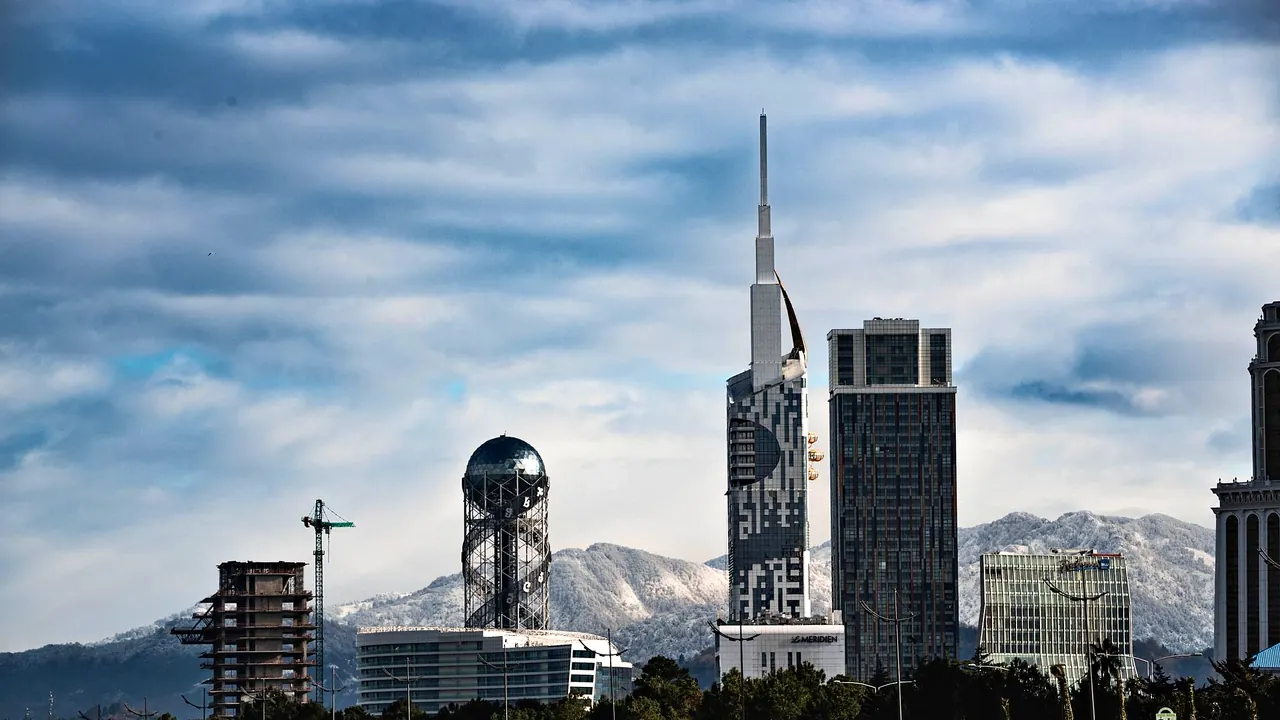
The skyline and the Alphabetic Tower below snowy mountains
- Affordable cities78
- Nature & outdoors68
- Beaches62
Photo: Павел Хлыстунов, Pexels License
Match
49
Every category weighted equally
- Beach & sun53
- Culture & arts46
- Food & nightlife49
- Family trip54
- Outdoors53
- Relax & unwind50
- Shopping & style47
- On a budget53
Batumi in twelve categories
Our verdict on each, scored 0 to 100 against the same fixed benchmark cities, so a score means the same thing on every page.
Beaches & swimming. Scores 62 out of 100.
Food & drink. Scores 60 out of 100.
Culture & sights. Scores 36 out of 100.
Nightlife. Scores 47 out of 100.
Nature & outdoors. Scores 68 out of 100.
Day trips. Scores 35 out of 100.
Good for families. Scores 54 out of 100.
Getting around. Scores 60 out of 100.
Shopping & style. Scores 30 out of 100.
Affordability. Scores 78 out of 100.
Live music & performing arts. Scores 32 out of 100.
Wellness & relaxation. Scores 30 out of 100.
Batumi category by category
Beaches & swimming
62A long pebble beach runs right along the seafront boulevard, so a swim is never more than a few minutes' walk from a hotel. In July and August the Black Sea warms to about 25°C, and from June to September beach life sets the rhythm of the town, with sunbeds, showers and families from across the region. The stones are coarse and the water in front of the centre can look murky after rain, so swimming shoes help.
For clearer water, head south to Gonio, Kvariati and Sarpi, all within half an hour, where the water is cleaner and green hills come down to the shore. Outside the summer months the sea cools and rain is frequent, and the beach stops being a reason to come.
Food & drink
60The food of Batumi is Georgian cooking with a regional accent. The signature dish is Adjarian khachapuri, a boat-shaped bread filled with molten cheese, butter and an egg, and you will also find khinkali dumplings, grilled meats, walnut-rich sauces and Black Sea fish. At the fish market near the port you choose your catch from the stalls and have it fried next door. Georgian wine poured by the jug, chacha brandy and churchkhela sweets complete the picture.
The best meals are in plain family-run places in the old town rather than on the promenade, where menus tend to be generic. There is a little international cooking but no fine-dining scene to speak of, and variety thins once you have worked through the Georgian classics.
Culture & sights
36Batumi's sights are mostly modern and theatrical. Along the seafront you will find the Alphabet Tower, the moving Ali and Nino sculpture, the Piazza with its mosaics and a skyline of eccentric towers that is at its most striking when lit up at night. The old town behind the port has handsome nineteenth-century houses from the oil-boom years, along with the Orta Jame mosque and a few churches.
The Adjara archaeological and art museums are small and pleasant but take only an hour or two. The Roman and Byzantine fortress at Gonio, just south of the city, is the most serious piece of history nearby. Most visitors see the cultural highlights in a day and spend the rest of their time on the seafront.
Nightlife
47In summer Batumi becomes the party town of the Georgian coast. Open-air beach clubs along the seafront play music until dawn, the boulevard stays busy until late and visitors from Georgia, Armenia, Turkey and beyond keep the bars full. Casinos are a large part of the night-time scene, and the lit-up towers give evenings a showy, resort feel.
Outside July and August things change completely. Most beach clubs close, and what is left is a handful of bars and wine places in the old town. It suits visitors who want loud summer nights by the sea more than anyone looking for a varied, year-round bar culture.
Nature & outdoors
68Behind the city rise the lush, wet mountains of Adjara, where subtropical forest climbs from the sea into high pasture. The Batumi Botanical Garden on the Green Cape spreads over steep terraces above the water and makes a superb half-day walk. Mtirala National Park, about an hour away, has rainforest trails, waterfalls and river pools, and Machakhela's valleys stretch toward the Turkish border.
The Adjaristskali valley offers rafting, old arched stone bridges and the Makhuntseti waterfall. Paragliding launches from the hills above the coast, and the Goderdzi ski area is a long drive inland in winter. The seafront has a cycling path along its full length. Rain is heavy here, often around 2,400mm a year, which is what keeps everything green but also means wet days.
Day trips
35Day trips from Batumi are short and fairly modest. The Gonio fortress and the ruins of Petra near Tsikhisdziri are the main heritage outings, and the resort towns of Kobuleti and Ureki give a change of beach. Inland, the Adjara valley villages around Keda make a pleasant day of wine tasting, stone bridges and mountain roads, and the town of Khulo lies higher up.
The Turkish border at Sarpi is close, so some visitors cross for a look at Hopa or the Turkish Black Sea coast. Kutaisi, with its monasteries, and the mountain regions further inland are better treated as overnight trips than as day outings.
Good for families
54Batumi works well for a summer family trip. The seafront boulevard is long, flat and car-free, with playgrounds, bike and electric-car hire, fountains and ice-cream stands all the way along it. The dolphinarium, the Argo cable car up to a viewpoint, a big Ferris wheel and the botanical garden fill several days, and Georgians are openly warm with children in restaurants and on the street.
The drawbacks are the coarse pebble beach, which is uncomfortable for small children without proper shoes, fast and careless traffic once you leave the promenade, and crowds in August. Spring and autumn are calmer but often wet.
Getting around
60The part of Batumi that visitors use is compact and flat. The old town, the port and the seafront boulevard are all within walking distance of each other, and a cycle path runs the length of the promenade. City buses and minibuses run out to the botanical garden, Gonio and the airport, and app-based taxis are cheap and easy to use.
Walking off the boulevard means narrow pavements, and drivers pay little attention to crossings. There is no metro or tram. A car is useful only for the mountain valleys inland, and those roads are winding and slow.
Shopping & style
30Shopping in Batumi is limited. There are a few malls with international chain stores, a busy central market selling spices, cheese, honey and churchkhela, and plenty of shops for Georgian wine and chacha, which make the best things to take home. Craft souvenirs such as enamel jewellery and felt goods turn up, but the selection is narrow and much of the seafront retail is beachwear and trinkets.
Affordability
78Batumi is cheap for most visitors. Georgian meals with wine cost far less than at Western European seaside resorts, and buses, taxis and the botanical garden are all inexpensive. Rental apartments in the many residential towers keep room prices low for much of the year.
The exception is July and August, when seafront hotels and beach clubs charge noticeably more and good rooms fill up early. Visiting in June or September gives warm sea at much lower prices.
Live music & performing arts
32The performing arts are a small part of a stay here. The Ilia Chavchavadze Drama Theatre and the State Music Centre stage plays, concerts and some opera, mostly for local audiences, and Georgian folk ensembles occasionally perform the country's remarkable polyphonic singing and energetic dances, which are worth catching. Summer brings open-air concerts and music festivals on the seafront, but for most of the year there is little a visitor would plan an evening around.
Wellness & relaxation
30Batumi has no bathing culture of its own, since Georgia's famous sulphur baths are in Tbilisi, not on the coast. Wellness here means the spa floors of the larger seafront hotels and massage parlours of mixed quality. In summer the town is noisy, with music, casinos and crowds. The calmest way to unwind is a quiet spell in shoulder season, with slow walks along the empty promenade and through the botanical garden above the sea.
When should you go?
Pick a month to see what it is like. The climate figures are measured averages, not a forecast.
Batumi in July
Daytime high, °C
Rainfall in the month, mm
The whole year
Shaded against this city’s own year: the deepest cell is its best month for that figure and the palest its weakest.
Where the figures come from
Batumi's sunshine is measured 55 km from the centre, at Artvin.
Temperature and rainfall are climate normals, averaged over the years shown. Batumi: 1991-2020 (rainfall 1981-2010) normals, Batumi (0.8 km from centre).
Before you go
| Measure | Batumi |
|---|---|
| Official language | Georgian |
| Currency | Lari (GEL) |
| Sockets | CF220 V, 50 Hz |
| Driving side | Right |
| Time zone | UTC+4 |
| Emergency number | 112 |
| Elevation | 3 m |
| Main airport | Alexander Kartveli Batumi International Airport (BUS)5 km from centre39 non-stop destinations |
| Public holidays this year | 17 days |
By the numbers
| Measure | Batumi |
|---|---|
| City population | 235,668 |
| People per km² | 3,631 |
| Museums within 10 km | 6 |
| UNESCO World Heritage sites within 50 km | 1 |
| Swim season, months above 21 °C | 4 months |
Compare Batumi with
Every comparison with a written verdict behind it.