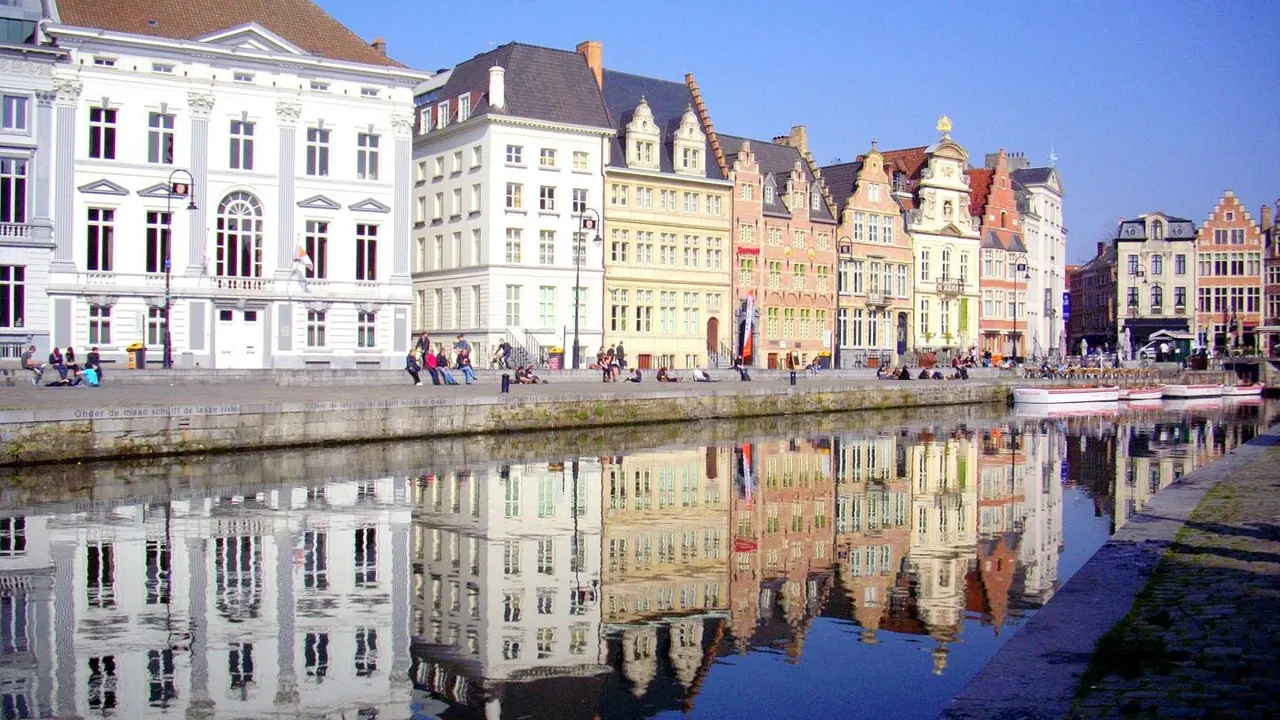
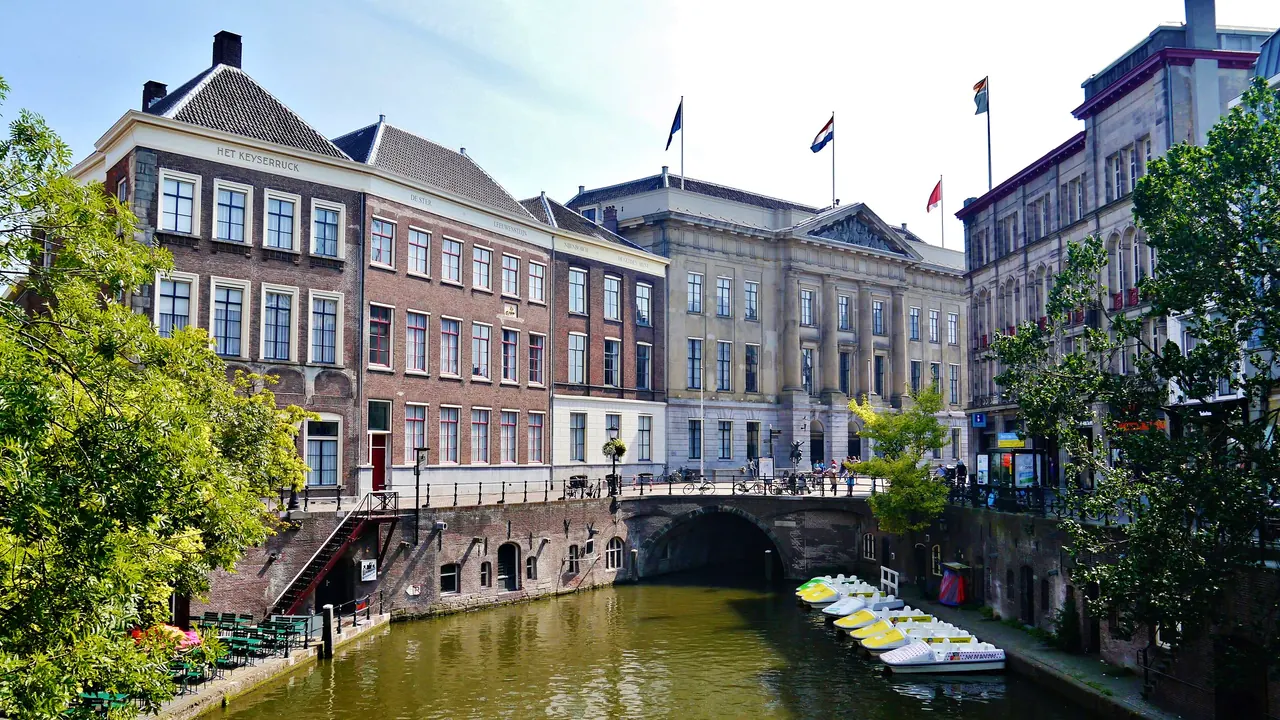
Photos: Ghent by ykeiko, CC BY-SA 3.0, cropped; Utrecht by Zairon, CC BY-SA 4.0, cropped.
Ghent or Utrecht?
Our verdict in twelve categories, each scored against the same fixed benchmark cities, and the climate month by month, so you can choose for your trip.
Choose Ghent for
- food and drink
- culture and sights
- beaches
Ghent suits the traveller who wants a medieval city with real weight to its art, food and evenings. The van Eyck altarpiece in St Bavo's, the Gravensteen and the guildhalls on the Graslei give it the stronger sightseeing. Waterzooi, stews made with dark beer and long Belgian beer lists in the Patershol make it the better place to eat and drink. Evenings are livelier too, from the Overpoort student bars to the Gentse Feesten in July.
Choose Utrecht for
- families
- nature and the outdoors
- wellness
Families and anyone who wants to get out on a bike will do better in Utrecht. The Railway Museum and the Miffy museum are built for children, and the Utrechtse Heuvelrug, the Vecht and the Loosdrecht lakes offer more varied country than the farmland around Ghent. The main station sits at the edge of the old town, and Amsterdam and most of the Dutch cities are a short train ride away.
Scoreboard
Twelve categories on one fixed scale from 0 to 100. The shaded stretch is the gap between the two.
Your match
Pick a travel style or drag the sliders, and both match scores follow your weighting.
Too close to call, 1 point apart
Wins on food and drink and culture and sights with your weighting.
Wins on families and nature and the outdoors with your weighting.
What matters to you?
Category by category
What the scores mean for a trip.
Beaches & swimming
Neither city is a place for a beach vacation, but Ghent has the better access to the sea. Ostend is about an hour away by train, and the coastal tram links wide sandy resorts from De Panne to Knokke. In the city itself, the lake at the Blaarmeersen has a sandy shore and lifeguards in summer.
From Utrecht, Zandvoort and Scheveningen take an hour or more to reach. Swimming closer to home means the Maarsseveense Plassen or the Loosdrecht lakes, which are fine for cooling off on a warm day and little more.
Food & drink
Ghent has a cuisine of its own, and that makes the difference here. Waterzooi, beef stewed in dark beer, grey shrimp croquettes and frites in paper cones give meals a clear Flemish identity. The cafés pour Trappist and lambic beers, and the lanes of the Patershol hold good restaurants. Vegetarians are unusually well served.
Utrecht offers more of a setting than a cuisine. Eating on the old wharves of the Oudegracht, right at the water, is the memorable part. Otherwise the city's strength is varied, casual food: Indonesian and Surinamese kitchens, bistros around the Twijnstraat and Lombok, and herring and cheese at the Vredenburg market.
Culture & sights
Ghent has the deeper sightseeing. The Ghent Altarpiece alone draws art lovers, and around it are the Gravensteen, the guildhalls facing each other across the Leie, the UNESCO-listed belfry and beguinages, and a museum line-up running from Flemish masters at the Museum of Fine Arts to contemporary art at the SMAK.
Utrecht's centre is just as well preserved, but there is less inside it. The Dom Tower, standing apart from its choir since the storm of 1674, and the two-level Oudegracht are the highlights. The Rietveld Schröder House and the De Stijl collection give the city a twentieth-century design angle that Ghent does not share.
Nightlife
Both are student towns, but Ghent's nights go further. The Overpoort runs loud and late in term time, the old cafés around the Vrijdagmarkt and Oudburg suit a long evening over strong beer, and a few small electronic clubs add some range. Every July the Gentse Feesten turns the whole centre into a ten-day street party.
Utrecht's evenings centre on terraces and bars around the Neude, the Janskerkhof and the canal edge. They are pleasant on a summer night, but clubs are few, and anyone who wants a big night out takes the train to Amsterdam.
Nature & outdoors
Utrecht has more varied country on its doorstep. The Utrechtse Heuvelrug adds low wooded ridges, heath and sandy trails for walking and mountain biking. Bike routes along the Vecht pass country estates and windmills, and the Loosdrecht lakes offer sailing and canoeing.
Around Ghent the land is flatter and mostly farmed. The best of it is the riverside cycling along the Leie towards Sint-Martens-Latem, birdwatching at the Bourgoyen-Ossemeersen wetland and the Zwin reserve on the coast. Neither city has hills or wild country.
Day trips
Both cities make excellent bases, and the real question is which country you want to see. From Ghent the trips are Flemish and Belgian: Bruges, Brussels and Antwerp, each within an hour. Further out are Ypres and the First World War cemeteries of the Westhoek, the cobbled Flemish Ardennes and Lille across the French border.
Utrecht is the hub of the Dutch rail network. Amsterdam is under half an hour away, and Rotterdam, The Hague, Delft, Leiden and Gouda are all close. The windmills of Kinderdijk and the Kröller-Müller Museum offer a mix of landscape and art that the Flemish circuit lacks.
Good for families
Utrecht has more that is made for children. The national Railway Museum, in an old station, is one of the best children's museums in the country, and the Miffy museum is designed for toddlers. Kasteel de Haar makes an easy outing, and Dutch habits mean children are welcome wherever you go. The constant stream of bikes is the main thing to watch.
Ghent is safe and largely free of cars, and the Gravensteen and the canal boats go down well. The House of Alijn and the Blaarmeersen lake fill another day, but beyond them there is little aimed at children, and the cobbles are hard going with a pushchair.
Getting around
You notice the difference as soon as you arrive by train. Utrecht Centraal opens straight onto the old town and has a vast underground cycle park, and the trams and buses take the same tap-in card as the trains. From Gent-Sint-Pieters, the centre is a twenty-minute walk or a short tram ride away.
Once you are in the centre, the two are much alike. Ghent's traffic plan keeps most cars out, so the cathedral, the Graslei and the Patershol are minutes apart on foot, though wet cobbles need care. In both cities the bike is the local way to travel and a car is only a burden.
Shopping & style
The two are much alike: good independent shops in the side streets, high-street chains in one main place, and almost no luxury. Utrecht's small shops are more concentrated, with design and book shops along the Oudegracht wharves and the Twijnstraat, and its chains are gathered in the covered Hoog Catharijne mall beside the station.
Ghent is better for markets and things to take home. The flea market at Sint-Jacobs and the Sunday flower market on the Kouter are worth a visit, and chocolate, cuberdons, mustard and Belgian beer make the best souvenirs.
Affordability
Neither city is cheap, and the overall cost of a stay is much the same. The difference is in where the money goes. In Utrecht it is the bed, because the historic centre has few hotels and rooms are scarce.
Ghent has a better spread of small hotels and guesthouses at moderate rates, except during the Gentse Feesten. Its sit-down dinners with Belgian beer add up fast, though. In both cities, cheap lunch spots in the student quarters and a centre you can cover on foot keep daytime spending down.
Live music & performing arts
Ghent has the opera house. Its nineteenth-century theatre on the Schouwburgstraat stages opera and ballet for the Flemish national company, and NTGent's bold, often political productions are known well beyond Belgium. During the Gentse Feesten, free stages fill the centre.
Utrecht has no opera. Its focus is TivoliVredenburg, where classical, pop and jazz share one building of stacked halls, sometimes on the same evening. Early music links the two cities, with De Bijloke in Ghent and Utrecht's Festival Oude Muziek, one of Europe's leading festivals of its kind. In both cities, theatre is mostly in Dutch.
Wellness & relaxation
Utrecht has a slight advantage for spa-goers. Large Dutch sauna complexes, with steam rooms, outdoor pools and quiet rooms, lie in the green belt a short ride from the centre. Ghent offers only a few private saunas and hotel spas.
For simply slowing down, the two are close. Ghent has the enclosed gardens of its beguinages and walks along the Coupure canal, while Utrecht has the Pandhof cloister beside the Dom and quiet evenings on the canal wharves.
When should you go?
Pick your month. The climate figures are measured averages, not a forecast.
Ghent in July
Utrecht in July
Daytime high, °C
Rainfall in the month, mm
Where the figures come from
Ghent has no rain gauge within 25 km of the centre, so its rainfall comes from a gridded climate dataset read at the city rather than from a gauge further away.
Ghent's sunshine is measured 45 km from the centre, at Vlissingen.
Temperature and rainfall are climate normals, averaged over the years shown. Ghent: 2009-2025 (sunshine 1991-2020, rainfall 1991-2020) normals, Melle / Kalverhaag (10.1 km from centre). Utrecht: 1991-2020 normals, De Bilt (4.3 km from centre).
The two cities share almost the same climate. Both are at their best from May to September, when afternoons reach about 23°C in July and August. That is comfortable for walking the streets and sitting out by the canals, though never really beach weather. Winter is cold and grey, with highs around 6°C in January, so it suits museums and cafés more than long walks. The North Sea within reach of both only warms to about 19°C in August, so swimming there is brief and bracing.
The differences are small but they are there. Ghent gets noticeably more sunshine through spring and summer, and its wettest months are late autumn and December. Utrecht's heaviest rain falls in July and August, at about 85mm a month, so summer showers are a little more likely there. In both cities April is the driest month, and with mild days and long light it is a good time for cycling.
Which traveller are you?
For a food and nightlife trip, Ghent comes out ahead. Dinner can be grey shrimp croquettes with a lambic and a local jenever to finish, vegetarians eat unusually well, and the Oudburg cafés and small electronic clubs keep going late. Utrecht's evenings mostly stay on its canal terraces.
On a culture and arts trip, Ghent rewards an extra day. Beyond the cathedral, the SMAK covers contemporary art, the STAM tells the city's story in a former abbey, and the opera house stages opera and ballet. Utrecht's museums are good but fewer.
On an outdoors trip, Utrecht is the better base. You can hire a bike at the station and ride along the Vecht, walk or mountain-bike the heath and sandy trails of the Utrechtse Heuvelrug, or sail on the Loosdrecht lakes. Ghent offers gentler riverside cycling through flat farmland.
Before you go
| Measure | Ghent | Utrecht |
|---|---|---|
| Official language | French, German, Dutch | Dutch |
| Currency | Euro (EUR) | Euro (EUR) |
| Sockets | CE230 V, 50 Hz | CF230 V, 50 Hz |
| Driving side | Right | Right |
| Time zone | UTC+1, UTC+2 in summer | UTC+1, UTC+2 in summer |
| Emergency number | 112 | 112 |
| Elevation | 12 m | 5 m |
| Main airport | Brussels Airport (BRU)56 km from centre191 non-stop destinations | Amsterdam Airport Schiphol (AMS)34 km from centre287 non-stop destinations |
| Public holidays this year | 14 days | 11 days |
By the numbers
| Measure | Ghent | Utrecht |
|---|---|---|
| City population | 272,657 | 359,370 |
| People per km² | 1,728 | 3,619 |
| Museums within 10 km | 30 | 28 |
| UNESCO World Heritage sites within 50 km | 5 | 5 |
| Swim season, months above 21 °C | None | None |
Where else could you go?
Every comparison below shares a destination with this one, so you can follow Ghent or Utrecht somewhere new.