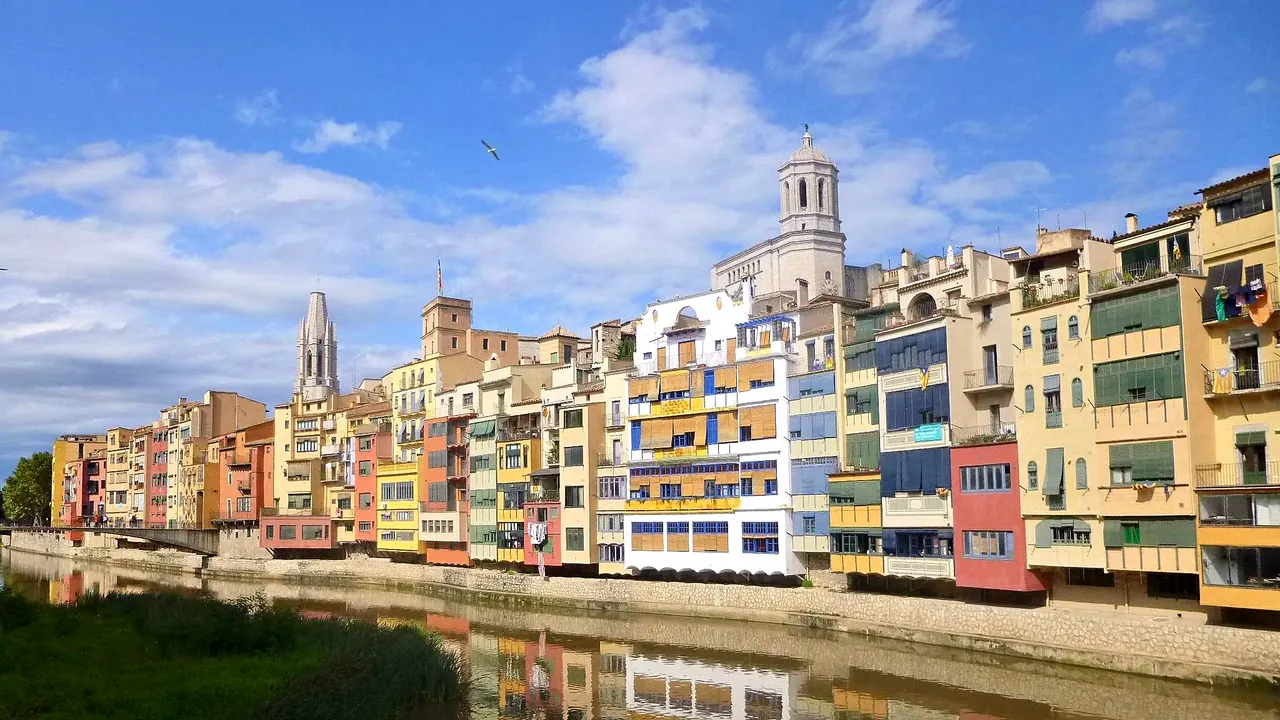
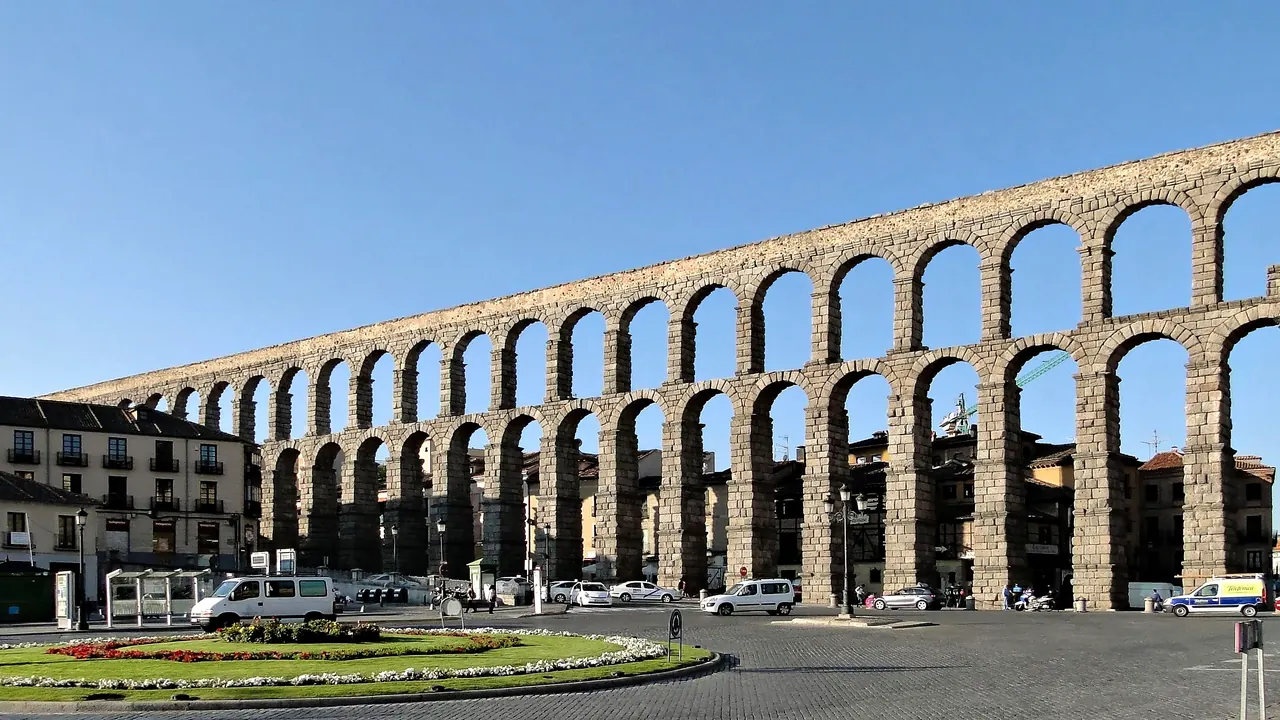
Photos: Girona by Zarateman, CC0; Segovia by Bernard Gagnon, CC BY-SA 3.0, cropped.
Girona or Segovia?
Our verdict in twelve categories, each scored against the same fixed benchmark cities, and the climate month by month, so you can choose for your trip.
Choose Girona for
- beaches
- shopping
- wellness
Girona suits travellers who want a handsome small city as a base rather than an end in itself. The Costa Brava, the cycling roads and volcanic hills of the Garrotxa, Dalí's Figueres and Barcelona by fast train all lie within easy reach. It also eats better, with Catalan cooking, Empordà wine and serious tasting-menu kitchens. Choose it for a mix of sea, outdoors and good meals.
Choose Segovia for
- culture and sights
- prices
Segovia is for people who travel to see great monuments in one compact place. A Roman aqueduct, a cliff-top Alcázar and a cathedral stand along a single ridge, and the Sierra de Guadarrama rises behind them. It costs less to stay, especially midweek, and pairs naturally with Madrid, Ávila and the royal palace at La Granja. It is a stronger pick for a focused sightseeing trip than for a varied vacation.
Scoreboard
Twelve categories on one fixed scale from 0 to 100. The shaded stretch is the gap between the two.
Your match
Pick a travel style or drag the sliders, and both match scores follow your weighting.
Wins on beaches and shopping with your weighting.
Wins on culture and sights and prices with your weighting.
What matters to you?
Category by category
What the scores mean for a trip.
Beaches & swimming
Girona puts the Mediterranean about 40 minutes away by car or bus, so the city works as a base for swimming even though it sits on a river. Sant Feliu de Guíxols, Platja d'Aro and Tossa de Mar are the nearest, while the coves around Begur and L'Escala further north have some of the clearest water on the coast. Treat the coast as a day out rather than the whole stay. Without a car, the buses limit how far you get, and in high summer the best-known coves fill early.
Segovia has nothing comparable. It sits on the Castilian plateau, a long day's drive from any coast, so summer swimming means a municipal pool or a cold reservoir in the Guadarrama foothills. That is fine for cooling off, but it is no reason to go.
Food & drink
Girona has more range at the table. Catalan home cooking such as botifarra with beans and mar i muntanya dishes sits alongside kitchens with an international fine-dining name. The Mercat del Lleó and nearby Empordà wineries supply both, and xuixos pastries cover breakfast.
Segovia eats well in a narrower way. Wood-roasted cochinillo and lechazo are the reason to book a table, with judiones beans and ponche as supporting acts. After two or three meals you have covered most of what the city does, and international food or fine dining is hard to find.
Culture & sights
Segovia has the more striking monuments. The aqueduct's mortarless granite arches, the cathedral and the Alcázar on the tip of the ridge form a line of world-class sights. The many Romanesque churches with arcaded porches and the twelve-sided Vera Cruz add depth.
Girona's appeal is the atmosphere of a whole quarter rather than a few great buildings. You climb the Barri Vell's stairways to a cathedral with an enormously wide Gothic nave, walk the walls, and explore the Call, one of Europe's best-preserved Jewish quarters. Both cities have modest museums and can be seen in a day or two.
Nightlife
Both cities wind down early compared with Spain's big cities, and in both the real late night is a fast train away, to Barcelona from Girona and to Madrid from Segovia. In Girona, term-time students fill the bars around Plaça de la Independència, and a few small clubs open at weekends. Segovia is more about a tapas crawl around Plaza Mayor, and its old town goes quiet in the cold months.
Nature & outdoors
Girona offers more variety outdoors. Road cyclists ride from the door to Rocacorba and Els Àngels, and the old railway greenways run flat to Olot and the coast. The Garrotxa volcanoes, the Cap de Creus headland and the Costa Brava cliff paths are all within about an hour.
Segovia's strength is mountains close at hand. The pine forests of Valsaín and the passes below Peñalara, at 2,428m with glacial lakes, are about half an hour away. The Duratón gorge with its vultures adds a wilder outing. Segovia is better for high hiking, while Girona combines riding, coast and volcanic landscapes.
Day trips
Both are excellent bases with a capital-sized city close by on high-speed rail, but Girona's options are more varied. In one stay you can visit Barcelona, Dalí's museum at Figueres and his house at Portlligat, medieval Besalú, the ruins at Empúries and, across the border, Perpignan or Collioure.
Segovia's trips are more about royal and medieval Castile. They include La Granja's palace gardens twenty minutes away, Madrid, walled Ávila, the villages of Pedraza and Sepúlveda, and El Escorial over the mountains. Both work much better with a car once you leave the rail lines.
Good for families
Neither city is built around children, and both have steep cobbled streets that are hard work with a pushchair. The difference is what keeps children interested. In Segovia it is a turreted castle on a cliff and the giant arches of the aqueduct. Girona families walk the walls, play in the shaded Devesa park and head to the Costa Brava beaches for most of the day.
Getting around
Both centres are best on foot and both are steep. Segovia's sights run in one line along its ridge, while Girona spreads across the river into a flat modern centre. Girona's station is a walk from town. Segovia's high-speed station is several kilometres out and needs a bus. In both cities a car makes the hill villages much easier, and Girona's quiet lanes also suit a bike.
Shopping & style
Girona gives you more to browse. The Rambla and the old-town streets have independent fashion, shoe and book shops, the Mercat del Lleó sells Empordà cheese, oil and wine, and visiting riders find plenty of cycling shops.
In Segovia, shopping mostly means souvenirs along Calle Real, with some local ceramics, embroidery and boxed ponche or La Granja beans. For serious shopping you would go to Barcelona from one city and Madrid from the other.
Affordability
Segovia is the cheaper stay. It has plenty of small family-run hotels and guesthouses, and midweek or in winter it is inexpensive. The one costly habit is the famous roast at the dining rooms by the aqueduct.
Girona is mid-range for Western Europe, and its weekday set lunches are good value. Old-town rooms are limited, though, and climb in price in summer, at the spring flower festival and in the cycling season. Many visitors also rent a car to see the region, which adds to the cost.
Live music & performing arts
Girona has the stronger stage life. The Auditori brings touring orchestras and jazz, the Teatre Municipal stages drama and dance, and the autumn Temporada Alta festival draws international theatre companies, though many plays are in Catalan.
Segovia's live arts depend on its festivals. Titirimundi fills squares with puppetry in spring, and summer concerts are held in churches and palace gardens. Outside those seasons there is little beyond touring shows at the Teatro Juan Bravo.
Wellness & relaxation
Girona has a proper bathing option nearby. Caldes de Malavella, a thermal-spring town with Roman roots, is about 20 minutes south, with hotel pools and treatments that use its spring water. The city's Arab Baths are a monument to visit, not a place to bathe.
Segovia has no thermal tradition and only a few hotel spas. What it offers is quiet: once the day coaches leave, there are evening walks along the walls and pine air from the sierra.
When should you go?
Pick your month. The climate figures are measured averages, not a forecast.
Girona in July
Segovia in July
Daytime high, °C
Rainfall in the month, mm
Temperature and rainfall are climate normals, averaged over the years shown. Girona: 1991-2020 normals, Gerona / Costa Brava (10.1 km from centre). Segovia: 1991-2020 normals, Segovia (0.3 km from centre).
Girona has the milder year. Spring and late September are best for walking and cycling, because July and August reach 31°C inland. Those hot months are also when the Costa Brava is good for swimming: the sea is about 24°C in August and stays warm into September. Autumn is the wettest stretch, peaking at 86mm in October, and winter days stay mild enough for comfortable sightseeing.
Segovia sits high on the plateau, so its year is colder and drier. January days reach only about 8°C, which makes the steep lanes bracing rather than pleasant. July and August are hot but almost rainless, and they are the sunniest months of either city. May, June and September are the best time for walking the ridge and the sierra trails, and the rain returns in October.
Which traveller are you?
On a beach and sun trip, Girona wins easily. The sandy bays and pine-backed coves of the Costa Brava are within an easy drive or bus ride, and the sea stays warm into September. Segovia has no coast within reach.
For a culture and arts trip built around monuments, Segovia comes out ahead. The Roman aqueduct, the Alcázar and its Romanesque churches fill two unhurried days. Girona offers its medieval quarter, the old Jewish Call and the autumn Temporada Alta theatre festival.
On a tight budget, Segovia goes further. Its family-run guesthouses and newer-town tapas bars keep costs modest, especially midweek and in winter. Girona's old-town rooms are scarce and expensive in summer, and exploring its region usually means hiring a car.
Before you go
| Measure | Girona | Segovia |
|---|---|---|
| Official language | Spanish | Spanish |
| Currency | Euro (EUR) | Euro (EUR) |
| Sockets | CF230 V, 50 Hz | CF230 V, 50 Hz |
| Driving side | Right | Right |
| Time zone | UTC+1, UTC+2 in summer | UTC+1, UTC+2 in summer |
| Emergency number | 112 | 112 |
| Elevation | 70 m | 1,002 m |
| Main airport | Girona-Costa Brava Airport (GRO)10 km from centre18 non-stop destinations | Adolfo Suárez Madrid–Barajas Airport (MAD)68 km from centre241 non-stop destinations |
| Public holidays this year | 14 days | 12 days |
By the numbers
| Measure | Girona | Segovia |
|---|---|---|
| City population | 108,666 | 52,375 |
| People per km² | 2,779 | 320 |
| Museums within 10 km | 9 | 11 |
| UNESCO World Heritage sites within 50 km | 0 | 2 |
| Swim season, months above 21 °C | 3 months | - |
Where else could you go?
Every comparison below shares a destination with this one, so you can follow Girona or Segovia somewhere new.
- Madridvs Segovia
- Barcelonavs Girona
- Toledovs Segovia
- Salamancavs Segovia
- Carcassonnevs Girona
- Montpelliervs Girona