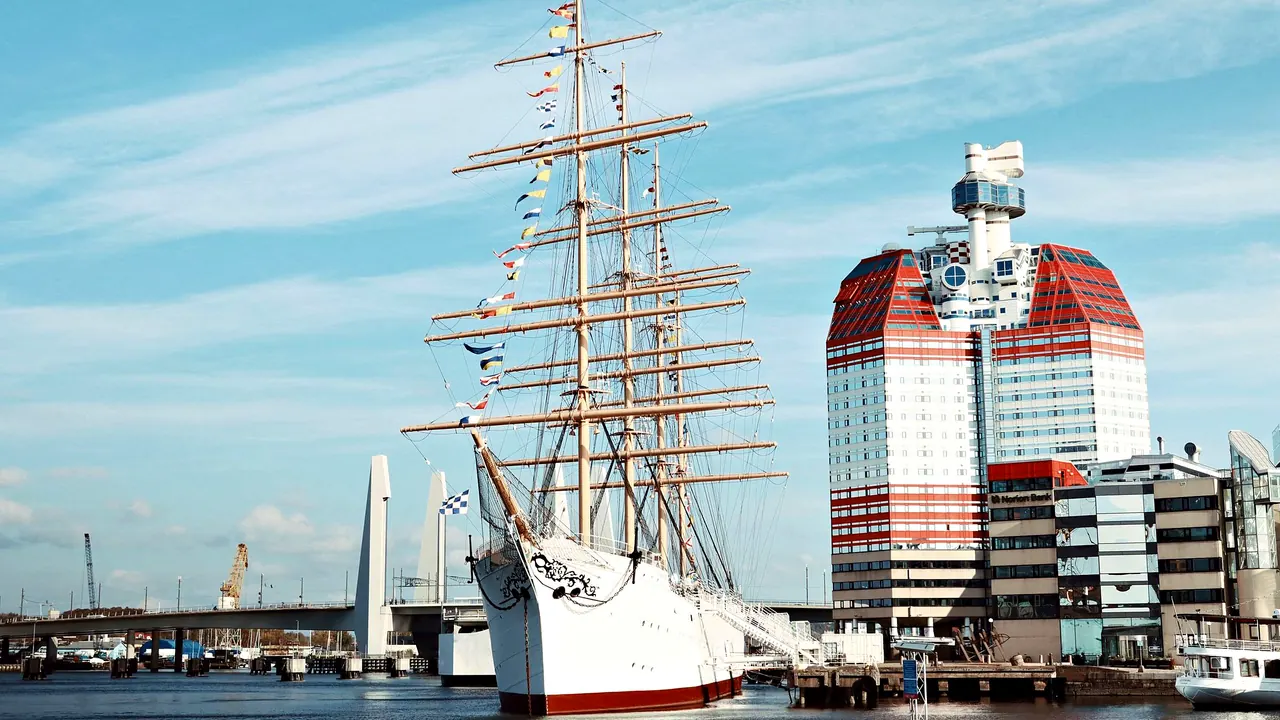
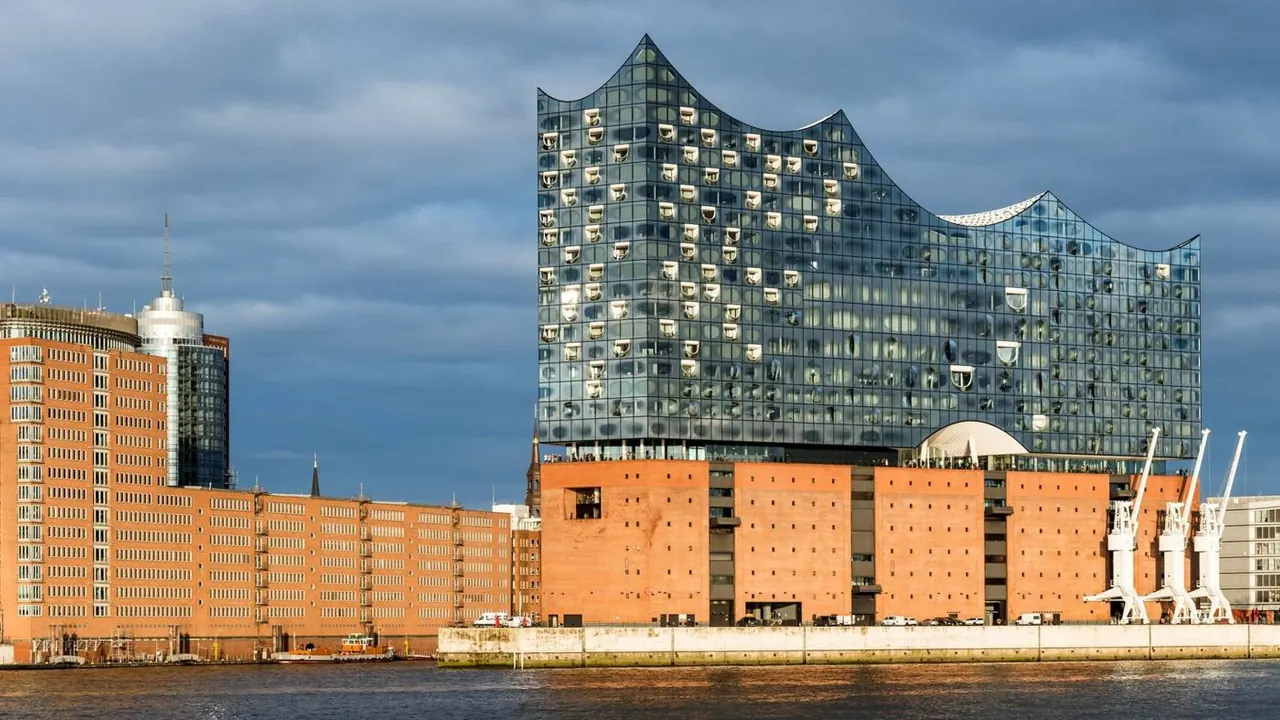
Photos: Gothenburg by Efrem Efre, Pexels License; Hamburg by Wolfgang Weiser, Pexels License.
Gothenburg or Hamburg?
Our verdict in twelve categories, each scored against the same fixed benchmark cities, and the climate month by month, so you can choose for your trip.
Choose Gothenburg for
- nature and the outdoors
- beaches
- food and drink
Gothenburg suits a summer trip where the sea is the point. Trams and short ferries take you out to bare granite islands with clean water for swimming, kayaking and coastal walks, and the city's seafood comes straight off the same coast. It is also the easier choice with children, since Liseberg and Universeum are a short walk from the centre. Evenings are pleasant but early, and the sights take a couple of days at most.
Choose Hamburg for
- nightlife
- live music and the arts
- culture and sights
Hamburg is for travellers who want a bigger city with more going on after dark and on stage. The Elbphilharmonie, the State Opera and the musical theatres give it a programme Gothenburg cannot match, the Reeperbahn and the Schanzenviertel keep going until dawn, and the UNESCO-listed warehouse district gives you real sightseeing. Lübeck, Bremen and Lüneburg are all an easy train ride away, so it also makes the better base for a longer stay.
Scoreboard
Twelve categories on one fixed scale from 0 to 100. The shaded stretch is the gap between the two.
Your match
Pick a travel style or drag the sliders, and both match scores follow your weighting.
Wins on nature and the outdoors and beaches with your weighting.
Wins on nightlife and live music and the arts with your weighting.
What matters to you?
Category by category
What the scores mean for a trip.
Beaches & swimming
Neither city is a beach destination, but in Gothenburg you can actually swim in town. There are smooth rocks and small coves at Askim and Saltholmen and on islands such as Brännö and Vrångö, all reached by tram and ferry, and the water is clean.
Hamburg's Elbe beaches at Övelgönne are for watching ships, not swimming, because the river's currents make it unsafe. For proper sea bathing you need a day trip of about an hour to the Baltic at Travemünde. In both places the water stays cool even in a good summer.
Food & drink
Both are port cities that live on fish, but they eat it differently. Gothenburg's strength is its fresh shellfish: langoustines, oysters and autumn lobster from Bohuslän, sold at Feskekôrka and Stora Saluhallen and served in a fine-dining scene built on the same catch. Add the cardamom buns of Haga and it has the better food of the two.
Hamburg's port food is plainer and heartier. Think a fish roll eaten on the Landungsbrücken piers, Labskaus and Franzbrötchen for breakfast. Its strength is range rather than produce, with Portuguese and Turkish cooking near the harbour and plenty of coffee roasteries.
Culture & sights
Hamburg offers much more to see. The red-brick Speicherstadt and the Chilehaus are on the UNESCO list, the Elbphilharmonie rises above them, and the Kunsthalle has a serious collection running up to Caspar David Friedrich. The war left gaps in the old city, so sightseeing here means moving from district to district.
Gothenburg's sights are smaller and more intimate: Dutch-planned canals, the wooden houses of Haga, the Nordic paintings in the Museum of Art and the East India Company building. Two days covers them comfortably.
Nightlife
Hamburg is far the better place for a night out. The Reeperbahn's neon, music clubs and cabaret, the crowded pavement bars of the Schanzenviertel and the lack of fixed closing times mean nights can end at the harbour at dawn.
Gothenburg is friendly but finishes early. Its best evenings are in the student pubs and cocktail bars around Järntorget and Andra Långgatan, the club scene is small, and on weeknights the city goes quiet.
Nature & outdoors
Gothenburg has the wilder setting. Its southern archipelago of bare granite, heather and small harbours begins at the edge of the city, the rocky Bohuslän coast runs north, and the Delsjön lakes add forest walks to the east.
Hamburg's outdoors is gentler and centred on fresh water: paddleboards on the Alster, canoes in the northern canals and orchard cycling in the Altes Land. The Lüneburg Heath is about an hour away. The wooded bank at Blankenese is as close as it gets to hills.
Day trips
Hamburg is the better base for day trips. Within about an hour by train you can reach Lübeck, Lüneburg, Bremen and Schwerin, a run of brick Gothic and Hanseatic towns that need no car.
From Gothenburg the outings follow the coast. Marstrand and Varberg are easy, but the fishing villages and the Tanum rock carvings are much simpler with a hire car. Capital cities are out of reach for a return trip.
Good for families
Both cities work well with children, and Gothenburg is a little easier. Liseberg, Scandinavia's largest amusement park, and the Universeum rainforest are a short walk from the centre. Slottsskogen's animal park costs nothing, and buggies roll straight onto trams.
Hamburg answers with Miniatur Wunderland, Hagenbeck's moated enclosures and a walk through the old Elbe tunnel, but its big theme parks are an hour out of town.
Getting around
Both are easy without a car, but they move you in different ways. Gothenburg relies on trams, with a compact flat centre and Scandinavia's largest tram network, which slows down where the lines meet in the centre.
Hamburg has a full U-Bahn and S-Bahn network, with a direct train link to the airport, and its centre is equally walkable. In both cities the same ticket covers the ferries, which reach the islands in Gothenburg and cross the harbour in Hamburg.
Shopping & style
Hamburg is the stronger shopping city. Luxury labels line Neuer Wall, covered arcades link the streets around the Jungfernstieg on wet days, and the Alsterhaus anchors it all. The Karolinenviertel adds vintage and streetwear.
Gothenburg has no luxury tier. Its best browsing is in independent boutiques, record shops and second-hand stores in Haga, Majorna and Linnéstaden, and it is a good place to buy Scandinavian design and knitwear.
Affordability
Both are expensive, and the gap between them is small. Where you spend differs. In Gothenburg, drinks in bars are what hurt most. Weekday set lunches and the transport ticket, which includes the island ferries, are the usual ways to save.
In Hamburg, hotels cost the most, especially during trade fairs and on summer weekends. Fish rolls, bakeries and free sights such as the Elbphilharmonie plaza help balance that.
Live music & performing arts
Here Hamburg is well ahead. The Elbphilharmonie's main hall is world famous, and the State Opera, the Hamburg Ballet and the Thalia Theater are leading companies. St Pauli's small rock clubs, where the Beatles started out, host the Reeperbahn Festival every autumn.
Gothenburg has a solid programme on a smaller scale. The national orchestra plays at Konserthuset, the harbour-side opera house has a well-regarded dance company, and Way Out West brings big acts to Slottsskogen in August.
Wellness & relaxation
Neither has thermal springs, and both rely on the sauna. In Gothenburg that means a sauna followed by a plunge from a bathing jetty into the sea, even in winter.
Hamburg's version is indoors, in large sauna landscapes and the art nouveau Holthusenbad. For calm, Gothenburg offers a ferry to the islands, and Hamburg a boat on the Alster or the Japanese garden in Planten un Blomen.
When should you go?
Pick your month. The climate figures are measured averages, not a forecast.
Gothenburg in July
Hamburg in July
Daytime high, °C
Rainfall in the month, mm
Temperature and rainfall are climate normals, averaged over the years shown. Gothenburg: 1991-2020 normals, Goteborg Save Airport (9.8 km from centre). Hamburg: 1991-2020 normals, Hamburg Airport (9.3 km from centre).
Both cities are at their best from June to August, but Gothenburg's summer is shorter and cooler. Its daytime highs reach about 21°C in July and August, and the sea only gets to around 18°C, so swimming is for warm spells. Those months are also its sunniest, with long light evenings. Hamburg is a couple of degrees warmer, at about 23°C in high summer, which makes it the more comfortable of the two for long days of walking in late spring and early autumn.
The wet seasons fall differently. Gothenburg's heaviest rain comes in autumn and early winter, with October the wettest month at about 95mm, so September is the last reliable month for the islands. In Hamburg most rain falls in midsummer, and April is the driest month at about 39mm, so spring is a good time for a city break there. From November to February both cities are cold, grey and short on daylight, and the time is best spent indoors.
Which traveller are you?
On a culture and arts trip, Gothenburg is done in two or three days: a morning at the Museum of Art, an afternoon in Haga, a concert if the orchestra is playing. Hamburg can fill a week, with galleries by day and a different stage each evening, so book performances before you book the hotel.
For an outdoors trip, Gothenburg lets you spend whole days at sea and still sleep in town. Pack a lunch, catch a morning ferry, walk or paddle round an island and be back for dinner. In Hamburg, time outdoors fits between city days rather than replacing them.
On a family trip with young children, Gothenburg keeps travel time short. The main attractions sit close together, so small legs and nap times are easy to plan around. Hamburg has just as much to do, but it is more spread out, from the harbour to Stellingen, and its grey weather means planning an indoor fallback every day.
Before you go
| Measure | Gothenburg | Hamburg |
|---|---|---|
| Official language | Swedish | German |
| Currency | Swedish Krona (SEK) | Euro (EUR) |
| Sockets | CF230 V, 50 Hz | CF230 V, 50 Hz |
| Driving side | Right | Right |
| Time zone | UTC+1, UTC+2 in summer | UTC+1, UTC+2 in summer |
| Emergency number | 112 | 112 |
| Elevation | 12 m | 6 m |
| Main airport | Göteborg Landvetter Airport (GOT)19 km from centre79 non-stop destinations | Hamburg Helmut Schmidt Airport (HAM)9 km from centre120 non-stop destinations |
| Public holidays this year | 16 days | 10 days |
By the numbers
| Measure | Gothenburg | Hamburg |
|---|---|---|
| City population | 674,529 | 1,869,473 |
| People per km² | 2,484 | 2,476 |
| Museums within 10 km | 39 | 77 |
| UNESCO World Heritage sites within 50 km | 0 | 1 |
| Swim season, months above 21 °C | None | - |
Where else could you go?
Every comparison below shares a destination with this one, so you can follow Gothenburg or Hamburg somewhere new.
- Aarhusvs Gothenburg
- Copenhagenvs Gothenburg
- Malmovs Gothenburg
- Berlinvs Hamburg
- Oslovs Gothenburg
- Copenhagenvs Hamburg