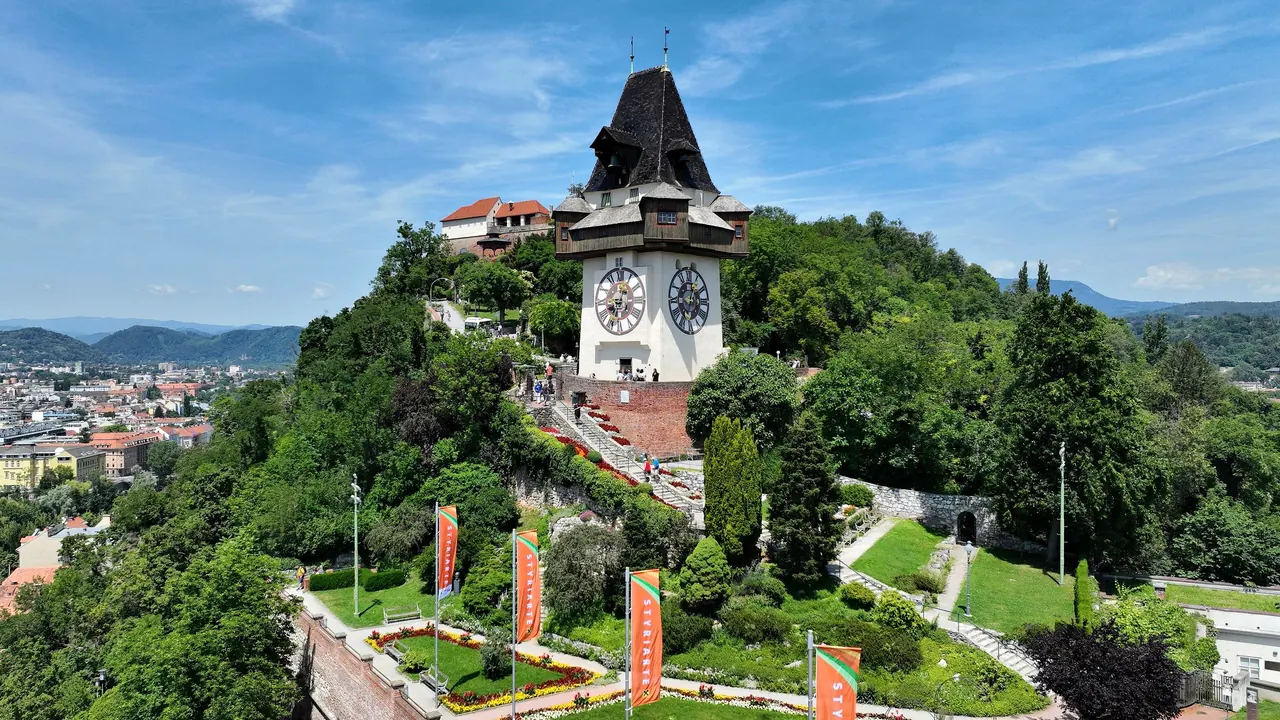
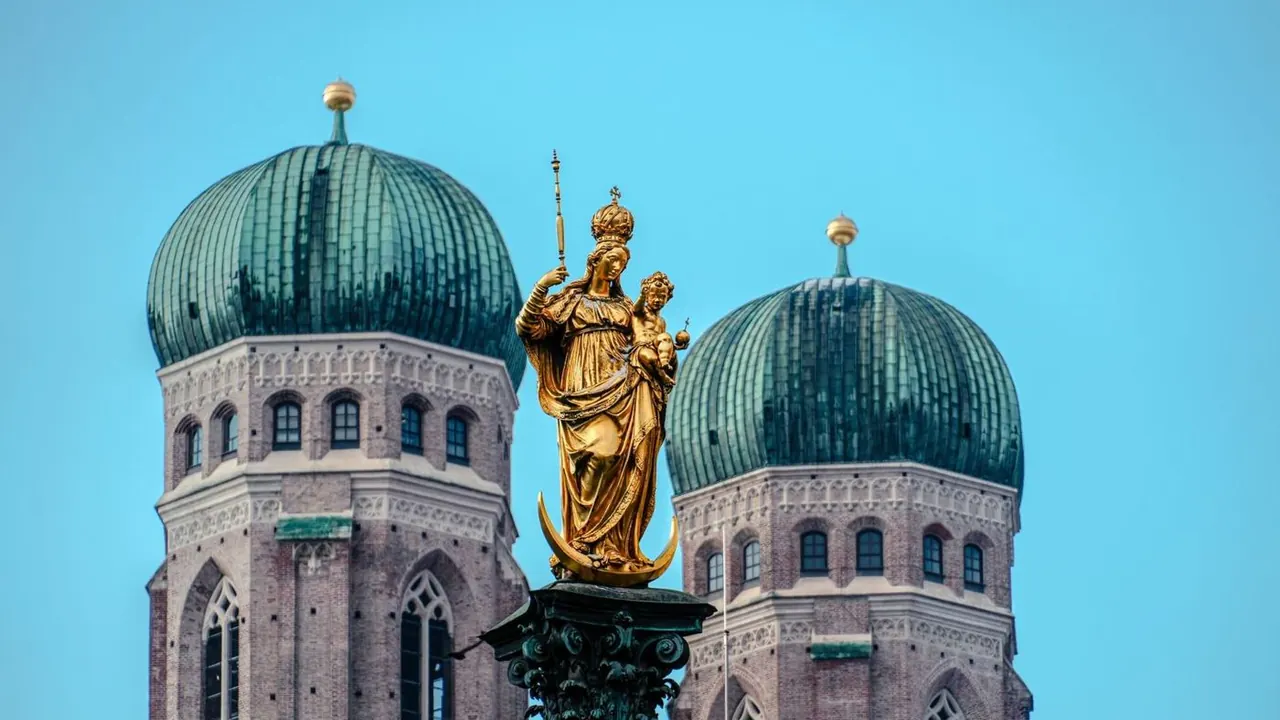
Photos: Graz by C.Stadler/Bwag, CC BY-SA 4.0, cropped; Munich by 0xd1ma, Pexels License.
Graz or Munich?
Our verdict in twelve categories, each scored against the same fixed benchmark cities, and the climate month by month, so you can choose for your trip.
Choose Graz for
- prices
Graz suits a slower, cheaper trip. Its old town of arcaded courtyards and red roofs can be covered in two or three days, and the rest of the time goes on the countryside: Buschenschank taverns in the South Styrian vineyards, pumpkin seed oil at the morning markets and thermal villages in the eastern hills. Choose it for wine, food and an unhurried pace in a small place, and to keep the bill below Munich's.
Choose Munich for
- shopping
- live music and the arts
- day trips
Munich is the stronger choice for almost everything else. The museums of the Kunstareal, one of the world's leading opera companies and a train network that reaches Salzburg, the royal castles and the Alps make it a bigger and richer base. Families, culture lovers, shoppers and anyone who wants mountains within reach will get more from it, provided they accept steep hotel prices.
Scoreboard
Twelve categories on one fixed scale from 0 to 100. The shaded stretch is the gap between the two.
Your match
Pick a travel style or drag the sliders, and both match scores follow your weighting.
Wins on prices with your weighting.
Wins on shopping and live music and the arts with your weighting.
What matters to you?
Category by category
What the scores mean for a trip.
Beaches & swimming
Neither city is a swimming destination, but Munich makes lake days easier and more appealing. The Starnberger See and Ammersee are a short S-Bahn ride away, with clear alpine water and lawns, and in summer the gravel banks of the Isar fill with sunbathers inside the city itself.
Graz has the Schwarzlsee and other former gravel pits on the plain to the south. They are pleasant and a little warmer, but they have less character and are harder to reach without wheels.
Food & drink
The two are about level, but they eat in different ways. Graz cooks from its regional larder: pumpkin seed oil on almost everything, cold fried chicken salad, Wurzelfleisch, and white wines from the hills to the south, drunk in farm taverns as much as in town.
Munich's table revolves around beer. Beer halls and chestnut-shaded gardens serve roast pork, Weisswurst and Obatzda, the Viktualienmarkt is the place for grazing, and there is a deeper layer of fine dining. Choose Graz for wine and Munich for beer.
Culture & sights
Graz's strength is its townscape. The intact old town climbs to the Schlossberg and the Uhrturm, and the Landeszeughaus armoury and Schloss Eggenberg are memorable, but a couple of days covers it all.
Munich has far more to fill a culture trip. The Pinakotheks and the Glyptothek in the Kunstareal, the Residenz, Nymphenburg and the vast Deutsches Museum are collections of European rank. Its old town is less original after wartime rebuilding, but there is much more to see inside.
Nightlife
Munich gives a fuller night out. Evenings often start in a beer hall, then move on to the cocktail and gay bars around Gärtnerplatz and Glockenbach, and a few proper techno clubs run until morning at weekends.
Graz is a student town on a small scale, with pub crawls through the Bermuda Triangle lanes and arty bars in Lend. It suits a relaxed evening, and it goes quiet in the summer break.
Nature & outdoors
Both have green country close by, but Munich has the real Alps within reach. Trains run to Garmisch, the Zugspitze and Tegernsee for summer hiking and winter skiing, and the English Garden, with surfers on the Eisbach wave, gives the city a huge park at its centre.
Graz has the Schöckl on its doorstep, the Bärenschützklamm gorge and gentle walks in the vineyard hills. Its serious alpine country in the Gesäuse lies further away, and the ski slopes are not close.
Day trips
Munich offers a long run of excellent outings by train: Augsburg, Nuremberg, Regensburg, Salzburg, Innsbruck and the royal castles of Neuschwanstein and Herrenchiemsee. Few cities in the region can match it.
Graz's excursions are rural and quieter: the South Styrian Wine Road, Riegersburg on its volcanic crag, the Piber Lipizzaner stud and Admont's great library, plus Maribor across the border. They are lovely, but most are far easier with a car.
Good for families
Graz is compact and calm, and its best family moments are on the Schlossberg: the glass lift or funicular up, the long slide back down inside the hill and the Märchenbahn rattling through fairytale scenes in the rock. FRida & freD in the Augarten and the summer toboggan runs on the Schöckl add a few more outings. With no zoo or large attraction, though, a longer stay soon depends on trips into the countryside.
Munich is the stronger family city, whatever the children's ages. Hellabrunn zoo on the Isar meadows, the Sea Life aquarium and the Deutsches Museum's children's area suit even small children, while the transport museum, the English Garden and the lake beaches keep a week varied. Legoland is about an hour and a half away by car, and beer gardens with playgrounds give parents a rest too.
Getting around
Both have walkable, pedestrianised centres and simple integrated tickets, so a car is pointless in either city. Munich edges ahead with its U-Bahn and S-Bahn, which reach the airport, the lakes and most day-trip towns by rail.
Graz gets by on trams and a funicular up the Schlossberg, which is all its small centre needs. Its weakness is the countryside, where buses are sparse.
Shopping & style
Munich is the shopping city of the two. Maximilianstrasse has the luxury houses, the long pedestrian axis from Neuhauser Strasse has the department stores, and Dallmayr and specialist Tracht tailors give it a local flavour.
Graz is modest, with the Herrengasse, Kastner & Öhler and a few design shops in Lend. Its best buys are edible: pumpkin seed oil, Schilcher and craft chocolate.
Affordability
Graz is the easier city on the wallet. Rooms are fairly priced for Austria, and the student population keeps lunch menus and casual eating good value.
Munich is Germany's most expensive city, and its hotels show it, especially during fairs and the Oktoberfest. Picnics in beer gardens, free parks and lakes, and cheap Sunday museum entry soften the cost a little.
Live music & performing arts
Graz takes performance seriously for its size. It has Austria's second opera house, the Styriarte and steirischer herbst festivals, and a jazz scene fed by its music university.
Munich plays in a higher league. The Bavarian State Opera in the National Theatre is world class, three orchestras of real standing perform in halls such as the Herkulessaal, and the rococo Cuvilliés Theatre is a jewel in its own right.
Wellness & relaxation
Munich has a bathing culture inside the city. The Art Nouveau Müller'sches Volksbad and the German-style public saunas are there to use, and the huge thermal complex at Erding is about forty minutes away.
Graz has no historic baths of its own. It does lead to Styria's thermal villages, Bad Blumau with its Hundertwasser resort among them, about an hour east, and its quiet coffee houses and the shaded Schlossberg paths make the city itself restful.
When should you go?
Pick your month. The climate figures are measured averages, not a forecast.
Graz in July
Munich in July
Daytime high, °C
Rainfall in the month, mm
Temperature and rainfall are climate normals, averaged over the years shown. Graz: 1991-2020 normals, Graz Airport (7.9 km from centre). Munich: 1991-2020 normals, München (1.9 km from centre).
Both cities have a summer wet season, but it lasts longer in Graz. Its rain builds in May and stays heavy right through September, with July and August the warmest months at about 27°C. Munich's wettest stretch runs from May to August and eases noticeably in September. Both are cold and grey from December to February, although Graz is clearly drier and sunnier in winter, with about 20mm of rain in January against Munich's 52mm, so a crisp winter visit works better there.
For walking the streets, Graz is at its most comfortable in April and October, which are mild, drier than summer and still reasonably sunny. Munich's best month is September, at about 20°C and much drier than August, with April and October close behind. In both cities the lakes are warm enough for a swim from late June to August, and Graz runs a couple of degrees warmer at the summer peak.
Which traveller are you?
On a trip on a tight budget, Graz is the better pick. Hotels are fairly priced for Austria, student lunch menus and bakeries keep daytime eating cheap, and the small, flat centre costs almost nothing to cross. Munich's hotel prices are hard to avoid.
For a culture and arts trip, Munich wins clearly. The Alte Pinakothek, the Residenz and the Deutsches Museum are major collections, and the Bavarian State Opera and three serious orchestras fill the evenings. Graz has a lovely old town but far less to see indoors.
On a family trip with children, Munich offers more to do. Hellabrunn zoo, the Sea Life aquarium, the Deutsches Museum's hands-on sections and beer gardens with playgrounds fill a week. In Graz the Schlossberg slide is a treat, but there is no zoo or theme park.
Before you go
| Measure | Graz | Munich |
|---|---|---|
| Official language | German, Austrian Sign Language | German |
| Currency | Euro (EUR) | Euro (EUR) |
| Sockets | CF230 V, 50 Hz | CF230 V, 50 Hz |
| Driving side | Right | Right |
| Time zone | UTC+1, UTC+2 in summer | UTC+1, UTC+2 in summer |
| Emergency number | 112 | 112 |
| Elevation | 353 m | 519 m |
| Main airport | Graz Airport (GRZ)9 km from centre26 non-stop destinations | Munich Airport (MUC)29 km from centre210 non-stop destinations |
| Public holidays this year | 16 days | 12 days |
By the numbers
| Measure | Graz | Munich |
|---|---|---|
| City population | 306,971 | 1,505,036 |
| People per km² | 2,406 | 4,844 |
| Museums within 10 km | 29 | 75 |
| UNESCO World Heritage sites within 50 km | 1 | 1 |
Where else could you go?
Every comparison below shares a destination with this one, so you can follow Graz or Munich somewhere new.