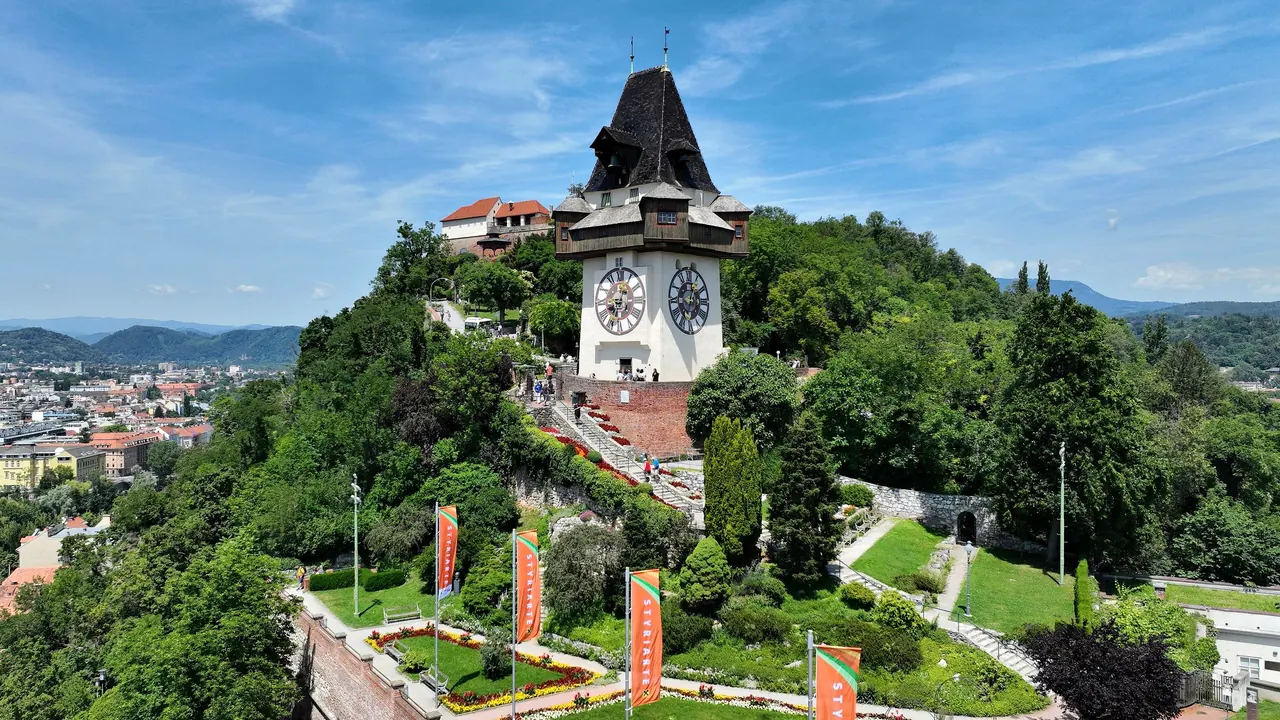
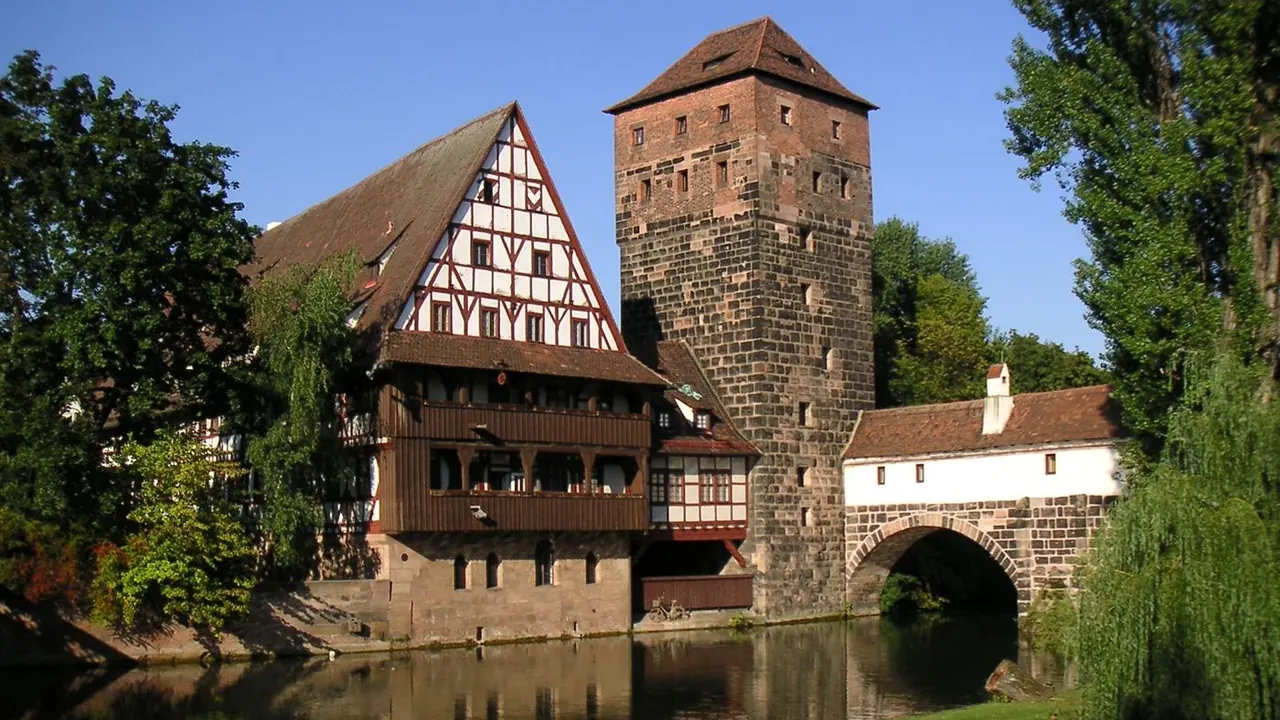
Photos: Graz by C.Stadler/Bwag, CC BY-SA 4.0, cropped; Nuremberg by Horst Gutmann, CC BY 2.0, cropped.
Graz or Nuremberg?
Our verdict in twelve categories, each scored against the same fixed benchmark cities, and the climate month by month, so you can choose for your trip.
Choose Graz for
- nature and the outdoors
- live music and the arts
- food and drink
Graz suits travellers who want a handsome old town with green country close by. The Schöckl and the alpine walls of the Gesäuse are within reach for walkers, and the table is more interesting, with pumpkin seed oil, market produce and crisp Styrian whites from the wine hills to the south. The opera house and the two big festivals also give evenings more weight than you might expect from a city this size.
Choose Nuremberg for
- day trips
- culture and sights
- prices
Nuremberg is the better base for anyone who wants to see a whole region by train. Bamberg, Regensburg, Würzburg and the walled towns of the Romantic Road are all easy outings, with no car needed. It also asks more of you as a sightseer. The medieval walls and imperial castle sit alongside the Germanisches Nationalmuseum and the sobering Nazi-era sites, and families get a proper zoo and a city built on toy-making.
Scoreboard
Twelve categories on one fixed scale from 0 to 100. The shaded stretch is the gap between the two.
Your match
Pick a travel style or drag the sliders, and both match scores follow your weighting.
Too close to call, level with your weighting
Wins on nature and the outdoors and live music and the arts with your weighting.
Wins on day trips and culture and sights with your weighting.
What matters to you?
Category by category
What the scores mean for a trip.
Beaches & swimming
Neither city is a place to swim, and both have lakes that reach about 23°C in high summer. The difference is distance. Graz's former gravel pits, led by the Schwarzlsee, lie on the flat land just south of the city, so a swim fits easily into a hot afternoon. Nuremberg's Franconian lakes, led by the Brombachsee, are about an hour away, but they are larger reservoirs with small sandy strips and room for sailing and paddleboarding.
Food & drink
Graz has more to eat for its own sake. Styrian cooking is built on regional produce: pumpkin seed oil on everything from salad to ice cream, cold fried chicken salad and pork boiled with horseradish. The morning markets at Kaiser-Josef-Platz and Lendplatz are a pleasure to browse, and Sauvignon Blanc from the southern hills is poured in the vineyard taverns.
Nuremberg's food is heavier and narrower: small beechwood-grilled bratwurst, Schäufele with dumplings and Lebkuchen. It makes up for this with beer. The small Franconian breweries and riverside beer gardens are the real reason to linger at the table here.
Culture & sights
These two are closely matched, but their history is of different kinds. Graz has a largely intact Renaissance and Baroque centre, with arcaded courtyards and red roofs climbing towards the Schlossberg. Its standouts are the Landeszeughaus armoury, still packed with seventeenth-century weapons, and the palace of Schloss Eggenberg, while the Kunsthaus adds a modern counterpoint.
Nuremberg is medieval and more serious. Its walls and the Kaiserburg frame churches and half-timbered streets that were carefully rebuilt after the war. The Germanisches Nationalmuseum can fill a day, and the Rally Grounds and Courtroom 600 add twentieth-century history that Graz has no counterpart to.
Nightlife
Students drive the nights out in both cities, and neither is a clubbing destination. In Graz, evenings centre on the wine bars of the Bermuda Triangle around Mehlplatz, with looser bars across the river in Lend. Expect it to go quiet in the summer break. Nuremberg leans more towards beer taverns in the old town, and its best nights are in the small alternative bars of Gostenhof, with students from Erlangen filling the weekends.
Nature & outdoors
Graz has the stronger outdoors. Its home mountain, the Schöckl, rises right above town, with a cable car, trails and paragliders launching from the summit. Within about two hours, the limestone walls of the Gesäuse and Hochschwab offer proper alpine hiking, and the South Styrian vineyards make lovely autumn walking.
Nuremberg's countryside is gentler. The Reichswald forest starts at the city edge, and Franconian Switzerland, about an hour away, has wooded valleys, caves and well-known rock climbing. It suits walkers and cyclists but has nothing on an alpine scale.
Day trips
Nuremberg is the stronger base here, and it is easier too. Bamberg is under an hour away by train, and Regensburg on the Danube, Würzburg's Residence and even Munich are each about an hour away. The walled towns of Rothenburg and Dinkelsbühl are only a little further, and regional trains reach almost all of them.
Graz's outings are more rural: the South Styrian Wine Road, Riegersburg on its volcanic crag, the Lipizzaners at Piber and Admont's great abbey library. They are rewarding, but apart from Maribor across the Slovenian border, most are much easier with a car.
Good for families
Both cities are safe and manageable with children. Nuremberg has a little more to fill the days: its zoo spreads through old quarries and has a dolphin and manatee house, and the Toy Museum and railway museum suit a city that made toys for centuries. In Advent, there is also a children's Christmas market.
Graz's highlight is the Schlossberg, where children ride the funicular up, slide down inside the hill and take the Märchenbahn through fairytale tunnels. Add the FRida & freD children's museum, but with no zoo, a longer stay means trips into the countryside.
Getting around
Both cities are easy on foot, with compact centres and one ticket for all public transport. Graz's centre is flat and largely pedestrianised, with trams along the Herrengasse and easy cycling beside the Mur, while Nuremberg's only real climb is the cobbled lane up to the castle. The difference shows beyond the city limits. Nuremberg's U-Bahn and regional trains reach Fürth, Erlangen and towns across Franconia, whereas Graz's vineyards and mountains are poorly served by buses.
Shopping & style
Graz's best buys are things to eat and drink. Pumpkin seed oil, Schilcher rosé, apple brandies and regional craft chocolate come from the farmers' markets and delicatessens. Beyond food, Lend has small design and vintage shops, and the old Kastner & Öhler department store is worth a visit for its rooftop view over the old town.\n\nNuremberg's souvenirs are gingerbread and toys: Lebkuchen in decorated tins, wooden toys, tin figures and crafts from the workshops of the Handwerkerhof. Its main streets are lined with ordinary chain stores. In Advent, though, the Christkindlesmarkt, one of Germany's oldest Christmas markets, fills the Hauptmarkt with ornaments, plum-figure dolls and gingerbread.
Affordability
Graz costs a little more than Nuremberg, though both are mid-priced for Western Europe. In Graz, sit-down dinners and wine cost the usual Austrian amounts, so the savings come from student lunch menus and bakeries. Hotels are fair for Austria and only climb during big festivals and trade fairs.\n\nIn Nuremberg, filling tavern meals and cheap local beer keep daily spending down. The catch is timing. During the big trade fairs, including the toy fair, and through the Advent market season, rooms get scarce and expensive, so your dates matter more here than in Graz.
Live music & performing arts
Graz offers more on stage. Its opera house, the second largest in Austria, runs a full season, and the Musikverein hosts concerts. Styriarte's early music in summer and the avant-garde steirischer herbst in autumn give the city a real festival profile, and the music university feeds a strong jazz scene.
Nuremberg's Staatstheater, in its Art Nouveau opera house, is respectable but regional. Its summer events are more popular in tone: the free folk and world music of the Bardentreffen, an open-air orchestral concert in the Luitpoldhain and a big rock festival near the Zeppelinfeld.
Wellness & relaxation
Neither city has its own historic baths, so relaxing means heading out. Graz is the gateway to Styria's thermal villages about an hour east, including Bad Blumau, with its Hundertwasser-designed resort. Nuremberg's large thermal spa and sauna garden in Fürth is a short U-Bahn ride away, though visitors should expect mixed nude saunas, and Bad Windsheim's saline pools are an hour west.
When should you go?
Pick your month. The climate figures are measured averages, not a forecast.
Graz in July
Nuremberg in July
Daytime high, °C
Rainfall in the month, mm
Temperature and rainfall are climate normals, averaged over the years shown. Graz: 1991-2020 normals, Graz Airport (7.9 km from centre). Nuremberg: 1991-2020 normals, Nuernberg (5.5 km from centre).
Both cities have cold winters and warm summers, but Graz gets hotter and sunnier. July there reaches about 27°C against 25°C in Nuremberg, which makes Graz the better choice for an afternoon at its bathing lakes. The catch is rain. Graz's summers are its wettest season, with about 125mm in July, mostly as heavy showers and thunderstorms. Nuremberg's rain is spread evenly through the year and peaks at only about 77mm in July.
For walking the streets, May and September are the best months in both, with highs of about 21°C in Graz in September and a little cooler in Nuremberg. Graz's dry, comparatively bright winters suit a crisp city visit. Nuremberg's winters are greyer, with much less sunshine, so it is at its best from late spring to early autumn.
Which traveller are you?
For an outdoors trip, Graz wins clearly. You can ride a cable car up the Schöckl, walk the ladders of the Bärenschützklamm gorge or reach real alpine hiking in the Gesäuse and Hochschwab. Nuremberg offers forests, climbing crags and gentle cycling, but no mountains.
On a food and nightlife trip, Graz is the better pick. Its Styrian cooking, morning farmers' markets and Buschenschank wine taverns have more character than Nuremberg's bratwurst and pork roasts. The evenings out are similar, with wine bars in the old town and arty bars in Lend.
On a family trip with children, Nuremberg has the edge. It has a large zoo with a dolphin and manatee house, a Toy Museum and a railway museum with full-size locomotives. Graz has its underground slide and fairytale train, but no zoo or bigger attractions.
Before you go
| Measure | Graz | Nuremberg |
|---|---|---|
| Official language | German, Austrian Sign Language | German |
| Currency | Euro (EUR) | Euro (EUR) |
| Sockets | CF230 V, 50 Hz | CF230 V, 50 Hz |
| Driving side | Right | Right |
| Time zone | UTC+1, UTC+2 in summer | UTC+1, UTC+2 in summer |
| Emergency number | 112 | 112 |
| Elevation | 353 m | 209 m |
| Main airport | Graz Airport (GRZ)9 km from centre26 non-stop destinations | Nuremberg Airport (NUE)5 km from centre56 non-stop destinations |
| Public holidays this year | 16 days | 12 days |
By the numbers
| Measure | Graz | Nuremberg |
|---|---|---|
| City population | 306,971 | 531,159 |
| People per km² | 2,406 | 2,848 |
| Museums within 10 km | 29 | 50 |
| UNESCO World Heritage sites within 50 km | 1 | 1 |
Where else could you go?
Every comparison below shares a destination with this one, so you can follow Graz or Nuremberg somewhere new.