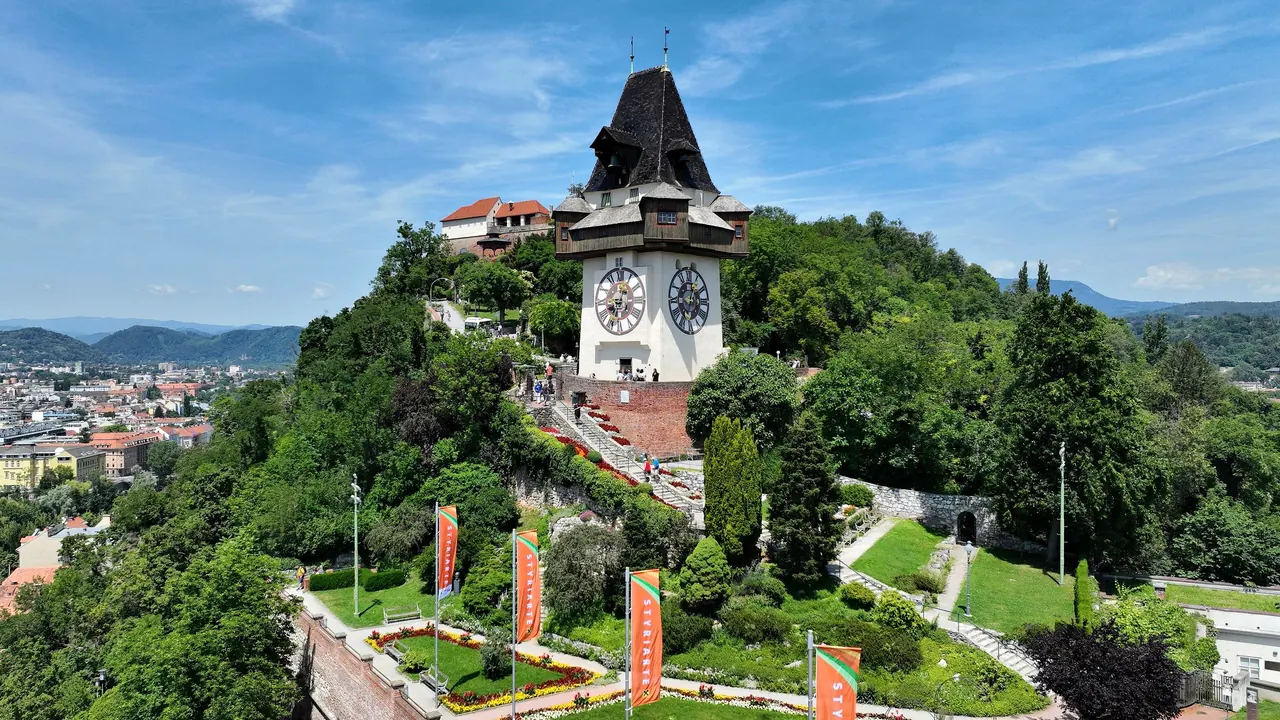
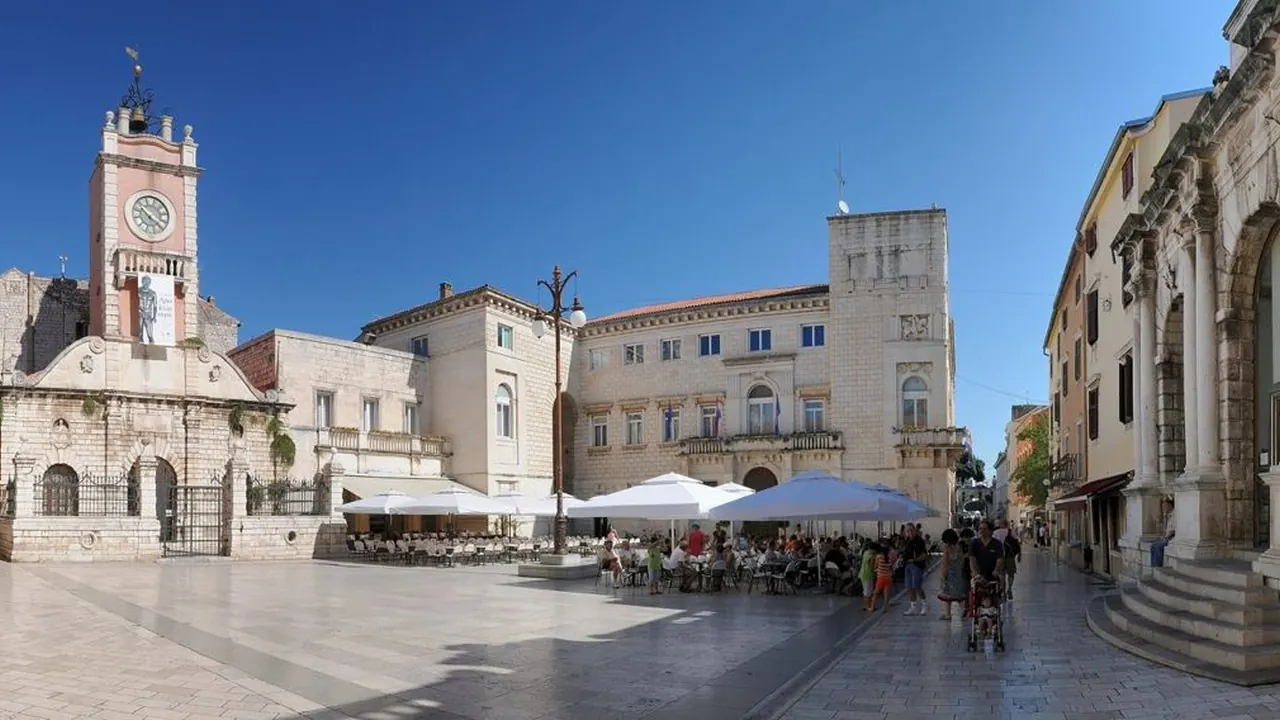
Photos: Graz by C.Stadler/Bwag, CC BY-SA 4.0, cropped; Zadar by Böhringer Friedrich, CC BY-SA 2.5, cropped.
Graz or Zadar?
Our verdict in twelve categories, each scored against the same fixed benchmark cities, and the climate month by month, so you can choose for your trip.
Choose Graz for
- live music and the arts
- getting around
- shopping
Graz suits travellers who want a compact, well-kept city to explore on foot. You get a Renaissance and Baroque old town, a proper opera house, Styrian cooking with pumpkin seed oil and hill wines, and spa villages within an hour. It works in most seasons, it is easy to get around without a car, and it rewards anyone who cares more about what they see, eat and hear than about the sea.
Choose Zadar for
- beaches
- nature and the outdoors
- day trips
Zadar is the choice for a summer by the water. You swim off the stone promenade, take ferries out to the islands, and spend whole days at Paklenica's gorges, the Kornati or Krka's waterfalls. The Roman forum and St Donatus give it a strong historic core, but the real draw is the Adriatic and the coast around it, and evenings here mean watching the sunset at the Sea Organ rather than going to concerts.
Scoreboard
Twelve categories on one fixed scale from 0 to 100. The shaded stretch is the gap between the two.
Your match
Pick a travel style or drag the sliders, and both match scores follow your weighting.
Wins on live music and the arts and getting around with your weighting.
Wins on beaches and nature and the outdoors with your weighting.
What matters to you?
Category by category
What the scores mean for a trip.
Beaches & swimming
This is where the two cities are furthest apart. Graz is landlocked, and swimming means a gravel-pit lake such as the Schwarzlsee, pleasant on a hot afternoon and no more than that.
Zadar has the clear Adriatic on its doorstep. Locals swim straight off the promenade, Kolovare and Borik are within easy reach, and there is sand at Nin and on Dugi Otok. The city beaches are pebble or concrete and get crowded, but from June to September the sea is part of every day.
Food & drink
Graz eats better. Styrian cooking has a distinct identity: pumpkin seed oil on almost everything, cold fried chicken salad, Wurzelfleisch, and daily farmers' markets at Kaiser-Josef-Platz and Lendplatz. Crisp Sauvignon Blanc from the southern hills is poured in town and at Buschenschank taverns nearby.
Zadar's grilled fish, black risotto and peka dishes are enjoyable, and the market by the walls and the local Maraschino are worth seeking out. But the menus repeat from one konoba to the next, and the main streets lean towards passing visitors.
Culture & sights
Graz has more to fill the days. The old town is one of the best preserved in Central Europe, with arcaded courtyards, the Mausoleum and the Schlossberg's clock tower. On top of that come the extraordinary Landeszeughaus armoury, Baroque Schloss Eggenberg and the modern Kunsthaus.
Zadar packs older history into a smaller space: the open Roman forum, round St Donatus and the UNESCO-listed Venetian walls. Its glass and archaeology museums are good but small, and its most memorable sights, the Sea Organ and the Greeting to the Sun, are as much about the waterfront as about art.
Nightlife
Neither city is built for serious clubbing, and evenings in both are relaxed. The difference is in rhythm. Graz is a student town, with wine bars and pubs around the Bermuda Triangle and Lend, busiest in term time and quieter in summer.
Zadar is the reverse. It comes alive on summer nights with sunset at the Riva and terrace bars on the walls, with the Zrće party beach an hour away on Pag, and then goes quiet from October.
Nature & outdoors
Zadar has the wider range of landscapes. Paklenica's limestone gorges offer hiking and climbing within an hour, and boats run out to the stark Kornati islands and Telašćica. Krka and Plitvice make it possible to see two of Croatia's best-known waterfall parks from one base.
Graz is green and gentle by comparison. The Schöckl, the Mur cycle path and the vineyard hills are all close, and the Gesäuse gives true alpine hiking within two hours. It is better for walking in midsummer, when Zadar's heat makes the high ground punishing.
Day trips
Zadar has slightly more variety on offer. Šibenik's cathedral town, tiny royal Nin, and Split and Trogir further south give a run of historic coastal towns, with island ferries leaving from the old town on top.
From Graz the outings are rural rather than urban: the South Styrian Wine Road, Riegersburg on its volcanic crag, the Lipizzaners at Piber and Admont's great library, plus Maribor across the border by train. Both cities work best with a car for these.
Good for families
Both are calm, safe and easy to manage with a pushchair, and Graz has a little more designed for children. Families can ride the funicular up the Schlossberg and come down the underground slide, take the Märchenbahn through the rock, or visit the FRida & freD children's museum.
In Zadar, family days revolve around the sea instead, with Nin's shallow sand and short ferry rides. The Sea Organ and the lit-up Greeting to the Sun are the town's own treats. Neither city has a zoo or theme park.
Getting around
Graz is much easier to get around. Trams cross the centre and run out to Eggenberg and the station on one ticket, a lift and funicular climb the castle hill, and cycling along the Mur is easy.
Zadar's walled peninsula is just as walkable, but the local buses go little further than Borik. Ferries make island hopping simple. For national parks and coastal towns, though, you need a hire car or an organised excursion, and parking is tight in summer.
Shopping & style
Graz gives you more to browse. Herrengasse and Sporgasse have shops in historic buildings, the old Kastner & Öhler department store has its rooftop view, and Lend has small design and vintage places. The best buys are Styrian: seed oil, Schilcher rosé and craft chocolate.
Zadar's Kalelarga has jewellers, chains and souvenirs, and little more. The open-air market and the edible souvenirs, Maraschino and Pag cheese, together with Pag lace, are the real reasons to buy.
Affordability
Zadar is a little kinder to the budget, especially if you rent a private apartment in June or September. High summer near the peninsula is a different story, and park fees and boat trips add up.
Graz is fair rather than cheap, at the usual Austrian level for dinners and wine. Student lunch menus, a walkable centre and combined museum tickets keep the daily outlay in check.
Live music & performing arts
Graz is far ahead here. It has Austria's second largest opera house, the Schauspielhaus and the Musikverein's long-running concerts. Styriarte and the avant-garde steirischer herbst give the year two highlights, and the music university fuels a real jazz scene.
Zadar's best moment is the summer Musical Evenings inside ninth-century St Donatus, an unforgettable setting, along with klapa singing in July and August. Beyond that there is little to attend, especially outside the season.
Wellness & relaxation
Graz offers more for a restorative stay, thanks to the Styrian thermal villages about an hour east. Hundertwasser's Bad Blumau, Loipersdorf and Bad Radkersburg all welcome day visitors to their warm pools and saunas.
Zadar has no spa tradition beyond hotel spas at Borik and the healing mud of Nin's lagoon. Its way of relaxing is the slow Dalmatian day: café mornings, a siesta, and sunset over the islands from the steps of the Sea Organ.
When should you go?
Pick your month. The climate figures are measured averages, not a forecast.
Graz in July
Zadar in July
Daytime high, °C
Rainfall in the month, mm
Where the figures come from
Zadar has no rain gauge within 25 km of the centre, so its rainfall comes from a gridded climate dataset read at the city rather than from a gauge further away.
Temperature and rainfall are climate normals, averaged over the years shown. Graz: 1991-2020 normals, Graz Airport (7.9 km from centre). Zadar: 1999-2020 (rainfall 1991-2020) normals, Zadar / Zemunik (9.9 km from centre).
Graz is at its best from May to September, when days are warm without being oppressive, peaking around 27°C in July, and these are also its sunniest months. Summer is its wettest stretch too, with downpours bringing around 125mm a month. Spring and early autumn are the most comfortable for walking the streets and the hills, and the wine country looks its best in autumn. Winters are cold, close to freezing by day, but fairly dry and fine for museums and coffee houses.
Zadar follows a different calendar. The sea is only warm enough for most people from June to September, reaching about 25°C in August. July and August are hot, around 31°C, which makes high-ground walks and midday sightseeing hard work. June and early September are the best months for combining swimming with hiking and walking the old town. May is warm and pleasant on land, good for Paklenica and the old town, but the sea is still too cool for most swimmers. The rain arrives in autumn and stays through winter, which is mild but wet.
Which traveller are you?
On a beach and sun trip, Zadar is the clear pick. You can swim from the city promenade, reach Nin's sandy shallows in twenty minutes and take ferries to coves on Ugljan or Sakarun, while Graz offers only gravel-pit lakes.
For a culture and arts trip, Graz has the edge. Its intact old town, the Landeszeughaus armoury and Schloss Eggenberg come with a full opera and concert season and two serious festivals. Zadar's Roman and medieval core is fine, but its stage calendar is thin.
For a short city break, Graz is easier. Trams, a funicular and a flat pedestrian centre put everything within minutes, and there is good food, wine bars and shopping close by. Zadar's appeal lies in the coast and islands, which take more than a weekend.
Before you go
| Measure | Graz | Zadar |
|---|---|---|
| Official language | German, Austrian Sign Language | Croatian |
| Currency | Euro (EUR) | Euro (EUR) |
| Sockets | CF230 V, 50 Hz | CF230 V, 50 Hz |
| Driving side | Right | Right |
| Time zone | UTC+1, UTC+2 in summer | UTC+1, UTC+2 in summer |
| Emergency number | 112 | 112 |
| Elevation | 353 m | 5 m |
| Main airport | Graz Airport (GRZ)9 km from centre26 non-stop destinations | Zadar Airport (ZAD)10 km from centre66 non-stop destinations |
| Public holidays this year | 16 days | 14 days |
By the numbers
| Measure | Graz | Zadar |
|---|---|---|
| City population | 306,971 | 70,779 |
| People per km² | 2,406 | - |
| Museums within 10 km | 29 | 1 |
| UNESCO World Heritage sites within 50 km | 1 | 2 |
| Swim season, months above 21 °C | - | 4 months |
Where else could you go?
Every comparison below shares a destination with this one, so you can follow Graz or Zadar somewhere new.