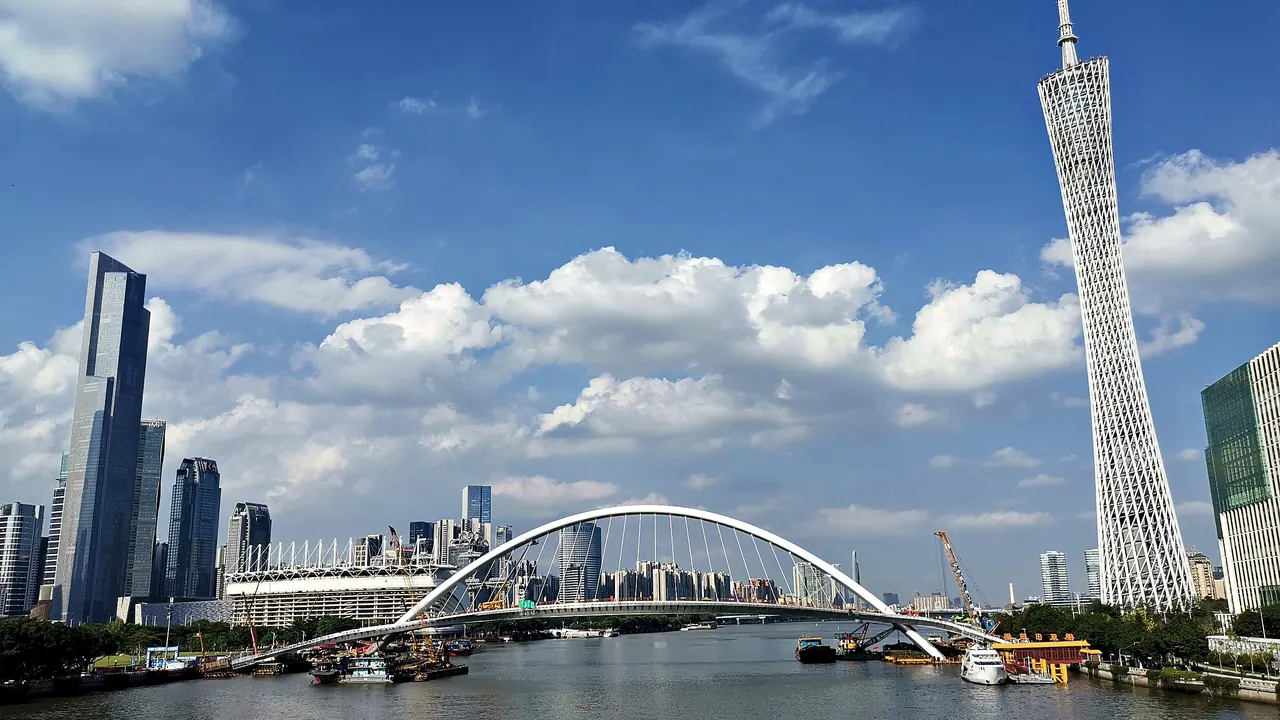
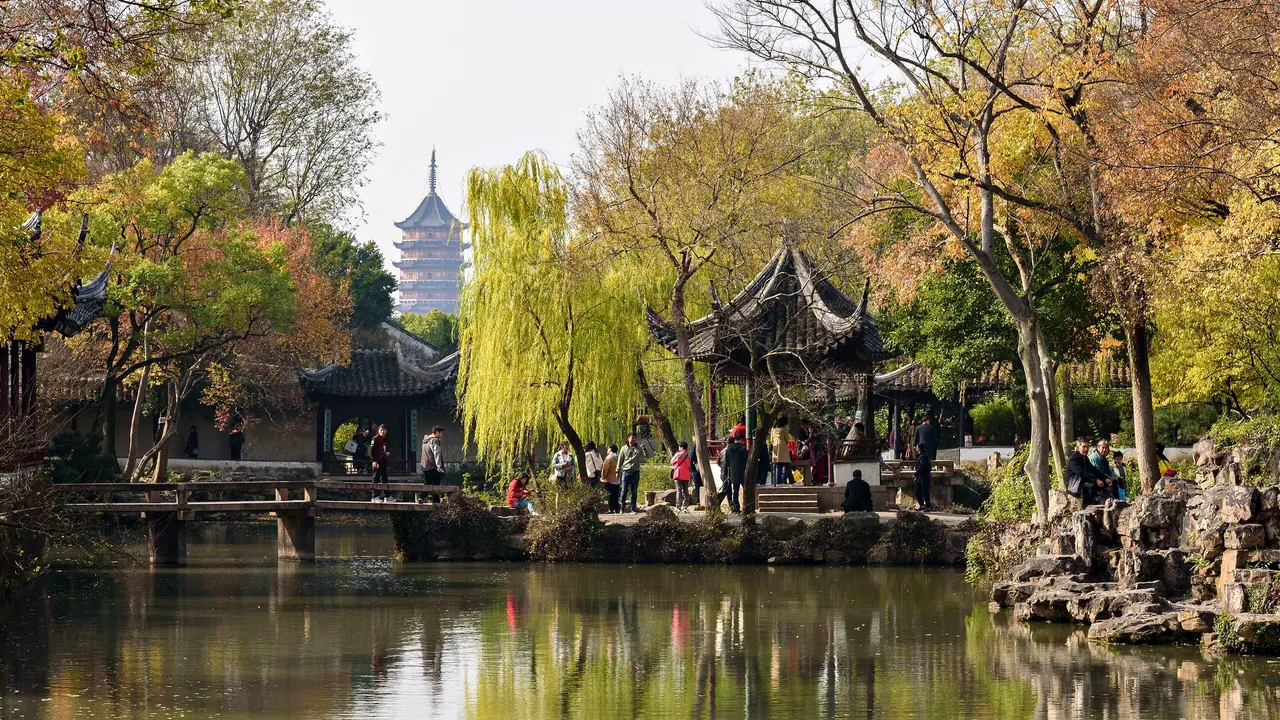
Photos: Guangzhou by Cwek, CC BY-SA 4.0, cropped; Suzhou by King of Hearts, CC BY-SA 4.0, cropped.
Guangzhou or Suzhou?
Our verdict in twelve categories, each scored against the same fixed benchmark cities, and the climate month by month, so you can choose for your trip.
Choose Guangzhou for
- families
- food and drink
- nightlife
Guangzhou suits a traveller who plans the day around meals. It is the home of Cantonese cooking, from morning tea in packed dim sum halls to seafood suppers that run until the small hours. Add the Chimelong safari and theme parks, a huge metro and wholesale markets selling tea and jade, and it works best for food lovers, families and anyone who wants a big, working Chinese city rather than a showpiece.
Choose Suzhou for
- culture and sights
- day trips
- nature and the outdoors
Suzhou is the better pick for someone who wants beauty and history close together. The UNESCO-listed classical gardens, canal streets and Kunqu opera make it the more rewarding city for culture, and its high-speed rail links put Shanghai, Nanjing, Hangzhou and a ring of water towns within easy reach. Evenings are quieter and the food is more delicate, so it suits slower travellers and those touring the Yangtze delta from one base.
Scoreboard
Twelve categories on one fixed scale from 0 to 100. The shaded stretch is the gap between the two.
Your match
Pick a travel style or drag the sliders, and both match scores follow your weighting.
Wins on families and food and drink with your weighting.
Wins on culture and sights and day trips with your weighting.
What matters to you?
Category by category
What the scores mean for a trip.
Beaches & swimming
Both are inland delta cities with muddy estuary shores, so swimming means a hotel pool in either. The difference is distance: from Guangzhou, the sandy beaches east of Shenzhen are about two hours away and make a possible outing, while Suzhou has no beach worth the trip, and Lake Tai is not used for bathing.
Food & drink
Guangzhou is one of the great eating cities of China. Morning tea with har gow and siu mai, char siu and clay-pot rice in the small shops of Xiguan and Liwan, and congee and grilled seafood at night markets past midnight give it a depth and range that Suzhou cannot match. It also has more international food and fine Cantonese dining in Tianhe.
Suzhou's cooking is narrower and gentler: sweet, seasonal Jiangsu dishes built on lake fish and shrimp, a breakfast bowl of noodles, and Biluochun tea with osmanthus cakes. It rewards the curious, especially in autumn when the Yangcheng Lake hairy crabs arrive, but it is a pleasure to try for a few days rather than a reason to travel.
Culture & sights
Suzhou's classical gardens, the Humble Administrator's Garden, the Lingering Garden, the Master of the Nets and the Lion Grove, form one of China's finest groups of sights, and they cluster within the old moat alongside canal streets such as Pingjiang Road. Tiger Hill, the Panmen gate and the Suzhou Museum round out a city that feels designed to be looked at.
Guangzhou offers strong single sights rather than a whole: the carved Chen Clan Ancestral Hall, the Nanyue King's jade burial suit and the old Buddhist temples, plus the colonial villas of Shamian Island. They are worth two or three days, but they are spread out and lack Suzhou's concentrated beauty.
Nightlife
Guangzhou has the bigger and later scene, with loud clubs along the river and in Tianhe, cocktail bars in Zhujiang New Town and karaoke everywhere. Its best night out is the siu yeh, sharing seafood and beer at plastic tables until two or three in the morning, though much of it is geared to local groups.
Suzhou's evenings are gentler: a lantern-lit walk along Pingjiang Road or Shantang Street, a drink by a canal, or the small bars of Shiquan Street. Little stays open late, and people wanting a proper night out take the train to Shanghai.
Nature & outdoors
Neither city has dramatic scenery, and both offer green, gentle landscapes rather than wilderness. Guangzhou's is subtropical and hilly, with Baiyun Mountain's forest paths on the city edge and waterfalls in the Dinghu reserve further out. Suzhou's is flat and watery: Lake Tai's tea terraces and orchards on the Dongshan and Xishan peninsulas suit cycling, and Lingyan Hill gives short climbs with autumn maples.
Day trips
Suzhou is one of the best bases in China. Shanghai is half an hour by high-speed train, Nanjing and Hangzhou are easy days out, and canal water towns such as Tongli, Luzhi and Zhouzhuang lie less than an hour away. Few cities offer that many major destinations so close.
Guangzhou is a good base too, with Foshan's Ancestral Temple next door by metro, Zhaoqing's limestone crags and the Kaiping watchtowers. Its biggest prizes, Hong Kong and Macau, mean crossing immigration and checking that your visa lets you back into mainland China, which makes them more complicated than Suzhou's trips.
Good for families
Guangzhou has a real draw for children in the Chimelong resort at Panyu, where a drive-through safari park with pandas and koalas sits beside a theme park, water park and circus. The zoo, science centre and river boat trips fill other days, and the metro is easy with a buggy.
Suzhou welcomes children just as warmly, but its famous gardens are narrow and contemplative, and young ones soon lose interest. Canal boat rides, the open parks around Jinji Lake and the amusement parks to the west help, but there is less built around children than in Guangzhou.
Getting around
Guangzhou's metro is among the largest in the world and reaches the airport, the rail stations and almost every sight, though its size means forty-minute journeys are normal. Away from Xiguan and Yuexiu, wide roads and heat make walking hard.
Suzhou works the other way round. The old town inside the moat is compact and lovely to walk or cycle between gardens, but outlying sights such as Tiger Hill and the Lake Tai shore need a taxi. In both cities, a mobile payment app makes life much easier.
Shopping & style
Guangzhou is a trading city, and its wholesale districts for clothing, leather and electronics, the vast Fangcun tea market and the Hualin jade street make for unusual shopping. Tianhe's malls add the luxury labels, so it covers more ground than Suzhou.
Suzhou's strength is a single craft: silk and the fine double-sided embroidery of Zhenhu village, where you can watch the stitching. Beyond silk, fans and sandalwood on the canal streets, it is limited, and many people save luxury fashion for Shanghai.
Affordability
Both are good value by Western standards, with cheap noodles, inexpensive metros and comfortable hotels. Where the money goes differs. Guangzhou's temples and parks are mostly free, but hotel rates jump during the spring and autumn trade fairs. Suzhou's gardens charge entry, which adds up over a day of them, and hairy crab dinners are a splurge.
Live music & performing arts
Each city has its own opera tradition, and that is the real difference. Guangzhou's Cantonese opera is bold, with painted faces and high singing in neighbourhood halls, and the Opera House and Xinghai Concert Hall host touring and orchestral work. Suzhou is the birthplace of slow, refined Kunqu, sometimes sung by lantern light in garden pavilions, and of pingtan storytelling in its teahouses.
Wellness & relaxation
Relaxation takes a different shape in each. Guangzhou has the Conghua hot springs an hour north and late-opening massage parlours on every block, set against a loud, fast city. Suzhou has no thermal baths, but an early morning in a garden, a canal-side teahouse and quiet spa hotels on Lake Tai give it a gentler pace day to day.
When should you go?
Pick your month. The climate figures are measured averages, not a forecast.
Guangzhou in July
Suzhou in July
Daytime high, °C
Rainfall in the month, mm
Where the figures come from
Suzhou's temperatures are measured 79 km from the centre, at Shanghai / Hongqiao.
Suzhou has no rain gauge within 25 km of the centre, so its rainfall comes from a gridded climate dataset read at the city rather than from a gauge further away.
Suzhou's sunshine is measured 81 km from the centre, at Shanghai.
Temperature and rainfall are climate normals, averaged over the years shown. Guangzhou: 1991-2020 normals, Guangzhou (8.5 km from centre). Suzhou: 1991-2020 normals, Shanghai / Hongqiao (78.8 km from centre).
Neither city is a beach destination, so timing is about walking in comfort. Guangzhou is subtropical. Its winters are mild, with January highs around 19°C, and October to December is the best stretch: dry, sunny and pleasantly warm. From April the rain builds into a long, heavy wet season peaking in June at about 357mm, and the heat and humidity of summer make sightseeing hard work.
Suzhou has proper seasons. Winters are cold and grey, with January highs near 9°C, so it is a poor choice when Guangzhou is at its most pleasant. Spring, from April into May, and autumn are its best times, and October is the driest month at about 25mm, with crisp days that suit the gardens. Both cities reach around 33°C in July and August, and Suzhou's summer rain, though lighter than Guangzhou's, still makes those months sticky.
Which traveller are you?
For a food and nightlife trip, Guangzhou is the clear choice. Cantonese dim sum, roast goose and live seafood are everyday fare there, and the siu yeh late suppers and riverside clubs keep going far longer than Suzhou's calm canal-side bars.
On a culture and arts trip, Suzhou is the stronger city. Its classical gardens, Tiger Hill pagoda, canal streets and I. M. Pei's museum sit close together around the old moat, while Guangzhou's history is scattered across separate sights that need the metro.
On a family trip with children, Guangzhou has the edge. The Chimelong resort's safari park, theme park and water park give days aimed squarely at children, whereas Suzhou's narrow, contemplative gardens tire young visitors quickly and its parks are a smaller draw.
Before you go
| Measure | Guangzhou | Suzhou |
|---|---|---|
| Official language | Putonghua | Putonghua |
| Currency | Yuan Renminbi (CNY) | Yuan Renminbi (CNY) |
| Sockets | ACI220 V, 50 Hz | ACI220 V, 50 Hz |
| Driving side | Right | Right |
| Time zone | UTC+8 | UTC+8 |
| Emergency number | Police 110, ambulance 120, fire 119 | Police 110, ambulance 120, fire 119 |
| Elevation | 21 m | 5 m |
| Main airport | Guangzhou Baiyun International Airport (CAN)29 km from centre195 non-stop destinations | Shanghai Hongqiao International Airport (SHA)69 km from centre82 non-stop destinations |
| Public holidays this year | 6 days | 6 days |
By the numbers
| Measure | Guangzhou | Suzhou |
|---|---|---|
| City population | 18,676,605 | 12,748,262 |
| People per km² | 2,576 | 1,473 |
| Museums within 10 km | 21 | 9 |
| UNESCO World Heritage sites within 50 km | 0 | 1 |
Where else could you go?
Every comparison below shares a destination with this one, so you can follow Guangzhou or Suzhou somewhere new.
- Shanghaivs Suzhou
- Shenzhenvs Guangzhou
- Macauvs Guangzhou
- Hangzhouvs Suzhou
- Hong Kongvs Guangzhou
- Yangshuovs Guangzhou