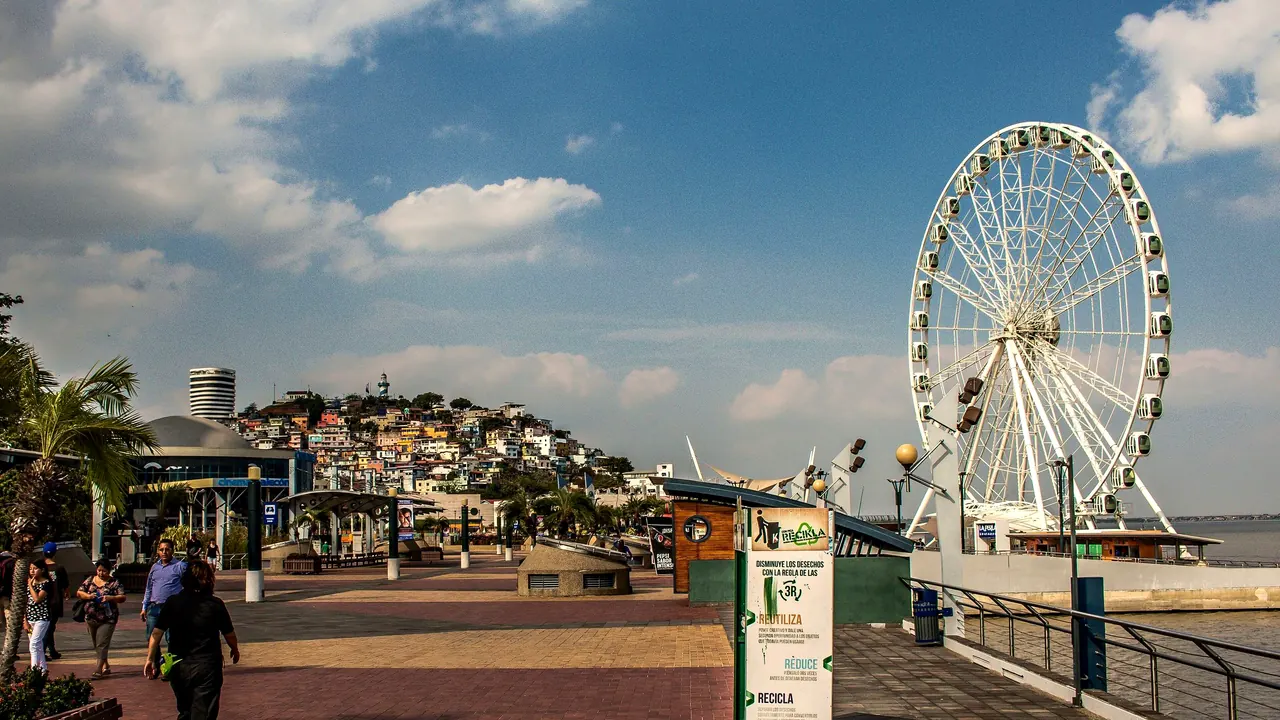
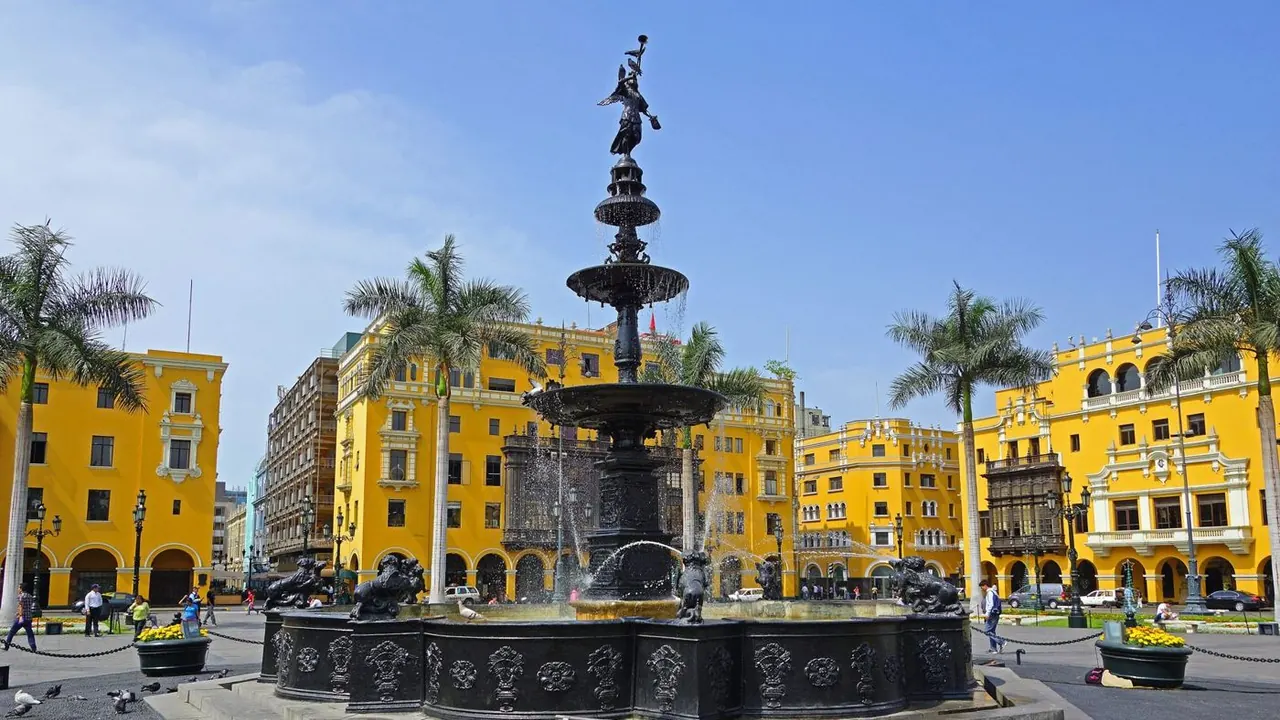
Photos: Guayaquil by Paulakindsvater, CC BY-SA 4.0, cropped; Lima by James C., CC BY-SA 2.0, cropped.
Guayaquil or Lima?
Our verdict in twelve categories, each scored against the same fixed benchmark cities, and the climate month by month, so you can choose for your trip.
Choose Guayaquil for
- nature and the outdoors
- getting around
- prices
Guayaquil suits a traveller passing through on the way to the Galápagos, the surf coast or Cuenca who wants a day or two of good local eating. That means encebollado for breakfast, crab cracked with a mallet at long tables, then an evening on the Malecón and the steps of Las Peñas. It is green, hot and cheap if you eat like a local, but it is a stopover rather than a destination.
Choose Lima for
- food and drink
- culture and sights
- nightlife
Lima is the stronger choice as somewhere to actually stay. Its cooking draws people from around the world, from the cevicherías and chifa kitchens to the famous tasting menus. It has a viceregal centre and first-rate museums, and in Barranco the nights end in peñas and late bars. A week here feels full where a week in Guayaquil would not.
Scoreboard
Twelve categories on one fixed scale from 0 to 100. The shaded stretch is the gap between the two.
Your match
Pick a travel style or drag the sliders, and both match scores follow your weighting.
Wins on nature and the outdoors and getting around with your weighting.
Wins on food and drink and culture and sights with your weighting.
What matters to you?
Category by category
What the scores mean for a trip.
Beaches & swimming
Neither is a beach city, but Lima at least sits on the ocean. Below the cliffs of Miraflores and Barranco, the pebbly Costa Verde has surf all year, and the sandy coves of Punta Hermosa and San Bartolo are about an hour south. The catch is the cold Humboldt Current, which keeps the water cool even in summer.
Guayaquil faces a muddy tidal river, so swimming means a hotel pool. Playas is an hour and a half away and Salinas or Montañita take longer still. The water there is noticeably warmer than off Lima, but a beach day from Guayaquil is a long excursion, and anyone who wants the sea is better off staying on the coast.
Food & drink
Guayaquil cooks one region and cooks it well. Its food belongs to Ecuador's hot coast, built on green plantain, shellfish, coconut and river crab, and it is best eaten at plain comedores, market counters and the long tables of the crab houses, mallet in hand. It is generous and filling, but a few days exhaust its range. Wine, coffee and foreign cooking are scarce outside the malls and the smarter restaurants of Urdesa and Samborondón.
Lima draws on a whole country rather than a single coastline. Ingredients come down from the Andes and in from the Amazon, and Japanese and Chinese immigrants have worked their techniques into ordinary Peruvian cooking over generations, so you can eat for a week without repeating yourself. The quality goes from a market stall in Surquillo all the way up to kitchens that build a meal around Peru's altitudes. Pisco makes the drinks, and the local coffee and chocolate are worth seeking out.
Culture & sights
Lima has a colonial past that survives in stone and carved wood. The Plaza de Armas and its balconied palaces, the bone-filled catacombs of San Francisco, the Larco Museum's pre-Columbian gold and adobe pyramids like Huaca Pucllana among the apartment blocks could fill several days on their own.
Guayaquil lost most of its old wooden town to fire, above all in 1896. What remains is along the river: the Malecón with its Moorish clock tower, the painted houses of Las Peñas and the lighthouse at the top of 444 steps, the iguanas below the cathedral and the MAAC museum of coastal cultures. It makes a pleasant day, not a cultural trip.
Nightlife
Lima's nights are easier to find. Barranco packs its cocktail bars, pisco bars and clubs into old mansions that fill after midnight, and Miraflores adds a smarter scene around Parque Kennedy. Dancing to salsa and cumbia lasts until dawn at weekends.
Guayaquil goes out just as late and loudly, but the scene is scattered. There are small bars on the hill at Las Peñas, pubs along Urdesa's avenue and the big reggaeton clubs over the river in Samborondón, so every move means a taxi. It is fun with local friends, less so as a visitor alone.
Nature & outdoors
There is little to choose between them on outdoor life, but the landscapes could hardly be more different. Guayaquil is wet and green: dry forest with howler monkeys at Cerro Blanco, mangrove boardwalks on Isla Santay and boat trips from Puerto El Morro to see dolphins and frigatebirds.
Lima is desert and sea cliffs. Its outdoor time is spent walking or cycling the clifftop malecón, paragliding off it, surfing below it or swimming with sea lions off the Palomino Islands. In winter the fog briefly turns the lomas hills green. Neither is close to the Andes.
Day trips
Both cities are better as gateways than as bases, but Lima has the one outstanding day out. Pachacamac, a huge pre-Inca sanctuary of adobe temples, is about an hour south, and Callao's fortress and La Punta promenade are closer still.
From Guayaquil the options are the Santa Elena peninsula two hours west, with its ancient Amantes de Sumpa burial, and the cacao haciendas inland. In both cases the real highlights need an overnight stay: Cuenca and the Galápagos from Guayaquil, Caral and Paracas from Lima.
Good for families
Neither city is built for children, and the main problem differs. In Guayaquil it is the heat. Feeding the iguanas in Parque Seminario, riverboats on the Malecón and the Parque Histórico's native animals fill a day, after which air-conditioned malls take over.
In Lima it is the traffic. Parque de las Leyendas gives a proper zoo of Peruvian animals, the lit fountains of the Circuito Mágico del Agua make an easy evening, and the cliff parks of Miraflores have playgrounds. Staying in one district a day keeps it manageable.
Getting around
Both are sprawling cities where you walk in one small area and take app taxis everywhere else. In Guayaquil, that area is the flat downtown, from the Malecón to Las Peñas, which is easy on foot apart from the heat. The Metrovía buses are of little use to visitors.
In Lima, it is Miraflores and Barranco, linked by the clifftop path. The Metropolitano buses in their own lanes are the quickest way to the historic centre, but crossing the rest of the city by road can take an hour at rush hour.
Shopping & style
Lima gives you more reasons to shop. Baby alpaca knitwear from the shops in Miraflores and San Isidro is the main buy. The Petit Thouars craft markets gather textiles, silver and retablos from all over Peru, and Barranco has small shops selling Peruvian design.
Guayaquil is mostly malls. Its artisans' market sells toquilla straw hats, tagua carvings and local chocolate, but the best hats are made in Cuenca and Montecristi, and serious buyers wait until they get there.
Affordability
Day to day, both are easy on the wallet. Set lunches, street food, ride-hailing and most sights cost little in either city. The difference is in where the money goes. In Guayaquil it is the hotels, which are mostly business hotels at corporate rates.
Lima's mid-range rooms in Miraflores and Barranco are fairly priced, but the city's food makes overspending easy. A couple of tasting menus and cocktail bars can cost more than the rest of the trip.
Live music & performing arts
Lima has the better evenings out. A peña in Barranco, with música criolla and Afro-Peruvian rhythms on guitar and cajón and an audience that gets up to dance, is a highlight in itself. There is also opera at the Teatro Municipal and ballet at the Gran Teatro Nacional.
Guayaquil's heritage is the pasillo ballad, celebrated at the Julio Jaramillo museum in Las Peñas and occasionally played in bars. Beyond that there are two theatres and a symphony orchestra, but few visitors plan their evenings around them.
Wellness & relaxation
Neither city is for resting, though Lima is slightly easier on the nerves. An early walk or yoga in the clifftop parks above the Pacific gives some calm away from the horns, and Miraflores and San Isidro have day spas.
Guayaquil's humid heat and traffic leave little room for that. The quietest time is an early evening in the Malecón gardens when the river breeze picks up. Anyone who really needs rest usually heads for the coast or the cool Andean valleys.
When should you go?
Pick your month. The climate figures are measured averages, not a forecast.
Guayaquil in July
Lima in July
Daytime high, °C
Rainfall in the month, mm
Temperature and rainfall are climate normals, averaged over the years shown. Guayaquil: 1991-2020 (rainfall 1981-2010) normals, Guayaquil / Simon Bolivar (4.5 km from centre). Lima: 1991-2020 normals, Lima-Callao / Aerop. Internacional Jorgechavez (10.9 km from centre).
Guayaquil is hot all year, with daytime highs of around 30°C in every month, so the seasons are about rain. From January to April the wet season brings heavy downpours, peaking at over 350mm in March, and sticky heat that makes walking the streets tiring. From June to October the rain almost stops, and those months are the easiest for sightseeing. The sea off the coast is warmest in the wet months, reaching 27°C, and cools through the middle of the year.
Lima stays dry all year, so its seasons are about sun and cloud. From January to April it is sunny and warm, with highs near 27°C, and this is the only stretch when the cool Pacific is pleasant for a swim. From June to October a grey ceiling settles over the city, highs drop to around 19°C and the sun barely shows, though it is still fine for museums and eating. If you can only go mid-year, Guayaquil is the warmer of the two and dry enough for walking, while Lima is grey and cool. In the first months of the year, when Guayaquil is at its wettest, Lima is the better bet.
Which traveller are you?
For a food and nightlife trip, Lima is the clear pick. You can go from lunchtime cevicherías to anticuchos grilled on street carts after dark, then carry on in Barranco until dawn. Guayaquil eats well, but its nights are scattered and mean taxis.
On a culture and arts trip, Lima has far more to fill the days. There is a viceregal centre on UNESCO's list, serious collections of pre-Columbian art and peña evenings where the audience dances. Guayaquil's sights, strung along the river, take a day or two.
For an outdoors trip, it depends on what you want from it. Birdwatchers and wildlife lovers who can take humid heat will find more in Guayaquil's dry forest and mangroves. Travellers who would rather be active by the sea, in the surf or above the cliffs, suit Lima.
Before you go
| Measure | Guayaquil | Lima |
|---|---|---|
| Official language | Spanish, Shuar, Northern Quichua | Spanish, Aymara, Quechua |
| Currency | US Dollar (USD) | Sol (PEN) |
| Sockets | AB120 V, 60 Hz | ABC220 V, 60 Hz |
| Driving side | Right | Right |
| Time zone | UTC-5 | UTC-5 |
| Emergency number | 911 | 111 or 911 |
| Elevation | 4 m | 154 m |
| Main airport | José Joaquín de Olmedo International Airport (GYE)4 km from centre16 non-stop destinations | Jorge Chávez International Airport (LIM)9 km from centre61 non-stop destinations |
| Public holidays this year | 11 days | 17 days |
By the numbers
| Measure | Guayaquil | Lima |
|---|---|---|
| City population | 2,650,288 | 9,943,800 |
| People per km² | 7,476 | 3,721 |
| Museums within 10 km | 6 | 47 |
| UNESCO World Heritage sites within 50 km | 0 | 2 |
| Swim season, months above 21 °C | 12 months | 2 months |
Where else could you go?
Every comparison below shares a destination with this one, so you can follow Guayaquil or Lima somewhere new.