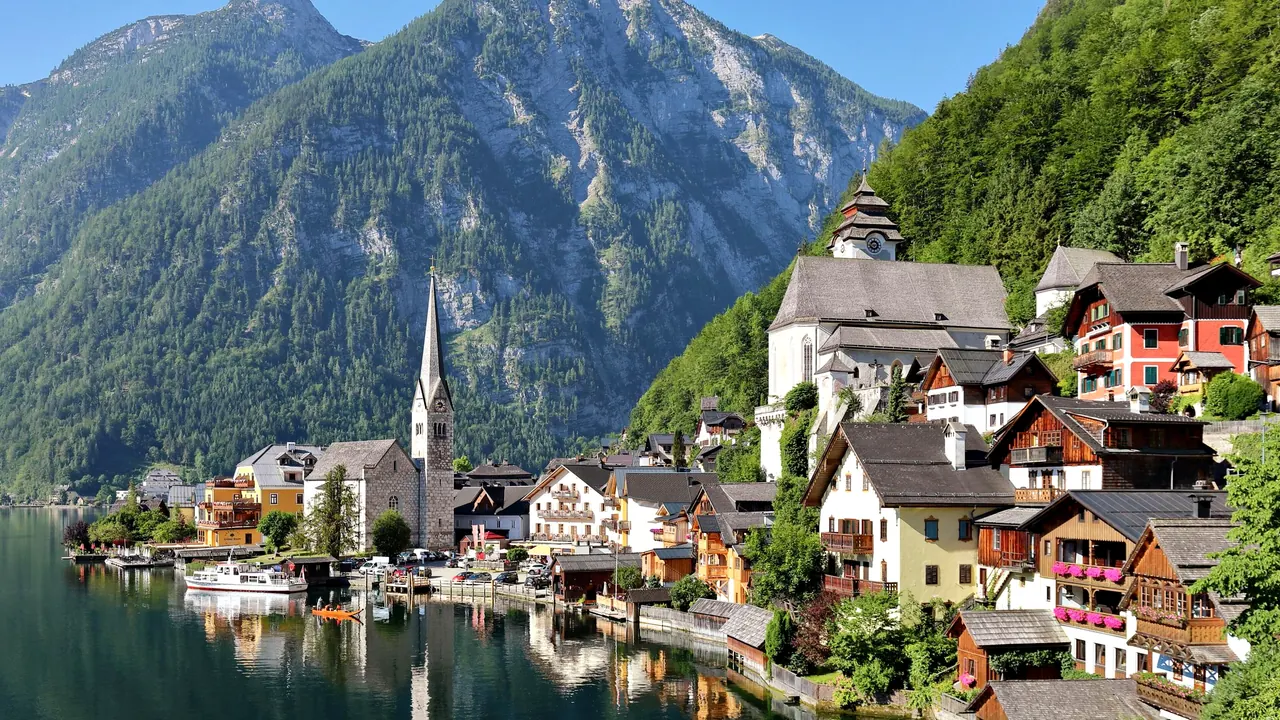
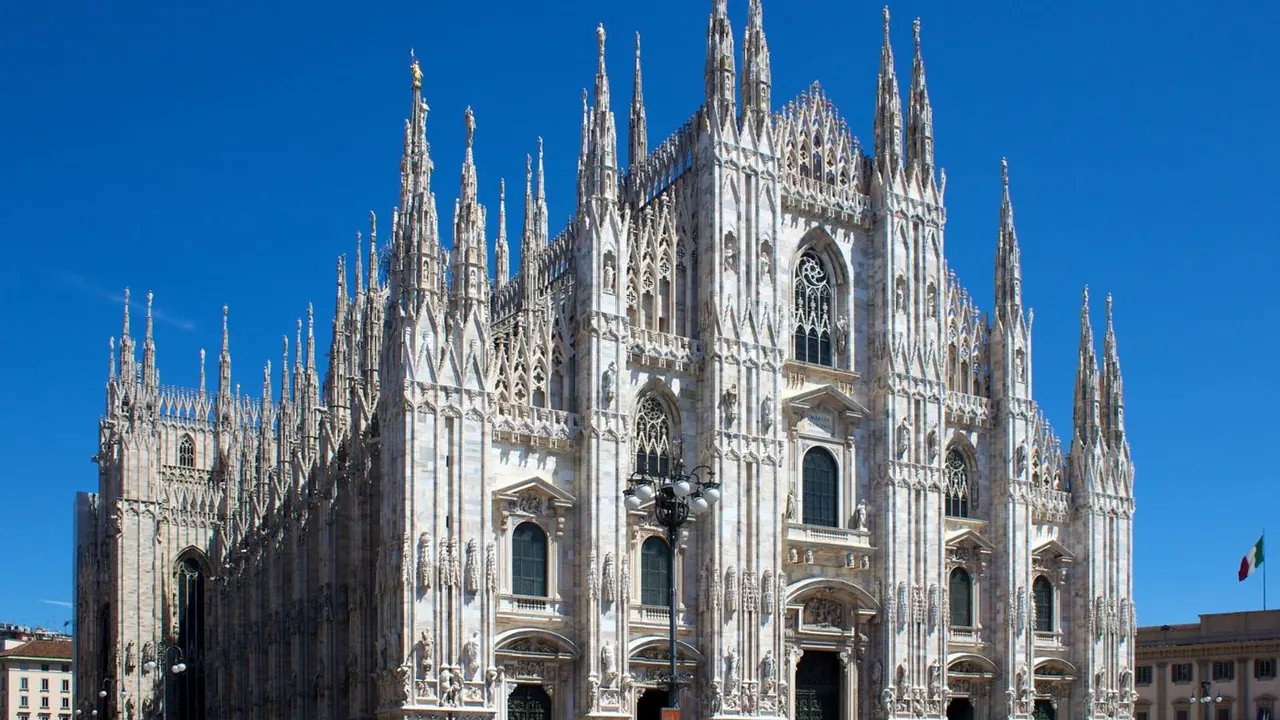
Photos: Hallstatt by C.Stadler/Bwag, CC BY-SA 4.0, cropped; Milan by Jiuguang Wang, CC BY-SA 3.0, cropped.
Hallstatt or Milan?
Our verdict in twelve categories, each scored against the same fixed benchmark cities, and the climate month by month, so you can choose for your trip.
Choose Hallstatt for
- nature and the outdoors
- beaches
- wellness
Hallstatt is the choice for walkers and anyone who would rather have mountains and still water than a city. The Dachstein starts at the edge of the village, with the Krippenstein cable car, the ice caves and the path to the Gosausee, and the evenings are quiet by design. Come for two or three nights of hiking and misty lake mornings, and accept simple food, nothing to do after dark and a high price for a room.
Choose Milan for
- shopping
- live music and the arts
- nightlife
Milan suits a traveller who wants a full city to explore: Leonardo's Last Supper, a night at La Scala, aperitivo on the Navigli and the fashion streets around Via Montenapoleone. It is also by far the better base for seeing more of the region, with fast trains to Verona, Bergamo, Turin and Lake Como, so even a week here never runs short.
Scoreboard
Twelve categories on one fixed scale from 0 to 100. The shaded stretch is the gap between the two.
Your match
Pick a travel style or drag the sliders, and both match scores follow your weighting.
Wins on nature and the outdoors and beaches with your weighting.
Wins on shopping and live music and the arts with your weighting.
What matters to you?
Category by category
What the scores mean for a trip.
Beaches & swimming
Neither place is a beach destination, but in Hallstatt you can at least swim from the village itself. There is a jetty and lawn at the northern end and a lido at Obertraun, in clear Alpine water that rarely gets above 20°C. Think of it as a bracing dip after a hike, not a lazy afternoon.
Milan has no water of its own beyond the Idroscalo basin and the public pools, so a real swim means an hour on the train to Lake Como or Lake Maggiore. The water there is milder, but the swim becomes a day out rather than something you do before dinner.
Food & drink
Hallstatt has a few guesthouse dining rooms and lakeside terraces serving schnitzel, goulash and char from the lake, smoked or pan-fried. Lake fish with the view is worth having once, but after a few nights you will have tried everything, and kitchens close early.
Milan is one of Italy's great places to eat. There is saffron risotto, ossobuco and cotoletta, cooking from every Italian region and a serious tier of fine dining. Early evening brings the aperitivo ritual around the Navigli, Brera and Isola, and historic pasticcerie fill the daytime.
Culture & sights
Hallstatt's history goes deep rather than wide. There are seven thousand years of salt mining, the Iron Age finds that gave the Hallstatt culture its name, the mine itself and the painted skulls of the Beinhaus. Together they fill one day very well.
Milan has world-class works spread across a handful of places: the Last Supper, the Duomo roof among the spires, the Pinacoteca di Brera and Michelangelo's Rondanini Pietà in the Castello Sforzesco, with Sant'Ambrogio and the Ambrosiana behind them. That adds up to several days of first-rate sightseeing, even though it comes in clusters within a modern city.
Nightlife
Hallstatt has no nightlife to speak of. Once the day visitors leave, an evening out means dinner, a glass of wine by the water and a walk along the dark lakeshore.
Milan offers a real night out. Aperitivo runs on into the night along the Navigli towpaths, Brera has smarter, quieter bars, and Porta Venezia is relaxed and the centre of the gay scene. Clubs range from dressy Corso Como to warehouse nights on the city's edges. The style is polished rather than wild, and things go quiet in August.
Nature & outdoors
Nature is Hallstatt's great strength. Mountain country starts at the edge of the village: the Krippenstein cable car up to the Five Fingers platform, the Dachstein ice caves, the Echerntal waterfalls and the walk to the Gosausee. On top of that come via ferratas, hut-to-hut routes and ski touring in winter.
Milan sits on the flat Po plain, with Parco Sempione and the canal towpaths for cycling. The good walking around Milan is real, but you have to travel for it: the slopes above Lake Como and the Grigne ridges near Lecco are an hour or more away by train. In Hallstatt you simply walk out of the door.
Day trips
From Hallstatt there is a pleasant round of Salzkammergut outings: Bad Ischl and the Kaiservilla, the altarpiece at St Wolfgang and the lake castle at Gmunden, with Salzburg as a long day. Without a car, though, every trip by bus or the lakeside railway takes planning.
Milan is one of the best bases in Italy for days out. High-speed trains bring Verona, Turin and Bologna within easy reach, and Bergamo and Bellagio are about an hour away. The Certosa di Pavia, Mantua, Cremona, the Borromean Islands and Lugano give a week's worth of variety, all without a car.
Good for families
Children get one excellent half day in Hallstatt: the salt mine, with its funicular ride, wooden miners' slides and underground lake. Older ones can also manage the ice caves and the many steps on the Krippenstein. The village itself is harder going. It is a single steep lane, crowded at midday and awkward with a pushchair, so families usually stay in Obertraun and come in for a few hours.
Milan works better over a longer stay with children. The centre is flat, and the trams and metro are simple to use. The science and technology museum, with its submarine and trains, covers a wet day, and Parco Sempione has playgrounds. Leolandia and Gardaland are within reach for older children. The drawbacks are heavy summer heat and big sights that mostly appeal to adults.
Getting around
In Hallstatt everything is a few minutes on foot, though the paths are steep and stepped. The problem is the wider region: the station is on the far shore and you cross by boat, buses are sparse outside summer, and many visitors find they need a car.
Milan needs no car at all. The centre is flat and easy to walk, the five metro lines and the dense tram network cover the rest, and direct trains from Centrale, Garibaldi and Cadorna reach the lakes and nearby towns. Only the long transfer from Malpensa airport is a chore.
Shopping & style
Shopping in Hallstatt takes half an hour along the main lane, and salt from the local mine is the one thing worth carrying home.
In Milan, shopping is a reason to travel in itself. There are the flagships of the Quadrilatero della Moda, the Galleria and La Rinascente, everyday shopping along Corso Buenos Aires, vintage and independent boutiques in Brera and Porta Ticinese, and design showrooms all over the city.
Affordability
Both places are expensive, but Hallstatt is harder on the wallet. There are few rooms and visitors come from all over the world, meals are at resort level, and the salt mine and cable car add up. Most budget travellers sleep in Obertraun, Bad Goisern or Bad Ischl and come in for the day.
Milan is expensive too, especially during trade fairs and fashion weeks, but it gives you more ways to cut costs. Public transport is fairly priced, aperitivo can stand in for a light supper, office-worker lunch menus are good value and hotels near a metro stop outside the centre are cheaper.
Live music & performing arts
Hallstatt has a brass band on feast days and the odd church concert. The nearest real stages are Salzburg and Bad Ischl, which has a summer operetta tradition.
Milan has La Scala, whose season opens each December on the feast of Sant'Ambrogio, along with the Piccolo Teatro, a symphony orchestra at the Auditorium, jazz rooms and big summer concerts at San Siro. For opera and ballet, plan a visit to Milan outside the summer.
Wellness & relaxation
Neither place is a spa destination in its own right, and the difference lies in the kind of rest each offers. In Hallstatt the calm comes from the lake at dawn and in the evening after the tour groups leave, with the brine baths of Bad Ischl half an hour away. The crowded lane at midday is the downside.
Milan offers city comforts instead: a thermal spa complex with outdoor pools in the south of the centre, a few hotel spas and the 1930s Bagni Misteriosi pools in summer. When you want real quiet, the lakes are an hour away.
When should you go?
Pick your month. The climate figures are measured averages, not a forecast.
Hallstatt in July
Milan in July
Daytime high, °C
Rainfall in the month, mm
Where the figures come from
Hallstatt's temperatures are measured 56 km from the centre, at Salzburg.
Hallstatt has no rain gauge within 25 km of the centre, so its rainfall comes from a gridded climate dataset read at the city rather than from a gauge further away.
Milan's sunshine is measured 41 km from the centre, at Novara / Cameri.
Temperature and rainfall are climate normals, averaged over the years shown. Hallstatt: 1991-2020 normals, Salzburg (55.5 km from centre). Milan: 1991-2020 (rainfall 1971-2000) normals, Milano / Linate (8 km from centre).
Hallstatt is at its best in summer. From June to September the days are mild, peaking around 25°C in July and August, which is ideal for hiking. These are also the wettest months, though, with close to 180mm of rain in July, so expect showers and mist and keep a spare day. The lake is only warm enough for a brisk swim in high summer. From November to March the village is cold and gets little sunshine, which suits snow scenes and ski touring more than lingering outdoors.
Milan is warmer all year round. Spring and early autumn, roughly April to June and September, are the best months for walking the streets. July and August reach about 30°C and feel heavy in the city, and that is when the lakes are most worth the trip. In Milan the rain peaks in October and November rather than in summer, and winter is grey and cool but milder than in the Alps.
Which traveller are you?
For an outdoors trip, Hallstatt wins easily. The Dachstein begins where the village ends, with the Krippenstein cable car, the ice caves, the Gosausee walk, via ferratas and winter ski touring, whereas Milan's mountains start an hour or more away by train.
On a culture and arts trip, Milan is the clear choice. The Last Supper, the Duomo roof, the Brera gallery and an evening of opera at La Scala fill several days, while Hallstatt's salt mine, museum and Beinhaus make one fascinating day.
For a shopping trip, there is no contest. Milan's Quadrilatero della Moda, the Galleria, the Brera boutiques and the design showrooms make it one of the world's fashion capitals, while Hallstatt has a short stroll past souvenir shops selling local mine salt.
Before you go
| Measure | Hallstatt | Milan |
|---|---|---|
| Official language | German, Austrian Sign Language | Italian |
| Currency | Euro (EUR) | Euro (EUR) |
| Sockets | CF230 V, 50 Hz | CFL230 V, 50 Hz |
| Driving side | Right | Right |
| Time zone | UTC+1, UTC+2 in summer | UTC+1, UTC+2 in summer |
| Emergency number | 112 | 112 |
| Elevation | 511 m | 138 m |
| Main airport | Salzburg Airport (SZG)55 km from centre64 non-stop destinations | Milan Malpensa International Airport (MXP)40 km from centre208 non-stop destinations |
| Public holidays this year | 16 days | 13 days |
By the numbers
| Measure | Hallstatt | Milan |
|---|---|---|
| City population | 741 | 1,354,196 |
| People per km² | 12 | 7,453 |
| Museums within 10 km | 3 | 88 |
| UNESCO World Heritage sites within 50 km | 2 | 4 |
Where else could you go?
Every comparison below shares a destination with this one, so you can follow Hallstatt or Milan somewhere new.