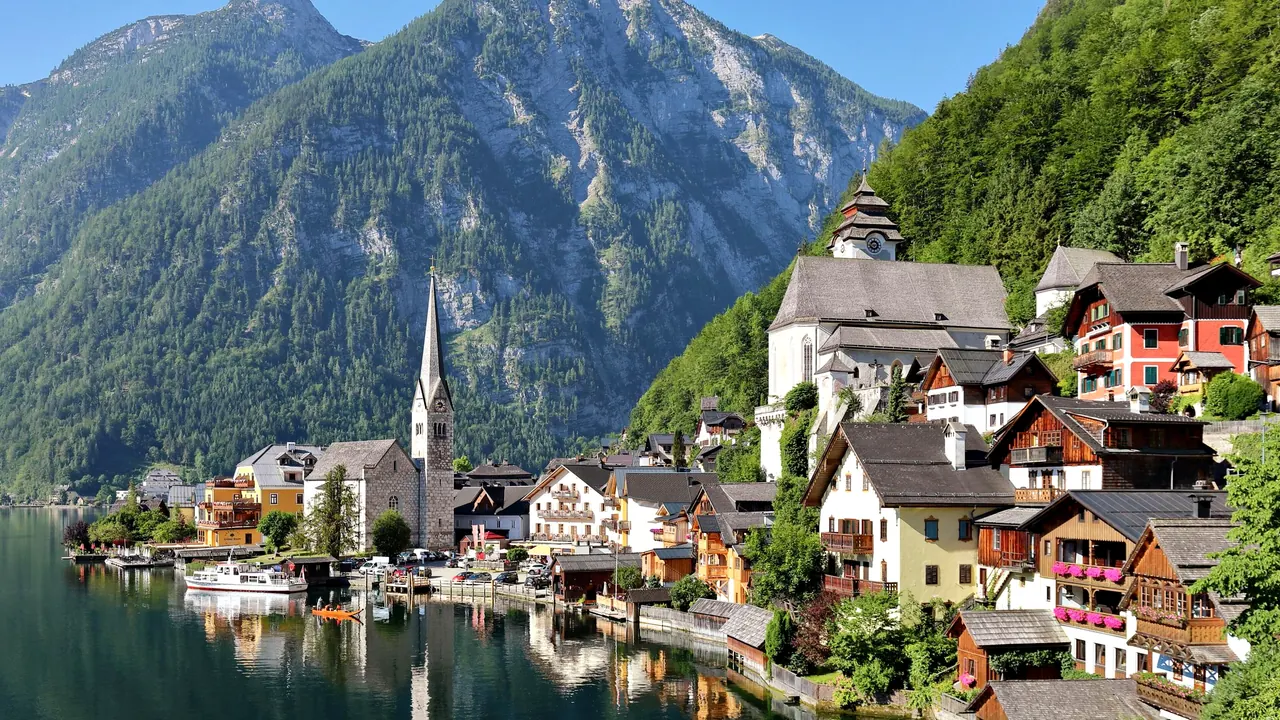
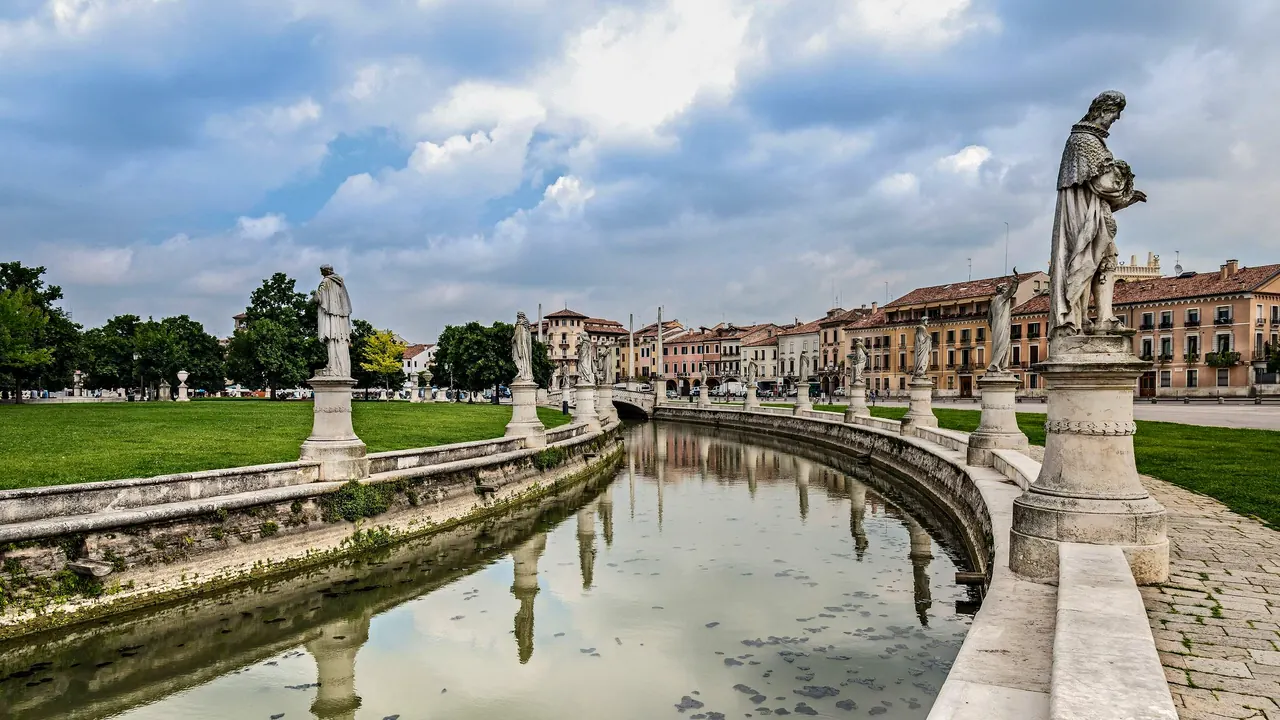
Photos: Hallstatt by C.Stadler/Bwag, CC BY-SA 4.0, cropped; Padua by Didier Descouens, CC BY-SA 4.0, cropped.
Hallstatt or Padua?
Our verdict in twelve categories, each scored against the same fixed benchmark cities, and the climate month by month, so you can choose for your trip.
Choose Hallstatt for
- nature and the outdoors
- families
Hallstatt is for travellers who come for the mountains and the stillness. The Dachstein begins at the edge of the village, with the ice caves, the Krippenstein and the walk to the Gosausee. Staying the night gives you the lake to yourself once the day visitors leave. Expect simple food, silent evenings and high room prices. It suits two or three days of hiking and slow mornings, not a varied city stay.
Choose Padua for
- food and drink
- nightlife
- culture and sights
Choose Padua for a cheaper base with far more to fill the days. Giotto's chapel and the Basilica of Saint Anthony, a food culture built on markets and the spritz, sociable evenings in the squares and the thermal pools of Abano are all close by. The station puts Venice, Vicenza and Verona a short ride away. Its countryside is gentle hills, not high Alps.
Scoreboard
Twelve categories on one fixed scale from 0 to 100. The shaded stretch is the gap between the two.
Your match
Pick a travel style or drag the sliders, and both match scores follow your weighting.
Wins on nature and the outdoors and families with your weighting.
Wins on food and drink and nightlife with your weighting.
What matters to you?
Category by category
What the scores mean for a trip.
Beaches & swimming
Neither is a swimming destination, and the water is very different. Hallstatt has a cold, clear Alpine lake right at hand, with a jetty in the village and a lido at Obertraun. It is good for a bracing dip after a hike, in a short summer season.
Padua has no water of its own, but the Adriatic sand at Sottomarina or the Venice Lido is about an hour away. The sea there is warmer, shallow and calm for children, though the beaches are flat and lined with umbrellas.
Food & drink
Padua is by far the better place to eat. It has twin markets under the Palazzo della Ragione, Venetian dishes such as bigoli with duck sauce and baccalà, Euganean wines and the evening spritz, which together give you a real food culture to explore over several days.
Hallstatt's guesthouse dining rooms serve schnitzel and goulash. Smoked or pan-fried char from the lake is the one local speciality, and kitchens close early. For anything more, go to the patisseries in Bad Ischl.
Culture & sights
Padua has far more to see: Giotto's Scrovegni Chapel, the UNESCO-listed fresco cycles, Donatello's work at the Basilica of Saint Anthony, the anatomical theatre at Palazzo Bo and the Orto Botanico of 1545. Together they fill two or three full days.
In Hallstatt the main sight is the village itself, along with seven thousand years of salt mining, told in the mine, the small museum and the painted skulls of the Beinhaus. It is memorable and unlike anywhere else, but you can see it in a day.
Nightlife
Padua has a real evening life, if a gentle one. The aperitivo crowd fills Piazza delle Erbe and Piazza dei Signori, and in term time students keep the wine bars around the old ghetto busy. It is not a city for clubbing.
Hallstatt has nothing after dark beyond dinner and a walk by the lake, which is exactly what people who stay the night come for.
Nature & outdoors
Nature is Hallstatt's strength. The Dachstein rises straight above the lake, with the Five Fingers platform, the Giant Ice Cave, the waterfalls of the Echerntal and the classic walk to the Gosausee, and there is ski touring in winter. You hardly need to travel for any of it.
Padua's outdoors is gentler and further away. The volcanic Euganean Hills, about 15km out, have vineyards and good cycling, there are level towpaths along the Brenta, and the lagoon suits birdwatching. Proper mountain walking means about an hour and a half's drive to Monte Grappa or Asiago.
Day trips
Padua is one of the best bases in Italy for outings. Venice is under half an hour by train and Vicenza is closer still. Verona, Treviso, Bologna and Ferrara are all easy without a car, and the Brenta villas and Arquà Petrarca are nearer to hand.
The Salzkammergut trips from Hallstatt are lovely, from Bad Ischl's Kaiservilla to St Wolfgang and Gmunden, and Salzburg makes a long day. By bus and the lakeside railway they are slow, so many visitors rely on a car.
Good for families
Both work with children without being built for them, in different ways. Hallstatt has the stronger single outings, with the miners' slides in the salt mine, the ice caves and boats on the lake, but its lane is steep, crowded and hard with a pushchair.
Padua is flat, largely pedestrianised and relaxed about children in restaurants, and Prato della Valle is a good place for them to run. Its frescoes hold little for them, though, so families rely on trips to Gardaland or the Adriatic.
Getting around
Padua is easier, both in town and beyond it. The centre is flat and arcaded and you can walk it all, a tram runs from the station, and the main railway lines make Venice, Verona and Bologna simple trips without a car.
You can cross Hallstatt on foot in minutes, but the lanes are steep and stepped. The station is across the lake, reached by a short boat crossing, and buses are limited, so many visitors hire a car.
Shopping & style
Neither is a shopping destination, but Padua gives you more to browse. There are fashion and shoe shops under the arcades, university bookshops, delicatessens for cheese and Euganean wine, and a monthly antiques market in Prato della Valle. Hallstatt's lane of souvenir shops is worth half an hour for salt from the mine and carved wood.
Affordability
Padua is clearly the cheaper place to stay. Hotels are moderately priced for the region, market food and a standing spritz cost little, and you can walk everywhere in the centre. That is why many people sleep here and visit Venice by day.
Hallstatt has few rooms and visitors from all over the world, so rooms and meals cost what they do in an Alpine resort, and the mine and the cable car add up. Staying in Obertraun or Bad Ischl lowers the cost.
Live music & performing arts
Padua has a modest but steady programme. The Teatro Verdi puts on theatre and some opera, there are chamber concerts in the Sala dei Giganti and the Basilica, and students keep live music going. The Fenice in Venice and the Verona Arena are also within reach.
Hallstatt has only its brass band and the odd church concert. For more, you go to Bad Ischl's summer operetta or to Salzburg.
Wellness & relaxation
Padua has the real spa draw. Abano Terme and Montegrotto Terme, about 12km away, form a large thermal district with hot mineral pools and mud treatments. Many spa hotels take day visitors, so a soak after a morning's sightseeing is easy.
Hallstatt's calm is of a different kind: misty mornings and empty evenings by the lake, though the crowds in the middle of the day break it. For brine baths you go to Bad Ischl or Bad Aussee.
When should you go?
Pick your month. The climate figures are measured averages, not a forecast.
Hallstatt in July
Padua in July
Daytime high, °C
Rainfall in the month, mm
Where the figures come from
Hallstatt's temperatures are measured 56 km from the centre, at Salzburg.
Hallstatt has no rain gauge within 25 km of the centre, so its rainfall comes from a gridded climate dataset read at the city rather than from a gauge further away.
Padua's temperatures are measured 35 km from the centre, at Treviso / Istrana.
Padua has no rain gauge within 25 km of the centre, so its rainfall comes from a gridded climate dataset read at the city rather than from a gauge further away.
Padua's sunshine is measured 36 km from the centre, at Treviso / S. Angelo.
Temperature and rainfall are climate normals, averaged over the years shown. Hallstatt: 1991-2020 normals, Salzburg (55.5 km from centre). Padua: 1991-2020 normals, Treviso / Istrana (35.4 km from centre).
Hallstatt is a summer place. Days are mild from May to September and reach about 25°C in July and August, which is comfortable for hiking. Those are also its wettest months, with around 178mm of rain in July, so leave spare days for mountain plans. In winter, daytime highs are only a few degrees above freezing, which suits snow on the Krippenstein more than wandering the lanes. Spring and autumn are cool and less wet.
Padua is warmer in every month and drier for most of the year, with far less summer rain than Hallstatt. November is the exception. It is Padua's wettest month and slightly wetter than Hallstatt's. July and August reach about 31°C and are sticky for walking the streets, but this is when the Adriatic, at around 26°C, is best for a day at the beach. May, June, September and early October are the most comfortable months for sightseeing, and winter is cool rather than cold.
Which traveller are you?
On an outdoors trip, Hallstatt is the clear choice. Serious mountain country starts at the village edge, with the Krippenstein cable car, the ice caves, hut-to-hut hiking, via ferratas and paddling on the lake. Padua has gentle Euganean trails and canal bike rides, not the Alps.
For a culture and arts trip, Padua offers much more. Giotto's Scrovegni frescoes, the Basilica of Saint Anthony, the anatomical theatre and a concert season fill several days, and Vicenza and Venice are close by train. Hallstatt's salt mine and skull-lined Beinhaus make a fascinating half day.
On a food and nightlife trip, Padua wins easily. You can spend mornings at the Piazza delle Erbe markets, eat bigoli and baccalà at lunch, then stand over a spritz in the squares with students until late. Hallstatt offers lake fish, an early dinner and a quiet terrace.
Before you go
| Measure | Hallstatt | Padua |
|---|---|---|
| Official language | German, Austrian Sign Language | Italian |
| Currency | Euro (EUR) | Euro (EUR) |
| Sockets | CF230 V, 50 Hz | CFL230 V, 50 Hz |
| Driving side | Right | Right |
| Time zone | UTC+1, UTC+2 in summer | UTC+1, UTC+2 in summer |
| Emergency number | 112 | 112 |
| Elevation | 511 m | 12 m |
| Main airport | Salzburg Airport (SZG)55 km from centre64 non-stop destinations | Venice Marco Polo Airport (VCE)39 km from centre103 non-stop destinations |
| Public holidays this year | 16 days | 13 days |
By the numbers
| Measure | Hallstatt | Padua |
|---|---|---|
| City population | 741 | 206,496 |
| People per km² | 12 | 2,220 |
| Museums within 10 km | 3 | 29 |
| UNESCO World Heritage sites within 50 km | 2 | 5 |
| Swim season, months above 21 °C | - | 4 months |
Where else could you go?
Every comparison below shares a destination with this one, so you can follow Hallstatt or Padua somewhere new.
- Venicevs Padua
- Salzburgvs Hallstatt
- Veronavs Padua
- Bolognavs Padua
- Cortina d'Ampezzovs Padua
- Piranvs Padua