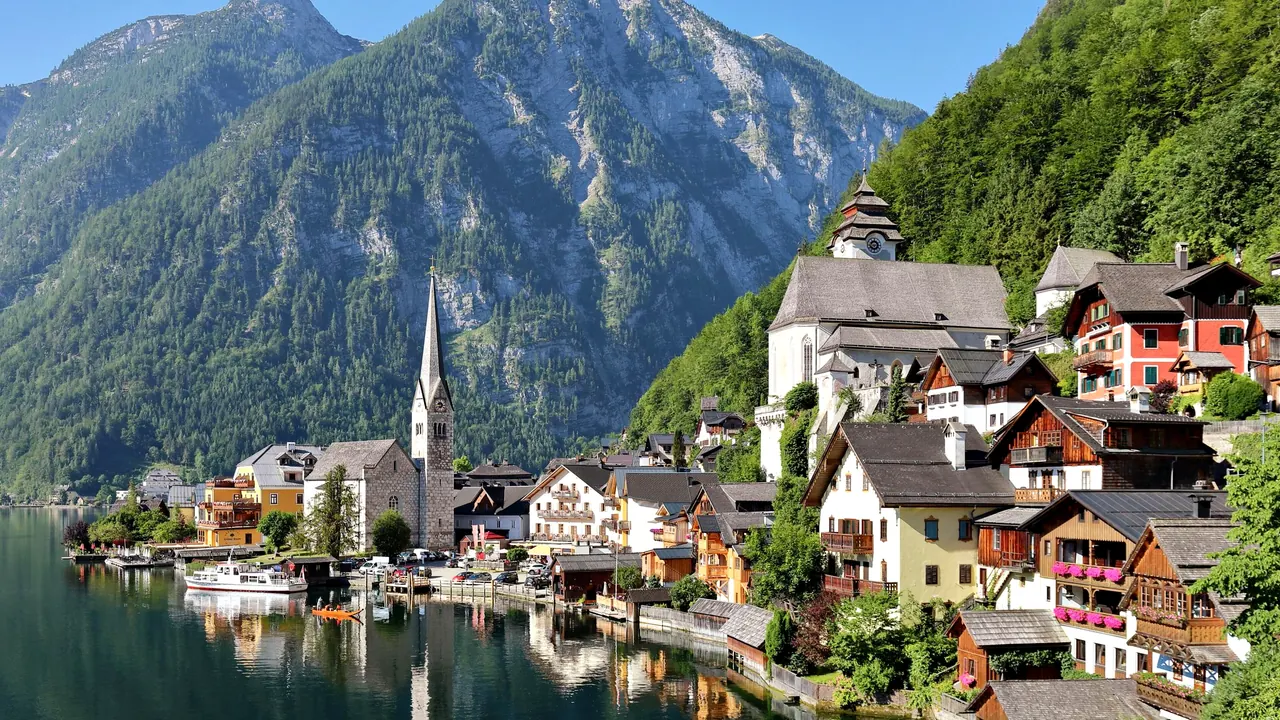
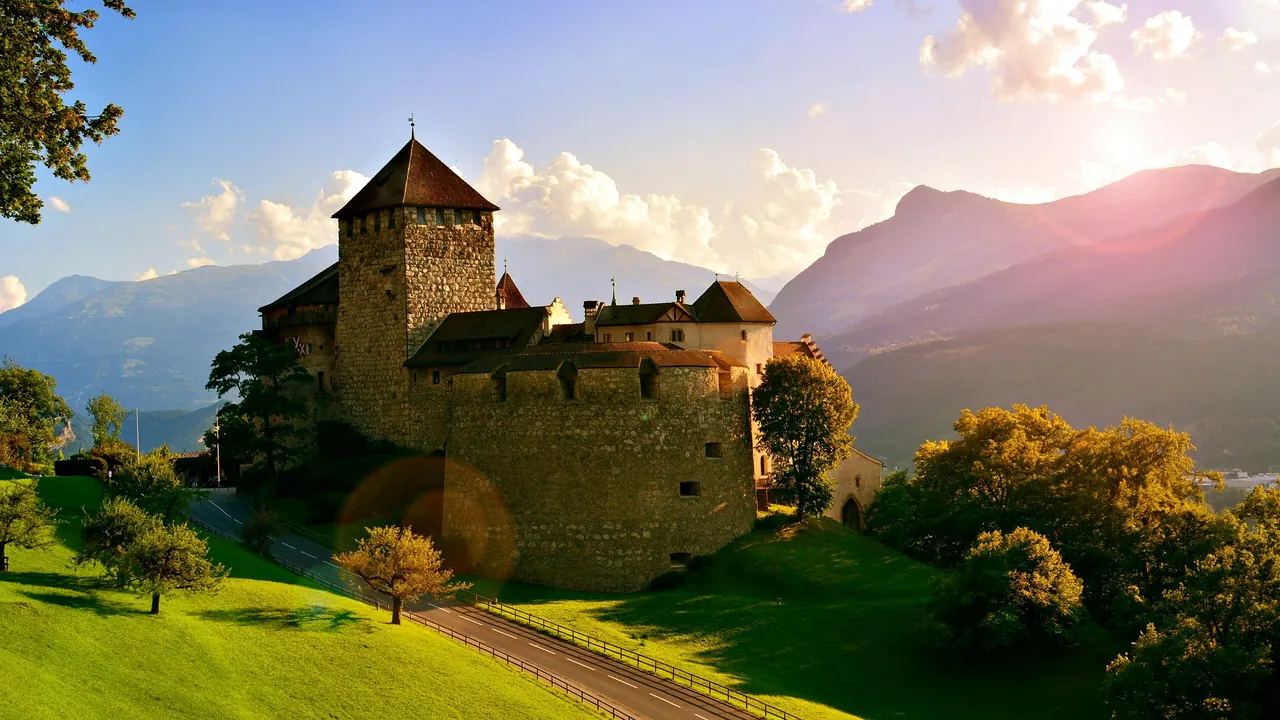
Photos: Hallstatt by C.Stadler/Bwag, CC BY-SA 4.0, cropped; Vaduz by Justin LaBerge, CC BY 2.0, cropped.
Hallstatt or Vaduz?
Our verdict in twelve categories, each scored against the same fixed benchmark cities, and the climate month by month, so you can choose for your trip.
Choose Hallstatt for
- prices
- beaches
- families
Hallstatt suits travellers who want the Alpine scenery itself to be the trip. The village on its ledge above the lake, the salt mine and the Dachstein caves and plateau give a stay of a few days plenty to do, and it is the better of the two for families and for anyone hoping to swim. It works best if you are happy to spend the crowded midday hours on the water or up in the hills, and to treat evenings as a quiet dinner and a walk by the lake.
Choose Vaduz for
- live music and the arts
- day trips
- food and drink
Vaduz is the pick if you want a calm, orderly base for touring a border region. From the Rhine valley you can reach Feldkirch, St Gallen, Appenzell, Lake Constance and Zurich, and an evening at the theatre in Schaan or a summer festival concert is a real option, which Hallstatt cannot offer. It costs more than almost anywhere else in Europe, and the town is a backdrop more than a destination, so it rewards people who like to drive out each day and return to quiet streets and a glass of local Pinot Noir.
Scoreboard
Twelve categories on one fixed scale from 0 to 100. The shaded stretch is the gap between the two.
Your match
Pick a travel style or drag the sliders, and both match scores follow your weighting.
Wins on prices and beaches with your weighting.
Wins on live music and the arts and day trips with your weighting.
What matters to you?
Category by category
What the scores mean for a trip.
Beaches & swimming
Hallstatt has the better swimming, because the lake is right there. You can take a bracing dip from the jetty at the north end of the village or spend an afternoon at the lido in Obertraun, though the deep water stays cool and the steep shores leave little room.
Vaduz has no water of its own to swim in, since the Rhine is not for bathing. A swim means the municipal open-air pools or a drive to the Walensee or Lake Constance, which makes it an outing to plan rather than something to do after a walk.
Food & drink
Neither place is somewhere to travel for food, and both offer solid Alpine cooking with little range and early-closing kitchens. The difference is in the one thing each does well: in Hallstatt it is char and whitefish from the lake, smoked or pan-fried and eaten by the water, while in Vaduz it is Käsknöpfle and the wine grown on the slopes below the castle. For more variety, Hallstatt sends you to the patisseries of Bad Ischl, and Vaduz to Feldkirch or Zurich.
Culture & sights
Hallstatt has more to see, and its sights are older and stranger. Seven thousand years of salt mining, the prehistoric finds that named the Hallstatt culture, the painted skulls of the Beinhaus and the UNESCO landscape of the village itself make a richer day than most small places can offer.
Vaduz is about the present more than the deep past. Its two art museums hold modern and contemporary work of real quality, alongside the National Museum and the stamp museum, but the castle is closed to visitors and the whole list fits into an unhurried day.
Nightlife
Both go quiet early, and neither is a place for a night out. Vaduz at least has a few wine bars and hotel lounges along the Städtle, with Feldkirch twenty minutes away for anything livelier, while in Hallstatt the evening is a lakeside dinner and a walk in the dark once the day visitors have gone.
Nature & outdoors
Both are superb bases for the mountains, with Hallstatt a little ahead for drama. The Krippenstein cable car, the Five Fingers platform, the Dachstein ice caves and the walk to the Gosausee give it some of the classic sights of the Alps, with via ferratas, paddling and ski touring as well.
Vaduz offers wider, gentler country: vineyard and forest trails from the centre, the Rätikon ridges above Malbun, a hiking trail the length of the country and flat cycling on the Rhine dam path. Its weather is also drier than Hallstatt's, which matters for long days out.
Day trips
Vaduz has the more varied choice, because two countries lie within easy reach. Medieval Feldkirch, the abbey library at St Gallen, Appenzell, Chur, Lindau on Lake Constance and Zurich give a different kind of outing each day.
Hallstatt's trips stay within one region of lakes and spa towns. Bad Ischl and the Kaiservilla, St Wolfgang, Gmunden and Altaussee are easy and attractive, and Salzburg makes a full day, but they share a similar character, and without a car they take some planning.
Good for families
Hallstatt has more that children will remember. The salt mine tour with its slides and underground lake, the cable car and ice caves for older ones, and rowing boats on the lake are genuine highlights, although the steep, crowded lane is hard work with a pushchair and staying in Obertraun is easier.
Vaduz is the opposite: flat, clean and very safe, but with museums aimed at adults. Families there end up outdoors, at the pools, on walks above Triesenberg or on the beginner slopes at Malbun.
Getting around
Both are small enough to cover on foot, and both are awkward beyond the centre. Hallstatt's lanes are steep and stepped, and the station lies across the lake, reached by boat, with limited buses out of season. Vaduz has a flat pedestrian centre and a tidy bus network up to Malbun, but no station of its own, so longer journeys mean a change at Buchs, Sargans or Feldkirch, and in either place a car makes the region easier.
Shopping & style
Neither is a place to shop, and half an hour covers both. Hallstatt's distinctive buy is salt from the mine, sold alongside carved wood and dirndl accessories, while Vaduz offers watches, jewellery and collectable stamps, with a bottle of local wine as the best gift.
Affordability
Hallstatt is expensive, but Vaduz is in another league. Rooms in Hallstatt are scarce and priced above the Austrian average, yet nearby Obertraun, Bad Goisern and Bad Ischl offer cheaper beds within easy reach.
Vaduz follows Swiss prices for everything from a hotel room to a simple lunch, with very few hotels and almost no budget choice. Staying across the border in Austria is the usual way to soften the cost.
Live music & performing arts
Vaduz can fill an evening and Hallstatt mostly cannot. Liechtenstein's theatre in Schaan, its symphony orchestra and the summer classical festival in Vaduz give a visitor something to attend over a week.
In Hallstatt, music means the brass band on feast days and the odd church concert. For a proper performance you would drive to Bad Ischl for its summer operetta or to Salzburg.
Wellness & relaxation
The two are evenly matched, and both rely on a famous spa town nearby rather than their own facilities. From Hallstatt it is the salt-brine tradition of Bad Ischl, Bad Aussee and Bad Goisern, while from Vaduz it is the warm Tamina spring water at Bad Ragaz. The calm feels different too: Vaduz is quiet all day, whereas Hallstatt is still only at dawn and dusk, with crowds in the lane around midday.
When should you go?
Pick your month. The climate figures are measured averages, not a forecast.
Hallstatt in July
Vaduz in July
Daytime high, °C
Rainfall in the month, mm
Where the figures come from
Hallstatt's temperatures are measured 56 km from the centre, at Salzburg.
Hallstatt has no rain gauge within 25 km of the centre, so its rainfall comes from a gridded climate dataset read at the destination rather than from a gauge further away.
Vaduz's temperatures are measured 51 km from the centre, at Sigmarszell-Zeisertsweiler.
Vaduz has no rain gauge within 25 km of the centre, so its rainfall comes from a gridded climate dataset read at the destination rather than from a gauge further away.
Temperature and rainfall are climate normals, averaged over the years shown. Hallstatt: 1991-2020 normals, Salzburg (55.5 km from centre). Vaduz: 1991-2020 normals, Sigmarszell-Zeisertsweiler (51.3 km from centre).
The two share almost the same temperatures through the year. Both are cold from November to March, at around 4°C by day in midwinter, which suits skiing more than strolling, and both warm to their best from June to August, when highs reach the mid-20s and lake swimming becomes possible. May and September are mild and good for walking in either place.
The real difference is rain. Hallstatt is noticeably wetter all year, and its summer is its wettest season, with around 178mm in July against 121mm in Vaduz. Vaduz also gets a little more summer sunshine, though its valley is darker than Hallstatt in winter. For a dry, settled stay, Vaduz has the edge in high summer, while Hallstatt's clear mornings are best looked for in the more stable weeks of late spring and early autumn.
Which traveller are you?
On a family trip with children, Hallstatt is the stronger choice. The salt mine with its funicular and miners' slides, the ice caves for older children and boats on the lake give a few days of real highlights, while Vaduz offers pools and gentle walks but little designed for children.
On a trip on a tight budget, neither is cheap, but Hallstatt is far easier. Staying in Obertraun, Bad Goisern or Bad Ischl and coming in for the day keeps costs reasonable, whereas Vaduz runs at Swiss prices with almost nothing at the budget end.
For a food and nightlife trip, both are poor choices, but Vaduz edges it. It has local wine from the prince's estate, a few wine bars on the Städtle and Feldkirch nearby for a livelier evening, while Hallstatt offers lake fish and a terrace, then silence.
Before you go
| Measure | Hallstatt | Vaduz |
|---|---|---|
| Official language | German, Austrian Sign Language | German |
| Currency | Euro (EUR) | Swiss Franc (CHF) |
| Sockets | CF230 V, 50 Hz | CJ230 V, 50 Hz |
| Driving side | Right | Right |
| Time zone | UTC+1, UTC+2 in summer | UTC+1, UTC+2 in summer |
| Emergency number | 112 | 112 |
| Elevation | 511 m | 455 m |
| Main airport | Salzburg Airport (SZG)55 km from centre64 non-stop destinations | Zürich Airport (ZRH)81 km from centre226 non-stop destinations |
| Public holidays this year | 16 days | 21 days |
By the numbers
| Measure | Hallstatt | Vaduz |
|---|---|---|
| Population | 741 | 5,668 |
| People per km² | 12 | 328 |
| Museums within 10 km | 3 | 7 |
| UNESCO World Heritage sites within 50 km | 2 | 3 |
Where else could you go?
Every comparison below shares a destination with this one, so you can follow Hallstatt or Vaduz somewhere new.