Photos: Hallstatt by C.Stadler/Bwag, CC BY-SA 4.0, cropped; Zagreb by Bernard Gagnon, CC BY-SA 4.0, cropped.
Hallstatt or Zagreb?
Our verdict in twelve categories, each scored against the same fixed benchmark cities, and the climate month by month, so you can choose for your trip.
Choose Hallstatt for
- nature and the outdoors
- beaches
- wellness
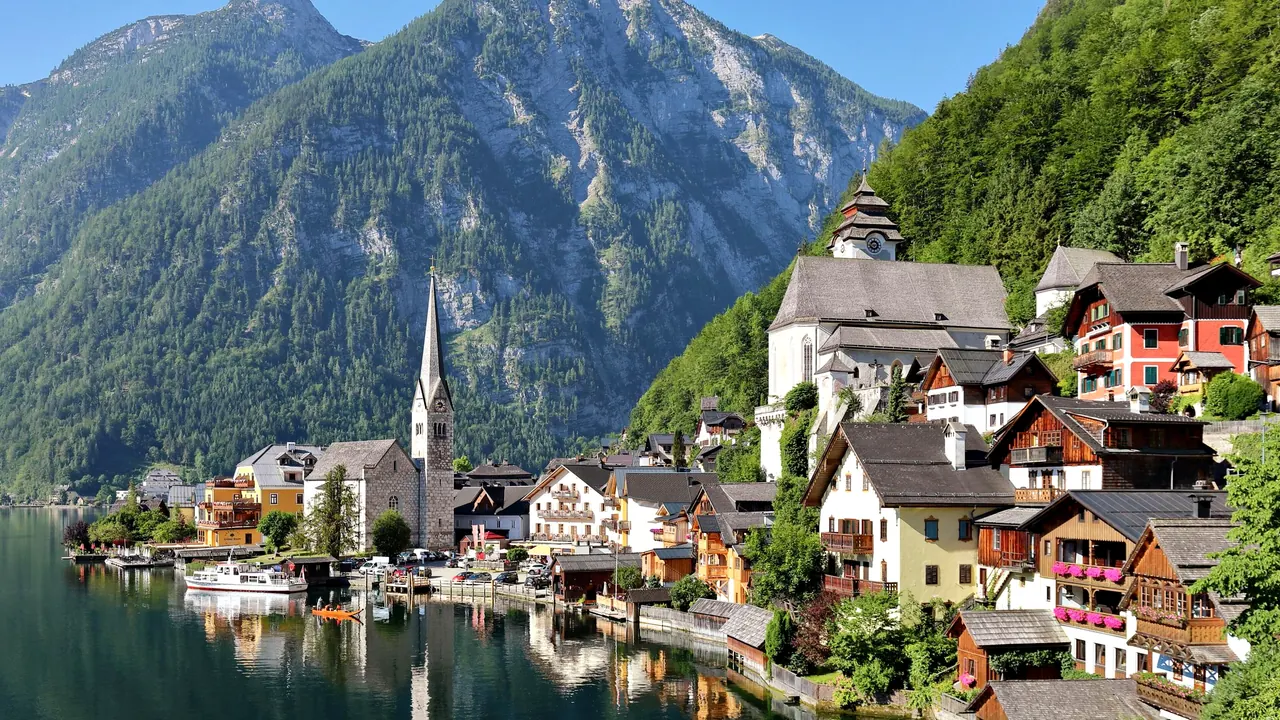
Hallstatt is for travellers who want mountains and water rather than a town to explore. Choose it if your days will be spent on the Krippenstein, walking to the Gosausee or rowing on the still lake, and if quiet evenings by the water appeal more than restaurants and bars. It works best as a base for hiking and for touring the Salzkammergut lake towns, and it costs more for what you get.
Choose Zagreb for
- nightlife
- live music and the arts
- food and drink
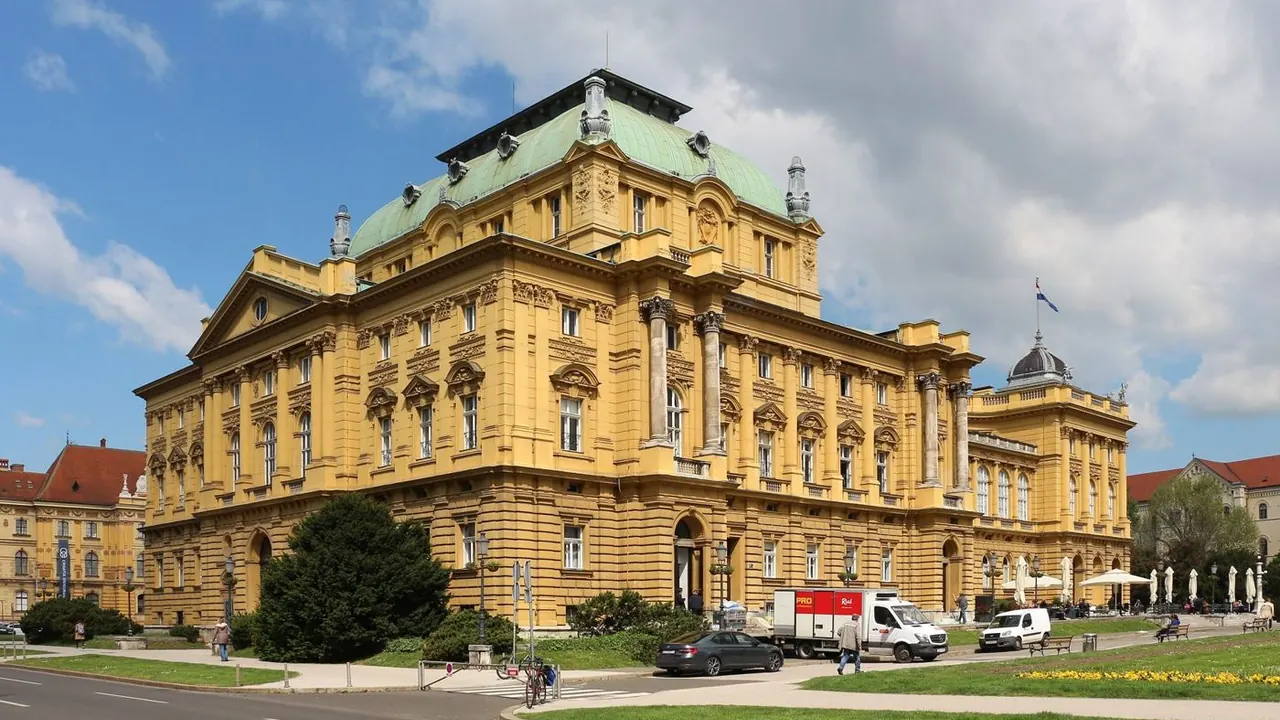
Pick Zagreb if you want an easy, affordable capital with something going on after dark. You get café terraces, a proper market, an opera house and a concert hall, two days of museums and old streets, and trams to take you everywhere. The beech woods of Medvednica are good for a gentle forest walk, but they are no match for the high Alpine country around the Dachstein.
Scoreboard
Twelve categories on one fixed scale from 0 to 100. The shaded stretch is the gap between the two.
Your match
Pick a travel style or drag the sliders, and both match scores follow your weighting.
Wins on nature and the outdoors and beaches with your weighting.
Wins on nightlife and live music and the arts with your weighting.
What matters to you?
Category by category
What the scores mean for a trip.
Beaches & swimming
Neither city is a swimming destination, but Hallstatt at least has its lake on the doorstep. You can take a cold, clear dip from the jetty at the north end of the village or at the lido in Obertraun after a hike, though the season is short.
Zagreb's options are Lake Jarun and Bundek, former gravel-pit lakes in the suburbs that are fine for a hot afternoon. The Adriatic is a two-hour drive away, so sea swimming means a separate coastal stop.
Food & drink
Zagreb gives you far more to eat. Dolac market sells farm cheese and vegetables every morning, the city has its own dishes such as štrukli and turkey with mlinci, and good wine comes from the surrounding hills. Its café culture is a daily ritual, and the Saturday promenade around Flower Square is its high point.
In Hallstatt, a few guesthouse dining rooms serve schnitzel and goulash, and the lake char or whitefish is the one meal worth seeking out. For coffee and cake with more choice, people go to the patisseries of Bad Ischl.
Culture & sights
Hallstatt is one remarkable sight rather than a sightseeing city. The village is set on its ledge inside a UNESCO landscape, and the salt mine, the prehistoric museum and the painted skulls of the Beinhaus fill a rich day.
Zagreb gives you more to do over a longer stay. The medieval Upper Town has St Mark's Church and the Stone Gate, and the Austro-Hungarian Lower Town is laid out around the Green Horseshoe. Add museums from the Strossmayer old masters to Naive Art and the arcades of Mirogoj, and you have two full days.
Nightlife
Zagreb has a real evening scene, though it is relaxed rather than wild. Café-bars along Tkalčićeva switch from coffee to drinks, smaller cocktail and craft beer bars fill the Lower Town courtyards, and in summer the crowd moves to the lakeside clubs at Jarun.
Hallstatt has nothing comparable. After the day visitors leave, an evening means dinner, a glass of wine by the water and a walk along the dark lake shore.
Nature & outdoors
This is Hallstatt's great strength. The Dachstein massif rises straight out of the lake, and the Krippenstein cable car takes you to the Five Fingers platform and the giant ice caves. Paths lead up the Echerntal towards the glacier and over to the reflections of the Gosausee, and there is ski touring on the mountain in winter.
Zagreb's outdoors is gentler but easy to reach. A tram and a short bus ride bring you to the beech woods of Medvednica, and Maksimir park and the Sava embankments are good for runs. Plitvice's lakes are a long day trip south.
Day trips
Both make good bases for outings, and the difference lies in what you go out to see. From Hallstatt the trips are lake towns: the Kaiservilla at Bad Ischl, the altarpiece at St Wolfgang and Gmunden's lake castle, with Salzburg as one long, standout day.
Zagreb's outings lead into castle and hill country instead: Trakošćan above its lake, baroque Varaždin, cream cake in Samobor and Karlovac's star-shaped fortress. Trams and trains make the city easier to leave without a car, while Hallstatt's buses take planning.
Good for families
Zagreb is the easier choice with children. Its flat Lower Town, trams that take pushchairs, the zoo in Maksimir and the Tesla technical museum make for several relaxed days.
Hallstatt has fewer attractions, but the ones it has are memorable: the miners' slides and underground lake in the salt mine, and the ice caves for older children. The steep, crowded lane is hard going with a pushchair, so families often stay in Obertraun.
Getting around
Hallstatt itself takes minutes to cross on foot, although its lanes and steps are steep. The difficulty is getting there and beyond: you reach the village from the station by boat, and buses are thin outside summer, which is why many visitors hire a car.
In Zagreb, a dense web of blue trams and the tiny funicular link a mostly flat, walkable centre, and you only need a car for Plitvice and the Zagorje castles.
Shopping & style
Neither city is a shopping trip, but Zagreb has an actual high street. Ilica has chains and local fashion, and you can take home licitar hearts, Croatian neckties, truffle products and food from Dolac, or browse the Sunday flea market at Britanski trg.
Hallstatt's shopping is a half-hour stroll past souvenir shops, where salt from the mountain is the one thing worth buying.
Affordability
Zagreb is clearly kinder to the wallet. Central rooms, trams, museums and market food are all reasonably priced, and only upmarket dining reaches Western European levels.
Hallstatt has few beds and draws visitors from around the world, so rooms and meals are priced like an Alpine resort, and the salt mine and cable car add up quickly. Staying in Bad Goisern or Obertraun is the usual way to save.
Live music & performing arts
Zagreb has a season you can plan an evening around. There is opera and ballet at the ochre Croatian National Theatre, the Zagreb Philharmonic plays at the Lisinski hall, operetta runs at the Komedija, and summer brings concerts in Upper Town courtyards.
In Hallstatt, music means the brass band on feast days and the occasional church concert. For a proper performance you would travel to Salzburg or to the summer operetta in Bad Ischl.
Wellness & relaxation
Hallstatt offers more calm, provided you avoid the crowded midday lane. Misty early mornings and empty evenings by the lake are restful, and Bad Ischl's brine baths and thermal complex are half an hour away.
Zagreb's way of slowing down is urban: long café mornings, quiet Upper Town lanes and shaded parks. For a soak you need the Zagorje spa towns such as Tuheljske Toplice, about an hour north.
When should you go?
Pick your month. The climate figures are measured averages, not a forecast.
Hallstatt in July
Zagreb in July
Daytime high, °C
Rainfall in the month, mm
Where the figures come from
Hallstatt's temperatures are measured 56 km from the centre, at Salzburg.
Hallstatt has no rain gauge within 25 km of the centre, so its rainfall comes from a gridded climate dataset read at the city rather than from a gauge further away.
Temperature and rainfall are climate normals, averaged over the years shown. Hallstatt: 1991-2020 normals, Salzburg (55.5 km from centre). Zagreb: 1991-2020 (sunshine 1981-2010, rainfall 1981-2010) normals, Zagreb / Gric (0.6 km from centre).
Hallstatt is warm enough for walking from May to September and peaks at around 25°C in July and August. Those summer months are also its wettest, with about 178mm of rain in July, so expect showers and mist even in high season. September is often the best balance of mild days and lighter rain. From November to March the village is cold, which suits snow and ski touring on the Krippenstein rather than days on the lake, though its winter days are a little sunnier than Zagreb's.
Zagreb is warmer all year and drier in every month. From February to September it also gets more sun, especially from May to August. It reaches around 29°C in July, which is a little hot for long afternoons on the streets, so late spring and early autumn are the most comfortable months for walking the city. Its rain is spread more evenly through the year and peaks at about 85mm in September. Winters are grey and chilly but not Alpine.
Which traveller are you?
On an outdoors trip, Hallstatt is the clear choice. Serious mountain country starts at the edge of the village: the Krippenstein cable car, the ice caves, hut-to-hut hiking and via ferratas. Zagreb's Medvednica is pleasant woodland walking, but it is on a far smaller scale.
For a food and nightlife trip, go to Zagreb. Dolac market, štrukli and Zagorje sausages, wine from Plešivica and an evening that moves from café-bars on Tkalčićeva to the clubs at Jarun all outdo Hallstatt, where kitchens close early and the night is silent.
On a trip on a tight budget, Zagreb stretches your money much further. It has reasonably priced central rooms, cheap trams and market snacks. Hallstatt has very few rooms and they are expensive, so budget travellers usually sleep in Obertraun or Bad Ischl and visit for the day.
Before you go
| Measure | Hallstatt | Zagreb |
|---|---|---|
| Official language | German, Austrian Sign Language | Croatian |
| Currency | Euro (EUR) | Euro (EUR) |
| Sockets | CF230 V, 50 Hz | CF230 V, 50 Hz |
| Driving side | Right | Right |
| Time zone | UTC+1, UTC+2 in summer | UTC+1, UTC+2 in summer |
| Emergency number | 112 | 112 |
| Elevation | 511 m | 127 m |
| Main airport | Salzburg Airport (SZG)55 km from centre64 non-stop destinations | Zagreb Franjo Tuđman International Airport (ZAG)11 km from centre65 non-stop destinations |
| Public holidays this year | 16 days | 14 days |
By the numbers
| Measure | Hallstatt | Zagreb |
|---|---|---|
| City population | 741 | 767,131 |
| People per km² | 12 | - |
| Museums within 10 km | 3 | 27 |
| UNESCO World Heritage sites within 50 km | 2 | 0 |
Where else could you go?
Every comparison below shares a destination with this one, so you can follow Hallstatt or Zagreb somewhere new.