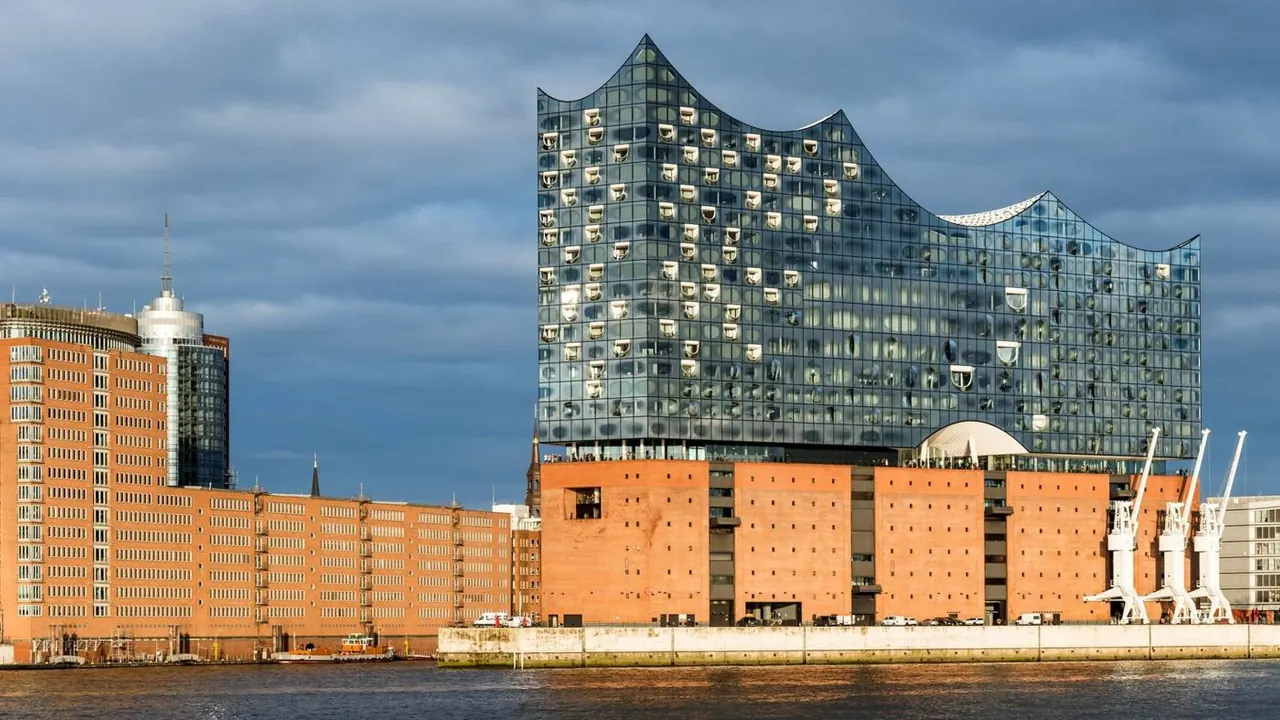
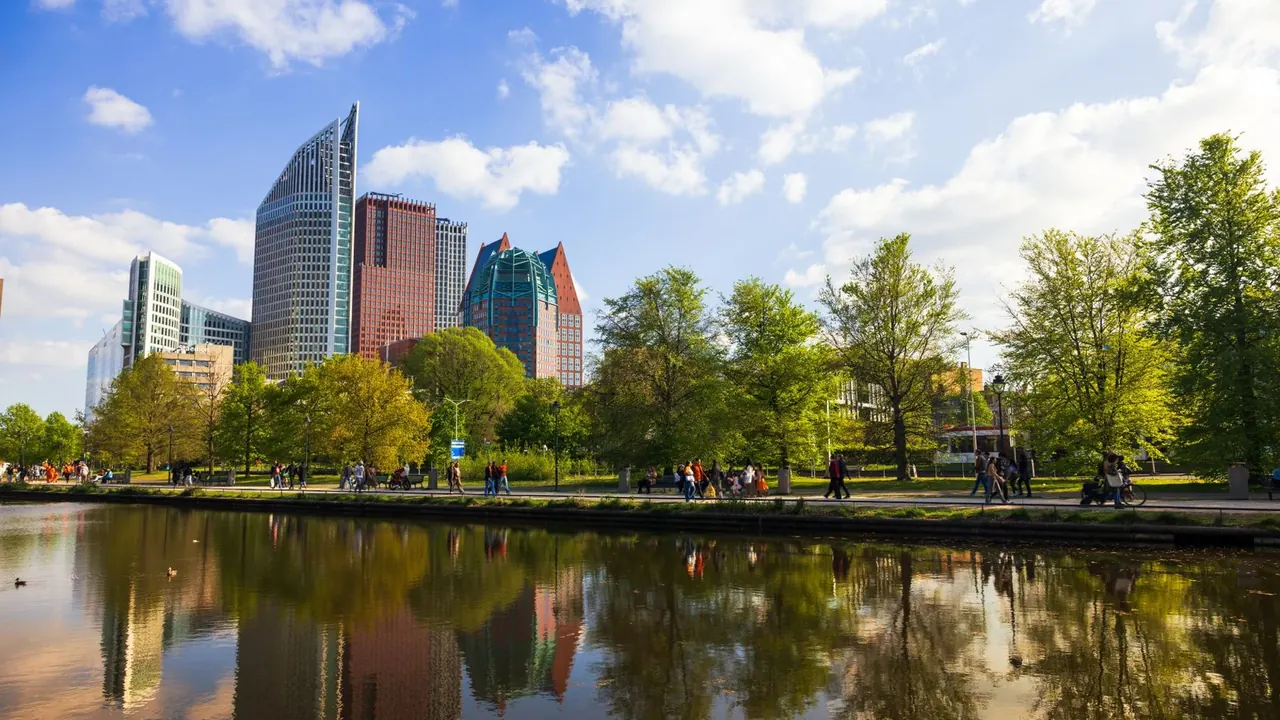
Photos: Hamburg by Wolfgang Weiser, Pexels License; The Hague by Bráulio jardim, Pexels License.
Hamburg or The Hague?
Our verdict in twelve categories, each scored against the same fixed benchmark cities, and the climate month by month, so you can choose for your trip.
Choose Hamburg for
- nightlife
- live music and the arts
- shopping
Hamburg is the pick for travellers who want a big city with evenings to match: late nights on the Reeperbahn and in the Schanzenviertel, a season at the Elbphilharmonie or the State Opera, and a harbour that still works. It also has more and better shops and a slightly broader table, from fish rolls on the piers to a confident restaurant scene.
Choose The Hague for
- day trips
- beaches
- culture and sights
For a quieter, unhurried trip, The Hague is the better choice. The sea is a tram ride from the centre, and some of the finest Dutch painting hangs in one small museum. Its real strength is what lies around it. Delft, Leiden, Rotterdam and Amsterdam are all close by train, so it makes a calm base for seeing much of the Netherlands.
Scoreboard
Twelve categories on one fixed scale from 0 to 100. The shaded stretch is the gap between the two.
Your match
Pick a travel style or drag the sliders, and both match scores follow your weighting.
Wins on nightlife and live music and the arts with your weighting.
Wins on day trips and beaches with your weighting.
What matters to you?
Category by category
What the scores mean for a trip.
Beaches & swimming
Neither city is a swimming destination, but The Hague at least has the sea on its doorstep. Scheveningen's long sandy beach, pier and summer pavilions are a short tram ride from the centre, and Kijkduin offers a calmer stretch backed by dunes. The cold North Sea keeps swims short.
Hamburg's sand lies along the Elbe at Oevelgoenne and Blankenese. It is lovely for watching ships at sunset, but the currents make it no place to swim. Proper sea bathing means an hour's trip to the Baltic at Travemuende or Timmendorfer Strand.
Food & drink
Hamburg has the wider range. Its port history shows in fish rolls on the Landungsbruecken piers, Labskaus and the cinnamon Franzbroetchen, in the coffee roasteries of Ottensen and the Schanzenviertel, and in a modern dining scene that reaches up to fine dining.
The Hague's strength is narrower but real: Indonesian cooking, from a full rijsttafel to plates of rendang, which comes from the city's families with roots in the former Dutch East Indies. Beyond that you get brown cafés on the Denneweg, raw herring from street carts and little choice at the top end.
Culture & sights
Both cities give two or three days of good sightseeing, but of different kinds. Hamburg's draw is its merchant waterfront: the brick warehouses of the Speicherstadt, the ship-shaped Chilehaus and the Elbphilharmonie on its old warehouse base, with the Kunsthalle for painting. War damage means you explore districts rather than an old core.
The Hague is stately, and its sights centre on art and institutions. The Mauritshuis holds Vermeer and Rembrandt in a few rooms beside the medieval Binnenhof. The Mondrians at the Kunstmuseum, the Escher museum, the Peace Palace and Panorama Mesdag fill out the visit.
Nightlife
This is one of the widest gaps between the two cities. Hamburg goes out until dawn, and bars have no fixed closing time. The choice runs from the neon and music clubs of the Reeperbahn to the pavement bars of the Schanzenviertel and the smarter places around the Alster.
Evenings in The Hague mean drinks on the café terraces of the Plein and the Grote Markt, and in summer, sundowners at the Scheveningen beach pavilions. For a serious night out, people take the train to Rotterdam or Amsterdam.
Nature & outdoors
Both are flat cities where water shapes the outdoors, but it is a different kind of water. In Hamburg it is river and lake: sailing and paddling on the Alster, canoeing the northern canals, the Elbe path to Blankenese's wooded bank, and spring cycling through the blossom of the Altes Land.
In The Hague it is the open coast. There are the sand hills and ponds of Meijendel, the old Haagse Bos forest close to the centre, beach walks in every season and kitesurfing when the wind picks up.
Day trips
Hamburg is a good base for the brick Gothic towns of the north. Lueneburg is about half an hour by train, Luebeck under an hour, and Bremen and Schwerin around an hour. Wismar's old port and Celle's half-timbered streets make longer days out.
The Hague is in another class. Delft and Leiden are about a quarter of an hour away and Gouda and Rotterdam not much further. Amsterdam, Haarlem and Utrecht are all under an hour, and Kinderdijk's windmills and the spring bulb fields are within reach too, so a week of outings would hardly run short.
Good for families
Both are easy with children, and each has a miniature world as its top outing: the model railway of Miniatur Wunderland in Hamburg and Madurodam's small-scale Netherlands in The Hague. Hamburg adds Hagenbeck's zoo, harbour ferries and the old Elbe tunnel, while The Hague adds a sandy beach, a sea aquarium and the Duinrell water park nearby. Rainy days are the drawback in both.
Getting around
In both cities it is simple to get around without a car. Hamburg's U-Bahn and S-Bahn reach every district, the harbour ferries run on the same ticket, and the airport is on the S-Bahn.
The Hague relies on trams rather than a metro to link its walkable centre with the beach and the Peace Palace. It is also more of a cycling city, with separate lanes almost everywhere and dune paths along the coast.
Shopping & style
Hamburg has much more choice. Neuer Wall and the arcades around the Jungfernstieg hold the luxury labels, the Alsterhaus department store sits on the water, and the Karolinenviertel and Schanzenviertel add vintage and streetwear.
The Hague's shopping is smaller and more refined, with antique dealers and galleries on the Denneweg and Noordeinde and the glass-roofed Passage from the 1880s. Its best stop is the Haagse Markt, a huge open-air market of fabrics and spices, but there is little luxury shopping.
Affordability
Neither city is cheap, and there is little to choose between them on cost. In Hamburg the savings come from a day ticket that covers the harbour ferries, free sights such as the Elbphilharmonie plaza, and fish rolls for lunch. In The Hague, central hotels are often easier on the budget at weekends once government travellers leave, and Indonesian and Surinamese eateries serve filling plates for less than a sit-down Dutch meal.
Live music & performing arts
Hamburg is much the stronger city for live performance. The Elbphilharmonie and the Laeiszhalle carry full classical seasons, the State Opera and the Hamburg Ballet have international reputations, and the city adds big musical theatres and the small St Pauli clubs where the Beatles got their start.
The Hague has one draw of world standing, Nederlands Dans Theater, along with the Residentie Orkest. It has no resident opera company, though, and its leading theatre stages plays in Dutch.
Wellness & relaxation
Both are pleasant places to unwind rather than wellness destinations, and in both the sauna is the main event. Hamburg has historic public baths such as the art nouveau Holthusenbad, while The Hague has large sauna complexes built for a whole day, where nudity is usually the rule. The Hague's quiet streets make it slightly easier to switch off, and Hamburg counters with the Alster and the Japanese garden in Planten un Blomen.
When should you go?
Pick your month. The climate figures are measured averages, not a forecast.
Hamburg in July
The Hague in July
Daytime high, °C
Rainfall in the month, mm
Where the figures come from
The Hague has no rain gauge within 25 km of the centre, so its rainfall comes from a gridded climate dataset read at the city rather than from a gauge further away.
The Hague's sunshine is measured 60 km from the centre, at De Bilt.
Temperature and rainfall are climate normals, averaged over the years shown. Hamburg: 1991-2020 normals, Hamburg Airport (9.3 km from centre). The Hague: 1991-2020 normals, Valkenburg (13.6 km from centre).
The two share the same cool northern pattern, and both are at their best from May to September. Hamburg gets a little warmer in high summer, around 23°C in July and August against 21°C in The Hague. Its winters are colder, though, so the season for comfortable walking about town is slightly shorter. In both cities the rain is spread through the year and peaks in July and August.
At The Hague the North Sea is only warm enough for brisk dips from July to September, reaching 19°C at best. Its autumn and early winter are wetter than Hamburg's, with around 80mm a month from September to December, but its winters are milder and get more sunshine. Hamburg's months from November to January are especially grey and dark.
Which traveller are you?
On a beach and sun trip, The Hague suits better, as long as sunbathing matters more than swimming. In Hamburg a day by the sea is a planned outing. In The Hague a morning among the paintings can easily end with an afternoon on the sand.
For a food and nightlife trip, Hamburg wins easily. You snack your way round a port city by day, then pick a different district each night and stay out as late as you like. The Hague suits a good Indonesian dinner followed by an early night.
On a shopping trip, Hamburg gives you a full weekend of it, from serious designer buying to slow afternoons in independent and second-hand shops, and covered streets keep it going in the rain. The Hague is better for an unhurried browse than a big spend.
Before you go
| Measure | Hamburg | The Hague |
|---|---|---|
| Official language | German | Dutch |
| Currency | Euro (EUR) | Euro (EUR) |
| Sockets | CF230 V, 50 Hz | CF230 V, 50 Hz |
| Driving side | Right | Right |
| Time zone | UTC+1, UTC+2 in summer | UTC+1, UTC+2 in summer |
| Emergency number | 112 | 112 |
| Elevation | 6 m | 1 m |
| Main airport | Hamburg Helmut Schmidt Airport (HAM)9 km from centre120 non-stop destinations | Rotterdam The Hague Airport (RTM)16 km from centre53 non-stop destinations |
| Public holidays this year | 10 days | 11 days |
By the numbers
| Measure | Hamburg | The Hague |
|---|---|---|
| City population | 1,869,473 | 548,320 |
| People per km² | 2,476 | 5,589 |
| Museums within 10 km | 77 | 54 |
| UNESCO World Heritage sites within 50 km | 1 | 4 |
| Swim season, months above 21 °C | - | None |
Where else could you go?
Every comparison below shares a destination with this one, so you can follow Hamburg or The Hague somewhere new.