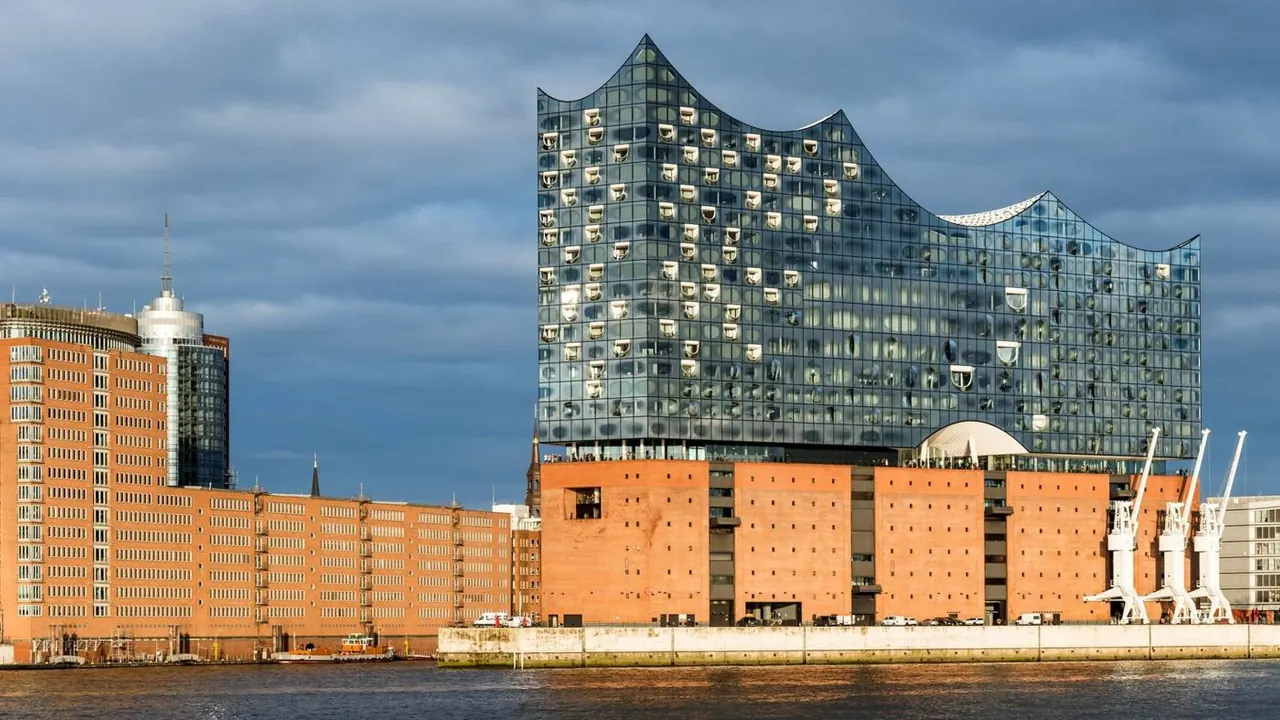
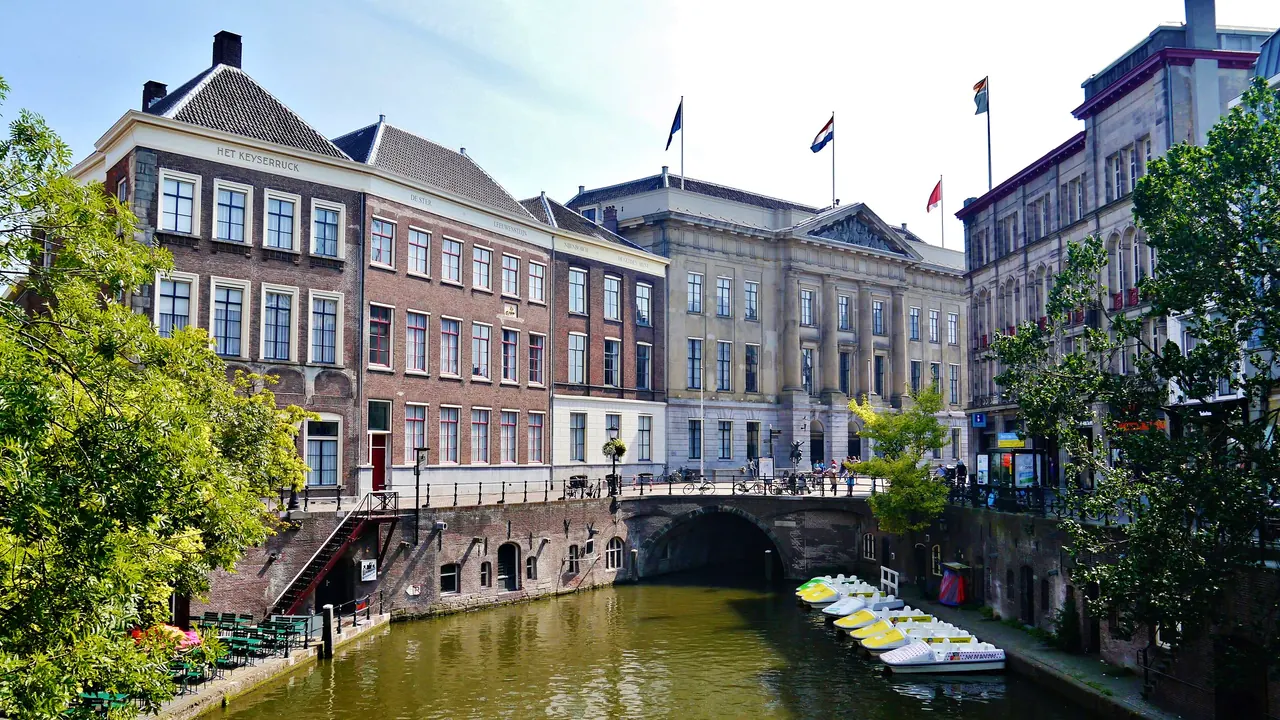
Photos: Hamburg by Wolfgang Weiser, Pexels License; Utrecht by Zairon, CC BY-SA 4.0, cropped.
Hamburg or Utrecht?
Our verdict in twelve categories, each scored against the same fixed benchmark cities, and the climate month by month, so you can choose for your trip.
Choose Hamburg for
- nightlife
- live music and the arts
- beaches
Hamburg suits travellers who want a big city with full evenings: concerts at the Elbphilharmonie, opera and ballet, musicals across the harbour and Reeperbahn nights that run until dawn. It is also the better choice with children, thanks to Miniatur Wunderland and Hagenbeck. Its harbour, warehouse districts and luxury shopping streets give it a scale that Utrecht never tries to match.
Choose Utrecht for
- day trips
- getting around
Choose Utrecht if you want a compact medieval town as a base for seeing a whole country. Amsterdam, Rotterdam, The Hague, Delft and Gouda are short train rides from Utrecht Centraal. In the evening you come back to canal-side terraces on the Oudegracht wharves and a quieter pace set by students. Utrecht has fewer big nights and grand stages, but the days are easy and the old centre is beautiful.
Scoreboard
Twelve categories on one fixed scale from 0 to 100. The shaded stretch is the gap between the two.
Your match
Pick a travel style or drag the sliders, and both match scores follow your weighting.
Wins on nightlife and live music and the arts with your weighting.
Wins on day trips and getting around with your weighting.
What matters to you?
Category by category
What the scores mean for a trip.
Beaches & swimming
Neither city is a beach destination, but Hamburg gets closer. The Elbe sands at Oevelgoenne and below Blankenese are fine spots for watching ships at sunset, although the river is no place to swim. The Baltic resorts of Travemuende and Timmendorfer Strand, with their wicker beach chairs, make an easy summer day out.
Utrecht is inland and has no shore of its own. The North Sea at Zandvoort or Scheveningen is a longer trip, so on a hot day you are more likely to end up at the Maarsseveense Plassen or the Loosdrecht lakes.
Food & drink
Hamburg has more worth eating. It has the identity of a port city: fish rolls on the Landungsbruecken piers, Labskaus and eel soup, Franzbroetchen at breakfast and a long coffee-roasting tradition. A proper fine-dining tier sits on top of all that.
Utrecht has no cuisine of its own to match this, and its pleasures come from the setting. You can eat at water level on the Oudegracht wharves, try the Indonesian and Surinamese kitchens, and buy cheese and herring at the Vredenburg market. Fine dining is limited, so food lovers will find more in Hamburg.
Culture & sights
The two offer quite different kinds of sightseeing, and both are rewarding. Hamburg's is the merchant port: the UNESCO-listed Speicherstadt and Chilehaus, the Elbphilharmonie rising from its warehouse, and big galleries such as the Kunsthalle. These are spread across separate districts, because the war destroyed much of the old town.
Utrecht has what Hamburg lost, an intact medieval centre around the free-standing Dom Tower and the two-level Oudegracht. Its museums are smaller, and the Rietveld Schröder House covers modern design. Everything is close together, so the city fits into a couple of days.
Nightlife
Hamburg offers by far the bigger night out. It has the Reeperbahn, bars with no fixed closing time and clubs in old bunker basements and down by the harbour. The Schanzenviertel, Ottensen and the Alster each have their own scene, and nights often end at dawn.
Utrecht's evenings belong to the students. They centre on brown cafés and canal-edge terraces around the Neude and the Janskerkhof, which are busy on weeknights too, but there are few clubs. Anyone wanting a bigger night takes the train to Amsterdam.
Nature & outdoors
Both landscapes are flat and green. The difference is that Hamburg's outdoors is about the water and Utrecht's is about the bike. In Hamburg you sail and paddle on the Alster, walk the riverside path to Blankenese and cycle through the Altes Land orchards in blossom, with Lueneburg Heath an hour south.
Utrecht is cycling country, with polders, windmills and country estates along the Vecht. It also has the wooded ridges and sandy trails of the Utrechtse Heuvelrug for walking and mountain biking.
Day trips
Both cities make good bases, but Utrecht is exceptional. It sits at the centre of the Dutch rail network, with Amsterdam under half an hour away and Rotterdam, The Hague, Delft, Leiden and Gouda all simple rides. A week there can take in most of the Netherlands without changing hotels.
Hamburg has fewer outings and they are a little further away. Luebeck is under an hour, Lueneburg about half that, and Bremen and Schwerin about an hour each. They are lovely brick Gothic towns, but they add up to a region rather than a whole country.
Good for families
Hamburg has more for children to do. Miniatur Wunderland holds young and old for hours, Hagenbeck shows its animals without bars, and a harbour ferry ride with a walk through the old Elbe tunnel makes an outing in itself. Two theme parks are about an hour away.
Utrecht is calmer and smaller. The Railway Museum and the Miffy museum for toddlers are its highlights, but zoos and theme parks mean a trip out of town. The constant stream of bikes also needs watching with small children.
Getting around
Both are easy without a car, in different ways. Hamburg is a large city that runs on the U-Bahn, the S-Bahn and the harbour ferries, all on one ticket. The airport is on the S-Bahn, and only outings to Blankenese or Hagenbeck take a longer ride.
Utrecht is compact enough to walk. Its main station sits on the edge of the old town, and the bike is the local way to get about. Hamburg's flat streets suit cycling too, but you often ride into wind and rain there.
Shopping & style
Hamburg is the stronger choice for shopping, mainly because it has more range. Neuer Wall and the arcades off the Jungfernstieg carry the luxury labels that Utrecht lacks, and the Alsterhaus department store stands on the water. The Karolinenviertel and Schanzenviertel cover vintage and streetwear.
Utrecht is better for browsing than for a big spree. It has independent fashion, book and homeware shops along the Oudegracht wharves and the Twijnstraat, plus flower and textile markets. For big names, shoppers go to Hoog Catharijne by the station or on to Amsterdam.
Affordability
Neither city is cheap, and in both the cost of a bed is the main expense. Hamburg's hotels get dearer during trade fairs and on summer weekends. Utrecht's historic centre has so few hotels that rooms there are scarce and expensive.
The ways to save differ. In Hamburg, a day ticket covers trains and harbour ferries, and fish rolls keep lunches simple. In Utrecht you can walk or cycle everywhere and eat in the student lunch cafés around the university quarter.
Live music & performing arts
This is where Hamburg has its clearest advantage. The Elbphilharmonie and the Laeiszhalle, a State Opera with a long history, an internationally known ballet company and leading drama stages give it a full classical season. Its large musical theatres and the St Pauli rock clubs where the Beatles started out cover the rest.
Utrecht does well for its size. TivoliVredenburg has several halls under one roof, and the Festival Oude Muziek is a major event for early music. However, the city has no opera house and most of its theatre is in Dutch.
Wellness & relaxation
In Hamburg a proper sauna is never more than a U-Bahn or S-Bahn ride away. The art nouveau Holthusenbad in Eppendorf and the big sauna areas in the other public baths are where locals spend whole winter afternoons, and the upmarket hotels have spas of their own. Otherwise, unwinding here means a boat around the Alster or an hour in the Japanese garden at Planten un Blomen.
Utrecht's sauna complexes are out in the green belt and take a short drive or bus ride, while its hotel spas are few and small. What it has instead is a quiet centre once the day-trippers leave. You can spend a slow evening at water level on the canal wharves or sit in the Pandhof cloister garden beside the Dom.
When should you go?
Pick your month. The climate figures are measured averages, not a forecast.
Hamburg in July
Utrecht in July
Daytime high, °C
Rainfall in the month, mm
Temperature and rainfall are climate normals, averaged over the years shown. Hamburg: 1991-2020 normals, Hamburg Airport (9.3 km from centre). Utrecht: 1991-2020 normals, De Bilt (4.3 km from centre).
Both cities have the same mild northern summer. From June to August daytime highs reach about 23°C, which is warm enough for long walks and terrace evenings but rarely hot. July and August are also the wettest months in both cities. Late spring is the underrated season. April and May are drier and the days are long, and May is Hamburg's sunniest month of the year.
Winter separates them a little. Hamburg is colder, with January highs around 4°C and very dark, grey days in December. Utrecht stays a couple of degrees milder and gets more winter sun, but it is wetter, and the rain keeps up from September through to December. Neither city offers real beach weather. The North Sea within reach of Utrecht peaks at around 19°C in August, which suits only hardy swimmers.
Which traveller are you?
For a food and nightlife trip, Hamburg is the obvious pick. Fish rolls on the harbour piers and a confident dining scene lead into nights on the Reeperbahn or in the Schanzenviertel, where bars keep no fixed closing time. Utrecht's student terraces are pleasant but much smaller.
On a culture and arts trip, Hamburg comes out ahead because of its evenings. By day the two cities are evenly matched for sights. After dark, however, the Elbphilharmonie, the State Opera, the Hamburg Ballet and the leading German-language stages offer a programme Utrecht cannot match.
For a short city break, Utrecht is easier. You step off the train at the edge of the old town and reach the Dom Tower and the Oudegracht wharves within minutes on foot. Two or three days covers the centre properly without any need for public transport.
Before you go
| Measure | Hamburg | Utrecht |
|---|---|---|
| Official language | German | Dutch |
| Currency | Euro (EUR) | Euro (EUR) |
| Sockets | CF230 V, 50 Hz | CF230 V, 50 Hz |
| Driving side | Right | Right |
| Time zone | UTC+1, UTC+2 in summer | UTC+1, UTC+2 in summer |
| Emergency number | 112 | 112 |
| Elevation | 6 m | 5 m |
| Main airport | Hamburg Helmut Schmidt Airport (HAM)9 km from centre120 non-stop destinations | Amsterdam Airport Schiphol (AMS)34 km from centre287 non-stop destinations |
| Public holidays this year | 10 days | 11 days |
By the numbers
| Measure | Hamburg | Utrecht |
|---|---|---|
| City population | 1,869,473 | 359,370 |
| People per km² | 2,476 | 3,619 |
| Museums within 10 km | 77 | 28 |
| UNESCO World Heritage sites within 50 km | 1 | 5 |
| Swim season, months above 21 °C | - | None |
Where else could you go?
Every comparison below shares a destination with this one, so you can follow Hamburg or Utrecht somewhere new.