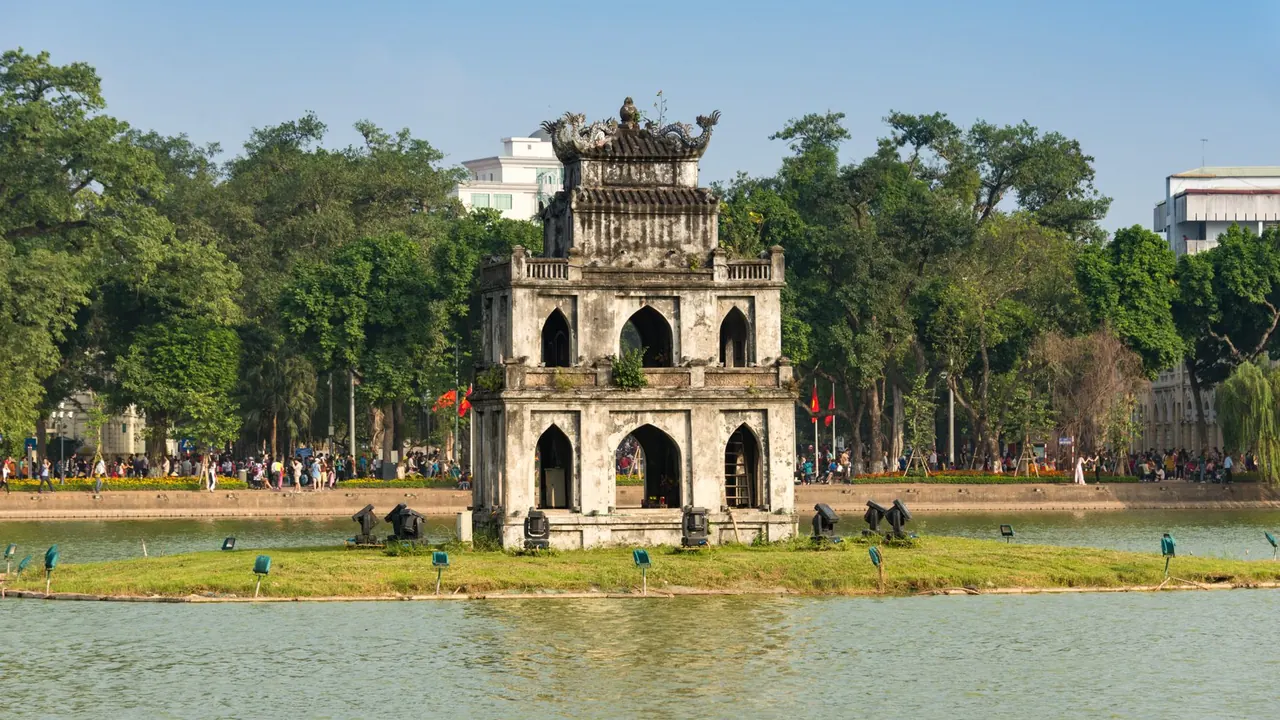
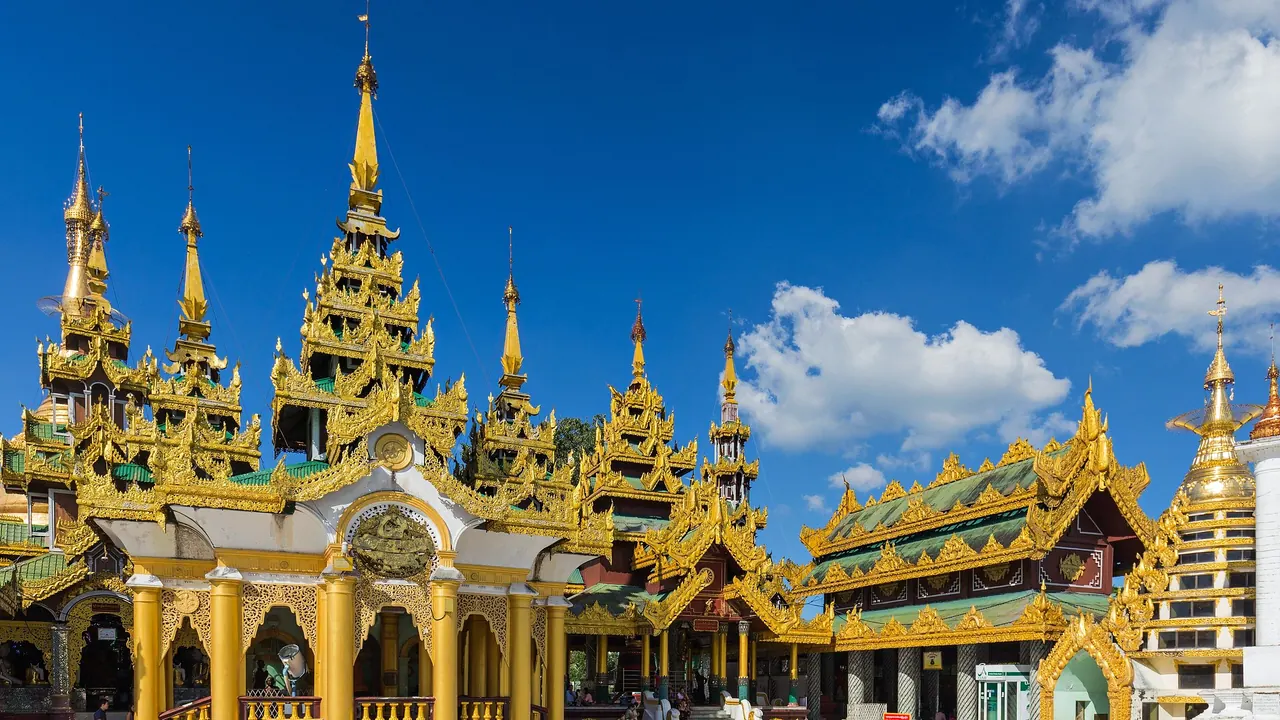
Photos: Hanoi by xiquinhosilva, CC BY 2.0, cropped; Yangon by Marcin Konsek, CC BY-SA 4.0, cropped.
Hanoi or Yangon?
Our verdict in twelve categories, each scored against the same fixed benchmark cities, and the climate month by month, so you can choose for your trip.
Choose Hanoi for
- nature and the outdoors
- nightlife
- live music and the arts
Hanoi is the better all-round choice, and for most travellers the easier one. Its street food is among the best in Asia, its evenings are sociable, and Ninh Binh's limestone country is close enough for a day out. Money also goes further here. Pick it for a first trip to the region, for eating your way through a city, or for a stay that mixes old streets with countryside.
Choose Yangon for
Yangon does not lead in any category we score.
Yangon is for the traveller drawn to one great monument and a city that has changed slowly. The Shwedagon at dusk is a sight Hanoi has nothing to match, and the weathered colonial downtown is unusually complete. The meditation centres offer a reason to stay that has nothing to do with sightseeing. It suits a shorter, quieter visit, or one stop on a wider trip through Myanmar, rather than a week of varied days.
Scoreboard
Twelve categories on one fixed scale from 0 to 100. The shaded stretch is the gap between the two.
Your match
Pick a travel style or drag the sliders, and both match scores follow your weighting.
Wins on nature and the outdoors and nightlife with your weighting.
Has no clear advantage with the weighting you have chosen.
What matters to you?
Category by category
What the scores mean for a trip.
Beaches & swimming
Neither city works for a beach trip. Hanoi's nearest coast is around Ha Long, Cat Ba or Sam Son, and Yangon's is at Chaung Tha and Ngwe Saung on the Bay of Bengal. Both are long journeys and best planned as separate stays. In the city itself, Hanoi has the edge for families because of its water parks near West Lake. In Yangon, swimming means a hotel pool.
Food & drink
Hanoi is the stronger food city. Its stalls have often cooked a single dish for decades, so pho, bun cha, banh cuon and cha ca are each made by specialists. The coffee culture of slow-drip and egg coffee in upstairs cafés overlooking the lakes is a reason to visit by itself.
Yangon is more of an adventure than a refinement. Mornings in the tea shops bring mohinga and palata, and Burmese curries come with their spread of side dishes and tea-leaf salad. The Indian and Chinese quarters add variety, especially the evening skewers on 19th Street. The cooking is interesting, but the depth and polish are lower.
Culture & sights
The two are close in what they offer and differ in shape. Hanoi spreads its heritage thinly and widely, across the Old Quarter's guild streets, the French Quarter, the Temple of Literature, the Imperial Citadel and museums such as Ethnology and Hoa Lo. You get three or four rewarding days without one overwhelming sight.
Yangon is the opposite. The Shwedagon is a single monument that outshines anything in Hanoi, backed by Sule, Botataung and the reclining Buddha at Chaukhtatgyi, and a colonial downtown of the Secretariat and Strand riverfront that is larger and more atmospheric than Hanoi's French Quarter. Its museums are weaker, and two or three days are enough.
Nightlife
Hanoi offers much more of an evening out. Bia hoi stools fill the Old Quarter pavements from late afternoon, the lanes around Ta Hien get loud with backpacker bars, and West Lake has rooftop terraces and craft beer. Even so, the city winds down around midnight.
Yangon goes quiet even earlier. A night out usually means a beer station showing football or a table among the skewer stalls of 19th Street, plus a few hotel bars, and the streets empty well before Hanoi's do.
Nature & outdoors
Hanoi has far better scenery within reach. Ninh Binh's limestone towers and river caves at Trang An and Tam Coc are about two hours away, the Ba Vi hills offer forest walking, and Ha Long Bay and Sapa make good overnight trips.
Yangon's outdoors amounts to its two lakes, Kandawgyi with its Shwedagon views and Inya for an evening walk, plus the park at Hlawga and the river ferries. With no hills nearby and heat or monsoon for much of the year, nature is not a reason to come.
Day trips
Hanoi gives you more good days out. There is Ninh Binh with Hoa Lu and Bai Dinh, the boat-and-cave approach to the Perfume Pagoda, craft villages such as Bat Trang and Van Phuc, and the laterite houses of Duong Lam. Together they easily fill several days.
Yangon really has one strong day trip: Bago, with the Shwemawdaw Pagoda and the Shwethalyaung reclining Buddha. Twante's pottery kilns and the island pagoda at Kyauktan are shorter outings. Golden Rock, like Ha Long Bay, needs a night away.
Good for families
Neither city is easy with children, but Hanoi is the more manageable of the two. The water puppets by Hoan Kiem Lake are a short show children love, and the village houses at the Museum of Ethnology and the edge-of-town water parks fill other days. Motorbikes and blocked pavements are the main strain.
Yangon has fewer attractions aimed at children, mainly an old zoo, a small amusement park and People's Park. Its heat rarely lets up, unlike Hanoi's cooler winter, so it suits older children who are happy at pagodas and markets.
Getting around
Getting around is hard work in both cities, though Hanoi is a little easier. Its main areas, the Old Quarter, Hoan Kiem, the French Quarter and Ba Dinh, are close enough to cover on foot, and ride-hailing and motorbike taxis handle the rest. The price is learning to step into the stream of scooters.
Yangon reverses that trade-off. Motorbikes are banned from the centre, so the downtown grid feels calmer, but the city sprawls beyond it, there is no metro, and taxis spend a long time in traffic. The Circular Railway is a sightseeing ride, not a way to get anywhere.
Shopping & style
Hanoi spreads its shopping across whole streets, each given over to one trade, while Yangon gathers most of it under one colonial-era roof. In Hanoi you can walk from silk to bamboo to tin boxes, have clothes made to measure on Hang Gai in a day or two, and finish at Dong Xuan or the weekend night market. Lacquer, Bat Trang ceramics and textiles from the northern hills are the things to bring home.
In Yangon nearly everything happens at Bogyoke Aung San Market, among stalls of jade, rubies, Bagan lacquerware, puppets and longyi. It makes one long afternoon of bargaining, though gems call for caution, and it offers less range than Hanoi's streets.
Affordability
Both are cheap, but Hanoi is cheaper. Street meals, bia hoi and ride-hailing cost almost nothing, and comfortable boutique hotels in the Old Quarter are inexpensive. Costs only climb with extras such as Ha Long Bay cruises, international chains and imported wine.
In Yangon, tea-shop meals and taxis are similarly cheap, and most pagodas charge little or nothing to enter. Hotels are the catch: anything of international standard costs noticeably more than the rest of the trip, so the overall bill comes out higher unless you stay in simple guesthouses.
Live music & performing arts
Water puppets play several times a day by Hoan Kiem Lake and a working opera house stands in the French Quarter, while Yangon's stage life amounts mostly to dinner shows. In Hanoi the colonial Opera House hosts the national symphony, ballet and opera, and ca tru sung poetry and a small jazz scene can fill another evening or two.
Yangon offers marionette performances and classical dance with dinner at the Karaweik Palace on Kandawgyi Lake. Its most genuine form, the all-night zat pwe at pagoda festivals, is hard for a visitor to find, and there are no regular concerts or opera.
Wellness & relaxation
In both cities massage is the everyday way to unwind, and Hanoi has slightly more of it. Foot and body treatment shops line the Old Quarter, there are spas with herbal baths, and the lanes and cafés around West Lake are a quieter place to stay.
Yangon's Burmese massage is firmer and more stretch-based. Its real strength is stillness rather than pampering: vipassana retreats at centres such as Mahasi, and the barefoot calm of the Shwedagon terraces in the early morning.
When should you go?
Pick your month. The climate figures are measured averages, not a forecast.
Hanoi in July
Yangon in July
Daytime high, °C
Rainfall in the month, mm
Where the figures come from
Hanoi's sunshine is measured 86 km from the centre, at Phu Lien.
Temperature and rainfall are climate normals, averaged over the years shown. Hanoi: 1991-2020 normals, Ha Noi (4.4 km from centre). Yangon: 1991-2020 normals, Yangon (3.2 km from centre).
The two cities run on different calendars. Hanoi has a real winter: January highs of about 19°C make walking pleasant, but the skies are grey and sunshine is scarce until April. From May to September the city is hot and wet, peaking around 35°C, with July rain reaching 311mm. October and November are the sweet spot, warm, drier and with the sun back, and spring is also mild but dull.
Yangon never cools down. The dry season from November to April is the time to go, with almost no rain, and December and January are the most bearable. By April the heat climbs to 38°C, too hot for long walks. From June to August the monsoon brings close to 590mm a month, and October is still damp. The sea on the Bay of Bengal coast stays warm all year, but the beaches are a separate trip from the city.
Which traveller are you?
On a food and nightlife trip, Hanoi wins easily. Eating and drinking run into each other there, from a breakfast stall to beer on the pavement at dusk, and it costs so little that you can graze all day. Yangon's cooking rewards curiosity, but its nights end early.
For an outdoors trip, Hanoi is the better base. Some of the north's finest country lies within a day's reach, and the cooler winter months make walking and cycling comfortable. Yangon offers city lakes rather than countryside, and heat or monsoon rules out most outdoor plans.
For travellers who want to practise meditation, Yangon is the clear choice. Myanmar is one of the great homes of vipassana teaching, and here a visitor can learn the practice properly rather than just sample it. Hanoi has massage and lakeside calm, but nothing comparable.
Before you go
| Measure | Hanoi | Yangon |
|---|---|---|
| Official language | Vietnamese | Burmese |
| Currency | Dong (VND) | Kyat (MMK) |
| Sockets | ACFG220 V, 50 Hz | CFG230 V, 50 Hz |
| Driving side | Right | Right |
| Time zone | UTC+7 | UTC+6:30 |
| Emergency number | Police 113, ambulance 115, fire 114 | Police 199, ambulance 192, fire 191 |
| Elevation | 10 m | 15 m |
| Main airport | Noi Bai International Airport (HAN)22 km from centre91 non-stop destinations | Yangon International Airport (RGN)13 km from centre27 non-stop destinations |
By the numbers
| Measure | Hanoi | Yangon |
|---|---|---|
| City population | 8,717,600 | 6,874,000 |
| People per km² | 2,595 | 11,934 |
| Museums within 10 km | 14 | 5 |
| UNESCO World Heritage sites within 50 km | 1 | 0 |
| Swim season, months above 21 °C | - | 12 months |
Where else could you go?
Every comparison below shares a destination with this one, so you can follow Hanoi or Yangon somewhere new.
- Ha Longvs Hanoi
- Sapavs Hanoi
- Chiang Maivs Yangon
- Paivs Yangon
- Luang Prabangvs Hanoi
- Kanchanaburivs Yangon