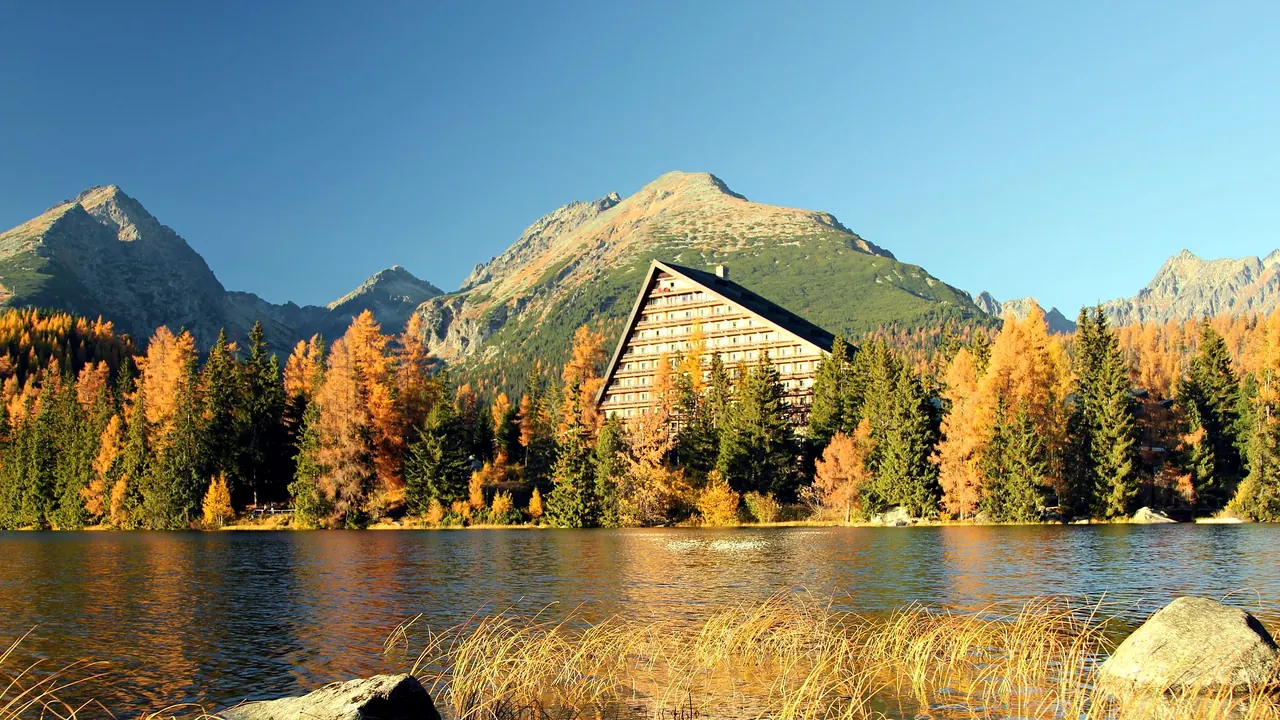
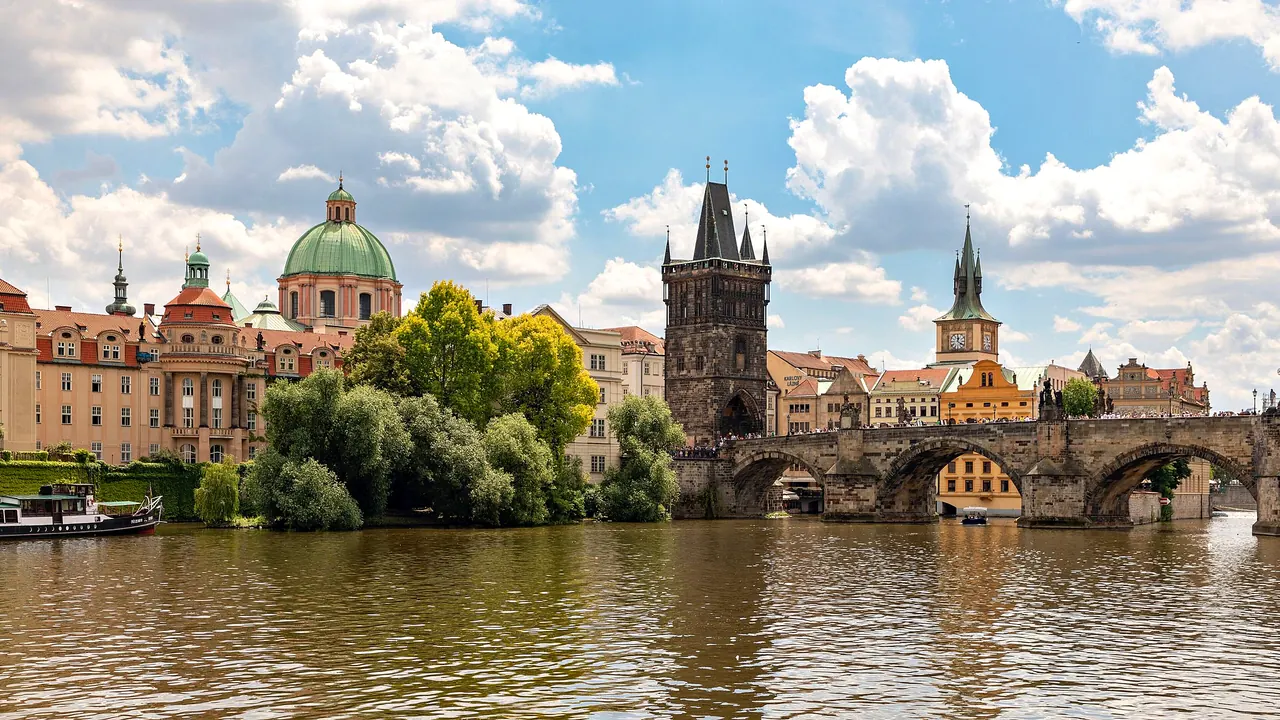
Photos: High Tatras by Marián Moravčík, Pexels License; Prague by Dietmar Rabich, CC BY-SA 4.0, cropped.
High Tatras or Prague?
Our verdict in twelve categories, each scored against the same fixed benchmark cities, and the climate month by month, so you can choose for your trip.
Choose High Tatras for
- nature and the outdoors
- wellness
- families
Choose the High Tatras if the trip is about being outdoors. Granite peaks, tarns and hut-to-hut trails start a short walk from the railway stops, and winter adds compact skiing. Evenings are early and quiet, the resorts are calm and easy with children, and the Spiš towns below supply the history the resorts themselves lack.
Choose Prague for
- culture and sights
- live music and the arts
- nightlife
Prague suits the traveller who wants a city to walk, look at and listen to. Its intact historic centre, three opera stages and pub-centred nights fill both days and evenings, and all of it is within reach on foot or by tram. There are green hills and sandstone country within reach, but nothing near the city compares with the Tatra ridges.
Scoreboard
Twelve categories on one fixed scale from 0 to 100. The shaded stretch is the gap between the two.
Your match
Pick a travel style or drag the sliders, and both match scores follow your weighting.
Wins on nature and the outdoors and wellness with your weighting.
Wins on culture and sights and live music and the arts with your weighting.
What matters to you?
Category by category
What the scores mean for a trip.
Beaches & swimming
Neither is a place to plan around swimming. What differs is what you get instead of a beach. In the Tatras it is warm water: geothermal pools around Poprad and the thermal parks of the Liptov valley, since swimming in the cold tarns is not allowed. Prague's summer swimming is in open water, at the Dzban reservoir in the Sarka valley or on the wooded banks of Slapy, an hour south.
Food & drink
The Tatras keep a short menu of Slovak mountain food: bryndzové halušky, game and cabbage soup in timbered kolíba taverns, and the most memorable meals at the mountain huts, with a beer after a climb. Beyond that and a few hotel dining rooms there is little choice.
Prague has more range, though its cooking is hearty rather than refined. The lager in the classic pubs is a reason to come in itself. Vinohrady, Karlin and Letna add cafés, Moravian wine bars and a modest modern scene, as long as you avoid the menus around Old Town Square.
Culture & sights
Sightseeing in the Tatras comes down to the timber and Art Nouveau villas and sanatoria of the old spa resorts, plus the national park museum in Tatranská Lomnica. The real heritage is down in the Spiš towns.
Prague is in another league. The whole centre is a UNESCO site, running from the Castle and St Vitus Cathedral through Baroque Mala Strana and over the Charles Bridge to the Old Town and Josefov. Cubist and Art Nouveau buildings add to it, and three or four days only just cover the essentials.
Nightlife
Nights in the Tatras end over dinner and a borovička. In winter a few après-ski and hotel bars in Tatranská Lomnica and Starý Smokovec stay open later, but there are no clubs at all.
Prague is a real drinking city. Zizkov's plain local pubs, the wine and cocktail bars of Vinohrady and the summer beer gardens on Letna stay full until late. Clubbers can choose between the big venues near Wenceslas Square that run until dawn and the smaller techno circuit in Holesovice.
Nature & outdoors
For anyone who walks, the Tatras are the reason to come. This is an alpine range with granite peaks above 2,600m, more than a hundred tarns, the magistrála trail linking the huts, and a cable car up to Lomnický štít, with chamois, marmots and bears. Winter brings compact skiing and ski touring, though the high trails close from November to mid-June.
Prague's green side is pleasant but small in scale. In town there are Petrin Hill, Stromovka and the gorge of Divoka Sarka, and the sandstone towers of Bohemian Switzerland are about two hours out. It is good for walking and cycling, but not for mountain days.
Day trips
Both make good bases, for different kinds of outing. From the Tatras the Spiš towns are close: Kežmarok's wooden church, Levoča's square and Gothic altar, and the vast ruins of Spiš Castle. Linking them is easiest by car.
Prague has the longer list and the trains to reach it. Kutna Hora and Karlstejn are each about an hour or less away, Terezin lies to the north, and Dresden along the Elbe makes a bigger city day. Cesky Krumlov is far enough that many visitors stay the night.
Good for families
With small children the Tatras are the easier place. The funicular to Hrebienok leads to gentle walks to the waterfalls, and the lake path at Štrbské Pleso takes a pushchair. Winter brings nursery slopes and sledging, and the thermal water parks are there for wet days.
Prague has one standout, the zoo at Troja, along with the astronomical clock and the mirror maze on Petrin. Cobbles, the castle stairs and the summer crowds make the old centre tiring for young legs and pushchairs, though.
Getting around
Prague is the easier place to be without a car. The centre can be walked end to end, and the metro, the trams that run through the night, the funicular and the ferries all share one ticket.
In the Tatras a narrow-gauge electric railway links the resorts over about 30km, funiculars and cable cars do the climbing, and trailheads are close to the stops. Services run less often, though, and reaching the Spiš towns or the Pieniny leads many visitors to hire a car.
Shopping & style
Shopping in the Tatras stops at outdoor gear, smoked sheep's cheese and bottles of local spirit, with Poprad's ordinary shopping centres for anything else. Prague is good for browsing once you get past the souvenir shops of the old centre: Bohemian crystal, garnets and marionettes, luxury labels on Parizska, and design and vintage shops in Vinohrady and Holesovice.
Affordability
Costs come out about even, but they bite in different places. In the Tatras the tavern meals, beer, guesthouses and local railway are cheap, while cable cars, ski passes and the big spa hotels push spending up, especially in July, August and over Christmas.
In Prague the bargains are beer, pub lunches and the trams, and the expense is the historic core, from the hotels to the riverside restaurants and the exchange booths. In both places, staying a little way out, in Poprad or a few tram stops from the centre, keeps the cost of a stay down.
Live music & performing arts
An evening out in the Tatras rarely means a performance. Beyond a folk ensemble in summer or over Christmas, and music with dinner in the odd tavern, there is nothing to book.
Prague could fill a week of evenings. Opera runs often across its three houses, with Dvořák, Smetana and Janáček alongside the Italian repertoire, and the Smetana Hall in the Municipal House gives concerts an Art Nouveau backdrop. If you are there for the Prague Spring festival, that is the high point of the year. Marionettes and black-light theatre suit visitors with no Czech, and there are jazz clubs in the Old Town for something less formal.
Wellness & relaxation
For a restful trip the Tatras are the better choice. The resorts grew up around the healing power of mountain air, and the pace still reflects that. Hotel wellness floors in Štrbské Pleso and Tatranská Lomnica, the geothermal pools at Poprad and Vrbov and long forest walks fill the days, and the quiet is deepest outside July and August.
Prague offers less in this way, and what it has is mostly indoors and practical: hotel spas, massage studios and the novelty of a beer bath. Real rest there means a slow afternoon in one of the grand coffee houses, the terraced gardens below the castle or a bench on Kampa, ideally from a base away from the crowded core.
When should you go?
Pick your month. The climate figures are measured averages, not a forecast.
High Tatras in July
Prague in July
Daytime high, °C
Rainfall in the month, mm
Where the figures come from
High Tatras's station stands 272 m below the city centre, so the centre is likely a little cooler than the figures say.
Temperature and rainfall are climate normals, averaged over the years shown. High Tatras: 1991-2020 normals, Poprad / Tatry (8.4 km from centre). Prague: 1991-2020 normals, Praha-Libus (8.1 km from centre).
The High Tatras have a short main season. Highs reach about 23°C in July and August, comfortable for climbing, but summer as a whole is the wet part of the year, with June and July the wettest months and around 101mm falling in July. Many high trails stay closed until mid-June, so late June to September is the window for serious hiking, and September is drier while still mild. From December to February highs sit around freezing. That suits skiing rather than walking, and sunshine is scarce in deep winter.
Prague runs a degree or two warmer for most of the year, and more than that in spring, with summer highs near 25°C and its rain peaking in June. It never gets hot enough to make sightseeing a struggle, and May and September are ideal for long days on foot. November to January is grey and has even fewer sunshine hours than the mountains, so a winter visit there is about indoor sights and warm interiors rather than views.
Which traveller are you?
On an outdoors trip, the High Tatras win clearly. Cable cars and funiculars lift you towards tarns, waterfalls and the magistrála trail, Rysy is a classic summit, and the Slovak Paradise gorges and Dunajec rafting are within an hour. Prague's sandstone rocks offer gentler walking.
For a culture and arts trip, Prague is the obvious choice. The Castle, Mala Strana and the Old Town give days of architecture, and in the evenings there is opera at the National Theatre or the Czech Philharmonic at the Rudolfinum. The Tatras have spa villas, one museum and no stage.
On a food and nightlife trip, Prague again comes out ahead. Lager poured with care from the tank, svickova and long pub tables lead on to wine bars in Vinohrady and techno in Holesovice. In the Tatras, dinner at a kolíba and a borovička usually end the day early.
Before you go
| Measure | High Tatras | Prague |
|---|---|---|
| Official language | Slovak | Czech |
| Currency | Euro (EUR) | Czech Koruna (CZK) |
| Sockets | CE230 V, 50 Hz | CE230 V, 50 Hz |
| Driving side | Right | Right |
| Time zone | UTC+1, UTC+2 in summer | UTC+1, UTC+2 in summer |
| Emergency number | 112 | 112 |
| Elevation | 966 m | 235 m |
| Main airport | Poprad-Tatry Airport (TAT)8 km from centre4 non-stop destinations | Václav Havel Airport Prague (PRG)12 km from centre184 non-stop destinations |
| Public holidays this year | 15 days | 13 days |
By the numbers
| Measure | High Tatras | Prague |
|---|---|---|
| Population | 3,749 | 1,397,880 |
| People per km² | 10 | 2,817 |
| Museums within 10 km | 1 | 88 |
| UNESCO World Heritage sites within 50 km | 4 | 1 |
Where else could you go?
Every comparison below shares a destination with this one, so you can follow High Tatras or Prague somewhere new.
- Zakopanevs High Tatras
- Krakowvs High Tatras
- Karlovy Varyvs Prague
- Dresdenvs Prague
- Cesky Krumlovvs Prague
- Brnovs Prague