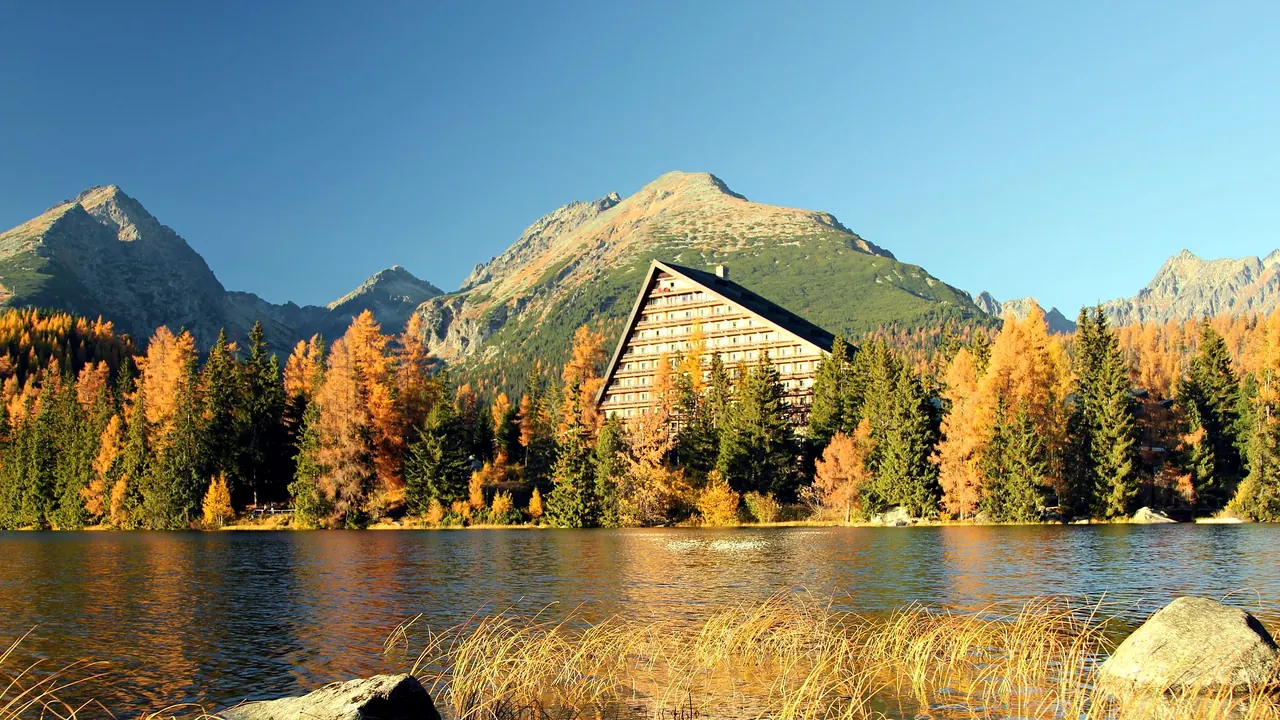
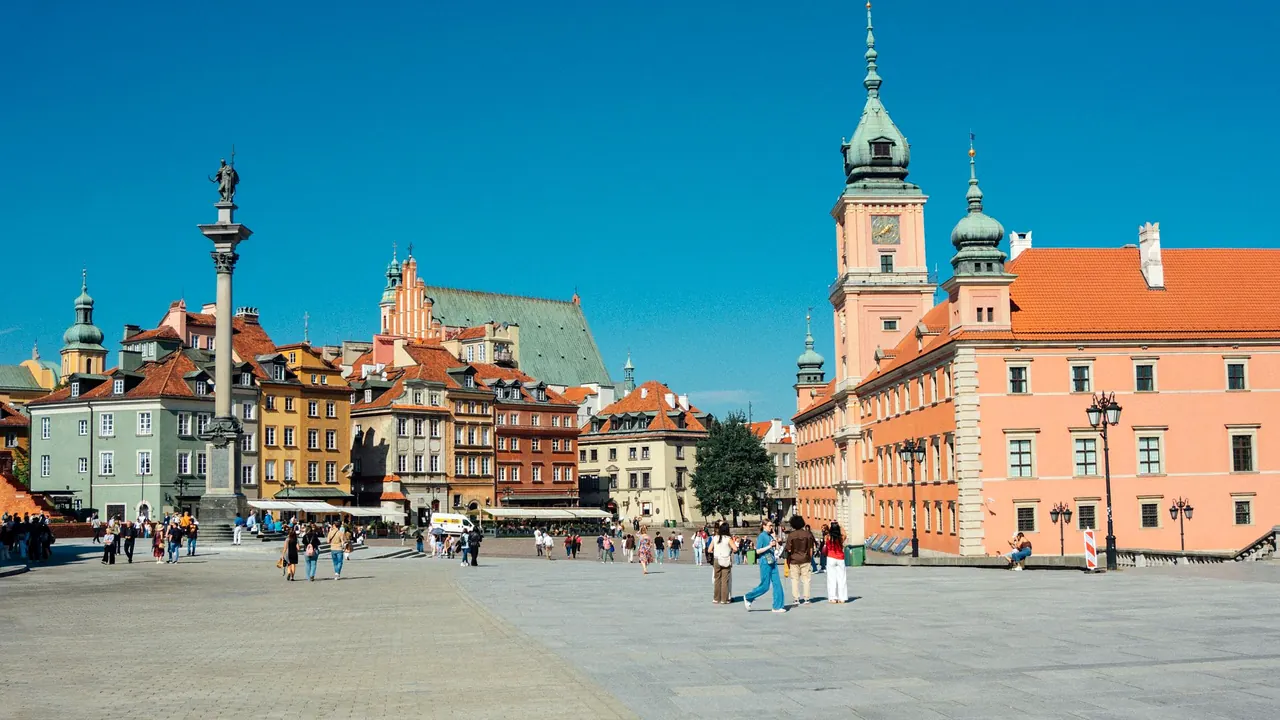
Photos: High Tatras by Marián Moravčík, Pexels License; Warsaw by Raymond Petrik, Pexels License.
High Tatras or Warsaw?
Our verdict in twelve categories, each scored against the same fixed benchmark cities, and the climate month by month, so you can choose for your trip.
Choose High Tatras for
- nature and the outdoors
- wellness
- day trips
The High Tatras suit travellers who come for the mountains themselves. In summer that means granite peaks, tarns and trails linking the mountain huts, and in winter compact skiing, with quiet evenings in old spa resorts all year. Walkers, families who like gentle forest paths and anyone looking for rest will be happier here, and the medieval Spiš towns below give a change of scene.
Choose Warsaw for
- culture and sights
- nightlife
- live music and the arts
Choose Warsaw for a city trip with real substance. The rebuilt Old Town, the powerful history museums, the opera and the Chopin recitals give every day a full programme, and evenings run late in Praga's courtyards and the bars around Nowy Świat. Food, shopping and transport are all stronger in Warsaw. The trade-off is nature, which there means flat forest and riverbank rather than peaks.
Scoreboard
Twelve categories on one fixed scale from 0 to 100. The shaded stretch is the gap between the two.
Your match
Pick a travel style or drag the sliders, and both match scores follow your weighting.
Wins on nature and the outdoors and wellness with your weighting.
Wins on culture and sights and nightlife with your weighting.
What matters to you?
Category by category
What the scores mean for a trip.
Beaches & swimming
Neither place is for a beach trip, though Warsaw has a little more water life. In the Tatras the tarns are cold and swimming in them is not allowed inside the national park, so a swim means the geothermal pools around Poprad or the thermal parks of the Liptov valley. In Warsaw you can sunbathe and have a drink on the sandy Vistula banks on the Praga side, and for a real swim there is the Zegrze reservoir or a lake on the outskirts.
Food & drink
The food in the Tatras is honest mountain cooking: bryndzové halušky, cabbage soup and game in timbered kolíba taverns, or soup and a Slovak beer at a hut after a climb. It is just right for hungry hikers, but after a few days the choice runs thin.
Warsaw has far more range. Milk bars serve cheap home cooking and old-fashioned dining rooms do żurek and duck, while modern kitchens turn forest mushrooms and fermented vegetables into tasting menus. Market halls, cake shops and vodka with herring give you plenty to try between meals.
Culture & sights
Culture in the Tatra resorts comes down to the timber and Art Nouveau villas and grand hotels of the old spa settlements, plus the national park museum in Tatranská Lomnica. For anything older, you have to go down to the Spiš towns.
Warsaw is in another league. The Old Town and Royal Castle were rebuilt after 1944 so faithfully that the reconstruction is itself UNESCO-listed, and from there the Royal Route leads to Łazienki and Wilanów. The Warsaw Rising Museum and POLIN can each take up most of a day.
Nightlife
A Tatra evening ends with dinner and a borovička. In the ski season a few après-ski and hotel bars in Tatranská Lomnica and Starý Smokovec stay open later, but there are no clubs.
Warsaw stays out until morning. There are tiny bars in the pavilions behind the main streets, weekend crowds on Mazowiecka Street and around Nowy Świat, a younger crowd in Powiśle and techno in Praga's old factories. In summer much of it moves to the Vistula boulevards.
Nature & outdoors
The mountains are the reason to come to the Tatras. This is Europe's smallest alpine range, rising to 2,655m, with more than a hundred tarns, the Tatranská magistrála trail linking huts along its length and a cable car up Lomnický štít. In winter the same mountains give you skiing and ski touring, and Slovak Paradise and the Pieniny are within an hour.
Warsaw's outdoors is flat and gentler. Kampinos National Park, with inland dunes, marshes and elk, begins at the city's edge, and the wild eastern bank of the Vistula is unusual for a capital. Still, this is walking and cycling country, not mountains.
Day trips
The Tatras sit above one of Central Europe's densest clusters of medieval heritage. Kežmarok, the walled Renaissance square of Levoča and the vast ruins of Spiš Castle are all within an hour, and Košice and Zakopane are further out. A car makes it much easier to fit two or three into a day.
Warsaw's outings are more scattered. Łódź and its factory palaces are a quick train ride away, and Chopin's birthplace at Żelazowa Wola and the palace at Nieborów are close. Lublin takes a full day, and Kraków is too far to see properly in one.
Good for families
Both work well with children, in different ways. The Tatras offer the funicular to Hrebienok, the pushchair-friendly path around Štrbské Pleso, the Belianska cave, and ski schools and sledging in winter, with water parks near Poprad for wet days.
Warsaw is a city of parks and indoor attractions for children. The Copernicus Science Centre can fill a whole day, the zoo is large, and Łazienki has squirrels and playgrounds. Its history museums are heavy going for young children, just as the long Tatra hikes are too steep for them.
Getting around
In the Tatras a narrow-gauge electric railway links the resorts along about 30km, and funiculars and cable cars carry you up towards the trailheads. Trains run less often than in larger mountain areas, though, and the Spiš towns are much easier to reach with a hire car.
In Warsaw you will not need a car at all. Trams, two metro lines and buses all run on one ticket, and a direct train links the airport to the centre. The catch is size: beyond the Old Town the post-war avenues are wide and long, so you will ride more than you walk.
Shopping & style
Shopping in the Tatras goes no further than outdoor gear, smoked sheep's cheese and a bottle of local spirit. Warsaw has big malls, Polish designer boutiques on Mokotowska Street, the Hala Mirowska market and weekend flea markets selling communist-era posters, plus amber and stoneware to take home, though it has no great historic shopping streets.
Affordability
Overall costs are much the same. The Tatras are cheap for a mountain vacation, with tavern meals, guesthouses and the local railway well below Alpine prices, but cable cars, ski passes and the summer and Christmas peaks add up. Warsaw is cheap for a capital, with milk bars, low transport fares and free museum days, though central hotels cost more on weekdays and during trade fairs, which makes a weekend stay the better deal.
Live music & performing arts
The Tatras offer little more than folk ensembles in summer and at Christmas, and music with dinner in some taverns. Warsaw is a real music city, with opera and ballet at the Grand Theatre, a full season at the National Philharmonic, Chopin recitals in palaces all year, free Sunday concerts by his monument in Łazienki in summer, and jazz in cellar clubs.
Wellness & relaxation
In the Tatras, how calm it feels depends on when you go. In July and August the popular routes and resorts fill up. In September, or in a quiet week of the low season, the empty forest paths and long views are the whole point. Don't expect a historic bathhouse. The bathing is modern and practical, from the wellness floors of the big hotels at Štrbské Pleso to the larger thermal parks of the Liptov valley, about an hour away.\n\nWarsaw has no bathing tradition of its own, but its sauna culture is worth trying.
In the big sauna zones of the indoor water parks, attendants wave scented towels through the heat in rituals that locals take seriously. For fresh air, Konstancin-Jeziorna on the city's southern edge has a saltwater graduation tower and a park for slow walks. That makes a pleasant afternoon, but it doesn't add up to a restful stay the way the mountains do.
When should you go?
Pick your month. The climate figures are measured averages, not a forecast.
High Tatras in July
Warsaw in July
Daytime high, °C
Rainfall in the month, mm
Where the figures come from
High Tatras's station stands 272 m below the city centre, so the centre is likely a little cooler than the figures say.
Temperature and rainfall are climate normals, averaged over the years shown. High Tatras: 1991-2020 normals, Poprad / Tatry (8.4 km from centre). Warsaw: 1991-2020 normals, Warszawa-Okecie (7.7 km from centre).
Both places have a hard continental winter, with daytime highs around 1°C in January. In the Tatras that is ski season, and in December and January the mountains get roughly twice as much sunshine as Warsaw, so winter days there are noticeably brighter. Many high trails stay closed until mid-June, which makes summer and early autumn the hiking months. July is the wettest month in the mountains, at 101mm, so a mild, drier September is a fine time for walking.
Warsaw is at its best from May to September. Highs reach about 25°C and summer brings more than 300 hours of sunshine a month, far more than the mountains get, so the riverbanks and long avenues are at their most pleasant. Neither place is a beach destination in any month. From November to February Warsaw is cold and dim, and museums and concerts have to carry a winter trip. By March the light has come back and matches the mountains, though it is still too cold for long days on foot.
Which traveller are you?
For an outdoors trip, the High Tatras win clearly. Granite peaks, tarns and trails linking the huts start a short walk from the railway, and winter adds skiing. Warsaw's flat Kampinos forest suits a bike ride more than a real mountain day.
On a culture and arts trip, Warsaw is the obvious choice. The rebuilt Old Town, the Warsaw Rising Museum and POLIN fill the days, and opera, the Philharmonic and Chopin recitals fill the evenings. The quiet Tatra resorts cannot match that.
For a relaxing and wellness trip, the Tatras suit better. The resorts began as climatic spas and still offer hotel pools and saunas, geothermal bathing near Poprad, forest walks and early, quiet nights. Warsaw is a fast-moving capital whose spas are mostly in hotels.
Before you go
| Measure | High Tatras | Warsaw |
|---|---|---|
| Official language | Slovak | Polish |
| Currency | Euro (EUR) | Zloty (PLN) |
| Sockets | CE230 V, 50 Hz | CE50 Hz |
| Driving side | Right | Right |
| Time zone | UTC+1, UTC+2 in summer | UTC+1, UTC+2 in summer |
| Emergency number | 112 | 112 |
| Elevation | 966 m | 118 m |
| Main airport | Poprad-Tatry Airport (TAT)8 km from centre4 non-stop destinations | Warsaw Chopin Airport (WAW)8 km from centre175 non-stop destinations |
| Public holidays this year | 15 days | 14 days |
By the numbers
| Measure | High Tatras | Warsaw |
|---|---|---|
| Population | 3,749 | 1,862,402 |
| People per km² | 10 | 3,601 |
| Museums within 10 km | 1 | 117 |
| UNESCO World Heritage sites within 50 km | 4 | 1 |
Where else could you go?
Every comparison below shares a destination with this one, so you can follow High Tatras or Warsaw somewhere new.
- Zakopanevs High Tatras
- Krakowvs High Tatras
- Budapestvs High Tatras
- Krakowvs Warsaw
- Bratislavavs High Tatras
- Brnovs High Tatras